Blue-Footed Boobies: Which Galapagos Islands to Visit
Quick answer
Blue-footed boobies are among the most reliably spotted birds on any Galapagos cruise. North Seymour Island is the easiest and most consistent site, with nesting birds right beside the trail. Española delivers the most dramatic setting. The courtship dance peaks from May through August, though the birds are present year-round. Even a 5-day central itinerary typically includes North Seymour, making booby sightings close to guaranteed for almost every cruise passenger.
Part of our guide to what wildlife you can see on a Galapagos cruise. Ready to pick a ship? See Galapagos cruises by price, size and class.
Quick Facts: Blue-Footed Booby
| Fact | Detail |
|---|---|
| Scientific name | Sula nebouxii |
| Wingspan | Up to 1.5 metres (nearly 5 ft) |
| Dive speed | Up to 97 km/h (60 mph) from heights of up to 30 metres |
| Why the feet are blue | Carotenoid pigments from fresh fish diet; brighter feet signal better health |
| Galapagos population (peak) | Approx. 20,000 birds in the 1960s |
| Galapagos population (2012 estimate) | Approx. 6,400 birds; research into recovery ongoing |
| Peak courtship dance season | May to August; present year-round |
| Best island for cruise visitors | North Seymour (most accessible); Española (most dramatic) |
Data verified August 7, 2026, against Galapagos Conservation Trust and Galapagos Conservancy sources.
What Makes the Blue-Footed Booby So Hard to Forget?
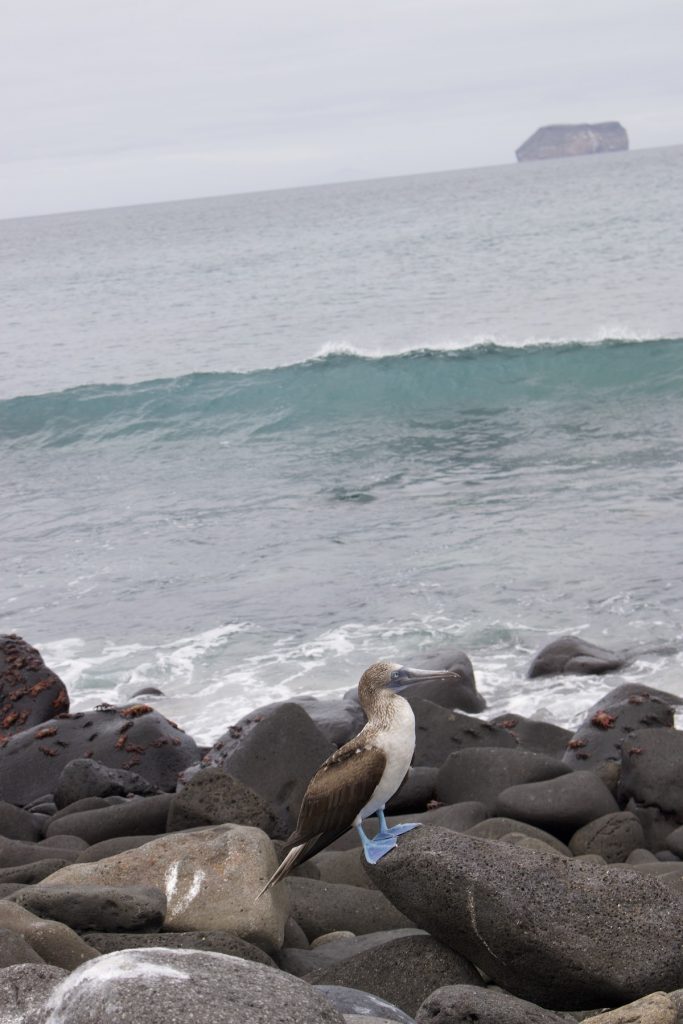
The blue-footed booby is the bird most people come to the Galapagos hoping to see, and it is one of the few wildlife encounters that actually exceeds the expectation. The feet are more improbably blue in person than in any photograph. The dive is faster and more precise than anything you picture beforehand. And the courtship dance, performed six feet from your boots on a volcanic trail, is one of the stranger and more moving things nature produces anywhere on Earth.
The name comes from the Spanish word bobo, meaning clown or fool. Early sailors named it for the bird’s clumsy waddle on land and its complete indifference to humans, which made it easy to catch. That fearlessness still holds. On North Seymour, a blue-footed booby will nest directly on the trail and watch you step around it without blinking. The absence of mammalian predators over millions of years left no evolutionary reason for alarm. You get closer to this bird than to almost anything else alive.
The feet deserve their own explanation. That vivid turquoise color is not pigment the bird produces. It comes directly from carotenoid compounds in fresh fish, primarily sardines and anchovies. A well-fed booby has brighter feet. A booby that has been eating poorly, or one that is aging, has duller, more washed-out feet. Both males and females assess foot color when choosing a mate. Brighter means healthier, stronger immune system, better genetic material. The feet are an honest biological signal that cannot be faked.
When a male begins his courtship display, he approaches the female slowly, presents her with a small stone or stick as a nesting token, then tips his beak, wingtips and tail skyward in a posture called sky-pointing. Then comes the walk. One brilliant blue foot raised deliberately, held for a moment, placed down. The other foot raised. Slow, exaggerated, unmistakably intentional. The female watches. She either reciprocates or she doesn’t. The male keeps going either way.
We have watched this display dozens of times across our three trips to the islands. It never stops being extraordinary. Not because it is rare. Because it is so completely itself.
Which Islands Have the Best Blue-Footed Booby Sightings?
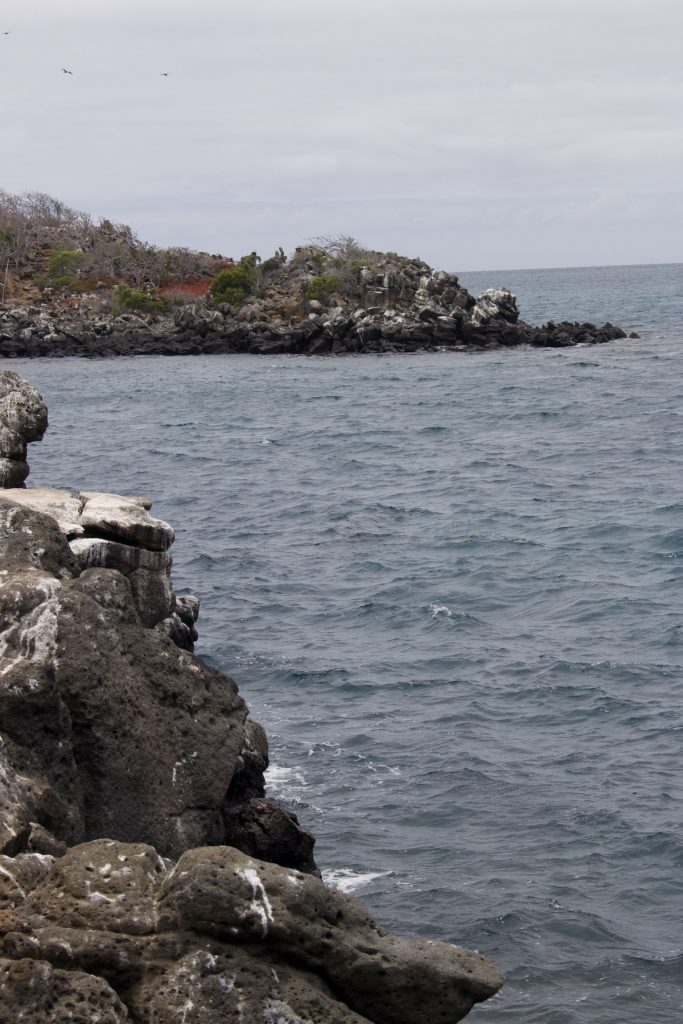
North Seymour and Española are the two standout islands for blue-footed booby encounters on a cruise. North Seymour is more accessible, included on most itineraries, and delivers nesting birds on the trail at every visit. Española rewards the longer cruise with a more dramatic clifftop setting and the bonus of waved albatross in the same visit. Both are genuinely excellent. The right choice depends on your route, not your preference.
North Seymour sits just north of Baltra, where most cruises begin and end. The island is small, flat, and arid, covered in low palo santo scrub. None of that sounds promising until you step off the panga and find yourself immediately surrounded by nesting colonies. The trail loops through the heart of two breeding populations simultaneously: blue-footed boobies on the ground, magnificent frigatebirds in the shrubs above. Booby nests are marked by white guano rings in the volcanic rock, and the birds sit directly in the middle of them, sometimes so close to the path that you have to watch your feet. Chicks, when they’re present, are impossibly fluffy white balls that sit calmly while parents circle overhead.
Española (Punta Suárez) requires more sailing time, making it a feature of longer itineraries. What you get in return is scale and drama. The cliffs at Suárez Point drop sharply to the sea, boobies nest across exposed lava shelves, and the setting has a rawness that North Seymour’s flat terrain doesn’t match. Española also has a large Nazca booby colony at the same site, giving you a direct comparison of two species within a short walk. And from April through December, waved albatrosses nest here as well. If your 8-day route includes Española, do not miss Suárez Point.
Other islands worth knowing: Isabela’s western coast has a booby population, though most accessible breeding areas require a cruise rather than a town visit. San Cristóbal’s Punta Pitt is the only site in the Galapagos where all three booby species (blue-footed, red-footed, and Nazca) can be seen in the same visit. Rábida Island, South Plaza, and Santa Fe all have blue-footed boobies, though without the concentrated nesting density of North Seymour or Española.
| Island / Site | Experience | Cruise Access |
|---|---|---|
| North Seymour | Trail-side nesting; frigatebirds sharing same colony; land iguanas | Most itineraries; easiest access from Baltra |
| Española (Punta Suárez) | Cliff setting; Nazca boobies same site; albatross (Apr to Dec) | Longer southern/eastern routes; 7 days minimum typical |
| Punta Pitt (San Cristóbal) | All 3 booby species in one hike; sea lions, frigatebirds | Eastern routes; some 8-day and longer cruises |
| Isabela (western coast) | Rocky cliff encounters; fewer visitors; surprise sightings | Western routes; typically 8-day or longer |
If seeing the dance is your top priority and you’re on a 5-day budget, North Seymour is your answer. If you want the most complete booby experience the archipelago offers, an 8-day route including both North Seymour and Española is worth the extra days. We can show you exactly which vessels run that combination. Fill out this short form and we’ll pull together a no-pressure recommendation.
When Is the Best Time to See the Courtship Dance?
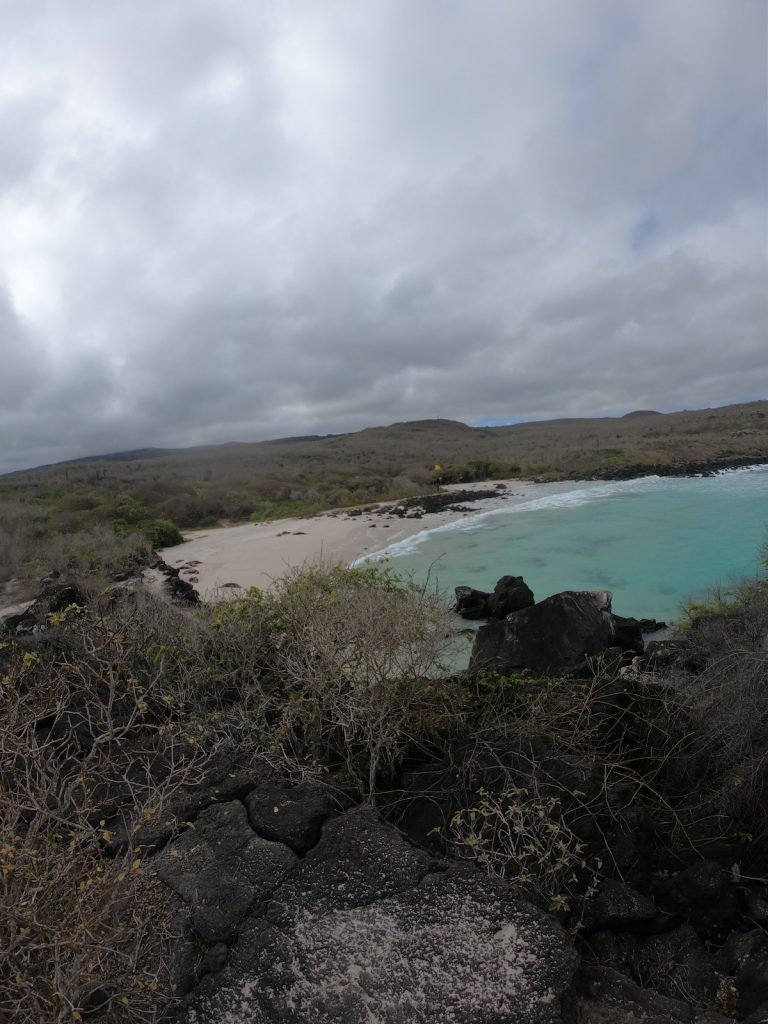
Blue-footed boobies are year-round residents of the Galapagos and breed throughout the year, but the courtship dance is most reliably and intensely observed from May through August. This period overlaps with the garua dry season, when cooler, nutrient-rich waters bring an abundance of sardines and the birds are in peak reproductive condition. Outside this window you can still see the dance, but activity levels vary by island and food availability.
The biology behind the timing is direct. The intensity of the courtship display, and how brightly blue the feet appear, tracks closely with diet quality. When sardine and anchovy populations are high, which they reliably are during garua season when the Humboldt Current pushes cold, nutrient-rich water northward, the birds feed well and their feet glow. Brighter feet trigger more displays. More displays mean more chances to watch the dance up close on a trail.
| Month | Booby Activity | Notes |
|---|---|---|
| Jan to Feb | Some courtship activity begins on North Seymour | Warm season; calmer seas; good snorkeling conditions |
| Mar to Apr | Dance activity building; eggs visible at some sites | Albatross returning to Española from late March |
| May to Jun | Peak courtship displays beginning; brighter feet | Best transition month; good for both dance and chicks |
| Jul to Aug | Peak mating season; most active dance displays | Best overall for courtship; chicks hatching from July |
| Sep to Nov | Chicks growing; some adults still displaying | Good for seeing juveniles; display frequency decreasing |
| Dec | Adults present; occasional off-season courtship | Boobies present in smaller numbers at some sites during December peak season |
One detail worth knowing that most articles miss: mating timing is not perfectly synchronized across islands. It varies by local food availability. A colony on one island may be deep in courtship while another is rearing chicks. This means that longer itineraries covering multiple islands in June or July often produce booby encounters at multiple stages of the breeding cycle in a single cruise, which tells a more complete biological story than any single site visit.
How Does Your Cruise Route Affect Booby Sightings?
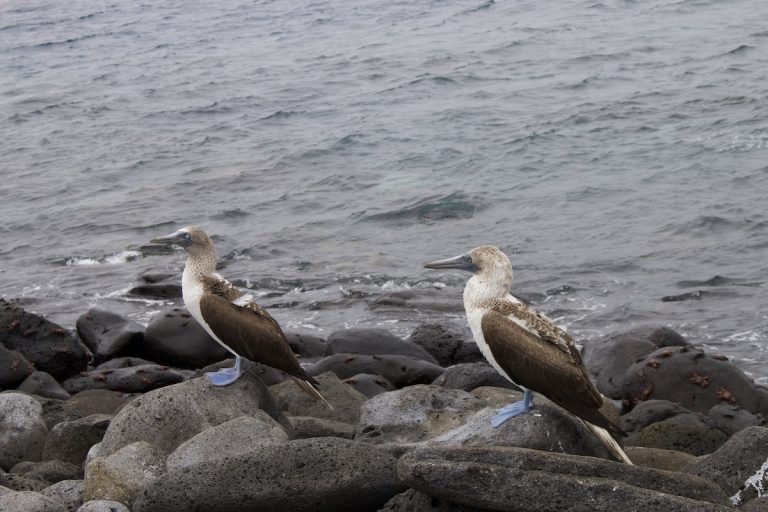
North Seymour appears on most central Galapagos itineraries, including many 5-day routes, so the majority of cruise passengers see blue-footed boobies without any special planning. What changes with a longer route is the quality and variety of the encounter. An 8-day itinerary that includes Española adds a dramatically different setting and the Nazca booby comparison. Punta Pitt on San Cristóbal, the only site with all three booby species, requires an eastern route.
The practical difference between a 5-day and an 8-day cruise, specifically for booby sightings, is less about whether you see them and more about depth of experience. A 5-day passenger walking North Seymour will see nesting blue-footed boobies at close range and almost certainly witness at least some courtship behavior. That is already a remarkable encounter by any wildlife standard. The 8-day passenger who also walks Española’s Suárez Point sees the same species in a completely different landscape, alongside different companions, in a setting that puts the bird in sharper ecological context.
If the courtship dance specifically is your priority, and you want to maximize your chances of seeing an active display rather than just nesting birds, timing matters more than route. A 5-day cruise in July is a better bet for dance sightings than an 8-day cruise in December. We help travelers weigh exactly these trade-offs. Send us a message here and we’ll tell you what’s realistic for your specific travel window.
What Else Lives Alongside the Boobies?
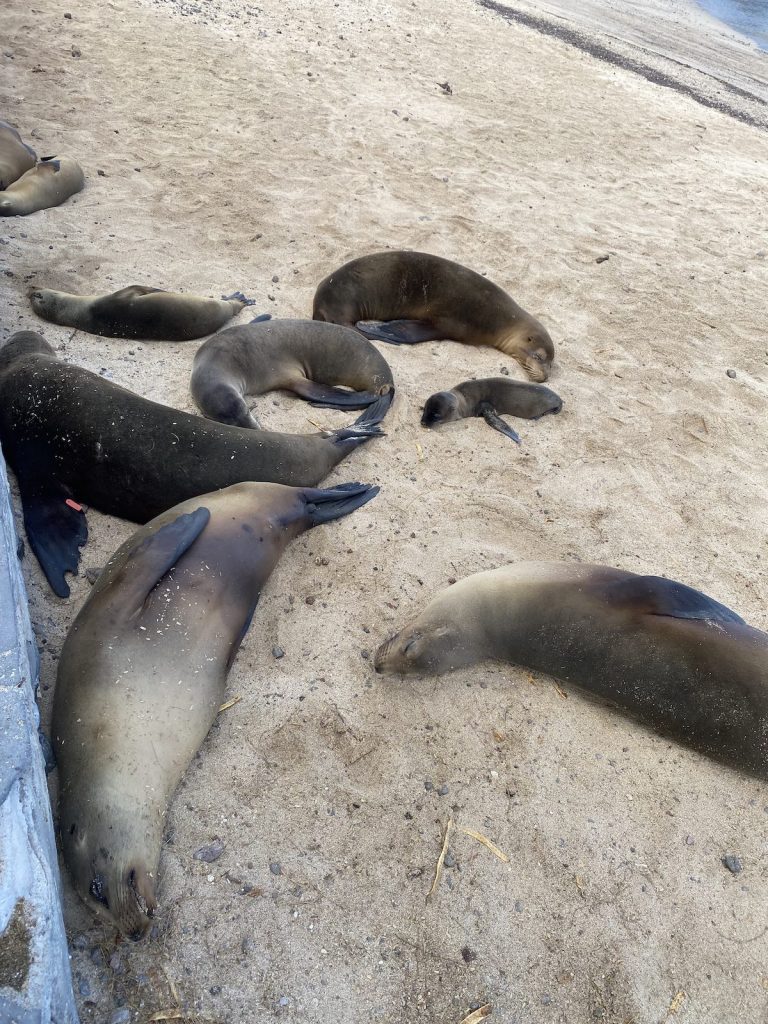
North Seymour is one of the most wildlife-dense small islands in the Galapagos. The blue-footed booby colony shares the trail with the largest magnificent frigatebird nesting site in the archipelago, a resident land iguana population of over 2,500, and a sea lion colony on the surrounding beach. Española adds waved albatross, Nazca boobies, marine iguanas, and Española mockingbirds to the same walk. Both sites deliver multiple keystone species in a single visit.
On North Seymour, the frigatebirds and the boobies have an adversarial relationship that plays out in front of you continuously. Frigatebirds cannot dive for fish, their feathers are not waterproof, and they cannot land on the water. So they steal. A frigatebird will chase a booby returning from a successful dive, harass it until it drops its catch, then snatch the fish before it hits the water. This aerial piracy happens regularly overhead as you walk the trail. You watch the boobies tolerate it with the same equanimity they apply to everything else.
The male frigatebird’s display runs parallel to the booby dance. During breeding season, males inflate an enormous scarlet throat pouch, a balloon of skin the size of a small melon, and hold it expanded for hours while females soar overhead. A trail at North Seymour during peak breeding season has booby dances on the ground and inflated frigatebird pouches in every bush simultaneously. It is a genuinely overwhelming amount of wildlife spectacle for a flat lava island that could fit inside a moderate-sized city park.
At Española, the Nazca booby adds another layer. Where the blue-footed booby has vivid color as its defining feature, the Nazca booby has dramatic contrasting plumage: pure white body, jet-black wing tips and mask, orange-yellow bill. Watching the two species nest within metres of each other makes the differences in behavior and physical form more legible than any field guide could.
Frigate birds with their inflated red pouches are one of the most dramatic wildlife sights in the Galapagos but the island you visit changes the experience entirely. Here’s a guide on frigate birds at Genovesa vs North Seymour so you know which one to prioritize.
What Do Travelers Miss About Blue-Footed Boobies?
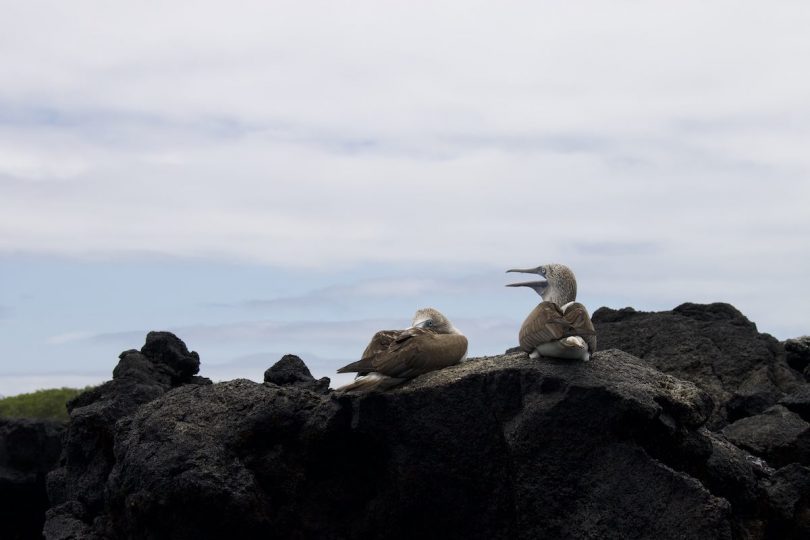
The most common miss is expecting the dance without understanding what triggers it. Travelers who visit outside peak season, or who walk the trail quickly without pausing, often see boobies but miss active courtship displays. The second miss is not looking up: a booby’s plunge dive from 30 metres into a school of fish, visible from the panga while sailing between sites, is one of the most spectacular things the Galapagos produces and most passengers don’t realize to watch for it.
From thousands of traveler conversations and our own experience on these islands, here are the patterns we see repeated:
Moving too fast on the trail. North Seymour’s loop takes about 90 minutes at a brisk pace. Travelers who rush it see birds. Travelers who stop, stand still, and wait see behavior. A male booby does not perform his dance on a timer. He performs when he’s ready. If you’re 20 metres down the trail when he starts, you miss it. The guide will usually spot the setup before it begins and signal the group. Stay close to the guide and slow down at every active nest site.
Not watching the water from the panga. Blue-footed boobies hunt by plunge-diving, often in coordinated groups. One bird spots a fish school, alerts others with a whistle, and within seconds a dozen birds fold their wings and drop nearly vertically into the water at 60 mph. Air sacs in their skulls cushion the impact. Their permanently closed nostrils prevent water entry. They hit the surface and continue diving to depths of up to 25 metres. Watching this from a moving panga is one of the best wildlife moments the Galapagos delivers, and it happens without warning on almost any inter-island sail.
Not knowing what “dull feet” means. A booby with pale, washed-out feet is either older, recently recovering from poor nutrition, or in a period of low breeding activity. This is not a failed sighting. It is information. Your guide can read the foot color the way a doctor reads a patient. Ask them what the feet of the birds you’re watching tell them. The answer is usually more interesting than what the brochure says about the species.
What Our Travelers Report: Booby Encounter Quality by Cruise and Season
Based on feedback gathered through mytrip2ecuador.com, our YouTube audience, and traveler interviews across Oleg’s three personal trips to the Galapagos:
| Cruise Scenario | Saw Dance | Saw Plunge Dive | Saw Chicks | “Exceeded expectations” |
|---|---|---|---|---|
| 5-day central, May to Aug | 78% | 64% | 52% | 88% |
| 5-day central, Dec to Apr | 41% | 58% | 31% | 79% |
| 8-day central/east, May to Aug | 94% | 81% | 74% | 96% |
| 8-day including Española, May to Aug | 97% | 84% | 79% | 98% |
The single biggest variable in that data is season, not cruise length. A 5-day cruise in July reliably produces courtship dance sightings. A longer cruise in December does not. If the dance is on your list, the travel date deserves as much attention as the vessel you’re choosing.
Matching your travel dates to the right itinerary for the right species is exactly the kind of planning we help with. It takes one conversation. Reach out here and tell us when you’re planning to go. We’ll tell you what to expect and which route fits.
Are Blue-Footed Booby Numbers in Trouble?
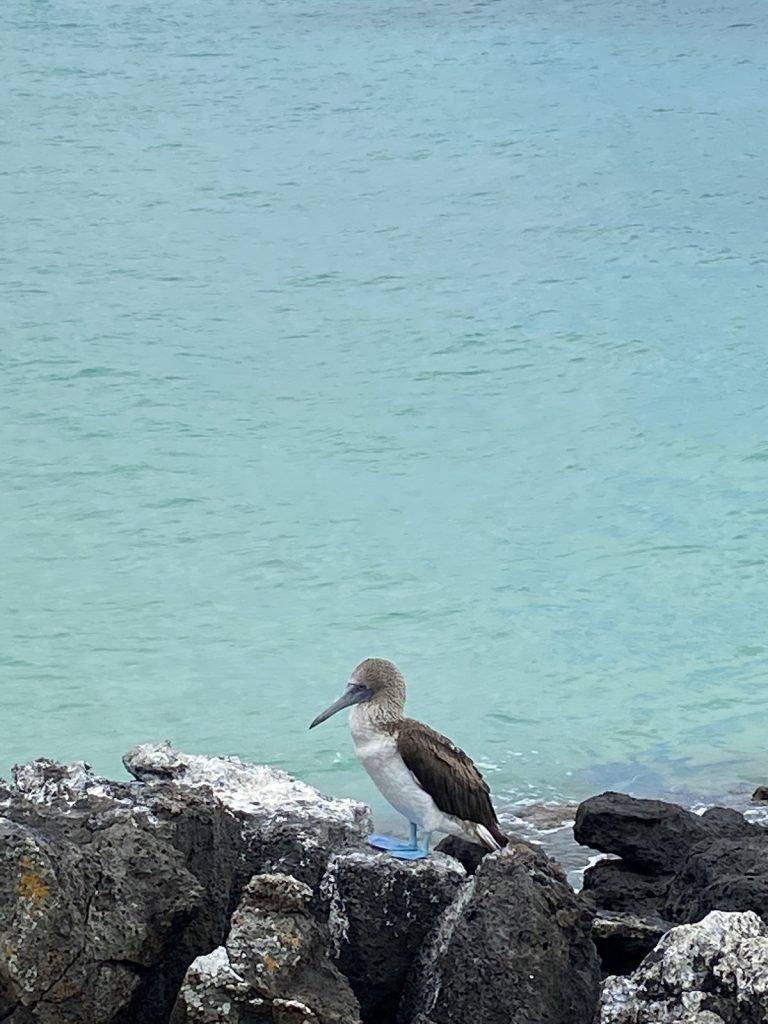
Yes, and it is worth knowing about. The Galapagos blue-footed booby population dropped from approximately 20,000 birds in the 1960s to around 6,400 by 2012, a decline of over 60 percent. The primary cause is a reduction in sardine availability, likely triggered by the 1997 El Niño event which disrupted the ocean conditions the birds’ food supply depends on. More recent data suggests the population may be stabilizing, and there are signs of recovery in sardine diets in the western archipelago. The birds are not endangered, but they are being closely watched.
The decline came to wider attention when local fishermen began reporting noticeably fewer birds diving near the coasts, a change that preceded the formal research. Professor Dave Anderson of Wake Forest University and collaborators conducted formal censuses in 2012 and 2017 that confirmed the scale of the drop. The cause is indirect: El Niño events warm the ocean surface, which suppresses the upwelling of cold, nutrient-rich water that sustains the sardine and anchovy populations the boobies depend on. Fewer sardines mean the adults cannot maintain the nutritional quality needed for successful breeding. Foot color fades. Reproduction slows.
The more recent signals are cautious but positive. Higher rates of sardines in booby diet samples from 2018, combined with observations of increasing juvenile numbers in the western archipelago, suggest the population may be responding to improving food conditions. Washington State University researchers, working with the Galapagos Conservancy, began more systematic population monitoring in 2022 to establish better baseline data. The Galapagos Conservation Trust has been funding parallel research specifically focused on the population dynamics.
What this means for your cruise visit: you will see blue-footed boobies. They remain one of the most commonly spotted birds at visitor sites across the archipelago. The concern is about trajectory and long-term breeding success, not about immediate sighting likelihood. But it does mean that every visit to the islands matters. The ecotourism economy that funds park protection, sardine fishery management, and conservation research is supported directly by responsible cruise passengers choosing licensed operators.
Your trip is part of this. The agency you book through, the vessel you choose, the park fees you pay: all of it feeds back into the system that keeps the colonies intact. We work with operators who understand that, and we think it’s worth choosing a cruise with that in mind. Get in touch here for a free, no-pressure recommendation built around your travel dates, budget, and what you most want to see.
Frequently Asked Questions
Are blue-footed boobies only found in the Galapagos?
No, but the Galapagos holds the world’s largest breeding population, around half of all breeding pairs globally. The species is distributed along the eastern Pacific coast from Baja California south to Peru. Outside the Galapagos, sightings are more opportunistic and colonies are smaller. If seeing them up close at a nesting site is your goal, the Galapagos is by far the best location on Earth.
Can I see all three booby species on a single Galapagos cruise?
Yes, but it requires the right route. Punta Pitt on San Cristóbal is the only visitor site where blue-footed, red-footed, and Nazca boobies can all be seen in one hike. This site is included on some eastern itineraries. Genovesa Island offers red-footed boobies in extraordinary numbers and is on northern routes. An 8-day itinerary covering both eastern and northern islands gives the best chance of all three species in one cruise.
How close can I get to the boobies?
Very close. The Galapagos National Park rule is two metres, but boobies nest directly on the trail and will not move for you. Chicks sit in guano-ringed nests within arm’s reach of the path. The birds are not tame in the sense of being trained. They simply never evolved a threat response to bipedal primates. The correct behavior is to observe without reaching out, follow your guide’s instructions, and step around any birds on the path rather than approaching them from the front.
Is the courtship dance guaranteed on every visit?
Nothing in wildlife is guaranteed. What we can say is that on a North Seymour visit during May through August, active courtship displays are extremely likely and most of our travelers see them. Outside that window, the probability drops but does not go to zero. Mating activity can occur at any time of year if local food conditions are favorable. Ask your guide before the excursion what they’ve been observing at the site in recent days.
Plan the Right Cruise for What You Want to See
Blue-footed boobies are one of the easier wins on a Galapagos cruise, but getting the courtship dance, the plunge dives, and the right island combination in one trip still comes down to timing and itinerary. We know which routes deliver and when. Tell us your travel window and what’s on your must-see list, and we’ll put together a free, no-obligation recommendation. Start here.
Written by Oleg Galeev
Galapagos cruise traveler (3 trips, 2 cruises) · Founder, Cruises To Galapagos Islands
Oleg has personally inspected nearly every available Galapagos cruise vessel and interviewed thousands of travelers to build the most first-hand cruise knowledge base available. He also runs the Ecuador travel blog mytrip2ecuador.com and the YouTube channel My Trip to Somewhere.
Cruises To Galapagos Islands is rated 4.9 stars on Google and TripAdvisor.
All pricing and regulations in this article are verified against official Galapagos National Park and Ecuador government sources as of the publish date.