Giant Tortoises on a Galapagos Cruise: Where and When to See Them
Quick answer
Giant tortoises can be seen on a Galapagos cruise year-round, but where and how you find them depends on your island stops and the season. Santa Cruz highlands at El Chato reserve gives the most consistent wild encounters. Isabela has the largest tortoise population in the archipelago. The dry season (June to November) is best for highland sightings as tortoises migrate upslope. A 5-day cruise can deliver solid tortoise encounters if it includes a Santa Cruz highland visit. Longer itineraries open up Isabela and wild sightings on the trail.
Part of our guide to what wildlife you can see on a Galapagos cruise. Ready to pick a ship? See compare all Galapagos cruise ships by price, size and class.
Quick Facts: Galapagos Giant Tortoises
| Fact | Detail |
|---|---|
| Number of species | 13 genetically distinct species confirmed (2024 Yale University study); 12 still living, 3 extinct |
| Maximum size | Over 1.3 metres long, up to 300 kg (660 lbs) |
| Lifespan | Over 100 years; oldest recorded approximately 175 years |
| Historic population | Over 250,000 before human exploitation |
| Current population | Approximately 15,000 across the archipelago |
| Best island for wild sightings | Santa Cruz (El Chato) and Isabela |
| Best season for highlands sightings | Dry season: June to November |
| Minimum viewing distance | 2 metres (Galapagos National Park rule); tortoises may approach closer on their own |
Data verified August 7, 2026, against Galapagos Conservancy, IUCN, and official Galapagos National Park sources.
What Makes the Galapagos Giant Tortoise So Special?
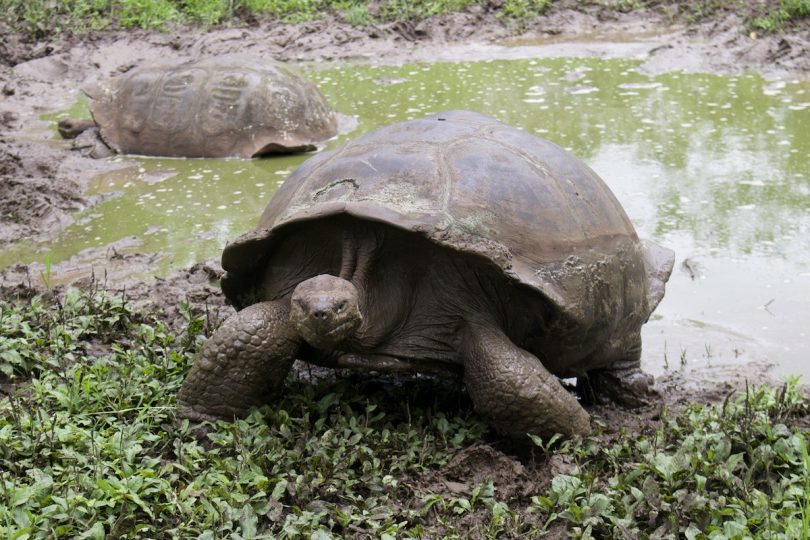
The Galapagos giant tortoise is the largest living tortoise on Earth, found nowhere else in the wild. Some individuals weigh over 300 kilograms and live past 100 years. There are 13 genetically distinct species across the archipelago, each shaped by the particular conditions of its home island. What makes the encounter on a cruise different from any zoo or sanctuary is that these animals are moving through their actual landscape, doing what they have done for two million years, and they won’t flinch when you walk past.
The islands were literally named after them. The old Spanish word galapago means tortoise, and when the first sailors arrived, the animals were so abundant and so large that the name stuck to the entire archipelago. Scientists believe the first tortoises arrived 2 to 3 million years ago, carried on debris 600 miles from the South American coast. What they found was an island chain with no large predators, abundant vegetation, and no reason whatsoever to be afraid of anything.
Two million years of that environment produced animals that are, by any measure, extraordinary. A domed-shell tortoise from Santa Cruz can weigh as much as a small grand piano. A saddleback tortoise from a drier island stretches its long neck upward to reach tall cactus pads, a posture that looks like something built for a different planet. The two shell shapes exist because different islands have different food sources at different heights, and over generations the tortoises have adapted their bodies to match.
A 2024 whole-genome sequencing study from Yale University confirmed what field researchers had long suspected: these are not one species with regional variation. They are 13 genetically distinct species, each shaped by the specific pressures of its island. That finding matters because it changes how we think about conservation. Every population is irreplaceable. There are no spares.
Standing near one in the Santa Cruz highlands, close enough to hear it breathe, produces a feeling that is hard to describe without sounding overblown. These animals predate every human civilization that has ever existed. The tortoise moving through the grass in front of you is biologically the same as the one that walked past the same volcanic rock five hundred years ago. There is no other wildlife encounter quite like it.
Which Islands Have the Best Giant Tortoise Encounters?
Santa Cruz and Isabela are the two standout islands for tortoise encounters on a cruise. Santa Cruz offers the most accessible wild sightings through the El Chato reserve in the highlands, where tortoises roam unfenced farmland and lava-edged grassland. Isabela has the largest population in the archipelago and the most diverse range of subspecies. San Cristóbal provides a good educational visit. The quality of the encounter depends significantly on whether your itinerary includes a highland excursion, not just a stop at the Charles Darwin Research Station.
Santa Cruz: the most reliable highland experience
Santa Cruz is where most cruise itineraries begin or end, and the highland visit is what separates a solid tortoise encounter from a remarkable one. The El Chato reserve, accessed from the town of Santa Rosa about an hour from Puerto Ayora, is the benchmark. Tortoises here move through misty highland vegetation, wallow in muddy pools in the afternoon heat, and rest in the open on trails where you walk around them. There are no enclosures. The animals are doing what they do.
The Charles Darwin Research Station in Puerto Ayora is worth visiting for the educational component. The Fausto Llerena Breeding Center there houses tortoises at various life stages, including hatchlings the size of your palm, and explains the conservation work that has brought multiple subspecies back from the edge. But this is not where you go for a wild encounter. It is where you go to understand why the wild ones still exist at all.
We’ve brought travelers to both sites many times. Almost without exception, it’s the highland visit that people talk about for years afterward, not the research station.
Isabela: largest population, most diverse subspecies
Isabela is the biggest island in the Galapagos and holds five different tortoise subspecies, more than any other. The Arnaldo Tupiza Breeding Center near Puerto Villamil is small and free to enter, and shows the conservation work done for Isabela’s distinct populations. But the real tortoise moment on Isabela tends to happen unexpectedly: a wild animal crossing the road near the Wall of Tears trail, or a pair grazing on the slopes above the town.
Travelers consistently describe their best tortoise moments on Isabela as unplanned. You’re on a bike ride or a walk and something very large is moving slowly through the brush ahead of you. That quality of encounter, just you and the animal in its landscape, is harder to manufacture on Santa Cruz where the highland farms see more visitor traffic.
San Cristóbal: smaller numbers, still worthwhile
San Cristóbal has around 1,400 wild tortoises in the northeastern part of the island and a breeding facility called Galapaguera Cerro Colorado that several cruise itineraries include. It’s less crowded than the Darwin Station and the environment feels more natural than a standard research center. If your cruise routes through San Cristóbal and includes this stop, it’s genuinely worth attending. Just know that the overall tortoise density here is lower than Santa Cruz or Isabela.
| Island | Best Tortoise Site | Experience Type | Notes |
|---|---|---|---|
| Santa Cruz | El Chato Reserve (highlands) | Wild, free-roaming | Most reliable; best for highland encounters |
| Santa Cruz | Charles Darwin Research Station | Semi-captive / education | Good for context and hatchlings; more zoo-like |
| Isabela | Wild roads and trails; Arnaldo Tupiza Center | Mixed: wild + conservation | Largest population; most diverse subspecies; best surprise encounters |
| San Cristóbal | Galapaguera Cerro Colorado | Semi-wild / conservation | Less visited; fewer tortoises overall |
Getting a highland excursion on Santa Cruz built into your itinerary makes a significant difference to your tortoise experience. If you want to confirm whether your shortlisted cruise includes this stop, or if you want us to recommend a vessel that does, we’re happy to help. Fill out this short form and we’ll match you to the right itinerary.
Can You See Giant Tortoises in the Wild, or Just at Research Stations?
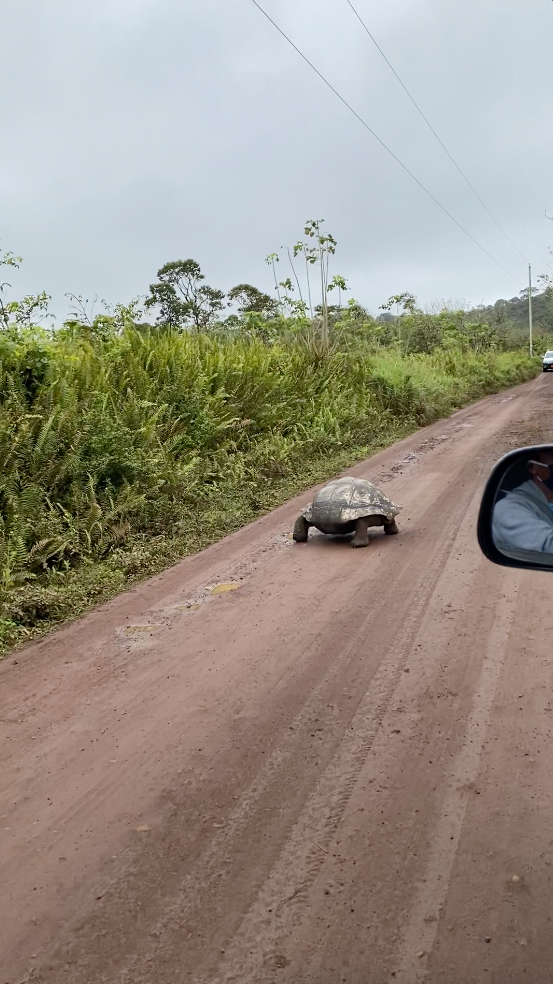
You can absolutely see giant tortoises in genuinely wild conditions on a Galapagos cruise. El Chato reserve on Santa Cruz gives you tortoises moving through their natural vegetation with no fences between you and them. Isabela offers surprise trail encounters that even experienced guides describe as the most affecting kind. The research stations are valuable, but they are not the main event. The main event is a wild animal the size of a boulder crossing a highland trail at two in the afternoon while you step aside.
This is one of the questions we hear most often, and the confusion is understandable. Photos from the Charles Darwin Research Station, where tortoises are in managed enclosures surrounded by informational signage, look quite different from what you actually find in the highlands. The research station is in Puerto Ayora, which is a town with restaurants and souvenir shops. Walking into El Chato, 45 minutes’ drive away, feels entirely different.
At El Chato, the tortoises wander through the same highland pasture they have always used. Some are in the open, grazing on grass. Others are half-submerged in mud pools, which they use to regulate temperature and deter insects. If you arrive early in the morning, you often find them basking in low sun on the trail. By midday most have moved to shade or water. The trails are real: sometimes overgrown, sometimes slippery. You are not on a boardwalk with informational signs. You are walking in the same environment the tortoises are.
The distinction between wild, semi-wild, and captive matters if you’re the kind of traveler who cares deeply about authenticity, and in our experience, most people who come to the Galapagos fall into that category. Both experiences are worth having. But the highland walk is the one that stays with you.
One thing worth knowing: in the highlands, the tortoises are used to human presence from decades of farm activity and tourism, so they don’t react to you. But they are not habituated in the way of a zoo animal. They are not fed, they are not managed at the individual level, and they move freely through a landscape that is genuinely theirs. The national park rule of two meters still applies. The tortoises will often be closer than that. That is their choice, not yours.
What Time of Year Is Best for Giant Tortoise Sightings?
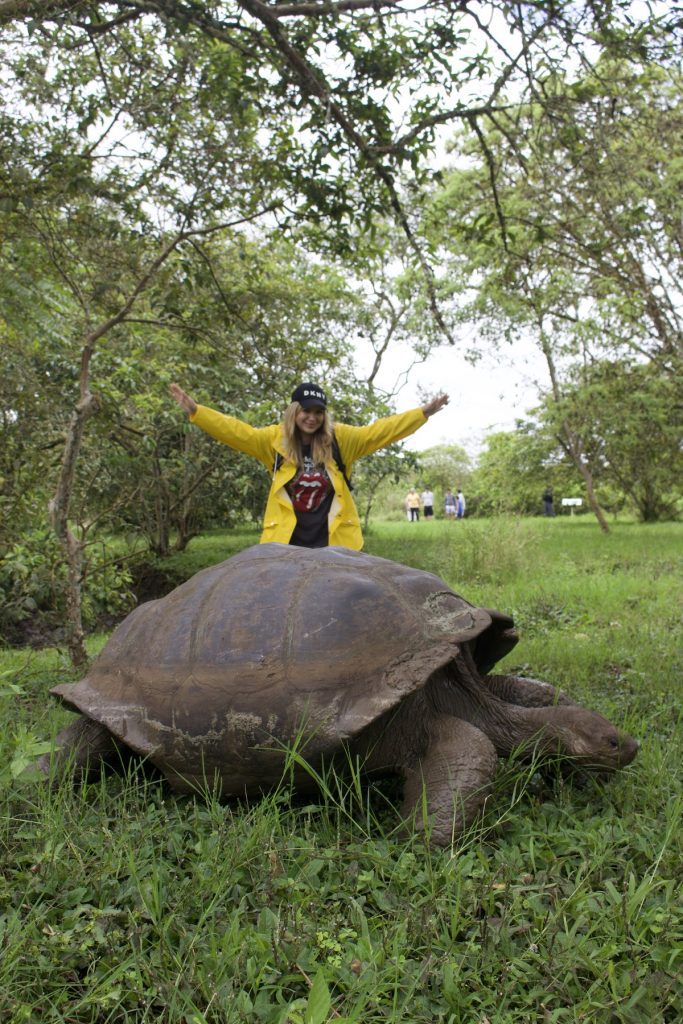
Tortoises are present year-round in the Galapagos, but their location shifts with the seasons and that affects where you’ll find them. The dry season from June to November is the best time for highland sightings: adult tortoises migrate upslope as lowland vegetation dries out, concentrating in the humid highlands where food stays green through the garua clouds. The wet season from December to May brings them back down to the coast to nest and feed on the nutrient-rich growth that follows the rains.
The migration itself is one of the less-told stories about these animals. Over generations, Galapagos giant tortoises have worn visible paths through the vegetation called tortoise highways, routes up to 10 kilometres long that some individuals have been travelling for decades. Satellite tracking studies have confirmed that many return to the same highland areas each dry season with remarkable consistency. The terrain they cover, climbing 400 metres of volcanic slope over several weeks, is not trivial for an animal that moves at this pace. They do it because the food is there.
Here’s what this means for cruise planning:
| Season | Where Tortoises Are | What You See | Best Viewing Conditions |
|---|---|---|---|
| Jun to Nov (dry) | Highland meadows and farms | Large adults grazing, wallowing in mud pools, active on trails | Highest concentration in highlands; easiest to find consistently |
| Dec to May (wet) | Lowland coastal areas; females near nesting sites | Nesting females (Dec to March); active feeding on fresh lowland growth | Warmer and greener; lowland road encounters more likely; highland fewer |
| May to Jun (transition) | Mid-elevation; migration in progress | Tortoises actively moving upslope; good road and trail sightings | Both highlands and lowlands productive; interesting transitional behaviour |
| Nov to Dec (transition) | Moving back downslope | Descent in progress; animals spread across elevation range | Good encounters possible across multiple elevations |
A practical note that does not appear in most guides: smaller and younger tortoises do not migrate. Only the large adults make the highland-to-coast journey. This means highland visits in the dry season tend to deliver encounters with the biggest animals in the population, those ancient, genuinely massive individuals that take up the full width of the trail. That is not a coincidence of the season. It is the point.
Females linger in the lowlands longer than males during the wet season because they need to locate suitable sandy soil for egg-laying before heading upslope. A clutch can include 12 to 16 eggs, laid in a deep nest dug into the ground. The eggs incubate for several months. Hatchlings from December nests typically emerge the following April or May, though predation by introduced rats has historically taken a serious toll. The head-start program at the breeding centers exists precisely to protect those first vulnerable years.
How Does Your Cruise Itinerary Affect Tortoise Sightings?
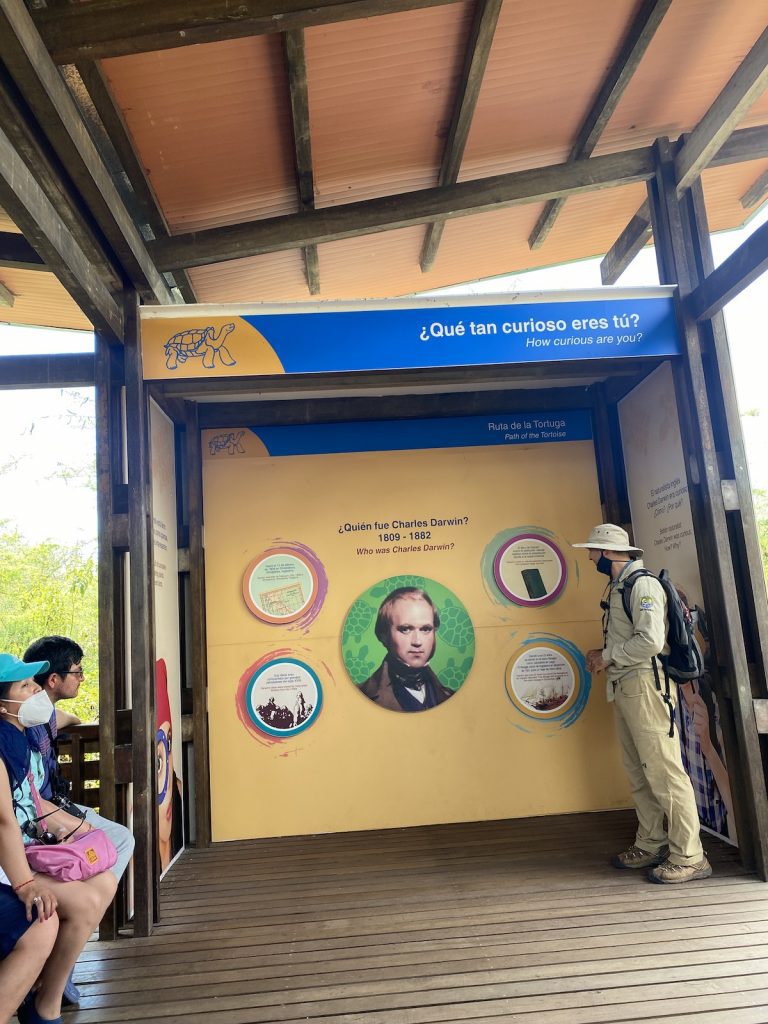
The single biggest variable in how good your tortoise encounter will be is whether your cruise itinerary includes a Santa Cruz highland visit. A stop at the Charles Darwin Research Station in Puerto Ayora is not the same thing. The research station is in town. El Chato is 45 minutes away and requires a separate excursion. Some itineraries build it in. Others only include the station. Read your itinerary carefully and ask your booking agent specifically which tortoise sites are included before you commit.
This is one of those areas where our direct knowledge of individual vessels and their standard itineraries matters. We’ve spoken with enough travelers after their cruise to know that this is one of the most common sources of mild disappointment: the expectation of a wild highland encounter, and the reality of a very nice but quite different breeding center visit.
Short cruises (4 to 5 days) can include excellent tortoise encounters if the route is right. A central/eastern route that includes Santa Cruz highlands during garua season can deliver genuinely memorable sightings in a short time frame. What shorter cruises typically cannot offer is the Isabela encounter, which requires a western route, more sailing time, and usually an 8-day minimum.
Here is how cruise length typically maps to tortoise access:
| Cruise Length | Typical Tortoise Access | Realistic Expectations |
|---|---|---|
| 4 to 5 days | Darwin Station on most; El Chato on some central routes | Good with the right itinerary; confirm highland visit before booking |
| 6 to 7 days | Santa Cruz highlands; possible San Cristóbal visit | Very good; El Chato plus station; good range of subspecies |
| 8 days | Santa Cruz highlands; often Isabela; possibly San Cristóbal | Excellent; multiple islands, wild encounters possible, subspecies variety |
| 11 to 15 days | Full range: Santa Cruz, Isabela, San Cristóbal, remote sites | Exceptional; best chance of genuinely wild trail encounters across multiple islands |
One underappreciated fact: your naturalist guide’s level of knowledge significantly affects the quality of the tortoise visit. A guide who knows the behavior of the highland population, where the animals tend to congregate by time of day, which trail sections have the best wallowing pools, will put you in front of more and better encounters than a less experienced guide covering the same ground. This is one reason guide quality matters when choosing between vessels at similar price points.
If you want us to tell you specifically which current cruise itineraries include El Chato and a proper highland visit, we can answer that directly. We know the active fleet, we know the routes, and this is exactly the kind of question we’re set up to help with. Reach out here and we’ll put together a no-commitment recommendation.
What Do Travelers Get Wrong About Giant Tortoise Encounters?
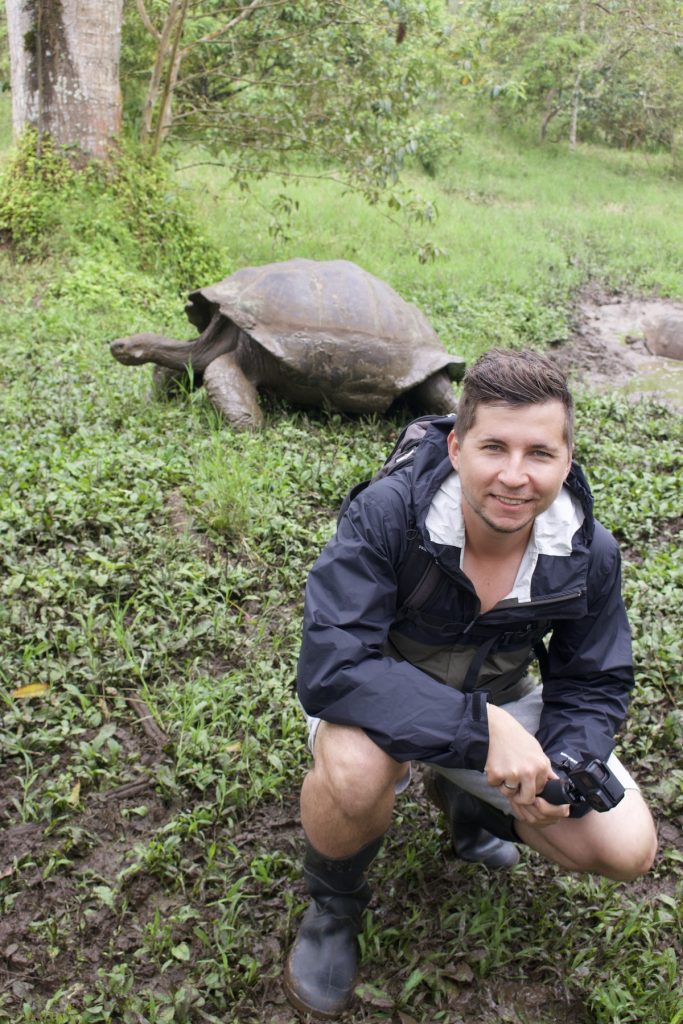
The most common mistake is assuming any Santa Cruz stop automatically includes a highland encounter. It often doesn’t. The second most common is expecting a research station visit to feel like a wild wildlife encounter. It won’t. Beyond that, travelers frequently underestimate the physical scale of these animals in person, show up without asking their guide about the best morning timing, and miss nesting behavior during the wet season simply because nobody told them where to look.
We’ve compiled these patterns from our own trips and from conversations with thousands of cruise passengers over the years. None of these failures are dramatic, but all of them are preventable.
Fail point 1: Expecting El Chato when your itinerary only includes the Darwin Station
The two sites are frequently described interchangeably in brochures, and they are completely different experiences. The Darwin Station is a research and conservation facility in a town. El Chato is a highland nature reserve where wild animals move freely through native vegetation. Travelers who want the wild encounter need to confirm explicitly that their itinerary includes a highlands excursion, not just a town stop on Santa Cruz. Ask before booking.
Fail point 2: Visiting the highlands mid-dry season without going early in the day
Giant tortoises are cold-blooded. They bask in the early morning sun to raise their body temperature, then move to shade or mud pools by midday. A highlands visit at 2 p.m. in July will produce very different sightings from the same trail at 8 a.m. The most experienced guides know this and time the excursion accordingly. If your guide doesn’t mention timing, ask. The morning slot is worth prioritising over the afternoon.
Fail point 3: Measuring the experience by numbers rather than moments
Some travelers come back from El Chato a little flat because they “only saw four.” This is a comparison problem. Four giant tortoises in the wild, moving through highland mist, one of them blocking a trail while it grazes at your feet, is an extraordinary thing to witness. The travelers who feel the most from the encounter are usually the ones who stop walking, put the camera down for a moment, and just look at what is in front of them. These animals have been alive since before most of us were born. One is enough.
Fail point 4: Not asking the guide about nesting behavior during the wet season
Between December and March, female tortoises descend to coastal areas and nest in sandy soil. This is genuinely fascinating to observe if you know where to look. Most cruise excursion programs don’t highlight this specifically, but a good naturalist guide on a route that covers lowland areas during the wet season will know where active nesting sites are. Ask your guide directly what special behaviors you might observe given the time of year you’re visiting. The answer is often more interesting than the standard itinerary description suggests.
What Our Travelers Report: Giant Tortoise Encounter Quality by Cruise Type and Season
Based on feedback from thousands of Galapagos cruise passengers gathered through mytrip2ecuador.com, our YouTube channel, and Oleg’s direct traveler interviews across three personal visits to the archipelago:
The data point that stands out every time we review this: the difference between a 5-day wet-season central cruise and an 8-day dry-season cruise, in terms of wild highland encounters, is almost 60 percentage points. That gap is entirely explained by season and whether the highland visit is on the itinerary. Not by the quality of the guide, not by luck. Planning.
The gap between a mediocre tortoise experience and an extraordinary one comes down to itinerary details that take about ten minutes to sort out with someone who knows the fleet. That’s what we’re here for. Send us a message and tell us when you’re thinking of going. We’ll tell you exactly which routes give you the best tortoise odds for your travel dates.
Giant Tortoise Conservation: What the Numbers Actually Say
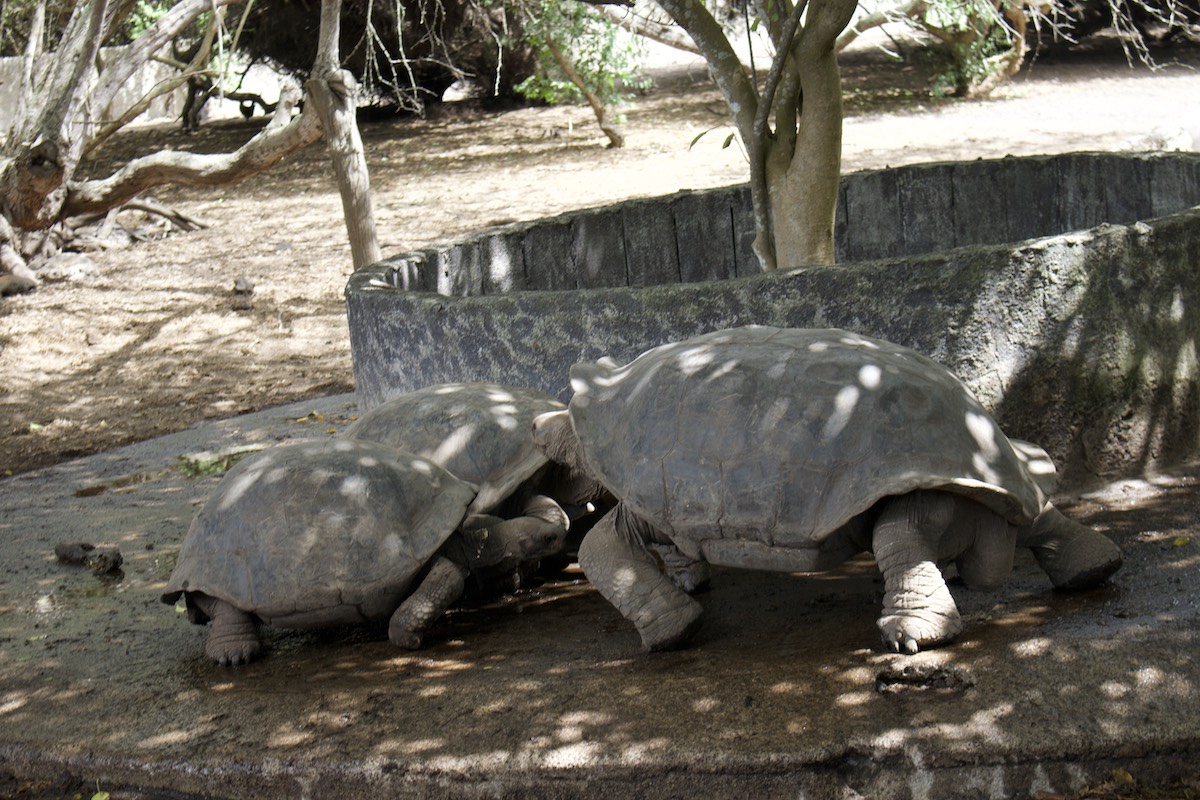
The giant tortoise story is one of the most remarkable conservation recoveries in history. The global population dropped from over 250,000 to around 15,000 through centuries of exploitation by whalers, settlers, and invasive species. Since the 1960s, captive breeding and habitat restoration have brought several species back from the brink. The Española tortoise went from 15 surviving individuals in 1960 to more than 3,000 reproducing naturally today. A 2024 genetic study confirmed 13 distinct species. The conservation work is ongoing and your cruise visit directly supports it.
The number that puts this in perspective: 250,000 to 15,000. That decline happened in roughly 200 years, largely driven by whalers who discovered that giant tortoises could survive in ship holds for over a year without food or water, making them perfect living provisions for long voyages. Tens of thousands were taken from the islands. Introduced animals, goats most destructively, did the rest: overgrazed vegetation that tortoises depended on, destroyed nesting habitat, and on some islands turned lush terrain into dustbowl.
The recovery started in the 1960s when the Galapagos National Park and Charles Darwin Research Station began the first captive breeding programs. Eggs were collected from threatened nesting sites, hatchlings were raised through their most vulnerable early years in controlled conditions, then released back to their home islands. More than 10,000 tortoises have been released back into the wild through this program since 1965.
The Española story is the one that gets cited most often, and for good reason. By 1960 the island’s tortoise population had been reduced to 15 survivors, 14 females and one male. All 15 were brought into captivity. Over the following decades those 15 animals produced more than 2,000 captive-raised offspring. The first batches were released back to Española and have since built into a self-sustaining wild population of more than 3,000 animals reproducing naturally. The 15 original adults are all still alive.
The death of Lonesome George in June 2012 was a moment of genuine grief for conservation biology. He was the last known Pinta Island tortoise, and his death meant the extinction of that specific lineage. His taxidermied remains are now displayed at a visitor center in the Galapagos as a permanent reminder of what is permanently gone.
The 2024 Yale University whole-genome study that confirmed 13 genetically distinct species is not just academic. It changes the conservation calculus. Six of the 13 are now classified as Critically Endangered by the IUCN. Each one needs its own strategy, its own breeding program, its own island restoration work. The Galapagos Conservancy’s Iniciativa Galapagos program is currently running active programs on multiple islands simultaneously. In 2024, satellite tracking was extended to over 90 tortoises across multiple islands, generating data on migration patterns and nesting behavior that has never previously been available.
What your cruise visit does for this: the ecotourism economy of the Galapagos directly funds the national park system, the ranger stations, the predator eradication programs, and the breeding centers. The Galapagos Islands receive no significant government subsidy for conservation operations. The park entrance fees, the guides, the vessels: this entire infrastructure is supported by visitor spending. Choosing a responsible, licensed cruise operation means your trip is doing conservation work whether you think about it that way or not.
We’ve got a full breakdown on why Española is one of the best Galapagos cruise stops if you want to know exactly which wildlife encounters, landscapes, and experiences make this island worth building your itinerary around.
Frequently Asked Questions
How big do Galapagos giant tortoises actually get?
Adults can exceed 1.3 metres in length and 300 kilograms (660 pounds) in weight. The domed-shell varieties from wetter, higher islands like Santa Cruz tend to be the largest. The saddleback varieties from drier, lower islands are somewhat smaller but have dramatically elongated necks that allow them to reach taller cactus pads. The first time you stand next to a large adult in the highlands, the scale is surprising even after you’ve seen photographs. They are genuinely enormous animals.
Can I touch a Galapagos tortoise?
No. The Galapagos National Park rules prohibit touching any wildlife, and this is enforced by your naturalist guide on every excursion. The two-metre minimum distance rule applies. In practice, tortoises will sometimes come closer than that, particularly on active trails where the animals have no reason to alter their path. When that happens, the correct response is to step off the trail and let the tortoise pass. Do not reach out. If a tortoise feels crowded it may hiss loudly, which is startling and a clear enough signal to give it more space.
Are tortoise encounters included in all cruise itineraries?
Not automatically. Virtually all cruise itineraries include some form of tortoise visit, but the quality varies enormously. A stop at the Charles Darwin Research Station in Puerto Ayora is a managed breeding facility. A highland excursion to El Chato is wild animals in their natural habitat. These are both called “tortoise experiences” in brochures, but they feel completely different. Ask specifically before booking whether your itinerary includes a highland reserve visit on Santa Cruz, or the equivalent on Isabela.
How many different tortoise species will I see on a cruise?
Most 8-day cruises covering Santa Cruz and Isabela will give you access to multiple subspecies, though most of what you see in the wild will be one of the Santa Cruz varieties at El Chato. The Charles Darwin Research Station keeps representatives of multiple subspecies and is a useful reference for understanding how shell shape varies by island. Longer itineraries that reach San Cristóbal add another species to the list. A full-archipelago cruise is the only way to encounter the widest range of tortoise diversity.
What is the Lonesome George story?
Lonesome George was the last surviving member of the Pinta Island tortoise subspecies. He was discovered in 1971 and lived at the Charles Darwin Research Station for over 40 years while conservationists tried and failed to find him a compatible mate to produce offspring. He died in June 2012, marking the extinction of the Pinta Island lineage. His taxidermied remains have been returned to the Galapagos and are now on display at a park visitation center, serving as both a memorial and a warning about what permanent species loss looks like.
Is the tortoise population actually recovering?
Yes, significantly. The Española species went from 15 individuals in 1960 to more than 3,000 reproducing naturally in the wild today. More than 10,000 tortoises have been released through the head-start program since 1965. In 2024, field surveys confirmed that tortoises introduced to Santa Fe Island in 2015 are thriving and playing an active ecological role in restoring that island’s vegetation. The recovery is real, measurable, and ongoing, though several species remain Critically Endangered and the work is far from finished.
Plan Your Giant Tortoise Encounter the Right Way
Getting the most out of a Galapagos tortoise encounter is mostly a planning problem, and it is a solvable one. The right season, the right island, the right vessel with the right itinerary. We’ve done these trips. We know which cruises build in highland excursions, which vessels have naturalist guides with deep knowledge of the highland populations, and which routes give you the best odds for wild encounters across multiple islands. A free quote from us includes an honest itinerary recommendation, not just a price. Get in touch here and let’s build your trip around what you actually want to see.
Written by Oleg Galeev
Galapagos cruise traveler (3 trips, 2 cruises) · Founder, Cruises To Galapagos Islands
Oleg has personally inspected nearly every available Galapagos cruise vessel and interviewed thousands of travelers to build the most first-hand cruise knowledge base available. He also runs the Ecuador travel blog mytrip2ecuador.com and the YouTube channel My Trip to Somewhere.
Cruises To Galapagos Islands is rated 4.9 stars on Google and TripAdvisor.
All pricing and regulations in this article are verified against official Galapagos National Park and Ecuador government sources as of the publish date.