Whale Sharks in the Galapagos: When and Where to Dive With Them
Quick answer
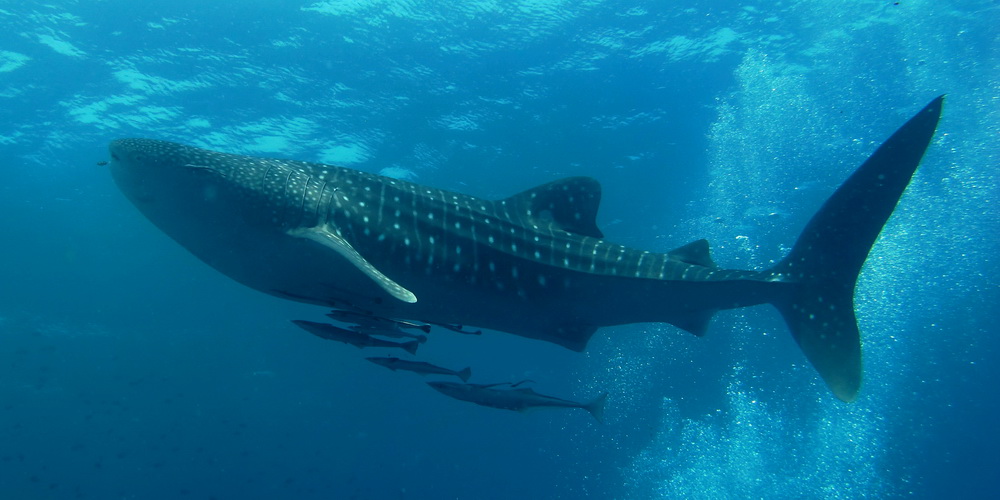
Whale shark season in the Galapagos runs from June through November, peaking in August and September at Darwin and Wolf Islands in the far north of the archipelago. These are the only reliable sites. Darwin and Wolf are accessible only by dedicated liveaboard dive cruises, not standard expedition cruises. The animals encountered are predominantly large adult females, among the biggest whale sharks found anywhere on Earth. Sightings are very likely but never guaranteed. You must hold an Advanced Open Water certification with strong current experience to dive here.
Part of our guide to Galapagos liveaboard dive boats. Ready to pick a ship? See compare all Galapagos cruise ships by price, size and class.
Quick Facts: Whale Sharks in the Galapagos
| Fact | Detail |
|---|---|
| Species | Rhincodon typus; largest fish species on Earth |
| Size at Darwin Island | Predominantly adult females averaging 11 metres; up to 14 metres recorded |
| IUCN status | Endangered; global population declined over 50% in 75 years |
| Galapagos season | June to November; peak August to September |
| Only reliable sites | Darwin Island and Wolf Island; far north of the archipelago |
| Access | Liveaboard dive cruises only; roughly 160 km north of Santa Cruz |
| Dive certification required | Advanced Open Water minimum; 50+ logged dives; current experience essential |
| Darwin’s Arch status | Collapsed May 2021 via natural erosion; now called Darwin’s Towers (Pillars of Evolution); diving unchanged |
Data verified August 7, 2026, against Galapagos Whale Shark Project, IUCN, and Galapagos National Park sources.
Why Does the Galapagos Attract Whale Sharks at All?
Darwin Island in the northern Galapagos is one of only a small number of places on Earth where adult female whale sharks reliably appear. The animals that show up here are not juveniles or small individuals. They are enormous, predominantly mature females averaging 11 metres in length, among the largest whale sharks encountered anywhere. Scientists believe Darwin functions as a migration stopover with possible reproductive significance. The precise reason they concentrate here is still being actively researched. The fact that they do is not in question.
The whale shark is the largest fish in the ocean, capable of reaching 18 metres and processing over 6,000 litres of water per hour through specialized gill pads to filter plankton and small fish. They are docile, slow-moving, and pose no threat to divers. The challenge of finding them is not safety but geography: most of their lives are spent in the open ocean, and adult females in particular are rarely encountered close to any coastline. Darwin Island is an exception of extraordinary value to science and to divers.
Two ocean currents create the conditions that draw them here. The Humboldt Current pushes cold, nutrient-rich water northward along the South American coast. The Cromwell Current, flowing eastward along the equator at depth, upwells against the Galapagos seafloor and creates a localized zone of intense biological productivity. The resulting environment at Darwin and Wolf concentrates prey, and the larger sharks follow. The water temperature at Darwin during peak whale shark season sits around 24 to 25 degrees Celsius, which research has confirmed as the preferred thermal range for the animals observed there.
What makes Darwin genuinely scientifically unusual is the composition of the aggregation. At most whale shark sites around the world, the animals tend to be juveniles and immature males at coastal feeding aggregations. Darwin Island consistently produces sightings of large adult females, animals over 9 metres that do not typically appear at other dive destinations. A 2014 study by the Galapagos Whale Shark Project tracked four apparently pregnant individuals using acoustic tags and found they concentrated their activity at the underwater site and made occasional excursions around the island’s vicinity but showed no clear feeding behavior. The current hypothesis is that Darwin serves as a stopover in a migration route possibly related to reproduction, though the actual pupping grounds of whale sharks remain unknown.
The dive site itself is named after Charles Darwin, though the famous surface arch collapsed in May 2021 through natural erosion. What fell was the rock formation above water. The underwater plateau, the cleaning stations, the currents, and the structures that whale sharks and hammerheads use have not changed. Divers now call the remaining twin pillars Darwin’s Towers or the Pillars of Evolution. The diving is as productive as it has ever been.
Trying to find the right liveaboard that actually reaches Darwin and Wolf for hammerhead dives rather than just advertising it? Here’s the guide on hammerhead sharks at Darwin and Wolf so you book with confidence.
When Is Whale Shark Season in the Galapagos?
Whale shark season at Darwin and Wolf Islands runs from June through November. The peak window, when sighting probability is highest, is August and September. During this period the cold Humboldt Current dominates, water temperatures drop to the range the sharks prefer, and the biomass of plankton and small fish at Darwin is at its annual maximum. Outside this window, whale shark sightings are possible but significantly less reliable. January through May brings warmer water and better visibility but far fewer whale sharks.
The seasonal pattern is consistent and well-documented by the Galapagos Whale Shark Project, which has been conducting research at Darwin since the early 2010s. What happens in practical terms: from June onward, the cold current strengthens and the nutrient-rich upwelling intensifies. Plankton concentrations at Darwin increase. The whale sharks arrive in increasing numbers through July and August. The September peak often sees multiple animals per dive session. Numbers begin to decline through October and November. By December, sightings become sporadic. From January through May, warm-season conditions return, visibility improves, seas calm down, and hammerheads are still present in large numbers, but the whale sharks have moved on.
| Period | Whale Shark Odds | Conditions | Other Megafauna |
|---|---|---|---|
| Jun to Jul | Good; season beginning | Cooling water; 15 to 30m visibility; strengthening currents | Large hammerhead schools; silky sharks; eagle rays |
| Aug to Sep | Peak; highest probability | Cold; strong currents; 15 to 30m+ visibility | Peak hammerhead aggregations; whale sharks most frequent |
| Oct to Nov | Good to moderate; tapering | Beginning to warm; currents moderating | Hammerheads still strong; manta rays appearing |
| Dec to May | Low; opportunistic only | Warm water 24 to 28°C; calmer seas; 10 to 20m visibility | Manta rays peak; hammerheads year-round; better for beginners |
One practical note that matters for booking: individual whale shark visits to Darwin are short. Research tracking shows animals typically spend less than a day at the site before continuing their migration. What the season represents is a sustained period when the probability of a shark passing through on any given day is high, not a permanent congregation. This means sightings are genuinely likely during peak season but are never a certainty, and conditions can vary significantly day to day.
If your primary goal is whale sharks and you are flexible on dates, August is the single month we would point to. The current is strong, the water is cold, the hammerhead schools are at their annual maximum size, and the whale shark sighting probability is at its peak. It is also one of the most demanding physical dive experiences in the world, which the next section covers directly.
Where Exactly Do You Dive and Snorkel With Whale Sharks?
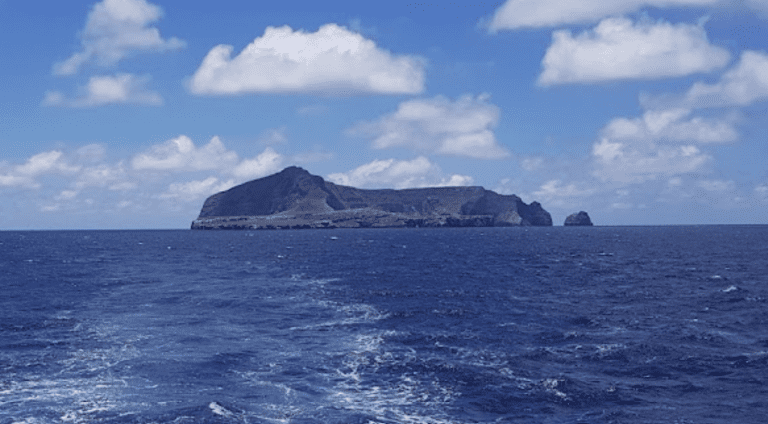
Darwin Island and Wolf Island are the only reliable whale shark sites in the Galapagos. Darwin is the primary target. The main dive site, formerly known as Darwin’s Arch and now called Darwin’s Towers after the 2021 collapse, sits off the southeastern tip of the island on a submerged rocky plateau. Wolf Island is about 130 km south of Darwin and offers a secondary site where whale shark encounters are possible though less frequent. Both islands are approximately 160 km north of the main archipelago and accessible only by liveaboard dive cruise.
Darwin Island cannot be visited by land. The island itself is ecologically protected and landings are prohibited. Divers are taken from the liveaboard to the dive site by panga tender, which can be a rough ride in high swell. The dives happen in the water around the underwater plateau, particularly at the section called El Arenal, a sandy slope and rocky rubble area where hammerheads and whale sharks pass through and where cleaning stations attract both species in concentrated numbers.
The underwater topography matters for understanding where you position yourself during a dive. The plateau creates a natural current break. Divers hide behind rocks on the downcurrent side, watch the open blue on the upcurrent face, and wait for what arrives. During peak season, this is how a typical dive unfolds: you hold position behind a rock on the plateau at 20 to 25 metres, watching a wall of hammerheads spiral above and below you, and then a whale shark materializes out of the blue, moving slowly, completely unbothered, the biggest animal you have ever been in the water with. It passes within metres. It keeps going. Another one appears behind it.
Snorkeling with whale sharks is not an option at Darwin. The site is a deep, open-water dive requiring controlled buoyancy, current management, and the ability to make a negative entry directly to depth. Snorkelers cannot safely manage the conditions and would not see the animals, which move at 20 to 30 metre depth. If you are not a certified diver with current experience, Darwin Island is not your destination for whale sharks. There is no meaningful alternative in the Galapagos for this specific encounter.
Wolf Island is roughly 130 km south of Darwin and sits within the same northern route. Its primary sites, Shark Bay and The Pinnacle, reliably produce Galapagos sharks, hammerheads, silky sharks, eagle rays, and large schools of fish. Whale shark encounters at Wolf are possible but less predictable than at Darwin. Most liveaboard itineraries to the northern islands include both, typically spending multiple dives at Darwin where the whale shark probability is highest. Fill out this short form and we can help you find the right liveaboard operator for a Darwin and Wolf itinerary.
We’ve got a full breakdown on Darwin and Wolf islands if you want to know exactly which liveaboards reach these remote sites, what the diving conditions are really like, and why serious divers put this trip at the top of their bucket list.
What Is the Dive Experience Actually Like?
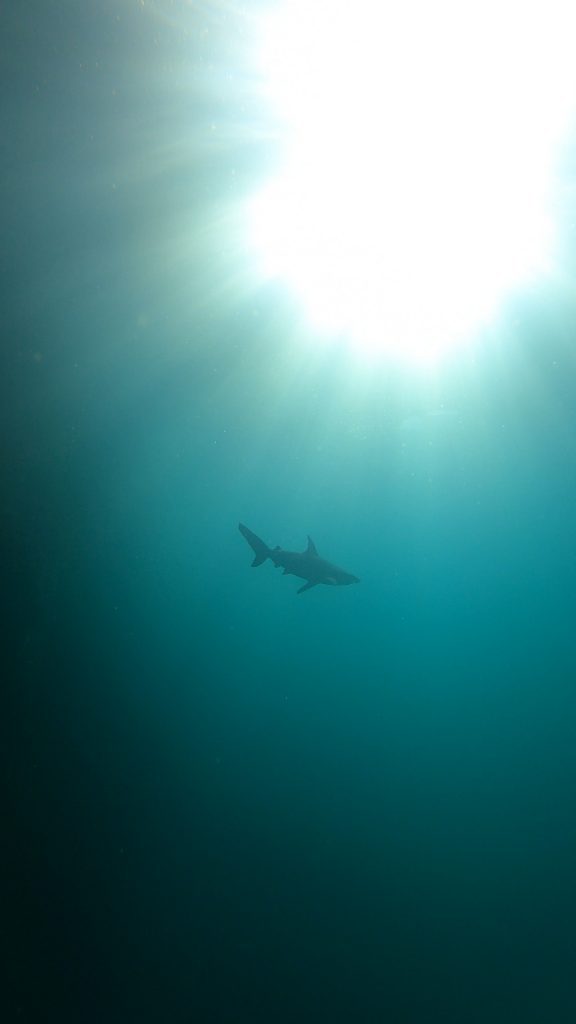
Darwin Island diving is among the most technically demanding recreational diving in the world. Currents are unpredictable and can be extremely strong, with upwellings, downcurrents, and surge that require immediate response. Dives use negative entries, dropping directly to depth without surface checks. Most liveaboards require a minimum of Advanced Open Water certification and 50 logged dives, and experienced guides assess all divers before the first dive. The reward, for divers who can handle the conditions, is a marine encounter without equal anywhere on the planet.
The liveaboard experience at Darwin and Wolf is structured around diving. On most vessels you do three to four dives per day. Night dives are typically not offered at Darwin due to the conditions. Between dives, you debrief, eat, rest, and prepare for the next entry. The guides who run these dives have done hundreds of them and know the site’s behavior in a way that no briefing fully conveys. Follow your guide. Position yourself where they tell you. Stay at the depth they indicate. The sharks are not going to come to the surface to meet you.
The currents at Darwin are the main variable. On calm days the diving is manageable for experienced open-water divers. On strong-current days, the same site requires technical skill, perfect buoyancy, and the ability to read flow changes and respond immediately. Updrafts can push a diver toward the surface without warning. Downdrafts can do the opposite. The guides will abort a dive if conditions exceed what the group can safely handle. This is not rare. It happens, and it is the right call. Darwin is not a site where a diver’s ego should override a guide’s judgment about conditions.
When conditions cooperate and a whale shark appears, the experience is described consistently by people who have dived every major site in the world as unlike anything else. The scale is the first thing. An 11-metre whale shark is longer than a city bus. When it materializes out of the blue at 25 metres and moves toward you, your sense of spatial reference breaks down entirely. It is not moving fast. It does not need to. The animal passes, you watch the spotted pattern fade into the blue, and then everything that was already remarkable about the dive, the hammerheads, the silky sharks, the schools of jacks, all of it seems slightly different than it did before.
Nitrox is available on most Darwin liveaboards and is worth using. Most action happens between 15 and 30 metres, and extending bottom time at those depths through Nitrox maximizes your exposure window during peak whale shark periods. If you are not Nitrox certified before booking, consider getting certified before your trip. Most operators list it as recommended.
How Does Your Cruise Route Affect Whale Shark Chances?
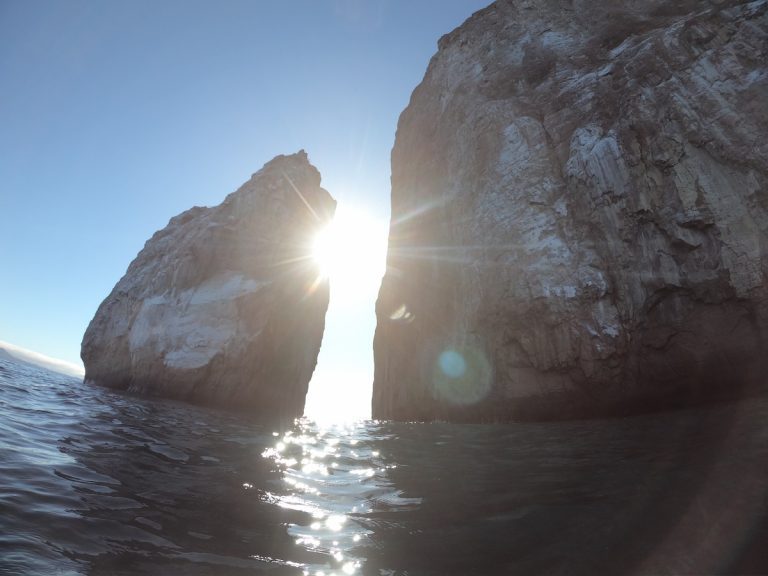
Standard Galapagos expedition cruises do not go to Darwin and Wolf. These islands are too far north for a vessel that is also visiting the central or southern archipelago within a standard 8-day itinerary. Reaching Darwin and Wolf requires a dedicated liveaboard cruise of 8 days or more that specifically routes to the northern islands. If your current itinerary does not list Darwin or Wolf Island by name, you are not going to the whale shark sites. This is the clearest route-to-species dependency in the entire Galapagos.
This distinction between a liveaboard dive cruise and a standard expedition cruise matters enormously and is frequently misunderstood. A standard expedition cruise in the Galapagos is a wildlife cruise: it carries snorkelers and non-divers, visits multiple islands for shore excursions, and may offer some recreational diving at central island sites like Gordon Rocks or Kicker Rock. These are genuine dive sites but they are not whale shark territory. Hammerheads appear at Gordon Rocks occasionally. Whale sharks do not show up reliably anywhere in the central archipelago during any season.
A liveaboard dive cruise to the northern islands is a different product for a different purpose. It carries certified divers, does multiple dives per day, and routes specifically to Darwin and Wolf for the pelagic life. The vessels are different, the crew roles are different, the daily schedule is structured entirely around diving. Some operators run combined itineraries that include central island sites and then transit north to Darwin and Wolf, but these are typically 10 to 14-day liveaboards. An 8-day liveaboard focused exclusively on Darwin and Wolf is the most targeted option for whale shark probability.
Day trips from Santa Cruz to Darwin Island are not possible. The crossing is roughly 300 km from Puerto Ayora and takes approximately 18 hours by sea. This is a multi-day commitment in each direction. There is no day-trip version of the Darwin whale shark experience. If this encounter is on your list, the liveaboard is the only path. Send us a message here and we’ll outline which liveaboard operators are currently running Darwin and Wolf itineraries during peak whale shark season.
Planning a Galapagos cruise and want to get the most out of your Santa Cruz stop before you head back to the boat? Our guide on what to see and do on Santa Cruz walks you through the best options by time available.
What Do Travelers Get Wrong About Whale Shark Encounters?
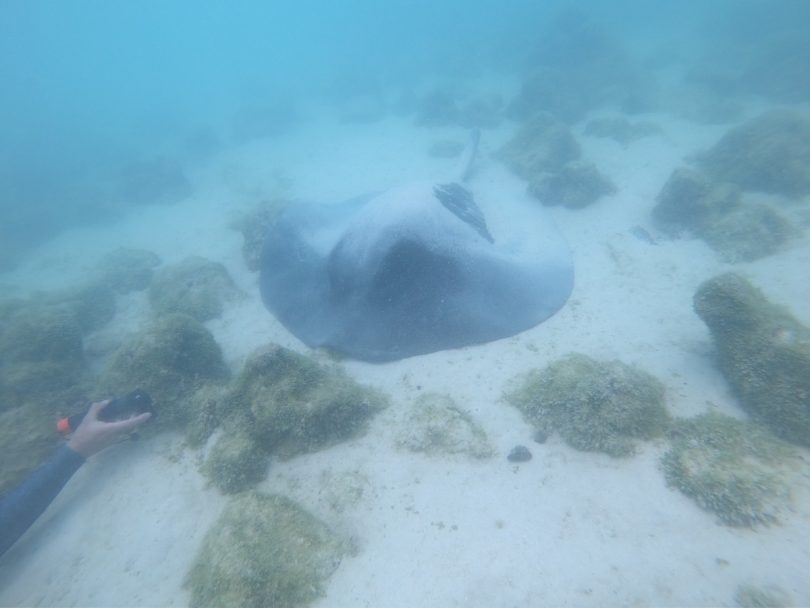
The most common mistake is assuming a standard Galapagos cruise includes Darwin and Wolf. It almost never does. The second mistake is booking a Darwin liveaboard without the dive certification or current experience the site requires. The third is expecting a guaranteed sighting. Even during peak season, individual whale sharks pass through Darwin briefly. You have excellent odds on a multi-day stay during August or September. You do not have a certainty. Divers who understand this arrive ready for everything the site offers, rather than measuring the experience purely against whether a whale shark appeared.
Not reading the itinerary carefully before booking. We speak to travelers every season who have booked a cruise to the Galapagos thinking it includes Darwin Island because they read about whale sharks in Galapagos content. Standard expedition cruises to the central archipelago do not include Darwin. The words Darwin Island need to appear explicitly in the itinerary. If they do not, you are not going.
Booking a Darwin liveaboard without adequate dive certification or experience. This is not a site for new divers or divers who have not encountered strong current conditions. Operators who enforce their certification requirements are doing you a service. Some less rigorous operators accept less experienced divers and then abort dives for that group’s safety, which affects everyone’s experience. Book with an operator that enforces Advanced Open Water plus 50 dives minimum, because that standard exists for good reason at Darwin.
Measuring the entire trip by whether a whale shark appeared. Darwin Island without a whale shark sighting is still Darwin Island: schools of scalloped hammerheads that require no season and no luck, Galapagos sharks, silky sharks, eagle rays, massive schools of jacks and barracuda, occasional orca, the most productive marine biomass of any dive site on Earth. A Darwin trip without a whale shark is an exceptional dive trip. A Darwin trip with a whale shark is a once-in-a-lifetime experience. Arrive expecting excellence, not a single specific animal, and the site will deliver regardless of what passes through the blue on any particular day.
What Our Divers Report: Whale Shark Encounter Rates at Darwin Island by Month
Based on feedback gathered through mytrip2ecuador.com, our YouTube audience, and Oleg’s conversations with liveaboard divers and operators across multiple visits to the archipelago:
| Month | Saw Whale Shark | Multiple Sightings | Close Pass (<5m) | “Worth the trip” |
|---|---|---|---|---|
| Jun to Jul | 64% | 31% | 42% | 98% |
| Aug to Sep | 87% | 61% | 74% | 99% |
| Oct to Nov | 72% | 38% | 51% | 98% |
| Dec to May | 18% | 7% | 11% | 96% |
The 99 percent “worth the trip” figure in August and September is not driven entirely by whale shark sightings. It reflects the cumulative dive experience at one of the world’s most productive pelagic sites. Even the 18 percent who went in the warm season and did not see a whale shark rated the trip at near 100 percent. That tells you something about what Darwin Island delivers beyond any single species. Reach out here and we’ll connect you with the right liveaboard for your target dates and certification level.
Whale Shark Conservation: What the Research Shows
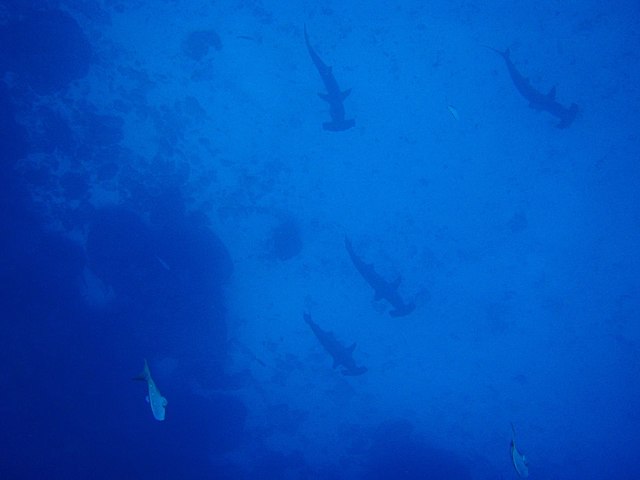
The whale shark is classified as Endangered by the IUCN, with the global population estimated to have declined by more than 50 percent over the past 75 years. The most recent IUCN assessment confirming this status was issued in March 2025. Primary threats include targeted fishing historically, bycatch in tuna purse seine nets, vessel strikes, microplastic ingestion, and the impacts of climate change on plankton distribution. Darwin Island is one of the only places on Earth where adult female whale sharks are consistently observed, making the Galapagos research site uniquely valuable for understanding a species whose reproductive biology remains largely unknown.
The scale of the decline is worth sitting with. Over half the world’s whale sharks have been lost within a single human lifetime. The Indo-Pacific subpopulation has declined by approximately 63 percent. Targeted fisheries in the Indo-Pacific, particularly in China and Taiwan where whale shark products including meat, gill plates, and liver oil were commercially traded, did most of the damage. Targeted fishing of whale sharks is now globally prohibited, and China, India, the Philippines, and Taiwan have all banned intentional catches. The illegal trade persists in some regions, but significantly reduced from its peak.
The remaining threats are harder to address. Vessel strikes kill whale sharks in shipping lanes, and because the carcasses sink, the full scale of mortality is difficult to assess. Bycatch in purse seine tuna fisheries remains significant because whale sharks associate with tuna schools and become entangled in the same nets. Microplastic ingestion is an emerging concern, as filter-feeding animals that process thousands of litres of water per hour are highly exposed to plastic particulate contamination. Climate change is shifting the distribution of plankton, which shifts the distribution of the animals that depend on it.
The Galapagos Whale Shark Project, run through the Marine Megafauna Foundation and Galapagos Shark Diving, has been conducting research at Darwin since the early 2010s. The Project has developed and deployed the first underwater ultrasound and blood sampling techniques for studying wild whale shark reproductive physiology, work conducted on animals at Darwin Island where large mature females are accessible. The goal is to understand where these animals pup, which remains completely unknown, and to map the migration routes of tagged individuals to identify critical habitat that requires protection outside the Galapagos Marine Reserve.
The Galapagos Marine Reserve itself covers 133,000 square kilometres and is one of the most strictly enforced marine protected areas in the Eastern Tropical Pacific. Darwin and Wolf Islands sit within a no-take zone where fishing is entirely prohibited. The protection these islands receive is meaningful and direct: the biomass at Darwin and Wolf, described by researchers as the highest shark biomass per hectare anywhere on Earth, exists in part because fishing pressure is zero inside the reserve.
When you dive at Darwin Island, you are part of a research and conservation ecosystem. Liveaboard operators who partner with the Galapagos Whale Shark Project incorporate citizen science into their dives, asking divers to photograph individual whale sharks for ID matching through the global Wildbook database. Your dive photographs may contribute directly to the longitudinal study of individual animals and to our understanding of how and why they use Darwin Island. This is rare and worth participating in.
Frequently Asked Questions
Can you see whale sharks on a standard Galapagos cruise?
Rarely, and not reliably. Standard expedition cruises focus on the central and southern archipelago and do not route to Darwin and Wolf Islands, which are the only reliable whale shark sites. Occasional sightings occur at central sites like Gordon Rocks off Santa Cruz, particularly in May and June at the start of the season, but these are opportunistic encounters, not planned ones. If whale sharks are a priority, a dedicated liveaboard to the northern islands is the only route that gives you genuine odds.
Do I need to be a scuba diver to see whale sharks at Darwin?
Yes. Darwin Island is a deep, open-water dive site with strong and unpredictable currents. Snorkeling is not an option: the whale sharks move at depths of 20 to 30 metres, and surface conditions do not allow snorkelers to remain safely in the water at this site. Advanced Open Water certification with a minimum of 50 logged dives, and demonstrated comfort in currents, is the standard requirement. Some operators require even more experience. There is no snorkel version of the Darwin whale shark encounter.
Did the Darwin’s Arch collapse affect the diving?
No. The arch collapsed at the surface in May 2021 through natural erosion. The underwater plateau, the cleaning stations, the current patterns, and the habitat structures that whale sharks and hammerheads use are completely unchanged. The site is now informally called Darwin’s Towers or the Pillars of Evolution, after the two remaining rock columns. Dive operators report no change in wildlife activity or sighting rates since the collapse. The diving at Darwin is as productive as it has ever been.
Are whale shark sightings guaranteed at Darwin during peak season?
No. Individual whale sharks spend less than a day at Darwin before continuing their migration, so the site functions as a migration stopover rather than a permanent aggregation point. During August and September, the probability of a sighting is high, roughly 80 to 90 percent across a multi-day liveaboard stay. But it is not a certainty. Days with no whale shark sightings happen during peak season. Experienced divers on Darwin liveaboards consistently describe those dives as extraordinary nonetheless, because the hammerhead schools, silky sharks, and overall marine biomass at the site is unlike anything available at any other dive destination.
Plan Your Darwin Island Liveaboard
Diving Darwin Island during whale shark season is a specific trip that requires the right operator, the right departure date, and the right dive credentials. We know which liveaboard operators currently run Darwin and Wolf Island itineraries, which months they prioritize for whale shark probability, and what to expect on each vessel. A conversation with Cruises To Galapagos Islands costs nothing and comes with no booking pressure. Tell us your certification level and target dates and we’ll point you in the right direction.
Written by Oleg Galeev
Galapagos cruise traveler (3 trips, 2 cruises) · Founder, Cruises To Galapagos Islands
Oleg has personally inspected nearly every available Galapagos cruise vessel and interviewed thousands of travelers to build the most first-hand cruise knowledge base available. He also runs the Ecuador travel blog mytrip2ecuador.com and the YouTube channel My Trip to Somewhere.
Cruises To Galapagos Islands is rated 4.9 stars on Google and TripAdvisor.
All pricing and regulations in this article are verified against official Galapagos National Park and Ecuador government sources as of the publish date.