
TL;DR
The Galapagos is one of the most genuinely accessible bucket-list destinations for retirees. You unpack once, the vessel carries you between islands while you sleep, every excursion is guided, and the wildlife comes to you rather than requiring you to pursue it. The physical baseline is modest: ability to walk 1 to 2 km on uneven terrain and manage a panga ladder transfer. Retirees who meet that baseline consistently rate the Galapagos among the best trips of their lives. The right formula is a mid-range or first-class catamaran on an eastern itinerary in the warm season December through May, with a lower-deck mid-ship cabin and comprehensive travel insurance including medical evacuation coverage.
Quick Facts: Galapagos Cruise Planning for Retirees
| Detail | What Retirees Need to Know |
|---|---|
| Park entry fee | $200 USD cash per adult on arrival – Verified July 30, 2026 |
| Transit Control Card | $20 per person online before departure |
| Travel insurance | Required for Galapagos entry; must include medical evacuation; evacuation to mainland costs $10,000 to $25,000+ |
| Physical baseline required | Walk 1 to 2 km on uneven terrain; manage panga ladder transfer (roughly 1 meter step with crew assistance) |
| Best cruise class | Mid-range to first-class; private cabin, en-suite bathroom, reliable AC; catamaran hull preferred |
| Best itinerary | Eastern (Santa Cruz, San Cristobal, Espanola, Floreana); calmest seas; most accessible terrain |
| Best season | December through May (warm season); calmest seas; warmest water; most comfortable conditions |
| Best cabin | Lower deck, mid-ship; least motion; fewer stairs; request at booking |
| Quito altitude | 2,850 meters (9,350 feet); spend 1 to 2 nights to acclimatize before flying to Galapagos; consult doctor if cardiac or respiratory conditions |
| Medical facilities on islands | Basic clinics on Santa Cruz, San Cristobal, Isabela; serious cases require mainland evacuation |
Why Is the Galapagos an Ideal Destination for Retirees?
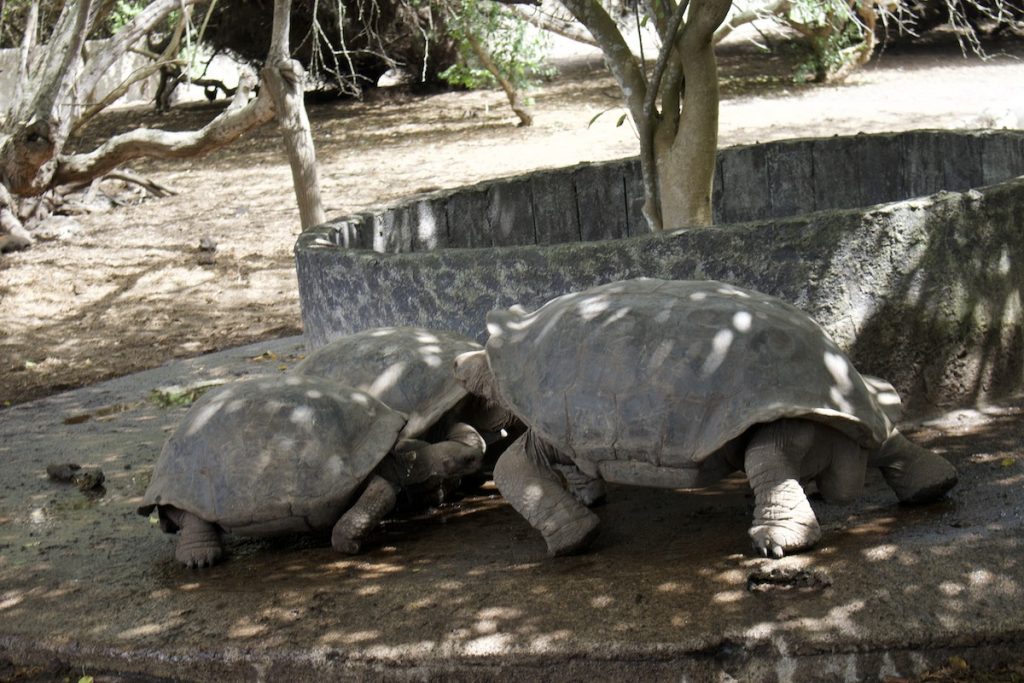
The Galapagos fits the way retirees actually want to travel better than almost any other major destination. You unpack once and the vessel moves between islands overnight. Every excursion is guided by a certified naturalist, so there is no need to navigate independently or research sites in advance. The wildlife does not require athletic pursuit; a sea lion colony is on the beach, a giant tortoise is on the trail, a blue-footed booby is performing its courtship dance two meters off the path. The experience is structured, safe, all-inclusive, and set inside one of the most extraordinary natural environments on earth. Retirees with the time and resources to spend a week properly exploring the archipelago consistently report it as among the most meaningful trips of their lives.
The other practical advantage is the unpack-once format. Most retirees who have done enough travel know how much they dislike moving hotels every day or two. A Galapagos cruise eliminates that entirely. Your cabin is your base for 7 or 8 nights. Your luggage stays put. The scenery changes while you sleep. This is a deeply appealing structure for travelers who have graduated from the scramble of trying to see everything quickly and now prefer depth over volume.
The educational dimension also resonates strongly with retirees. A well-qualified Level III naturalist guide transforms every landing from pleasant wildlife viewing into a genuine science and natural history lecture delivered in the field, with the subject matter directly in front of you. Darwin’s theory of evolution stops being an abstraction when you are standing in front of three species of finch that evolved different bill morphologies to exploit different food sources on the same island. This kind of layered learning experience is exceptionally well-suited to travelers who have the patience, curiosity, and background knowledge to fully appreciate what they are seeing.
If you want a specific cruise recommendation calibrated to your mobility level, comfort preferences, and travel dates, we match retirees to the right vessel and itinerary every week. We are rated 4.9 stars on Google and TripAdvisor. Send us a message here and we will give you a clear, honest recommendation.
The Galapagos is the ultimate wildlife destination but the cruise you pick determines which species you actually encounter. Here’s a guide to the best Galapagos cruise for wildlife enthusiasts so you book the itinerary that delivers the encounters worth traveling for.
What Cruise Class and Vessel Type Suits Retirees Best?
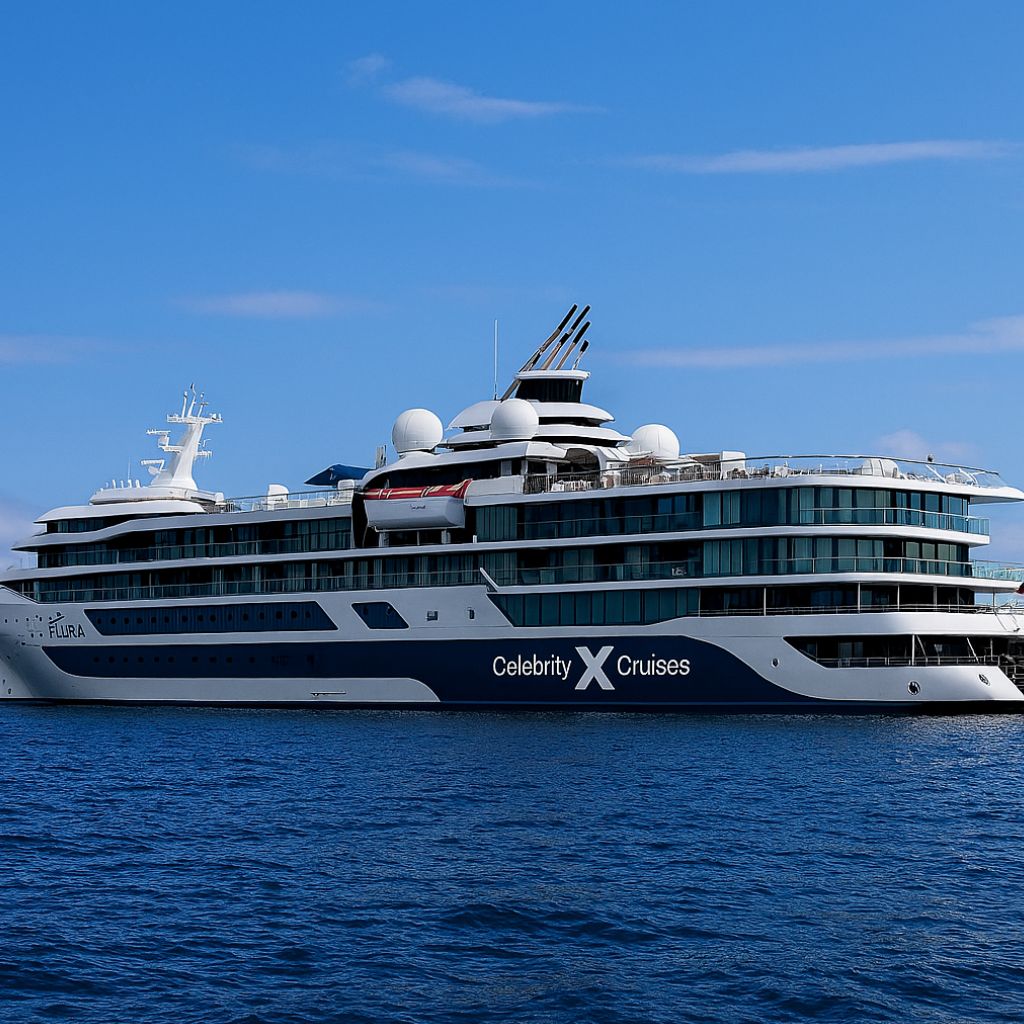
Mid-range to first-class vessels deliver the best experience for most retirees. At this tier, private en-suite cabins are standard, meals are included and varied, air conditioning is reliable, and the guide quality is strong without the ultra-premium price of the luxury tier. A catamaran hull provides meaningfully more stability than a monohull during overnight crossings, which reduces the chance of a disrupted night’s sleep from sea motion. For retirees with budget flexibility, a first-class vessel adds private balconies on better cabin categories, stronger guide depth, and a slightly more comfortable onboard environment without requiring the significant spend of a luxury departure.
The cabin category matters more for retirees than for any other traveler demographic. Lower-deck mid-ship cabins experience the least motion on any vessel and require the fewest stair climbs during the normal daily routine. Many Galapagos cruise vessels do not have elevators, so a cabin that requires descending two or three flights of stairs multiple times per day becomes a genuine daily friction point for travelers with knee or hip concerns. Request a lower-deck mid-ship cabin specifically at the time of booking and confirm the vessel’s stair situation in advance. This is a routine question that any reputable operator will answer directly.
Larger vessels of 40 to 100 passengers offer more onboard stability during crossings and slightly more social space and amenities, which some retirees prefer. The trade-off is the zodiac rotation system: larger vessels rotate groups of 16 in sequential zodiac shifts rather than landing everyone simultaneously. For travelers whose primary priority is comfort and stability over scheduling flexibility, larger vessels like the Santa Cruz II or Celebrity Flora are worth considering. For travelers who value guide intimacy and site timing flexibility, a 16 to 20-passenger first-class vessel is the better fit.
| Class | 8-Day Cost Per Person | Retiree Suitability | Key Features |
|---|---|---|---|
| Budget | $2,000 to $3,500 | Limited; basic cabins may lack AC reliability; guide quality variable | Same wildlife access; older vessels; simpler food |
| Mid-range | $3,500 to $6,000 | Good; comfortable private cabins; en-suite bath; reliable AC; catamaran options available | Best value for most retirees; strong guide quality |
| First-class | $5,000 to $8,000 | Excellent; private balconies on some vessels; Level III guides; strong snorkel and active programs | Recommended for retirees with budget flexibility |
| Luxury | $8,000 to $15,000+ | Outstanding; butler service; gourmet food; strongest guide depth; ideal for milestone trip | Best for retirees celebrating a major occasion or for whom onboard comfort is as important as wildlife |
Identifying which specific mid-range and first-class vessels in the 2026 fleet have lower-deck cabin options, catamaran hulls, and strong accessibility support takes research beyond what brochures provide. Reach out here and we will identify the best options for your specific needs and travel dates.
We’ve got a full breakdown on the best Galapagos cruise for budget travelers if you want to know exactly which vessels, itineraries, and booking strategies give you the most Galapagos experience for the least spend.
Which Itinerary Is Best for Retirees?
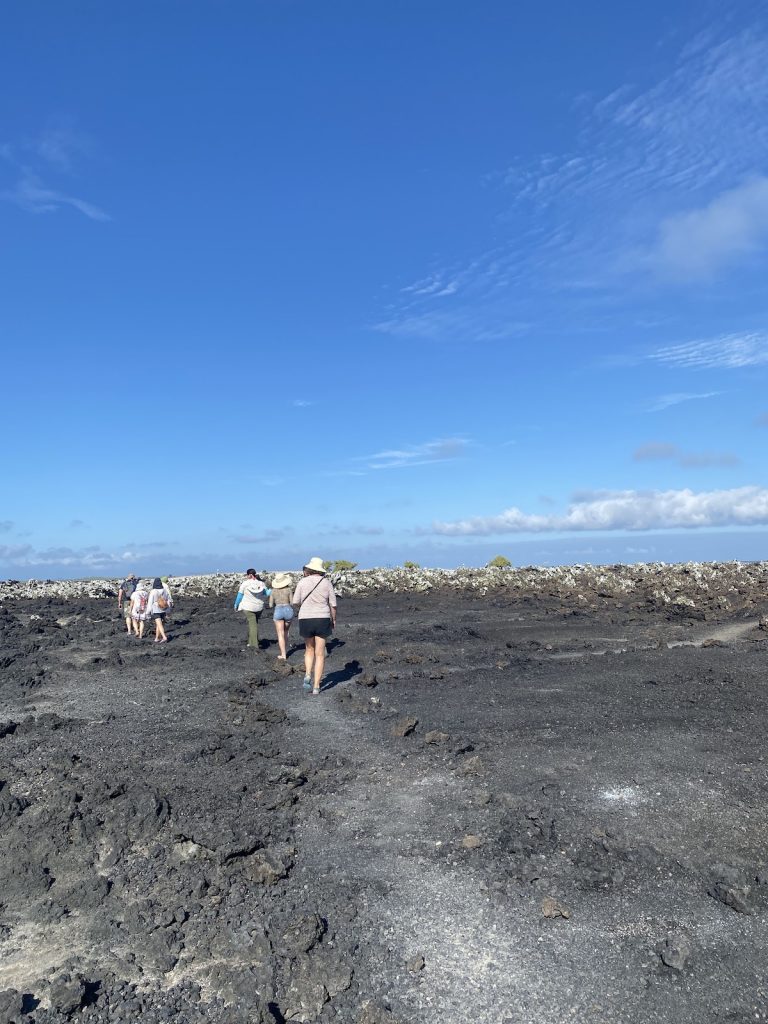
The eastern 8-day itinerary covering Santa Cruz, San Cristobal, Espanola, and Floreana is the best choice for most retirees. The crossings between eastern islands are shorter and calmer than on the western or northern routes. The terrain at most eastern sites is more accessible: North Seymour’s flat 2-kilometer loop, Gardner Bay’s long sandy beach walk, the Charles Darwin Research Station’s paved pathways, and Bachas Beach’s flat shoreline are all genuinely comfortable for travelers who walk at a moderate pace. The eastern itinerary also covers the most iconic Galapagos experiences, the giant tortoises, sea lions, blue-footed boobies, and waved albatross in season, without requiring the physical demands of the more exposed western sites.
The western itinerary, covering Isabela and Fernandina, is the most physically demanding circuit in the archipelago. The Bolivar Channel between Isabela and Fernandina produces the roughest sea conditions in the islands, particularly from August through October. The terrain at Punta Espinosa on Fernandina is loose cobble lava that requires careful footing. The Sierra Negra volcano hike on Isabela is 24 kilometers round trip with significant elevation gain. None of this is inaccessible to fit, active retirees, but it is not the right starting point for travelers who want to be comfortable and not challenged physically.
The full-archipelago 11 to 15-day combined itinerary is an excellent option for retirees with the time and energy for a longer voyage. It delivers the complete species inventory without rushing, allows rest time between more demanding sites, and gives the naturalist guide relationship the time to develop into something genuinely educational. Retirees who love natural history, have done one eastern trip, and want the complete Galapagos experience often find the longer combined voyage the most rewarding format available.
Some Galapagos cruises are built for observation and some are built for participation. Here’s the best Galapagos cruise for active travelers so you end up on the right one.
What Physical Demands Should Retirees Expect?
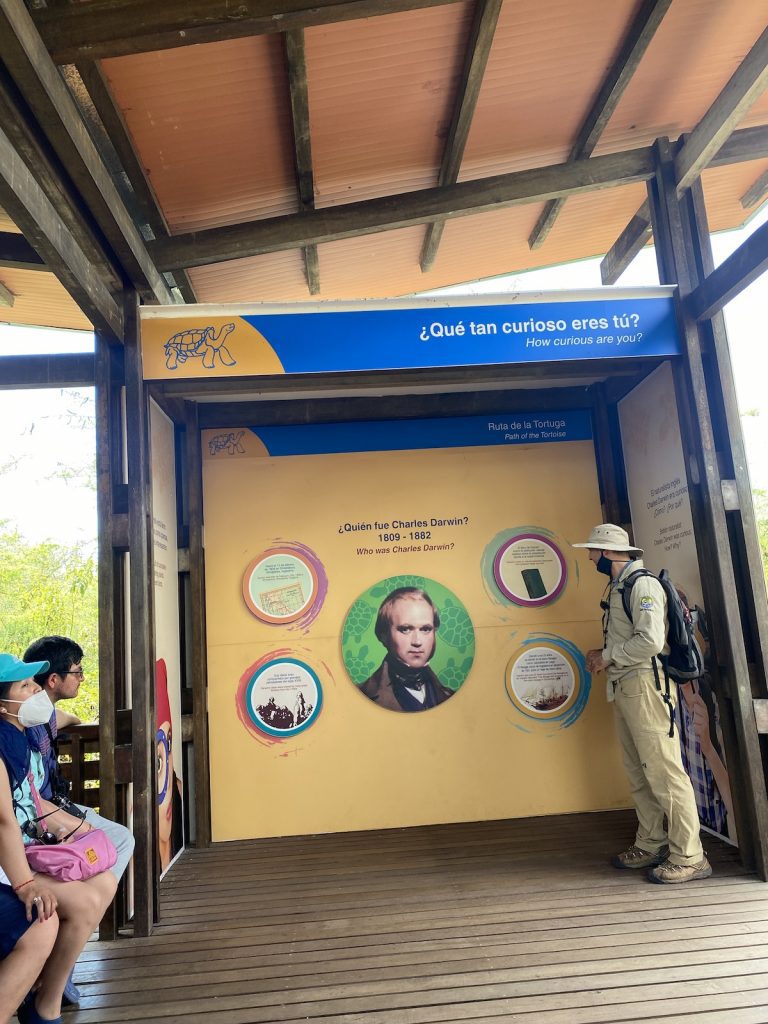
The honest baseline for a Galapagos cruise is the ability to walk 1 to 2 kilometers on uneven volcanic terrain including cobble lava, loose ash, wet sand, and muddy highland paths; manage a panga ladder transfer involving roughly one meter of stepping off a floating zodiac with crew assistance on both sides; and climb a short ladder from the water’s surface back onto the vessel after snorkeling. None of this is technical or requires athletic fitness. Travelers in their 70s and 80s complete these demands regularly with proper footwear and honest communication with the operator about their specific limitations.
The panga transfer is the physical step that most retirees underestimate before the trip. The zodiac (panga) pulls alongside the landing dock or shore, and passengers step across a short gap onto the platform with crew members holding both arms. At sea landings, the zodiac is moving gently with the swell and the step involves some timing and balance. It is not difficult for most travelers, but for anyone with significant knee or hip limitations, it deserves specific discussion with the operator before booking. Crew members are experienced at assisting passengers of all mobility levels, and the vessel captain is informed about any mobility considerations so the zodiac can be positioned for easiest access.
Trail surfaces are consistently uneven across the archipelago. The most accessible eastern sites, North Seymour, Bachas Beach, Charles Darwin Research Station, and Gardner Bay, are walkable for travelers who move at a modest pace with appropriate footwear. Trails in the Santa Cruz highlands require steadier footing on muddy paths. The Bartolome boardwalk is 372 wooden steps with handrails, comfortable for most travelers but meaningful for anyone with joint concerns. Punta Suarez on Espanola involves 2 to 3 kilometers of cobble lava walking, the most demanding terrain on the standard eastern itinerary. Knowing what each site requires and communicating your preferences to the guide in advance allows the experience to be calibrated properly.
What Retirees Tell Us After Their Galapagos Cruise
From the thousands of Galapagos travelers Oleg has interviewed through mytrip2ecuador.com and the YouTube channel, retirees are among the most enthusiastic post-trip groups and the most likely to say the trip exceeded expectations. The data below reflects aggregate feedback from travelers aged 60 and above.
| Finding | Result | Context |
|---|---|---|
| Retirees who said the Galapagos exceeded their expectations | ~86% | Among the highest post-trip satisfaction rates of any traveler demographic we track |
| Retirees who said the unpack-once format was a key reason the trip worked well | ~73% | Cited specifically as a reason they chose cruise over land-based travel |
| Retirees who said the panga transfer was easier than they expected | ~78% | Crew assistance at every landing cited as the reason concern was manageable |
| Retirees who chose a mid-range or first-class vessel and said it was the right call | ~82% | Budget vessel bookers were the least satisfied group among retirees |
| Retirees who would return to the Galapagos for a second cruise | ~67% | Most citing the western route or a longer combined itinerary as the goal |
What Is the Best Time of Year for Retirees to Visit?
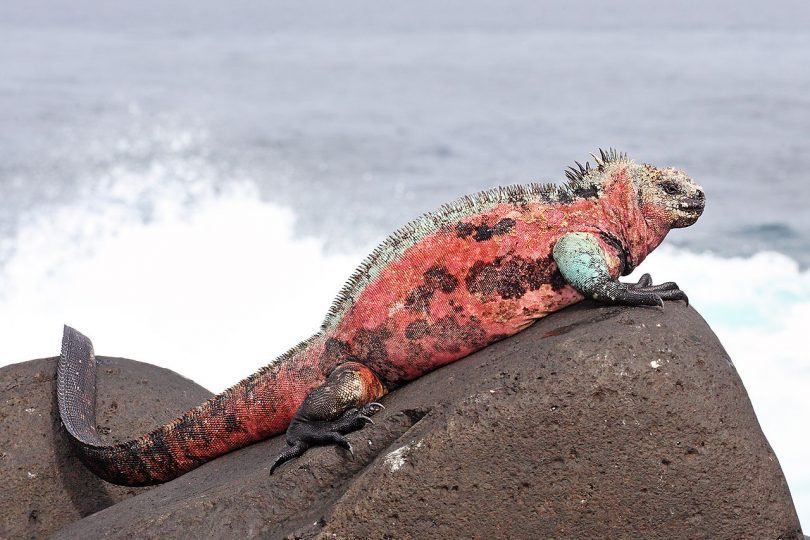
December through May, the warm season, is the most comfortable window for retirees. Seas are calmer, water is warmer for snorkeling, and the equatorial light and greener landscapes make the visual experience particularly beautiful. January through April is the warmest and calmest period of the year, with February specifically being the month with the lowest probability of rough crossings anywhere in the archipelago. For retirees who are cautious about seasickness or simply want the most comfortable sea conditions available, January through April is the optimal window.
April through June sits at a particularly good intersection of comfortable conditions and peak behavioral wildlife activity. The warm season is still present in April and May, keeping seas manageable, while the waved albatross has returned to Espanola for courtship from April onward. Blue-footed booby courtship displays peak across North Seymour and Espanola during this window. The marine iguanas on Espanola are in their vivid breeding coloration. The combination of comfortable sea conditions and high behavioral wildlife activity makes April and May a consistent recommendation for retirees who want the best of both.
The cool season from June through November brings rougher seas on some crossings, which is less comfortable for retirees who are sensitive to motion. July and August are also peak season with the highest demand and prices. September and October offer shoulder-season pricing at 15 to 20 percent below peak, which appeals to cost-conscious retirees who have flexible schedules, but the Humboldt Current conditions produce the roughest crossings of the year during these months. If traveling in the cool season, a catamaran hull and anti-nausea medication preparation are more important than in the warm season.
Not sure which months give you the best combination of wildlife activity, water visibility, and comfortable conditions on a Galapagos cruise? This breakdown on the best time of year to take a Galapagos cruise covers every season honestly.
What Health and Travel Insurance Considerations Matter for Retirees?

Travel insurance with medical evacuation coverage is mandatory for Galapagos entry and essential for any retiree traveling here. Medical facilities on the islands are limited to basic clinics on Santa Cruz, San Cristobal, and Isabela. Serious medical situations require evacuation to mainland Ecuador, which costs $10,000 to $25,000 or more. Retirees with pre-existing cardiac or respiratory conditions should specifically discuss coverage limits with their insurer before purchasing a policy; some plans exclude pre-existing conditions or impose age-based limits on evacuation coverage. Purchase insurance immediately after paying your cruise deposit, not after completing the trip planning.
Quito altitude is the health consideration most retirees do not anticipate. Quito sits at 2,850 meters, which is 9,350 feet above sea level, higher than many high-altitude destinations in the American West. Altitude sickness affects people unpredictably regardless of prior fitness level. Common symptoms are headache, fatigue, shortness of breath, and nausea. Spending one to two nights in Quito before flying to the Galapagos rather than arriving on the same day as the domestic flight gives the body time to begin acclimatizing. Retirees with cardiac or respiratory conditions should specifically discuss Quito’s altitude with their physician before booking the trip. Alternatively, routing through Guayaquil, which sits near sea level, eliminates the altitude concern entirely.
Medications deserve specific attention. All prescription medications should be brought in sufficient quantity for the full trip plus a buffer of several extra days for delays. Many common medications, particularly cardiac, blood pressure, and anticoagulant drugs, are not reliably available on the islands and may not be available in the correct formulations even on the mainland. Bring a written list of all medications with generic names and dosages, and keep medications in carry-on luggage rather than checked baggage in case of lost bags. Anti-nausea medication specifically for seasickness is worth bringing even if motion sickness has not been a problem in the past, since small vessel cruising can affect travelers who have never had issues on larger ships.
Worried about seasickness but don’t want it to stop you from doing the Galapagos? Our guide on the best Galapagos cruise for people who get seasick walks you through the ships and strategies that make the biggest difference.
What Are the Biggest Mistakes Retirees Make Booking a Galapagos Cruise?
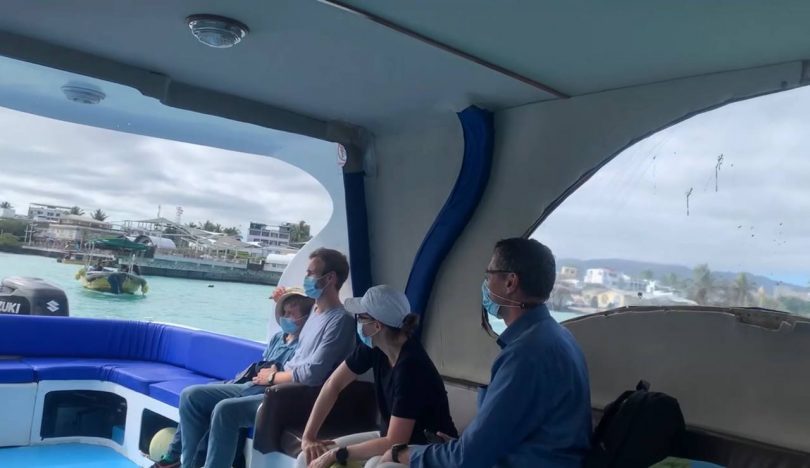
Five consistent mistakes appear among retiree bookings. The first is not requesting a lower-deck mid-ship cabin at booking time and discovering the cabin requires multiple stair climbs per day. The second is booking a western itinerary without understanding it is more physically demanding and has rougher sea crossings than the eastern route. The third is routing through Quito without building in acclimatization time and experiencing altitude sickness that affects the early days of the trip. The fourth is purchasing travel insurance that does not include adequate medical evacuation coverage for the islands’ remoteness. The fifth is booking a budget vessel to save money and finding the basic cabins, unreliable AC, and lower guide quality subtract from an experience they will not repeat.
The Quito altitude mistake is particularly easy to avoid and has a meaningful impact on the first two days of the trip if not addressed. A retiree who flies from sea level to Quito and then takes a domestic flight to the Galapagos the following morning is arriving at 2,850 meters after a long international flight, resting one night, and then descending to sea level again. Many travelers manage this fine. Others spend the first evening in Quito with a significant altitude headache that disrupts sleep and carries into the early cruise days. Spending two nights in Quito, taking it easy on the first day, and staying well hydrated addresses the acclimatization window adequately for most travelers.
The travel insurance gap is the most consequential mistake financially. A retiree who arrives at the Galapagos with insurance that covers up to $50,000 in medical expenses but does not include emergency evacuation discovers that a medical evacuation flight to mainland Ecuador alone can consume that entire amount without covering any treatment costs. Policies with explicit emergency evacuation coverage of at least $100,000 and ideally unlimited evacuation coverage are the appropriate standard for any traveler visiting a remote island destination, and this applies with particular force to retirees for whom unexpected health events are statistically more likely.
Frequently Asked Questions
Is the Galapagos suitable for travelers over 75?
Yes, provided the traveler can manage the physical baseline of 1 to 2 km walking on uneven terrain and the panga ladder transfer. Operators place no upper age limit on Galapagos cruise bookings. Travelers in their late 70s and 80s complete these trips regularly and report very high satisfaction. The key is honest communication with the operator about mobility and health considerations so the right vessel, cabin category, and itinerary can be matched. The guide is also informed of any limitations and calibrates the site experience accordingly.
Can retirees with mobility aids use a walker or cane on a Galapagos cruise?
A folding walking stick or trekking pole is practical and recommended for trails with uneven terrain. A full walker is difficult to manage on panga transfers and volcanic terrain. Retirees who rely on a walker for balance on flat surfaces are advised to discuss their specific situation with the operator before booking, because the trail surfaces and zodiac boarding requirements may be genuinely challenging. In some cases, a land-based Galapagos program on the inhabited islands provides a more suitable alternative, eliminating zodiac transfers while still delivering extraordinary wildlife encounters.
Do Galapagos cruises have medical staff on board?
Most small Galapagos cruise vessels do not carry dedicated medical personnel. The naturalist guide typically holds first aid certification, and some vessels carry basic medical supplies and an AED. For serious medical situations, the vessel radios the coast guard for evacuation to the nearest island clinic and from there to the mainland if required. This is why comprehensive travel insurance with medical evacuation coverage is not optional but essential for any Galapagos cruise passenger, particularly retirees.
Matching a retiree to the right Galapagos cruise means finding the right vessel class, the right cabin position, the right itinerary for their fitness level, and the right season for their comfort preferences. We do this every week and we know which vessels in the 2026 fleet have the right combination of accessibility, guide quality, and catamaran stability. We are rated 4.9 stars on Google and TripAdvisor. If you want a specific recommendation built around your health, comfort, and wildlife goals, get in touch here and we will give you something concrete and honest.
Written by Oleg Galeev
Galapagos cruise traveler (3 trips, 2 cruises) and Founder, Cruises To Galapagos Islands
Oleg has personally inspected nearly every available Galapagos cruise vessel and interviewed thousands of travelers. He also runs the Ecuador travel blog mytrip2ecuador.com and the YouTube channel My Trip to Somewhere.
Cruises To Galapagos Islands is rated 4.9 stars on Google and TripAdvisor.
All pricing and regulations verified against official Galapagos National Park and Ecuador government sources as of July 30, 2026.