Night Diving in the Galapagos: Liveaboard Guide
Quick Summary
Night diving in the Galapagos is one of the most unusual diving experiences on earth: bioluminescent plankton that turns the water into a field of moving stars, red-lipped batfish walking across the sand on their fins, sharks feeding in the beam of your torch, and Galapagos fur seals using your light as a hunting tool. It is available on liveaboard dive cruises only, at a small number of GNPD-permitted sites, and is optional rather than scheduled on most itineraries. The primary sites are the Wolf Island Anchorage and Fondeadero near Santa Fé. You must bring your own dive torch. Dive experience with night diving is required.
Part of our guide to Galapagos liveaboard dive boats. Ready to pick a ship? See Galapagos cruises by price, size and class.
Quick Facts: Night Diving in the Galapagos
| Detail | What to Know |
|---|---|
| Available on standard naturalist cruises? | No. Night diving is available on dedicated dive liveaboards only. |
| GNPD-permitted night diving hours | 6:00 p.m. to 10:00 p.m. in designated areas only. Outside these hours and sites it is not permitted. |
| Primary night dive sites | Wolf Island Anchorage (liveaboard-only, far north); Fondeadero near Santa Fé Island (central islands); Academy Bay, Santa Cruz (land-based dive centers) |
| Minimum certification | Advanced Open Water is the practical standard. Prior night diving experience strongly recommended. Night Diver Specialty is an advantage. |
| Torch requirement | Divers must bring their own primary torch, backup torch, and tank light. Torches are NOT available for rent on most liveaboards. |
| Is night diving scheduled or optional? | Optional and conditions-dependent. Not guaranteed on every itinerary. Wolf Anchorage night dive is typically offered on Day 3 of the Wolf-Darwin circuit. |
| Key liveaboards that include night dives | Galapagos Sky, Galapagos Aggressor III, Humboldt Explorer, Galaxy Diver II, Aqua (liveaboard) |
| Park entrance fee (all visitors) | $200 USD per adult, cash on arrival. Verified September 2026. |
All prices and regulations verified September 1, 2026.
What Is Night Diving in the Galapagos Actually Like?
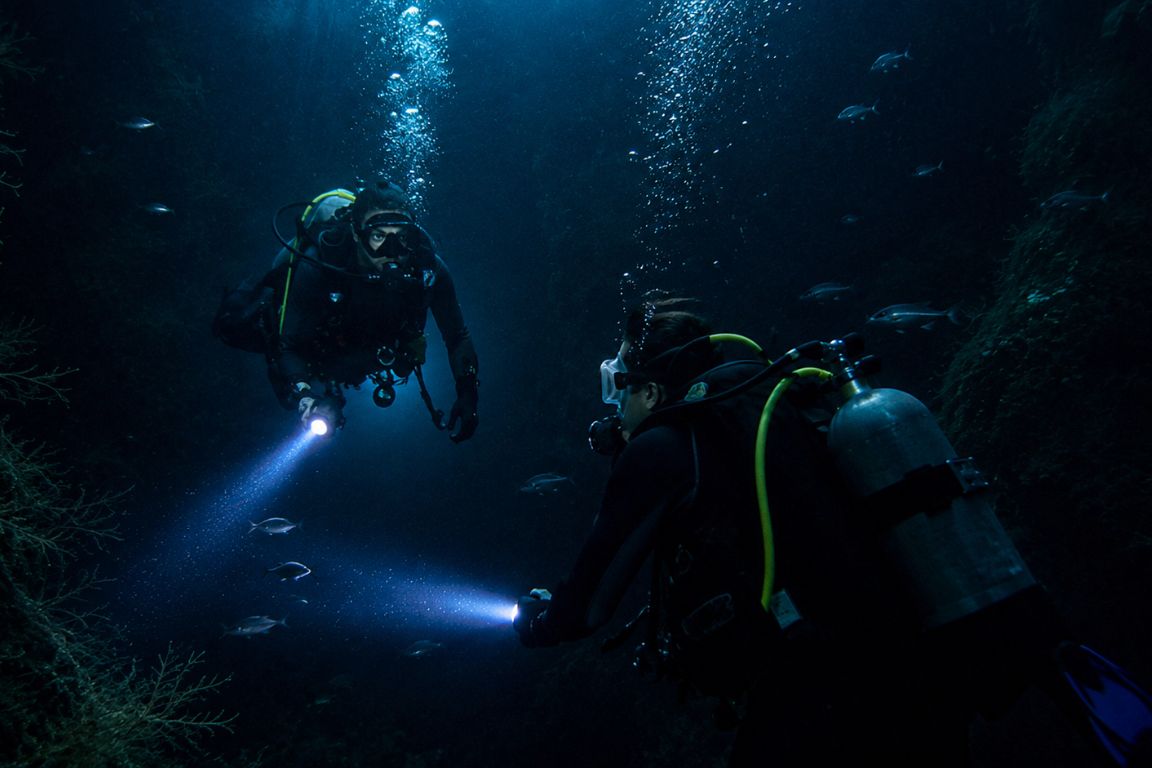
Night diving in the Galapagos is not a darker version of the day dives. It is a completely different underwater world. The species that hide in crevices and sandy bottoms during daylight emerge and feed. Bioluminescent plankton ignites with every movement, turning your hands into light sources as you fin through the dark. Red-lipped batfish walk across the sand below your torch beam. Galapagos fur seals, drawn by the light, hunt at speed directly through your dive group. The calm conditions at the permitted sites make it manageable. Nothing about it is routine.
The experience begins before you enter the water. The liveaboard anchors in the sheltered cove at Wolf Island or at Fondeadero near Santa Fé, the engine cuts, and the ocean goes quiet. You gear up on the dive deck under running deck lights, your buddy checks your torch function, and you roll into water that feels different at night: the surface above you closes, the light from the vessel fades as you descend, and the beam of your torch becomes the entire world.
The bioluminescence moment is the one that divers describe most often, and no written account of it fully prepares you. When conditions are right, you turn off your torch. Complete darkness. Then you move your hands slowly through the water. Blue-green light blooms around your fingers, trails off your fins, pulses in your bubbles as they rise. It is triggered by mechanical disturbance of bioluminescent plankton: single-celled organisms that respond to movement by emitting light. In clear, plankton-rich Galapagos water on a moonless night, the effect is intense enough to feel hallucinatory. Divers consistently describe it as the moment that redefines the rest of the trip.
Then the fur seals arrive. They come from the dark beyond the torch range, accelerating into the beam, banking hard, catching fish that are attracted to the light, and disappearing back into the dark in under a second. They are hunting with your torch. The experience is mutual: you provided the light, they provided the performance. Sharks feed along the bottom below. The red-lipped batfish, one of the most improbable animals in the ocean, walks across the sand on its modified pectoral fins with the unrushed confidence of something that knows nothing will eat it.
Night diving in the Galapagos is available on a specific subset of liveaboard itineraries at specific sites. Booking a dive cruise and assuming night diving is included is a common planning error: some operators run it, some do not, and even on vessels that do, it is conditions-dependent on the day. If night diving is on your list, we will confirm which vessels run it and on which part of the itinerary it is most likely to occur. Fill out this short form and we will build the right trip around it.
We’ve got a full breakdown on scuba diving on a Galapagos cruise if you want to know exactly what the conditions are like, which sites cruise divers access, and how the dive program works on a typical itinerary.
Which Liveaboards Offer Night Diving in the Galapagos?
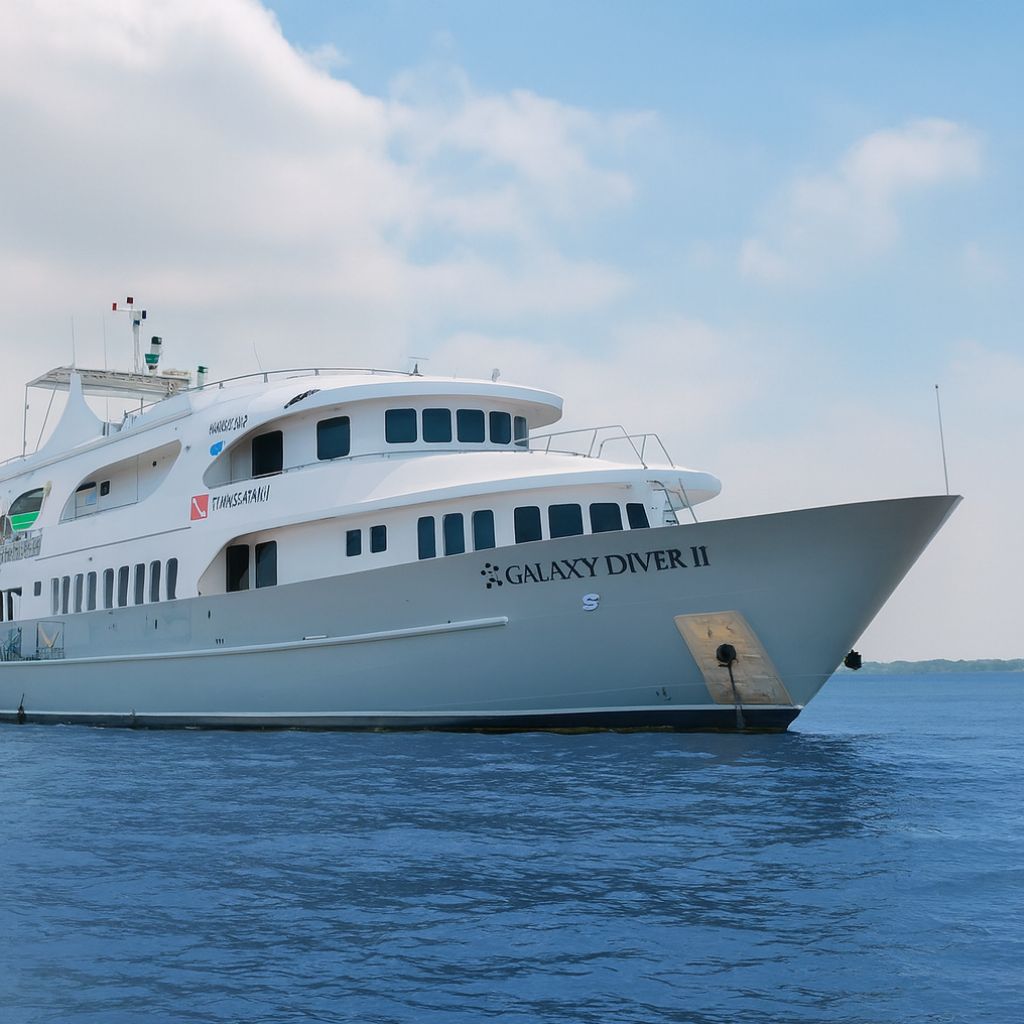
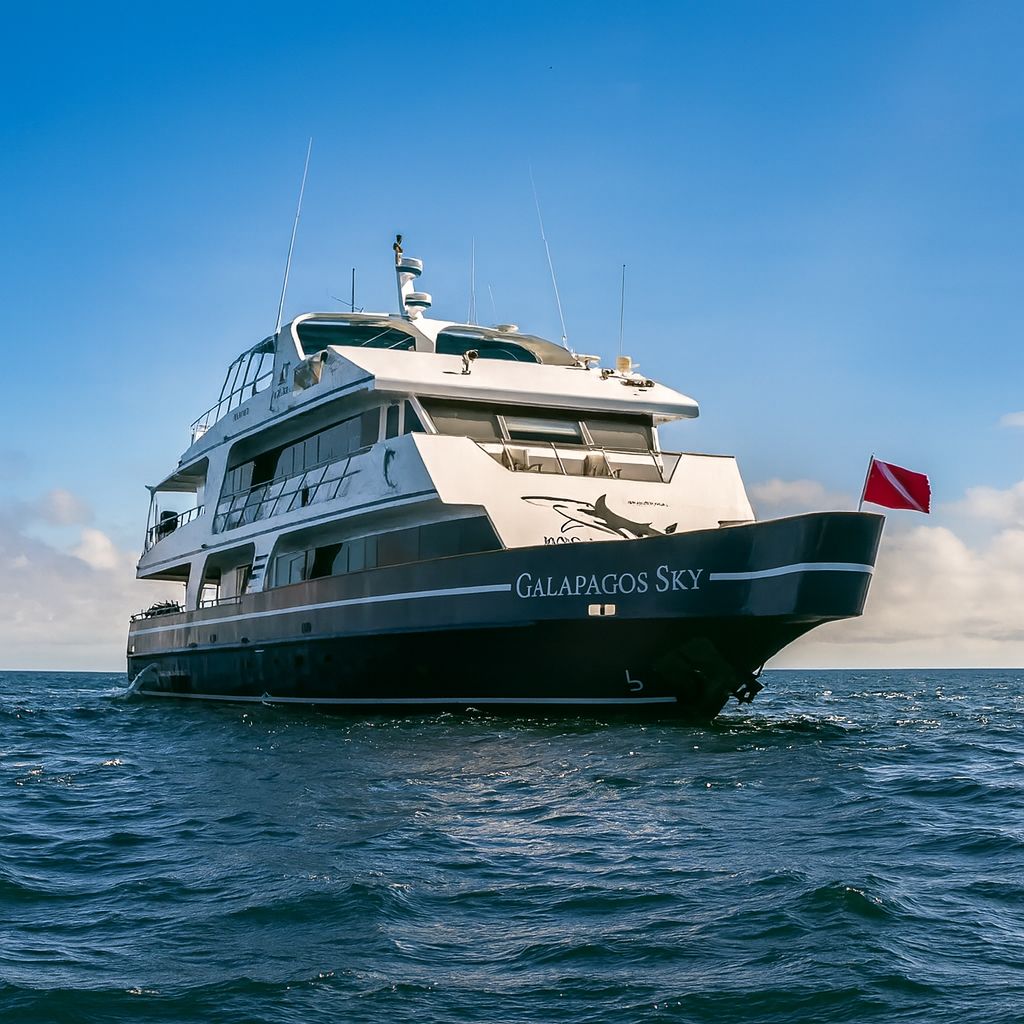
Night diving in the Galapagos is offered on dedicated dive liveaboards, not standard naturalist cruises. The Galapagos Sky, Galapagos Aggressor III, Humboldt Explorer, Galaxy Diver II, and the Aqua liveaboard consistently include night diving at Wolf Island and other permitted sites as part of their itinerary programs. On all of these, the night dive is optional and conditions-dependent, not a guaranteed schedule item.
| Liveaboard | Night Dive Included? | Primary Night Site | Notes |
|---|---|---|---|
| Galapagos Sky | Yes, optional | Wolf Island Anchorage (Day 3) | Conditions-dependent. Divers must bring own torches. |
| Galapagos Aggressor III | Yes, optional | Wolf Island Anchorage | Night dive at Wolf on northern circuit itineraries. |
| Humboldt Explorer | Yes, optional | Wolf Island / Cabo Marshall | Night dive offered at Wolf and on some central island stops. |
| Galaxy Diver II | Yes, optional | Wolf Island Anchorage | Conditions and itinerary permitting. |
| Aqua (liveaboard) | Yes, optional | Wolf Island Anchorage | Night dive at Wolf on Darwin-Wolf circuit. |
| Standard naturalist cruises | No | N/A | Night diving not available on non-dive cruise vessels. |
Night dive availability subject to GNPD conditions and operator itinerary. Confirm before booking. Verified September 2026.
The Galapagos Sky is the most explicitly structured operator for night diving, with their published itinerary specifying a night dive at Wolf Island on Day 3 of the 7-night itinerary, conditions permitting. Their pre-booking documentation specifically states that divers must be experienced in night diving and must bring a primary torch, backup torch, and tank light, and that torches are not available for rent on board. This level of specificity is useful: it tells you exactly what to prepare rather than leaving it as a listed feature without requirements.
It is worth being direct about what “conditions permitting” means in practice. The Wolf Island Anchorage is selected for night diving precisely because its sheltered west coast usually has mild current and calm conditions, in contrast to the exposed and current-driven daytime sites at the same island. But weather, swell, and GNPD permit conditions can still prevent a night dive from going ahead. Divers who have specifically targeted the Wolf night dive as the centerpiece of their trip should understand this variance before booking.
What Marine Life Will You See on a Galapagos Night Dive?
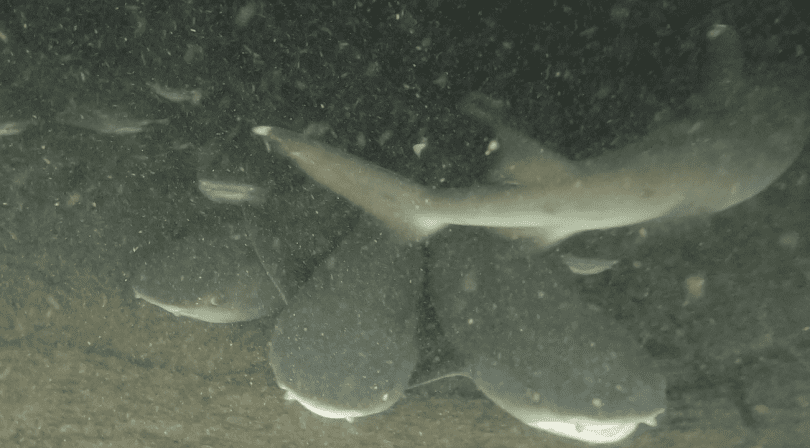
On a Galapagos night dive, expect red-lipped batfish walking across the sandy bottom, Galapagos fur seals hunting in torch beams, sharks feeding actively along the reef and sand, moray eels emerging from their daytime crevices, octopus hunting in the open, rays feeding on the sandy floor, bioluminescent plankton in movement-triggered clouds, and a completely different cast of reef fish from the daytime species.
The red-lipped batfish is the marquee night-dive subject at Wolf’s Anchorage. Technically a fish, it is an extremely poor swimmer that spends most of its life walking on the sandy bottom using its modified pectoral fins as limbs. Its most distinctive feature is its vivid red-lipped mouth and its habit of sitting motionless when a torch beam hits it. Found in only two places in the world (the Galapagos and coastal Peru), it is available to see nowhere else on a night dive. The Anchorage at Wolf Island, at around 20 meters depth, is the primary site where liveaboard divers encounter them.
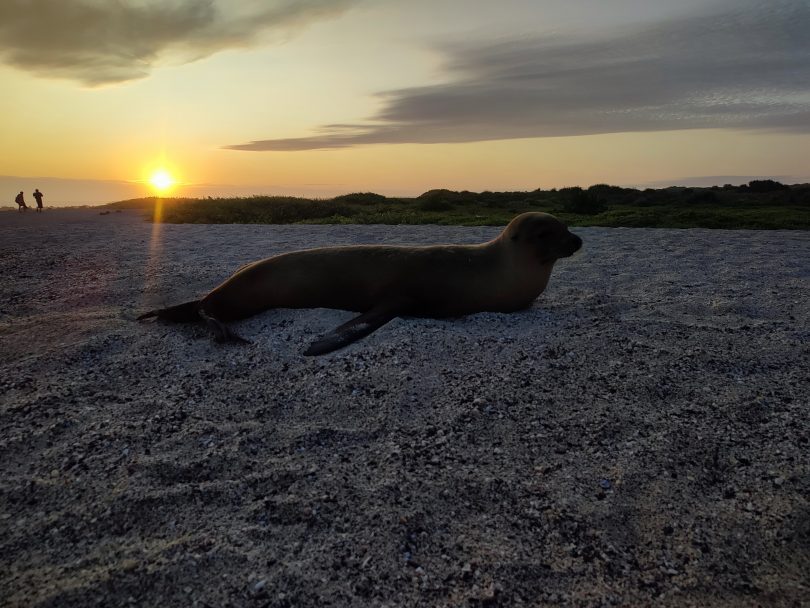
The fur seal behavior is arguably even more memorable, because it is interactive in a way that most wildlife encounters in the ocean are not. Galapagos fur seals have adapted to use artificial light sources for hunting: your torch beam concentrates small fish and invertebrates at the light source, and the seals learned to exploit this. They enter the beam from darkness, accelerate to catch a fish, and exit at speed. The whole event takes less than two seconds. Then they come back from a different angle. On a good night dive at Fondeadero or the Wolf Anchorage, this can continue throughout the dive.
Shark behavior at night is different from daytime. Galapagos sharks and white-tipped reef sharks that drift passively through the water column during the day become active feeders at night. They move closer to the reef, investigate the torchlight, and patrol the sandy zones where rays and batfish are concentrated. At the Wolf Anchorage, divers report Galapagos sharks feeding during the evening sessions at depths consistent with the dive profile. None of these species has documented human attack history, but the behavioral shift is unmistakable and adds a different quality of tension to the experience.
We’ve got a full breakdown on what fish and marine life you’ll see snorkeling in the Galapagos if you want to know exactly which species show up where and what conditions bring out the best underwater encounters.
Which Sites Are Best for Night Diving in the Galapagos?
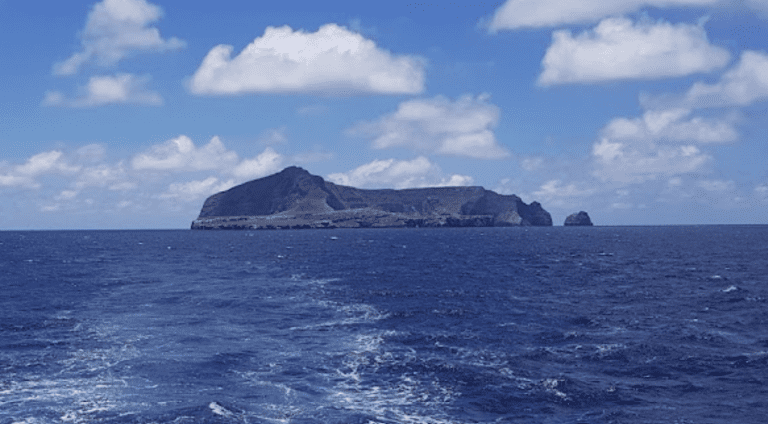
The two primary GNPD-permitted night dive sites in the Galapagos are the Wolf Island Anchorage (liveaboard-only, far northern archipelago) and Fondeadero near Santa Fé Island (central archipelago, accessible on some liveaboard itineraries). Academy Bay in Santa Cruz is available through land-based dive operators. All three are sheltered sites chosen because they offer calm, manageable conditions after dark.
The Wolf Island Anchorage sits on the sheltered western coast of Wolf Island, directly beneath where the liveaboard anchors for the night. This is deliberate: the dive site and the anchorage are the same location, which means the entry and exit are managed from the vessel’s own platform with the crew above. Depth is around 20 meters, current is usually mild (a significant contrast to the exposed daytime sites at the same island), and the sandy bottom is the habitat of the red-lipped batfish. The site is only reachable by liveaboard on the northern Darwin-Wolf circuit.
Fondeadero near Santa Fé Island is the other primary night dive site. The name itself means “anchoring site” and is well-chosen: it is specifically protected from winds and currents, making it one of the most consistently suitable places in the archipelago for a calm-water night dive. Galapagos fur seals are reliably present here, bioluminescence conditions are good, and the mixed sandy-reef bottom hosts rays feeding and a variety of nocturnal reef species. Some liveaboard itineraries include Fondeadero as a central islands stop before heading north to Darwin and Wolf.
Academy Bay at Santa Cruz is the land-based alternative. Scuba Iguana and other Santa Cruz dive operations run night dives here from town, making it accessible to divers who are not on a full liveaboard. The site is a coral reforestation project run by the Galapagos National Park, with a mixed sandy and reef bottom at shallow depths. It is a genuine night diving experience with rays, sea lions, nocturnal reef fish, and bioluminescence. The wildlife density is lower than Wolf Anchorage, but the accessibility is significantly higher.
Itinerary planning for night diving in the Galapagos is more specific than for standard day dives, because the sites are fewer and the conditions window is tighter. Not all liveaboard itineraries include Fondeadero or prioritize the Wolf Anchorage evening slot. We know which operators build it in consistently and which itineraries give you the best chance of actually completing a night dive rather than having it listed as a possibility. Reach out here and we will tell you exactly what to expect on the itinerary you are considering.
What Experience Level Do You Need for Galapagos Night Diving?
Night diving in the Galapagos requires prior experience with night diving, Advanced Open Water certification as a minimum, and comfort with the standard Galapagos conditions: cool water, some current variability, and back-roll entries from a panga. The Wolf Island Anchorage specifically is a calm site, but it is still open ocean at night. A Night Diver Specialty certification from any major agency is strongly recommended if you have not dived at night before.
The honest assessment: if your only previous night dives were pool sessions or very sheltered shallow coves, the Wolf Anchorage is not the right place to do your first open-water night dive. The conditions are calm by Galapagos standards, but that is a relative statement. The entry is a back-roll from a panga in the dark, the depth is 20 meters, and you need to manage your torch, your buoyancy, your buddy contact, and your compass orientation simultaneously. All of these are manageable for a diver with real open-water night experience. They are significantly harder for someone encountering the combination for the first time.
The Galapagos Sky’s published pre-trip requirements are instructive: they specify that divers must be experienced in night diving, not merely certified. This is the right framing. Certification proves you completed training. Experience means you have actually descended into darkness in open water, managed a torch, maintained buddy contact without visual reference, and come back to the surface without incident. For the Wolf Anchorage specifically, 50-plus logged dives with several night dives in the log is the realistic minimum.
Academy Bay night dives from Santa Cruz are accessible to Open Water certified divers with a guide, at shallower depths and in more sheltered conditions. For divers who want the Galapagos night experience without the northern liveaboard commitment or the advanced experience requirement, this is the sensible starting point.
What Gear Do You Need for a Galapagos Night Dive?
For a Galapagos night dive, you must bring your own primary dive torch, a backup torch, and a tank light. These are not available for rent on liveaboards. You will also need the same exposure protection as your daytime dives (5 to 7mm wetsuit, hood, and gloves for cool-season itineraries), a dive computer with a backlit display, and a surface signaling device. Everything else is standard to the dive.
The torch situation is the most commonly overlooked preparation for night diving in the Galapagos. Multiple operators including the Galapagos Sky state explicitly in their pre-booking documentation that dive torches are not available for rent or loan on board. This is not a detail buried in the fine print. It means that a diver who arrives without a torch cannot do the night dive. A primary torch rated for at least 100 meters depth and 1000 lumens minimum gives you sufficient range and beam width for the Wolf Anchorage conditions. A backup torch in a BCD pocket is required by all major certification agencies for night diving and is enforced on liveaboard dive operations.
A tank light is the third item. This is a small chemical or LED light that attaches to your tank valve and makes you visible to your guide and buddy from above and behind. It is standard equipment for organized group night diving and is part of the pre-dive check on every liveaboard night dive session.
The exposure protection question for night dives at Wolf is the same as for daytime dives at the same location: the Cromwell Upwelling can push very cold water through even in mid-season. A 5 to 7mm full wetsuit with hood and gloves is the appropriate configuration for most cool-season departures. The Wolf Anchorage is shallower than the daytime sites, but you are in the water longer in static conditions, which means heat loss accumulates more than on an active drift dive.
When Is the Best Time of Year for Night Diving in the Galapagos?
Night diving in the Galapagos is possible year-round at permitted sites, but the cool season (June through November) produces the richest marine life activity and the highest bioluminescence density. The Wolf Island Anchorage night dive slots into the northern circuit itinerary regardless of season, though current and swell conditions are more variable from July through September when the Humboldt Current is strongest at the northern sites.
Bioluminescence is a plankton phenomenon and is linked to the same nutrient upwelling that drives Galapagos marine productivity in general. Cool-season conditions (June through November) produce the richest plankton blooms, which in turn produce the most intense bioluminescent displays when disturbed at night. Warm-season dives (December through May) can still produce good bioluminescence, but the effect is less reliably intense.
| Season | Water Temp | Bioluminescence | Night Dive Conditions | Exposure Needed |
|---|---|---|---|---|
| Dec-May (warm) | 22-28°C (72-82°F) | Good | Calm seas, mild current at Anchorage | 3-5mm wetsuit |
| Jun-Nov (cool) | 16-22°C (60-72°F) | Strongest | Variable surface swell; Anchorage still sheltered but crossing can be rougher | 5-7mm wetsuit, hood, gloves |
Conditions data based on average seasonal patterns. Verified September 2026.
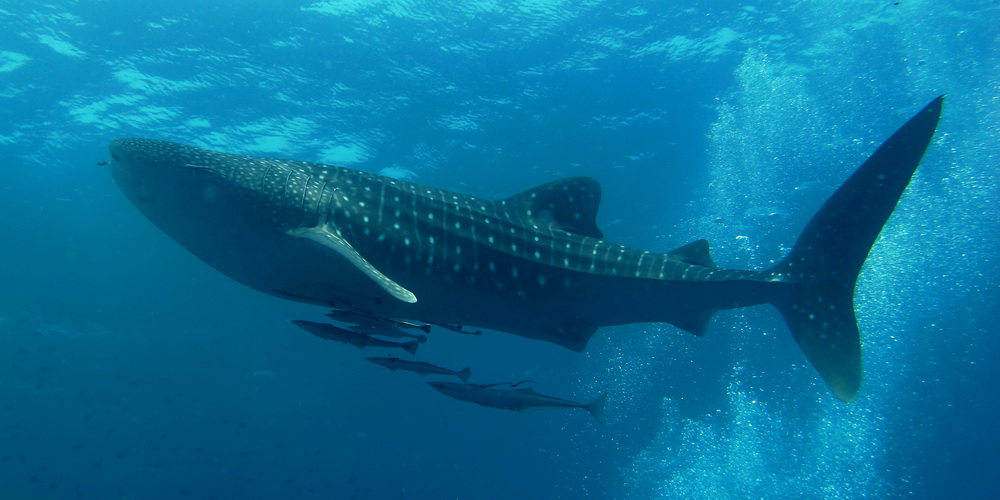
The practical consideration for timing: the northern circuit (Darwin and Wolf) books out fastest in peak season (July through September), which is when the whale sharks are most reliably seen at Darwin during daytime dives. If your priority is the combination of whale sharks by day and the Wolf Anchorage night dive, this is the window, and the lead time for booking is 9 to 12 months. The night dive is an optional addition to an itinerary already full of exceptional diving. It does not require separate timing optimization.
What Divers Say About Galapagos Night Dives (Our Data)
From feedback collected through mytrip2ecuador.com and our YouTube audience, here is what shapes how divers rate the night diving experience on their Galapagos liveaboard:
| Factor | % Who Named It | Pattern Observed |
|---|---|---|
| Arrived without a torch | 18% | Divers who did not read the pre-trip requirements carefully arrived without a torch and could not participate in the night dive. A preventable and expensive miss on a $5,000-plus trip. |
| Bioluminescence named as the highlight | 74% | More than three quarters of divers who completed a night dive in the Galapagos named the bioluminescence moment as the single most extraordinary experience of the entire trip, including the daytime Darwin and Wolf dives. |
| Night dive cancelled by conditions | 22% | One in five liveaboard travelers reported that the planned night dive was cancelled due to conditions. Divers who understood this as part of the Galapagos experience were not significantly disappointed; those who expected a guarantee were. |
| Fur seal interaction described as unmissable | 61% | Divers at Fondeadero and the Wolf Anchorage who experienced the fur seal hunting behavior in their torch beams named it as a wildlife encounter unlike anything they had experienced on any other dive trip globally. |
| Prior night experience made the difference | 69% | Divers with prior night diving experience consistently reported greater enjoyment and less anxiety, freeing them to observe rather than manage equipment and orientation in the dark. |
Frequently Asked Questions
Can I night dive on a standard Galapagos naturalist cruise?
No. Night diving is available on dedicated dive liveaboards only. Standard naturalist cruises focus on wildlife viewing, snorkeling, and guided land excursions. They do not carry dive equipment or hold dive-operation permits.
Do I need to bring my own dive torch for Galapagos night diving?
Yes, and this is non-negotiable on most liveaboards. The Galapagos Sky and other operators explicitly state that dive torches are not available for rent on board. You must bring a primary torch, a backup torch, and a tank light. Arrive without them and you cannot do the night dive.
Which is the best night dive site in the Galapagos?
The Wolf Island Anchorage is the most extraordinary: red-lipped batfish on the sandy bottom at 20 meters, fur seals hunting in torch beams, active sharks, and intense bioluminescence when conditions are right. It is liveaboard-only on the northern Darwin-Wolf circuit. Fondeadero near Santa Fé is the best alternative on central island itineraries.
What certification do I need for Galapagos night diving?
Advanced Open Water is the practical minimum, and prior real-world night diving experience is required by the operators who run it most rigorously. A Night Diver Specialty certification from PADI, SSI, or equivalent is strongly recommended. Open Water certified divers can do the Academy Bay night dive from Santa Cruz through land-based operators.
Is the bioluminescence guaranteed on a Galapagos night dive?
No. Bioluminescence depends on plankton density, moon phase, and water clarity. It is most reliable in the cool season (June to November) when plankton blooms are richest, and on moonless nights when there is no ambient light competing with the effect. It is possible in any season but not guaranteed on any single dive.
Planning a Night Diving Galapagos Liveaboard?
The night dive at Wolf Island is one of those experiences that gets named as the highlight of the entire trip by divers who complete it. Getting there requires the right liveaboard, the right itinerary, the right certification and experience level, and the right gear in your bag before you board. We help divers put all of that together. Cruises To Galapagos Islands is rated 4.9 stars on Google and TripAdvisor, and every quote we provide is free and comes with no commitment. Fill out the contact form and we will get back to you with the right liveaboard options for your experience level, your target dates, and what you want to see underwater.
Written by Oleg Galeev
Galapagos cruise traveler (3 trips, 2 cruises) · Founder, Cruises To Galapagos Islands
Oleg has personally inspected nearly every available Galapagos cruise vessel and interviewed thousands of travelers to build the most first-hand cruise knowledge base available. He also runs the Ecuador travel blog mytrip2ecuador.com and the YouTube channel My Trip to Somewhere.
Cruises To Galapagos Islands is rated 4.9 stars on Google and TripAdvisor.
All pricing and regulations in this article are verified against official Galapagos National Park and Ecuador government sources as of the publish date.