Galapagos Fur Seals vs Sea Lions: What’s the Difference?
Quick answer
Galapagos fur seals and sea lions are two distinct species sharing the same islands but living very different lives. Sea lions are everywhere on beaches across the archipelago, active during the day, and the animals most people swim with. Fur seals are smaller, nocturnal, prefer shaded rocky coastlines, and are genuinely harder to find. Both are Endangered on the IUCN Red List, with populations having declined over 50 percent since 1980. The single best place to see fur seals on a cruise is the Fur Seal Grotto at Puerto Egas on Santiago Island. A good guide will show you how to tell them apart in under a minute.
Part of our guide to what wildlife you can see on a Galapagos cruise. Ready to pick a ship? See compare all Galapagos cruise ships by price, size and class.
Are They Actually Different Animals?
Yes. The Galapagos fur seal and Galapagos sea lion are two distinct species that share the same archipelago but belong to different genera within the same family. Both are pinnipeds, fin-footed mammals, and both belong to the family Otariidae, the eared seals. But their size, coat, habitat, activity patterns, diet timing, and conservation trajectory differ enough that encountering one versus the other on a cruise is genuinely a different experience. The confusion is understandable because from a distance, especially when both are wet, they look similar. Up close or with a guide who knows what to look for, they are not hard to separate.
The taxonomy matters for understanding why they look related but are distinct. Both species are Otariids, meaning they share the defining eared-seal features: external ear flaps (pinnae) visible on both sides of the head, long front flippers they use to “walk” on land in an upright posture, and the ability to rotate their hind flippers forward to support their body on land. This is what distinguishes them from true seals, which cannot rotate their hind flippers and must belly-wriggle on land. The Galapagos is one of the few places in the world where both species of Otariid share the same island chain, and the quick field comparison is worth understanding before you arrive.
The fur seal’s genus name is Arctocephalus, meaning “bear-headed.” This is the diagnostic clue for the field: a rounder, shorter, bear-like muzzle compared to the longer, more dog-like snout of the sea lion. The fur seal also has proportionally larger eyes, which is an adaptation for nocturnal hunting where light is limited. Sea lions have their eyes set further back on a longer head, giving them a slightly more streamlined profile. Both differences are visible at close range and become obvious once pointed out.
How Do You Tell Them Apart in the Field?
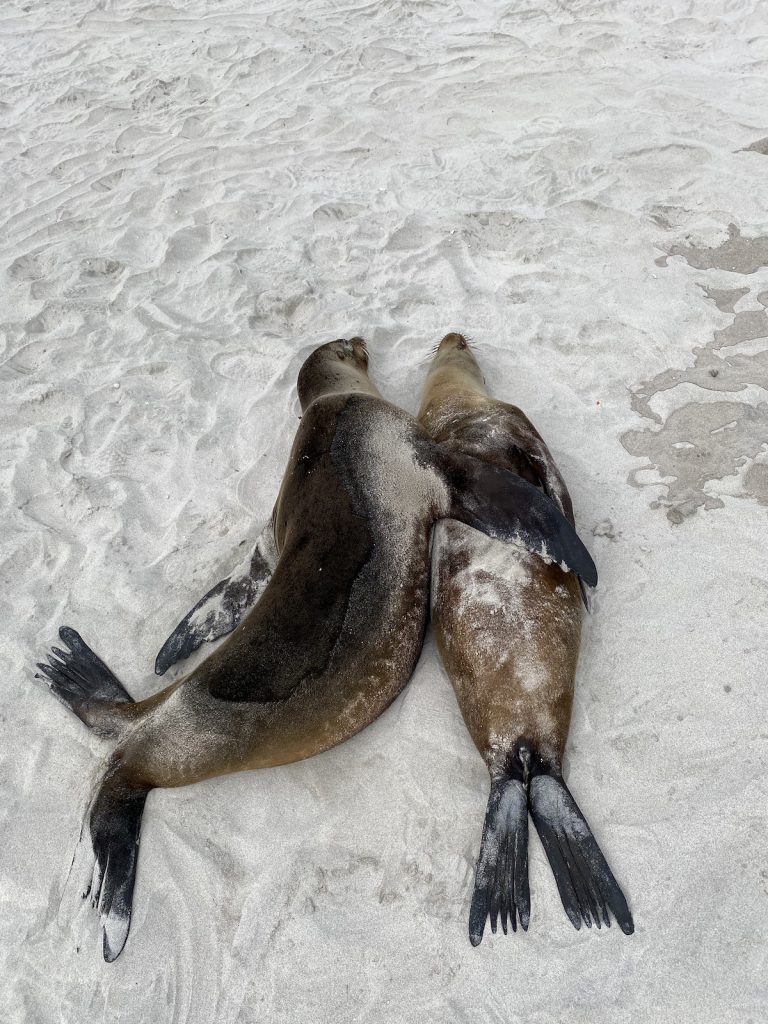
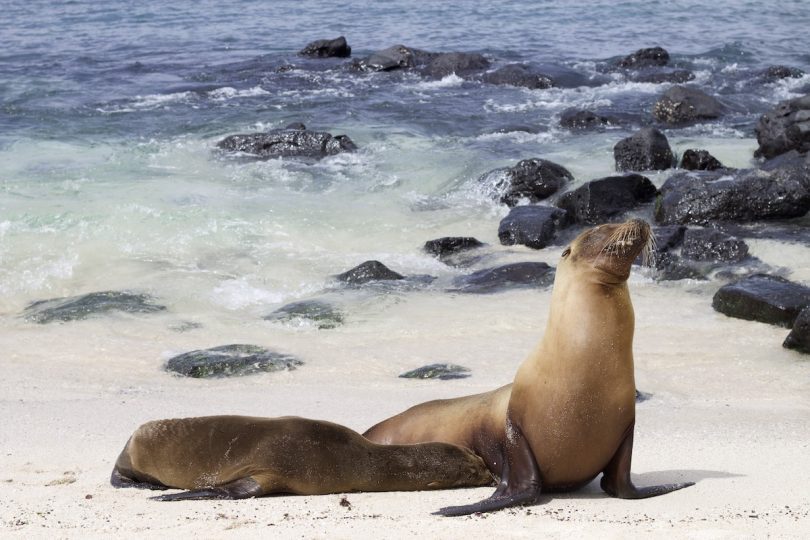
Size is the fastest field identification for most visitors. The Galapagos fur seal is the smallest of all eared seals: adult females weigh 27 to 33 kg, males up to 64 kg. The Galapagos sea lion is noticeably larger: females 55 to 75 kg, males up to 200 kg. Beyond size, the fur seal has a rounder bear-like head, larger and more prominent eyes, thicker and shaggier fur that turns distinctly golden when partially dry, and ear pinnae that stick out more visibly. The sea lion has a longer dog-like snout, a sleeker coat, and eyes set further back on the head. When both are resting in the same rocky pool, the size difference alone settles it.
| Field Marker | Galapagos Fur Seal | Galapagos Sea Lion |
|---|---|---|
| Head shape | Round, short, bear-like muzzle | Longer, dog-like snout; more pointed |
| Eyes | Proportionally larger and bulging; adapted for night vision | Smaller, set further back on head |
| Ear pinnae | Prominent; stick out noticeably from head | Present but less prominent |
| Coat | Thick, dense underfur plus guard hairs; goes golden when partially dry | Thinner, sleeker; stays uniformly brown |
| Adult female weight | 27 to 33 kg | 55 to 75 kg |
| Adult male weight | Up to 64 kg | Up to 200 kg |
| Body shape | Stocky, compact, shorter neck | Longer, more streamlined, upright neck |
| Front flippers | Proportionally larger; aids climbing rocky terrain | Proportionally smaller relative to body |
One reliable trick when both species are present together: look at the coat as the animal starts to dry after coming out of the water. The fur seal’s dense double coat holds water and then releases it unevenly, producing a shaggy, partly golden appearance as it dries. The sea lion’s thinner coat dries more uniformly and stays the same medium brown. A fur seal partially dry in the shade of a grotto looks distinctly different from a sea lion in the same pool. This coat difference is one of the reasons fur seals require shade so urgently in the equatorial sun: the thick double coat that protects them during cold-water nocturnal dives traps heat on land far more than the sea lion’s thinner coat.
Ask your guide before any landing whether fur seals are present at that site. The question is worth asking because many travelers complete an entire Galapagos cruise having only seen sea lions, assuming they have also seen fur seals because both appear on wildlife lists. Send us a message here and we will confirm which stops on your itinerary include reliable fur seal sightings versus sea-lion-only beaches.
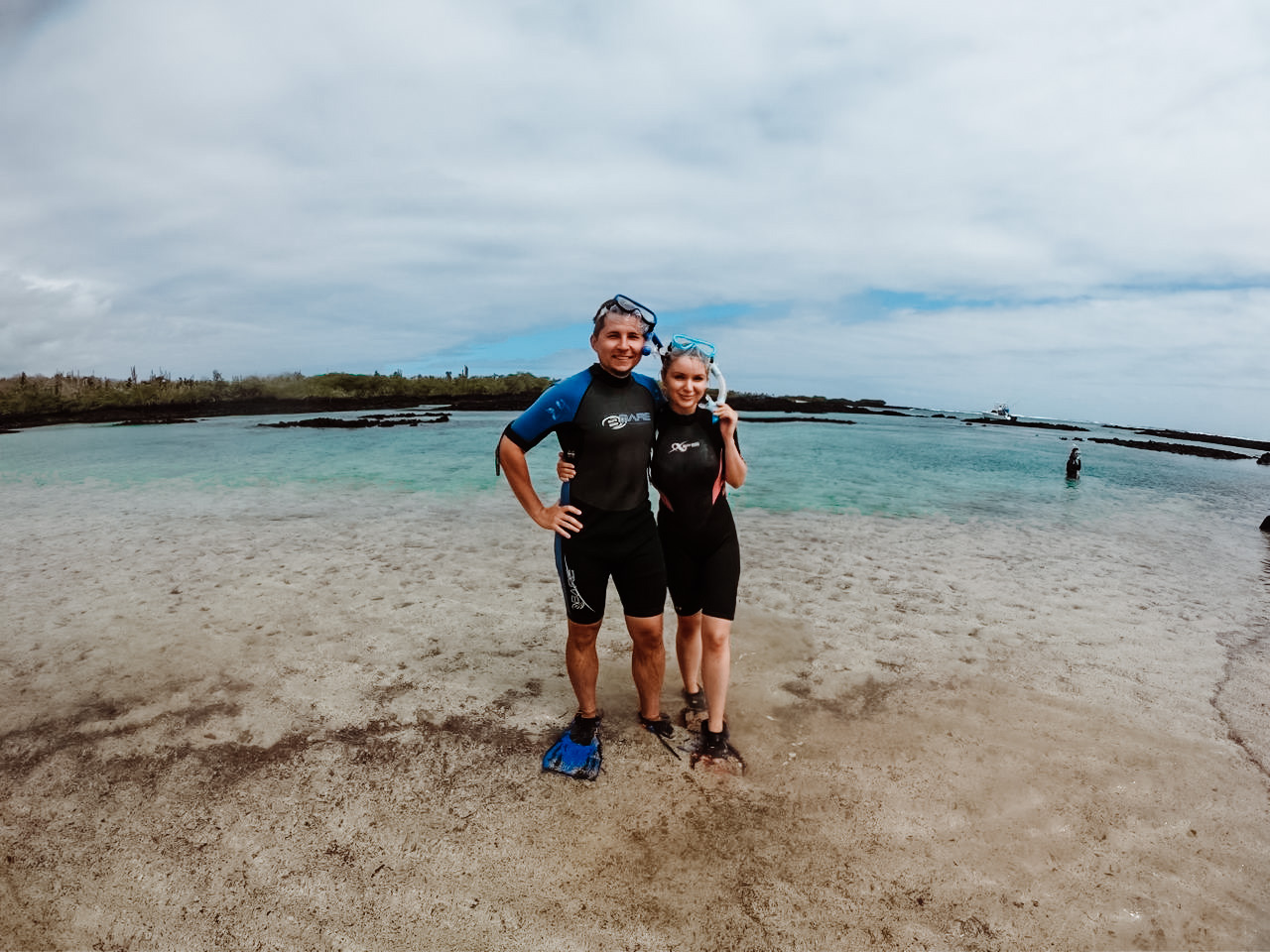
Snorkeling with sea lions in the Galapagos is one of those experiences that makes every other snorkel trip feel ordinary by comparison. Here’s a guide on the best sea lion snorkeling encounters on a Galapagos cruise so you find the right spots.
Where Do Fur Seals Live and Which Islands Have Them?
Galapagos fur seals concentrate on the rocky western shores of the archipelago, particularly Isabela and Fernandina, where cold Cromwell Current upwelling produces the deep-water squid and fish they hunt at night. Approximately 95 percent of the fur seal population is in the western islands. For cruise passengers, the most accessible encounter is the Fur Seal Grotto at Puerto Egas on Santiago Island, described consistently as the best place in the Galapagos to see fur seals up close. Additional sightings are possible at Genovesa, Rábida, and North Seymour, where rocky cliff habitats provide the shade and shelter fur seals require.
The habitat preference tells you everything about where to look. Fur seals need shade, rocky surfaces with multiple access points to the water, and proximity to deep, cold water for their nighttime foraging dives. They avoid flat sandy beaches entirely, which is why they are almost never encountered at the sea-lion-on-the-beach moments that define most cruise landings. The lava grottos and tidal pools formed by collapsed and eroded volcanic coastline are ideal: natural shade from lava overhangs, rough surfaces they can climb with their large front flippers, tide pools where pups can learn to swim safely, and direct ocean access for their nightly departure.
Puerto Egas on Santiago Island is the most visited fur seal site on the cruise circuit. The coastal trail at James Bay ends at a series of lava rock pools and grottoes where fur seals rest in the shade through the day. This is the one site on most central itineraries where a visitor can walk to within a few metres of a fur seal resting naturally in its preferred habitat, compare it directly to sea lions in the same rocky pools, and understand the difference between the species physically and behaviorally in a single visit.
| Site | Fur Seal Reliability | Habitat Type | Notes |
|---|---|---|---|
| Puerto Egas, Santiago | Very high; best on-trail site | Lava grottos and tidal pools | Sea lions present too for direct comparison |
| Isabela west coast | High; largest concentration globally | Rocky volcanic coastline | Best seen by panga ride; not always trail-accessible |
| Fernandina | High; remote western colony | Exposed lava shore | Often seen during panga rides along the coast |
| Genovesa | Moderate; cliffs near Prince Philip’s Steps | Cliff base; rocky coast | Often seen while snorkeling near the cliff base |
| North Seymour, Rábida | Occasional; opportunistic | Rocky edges; not ideal habitat | Bonus sighting; do not plan specifically for these |
Where Do Sea Lions Live and Which Islands Have Them?
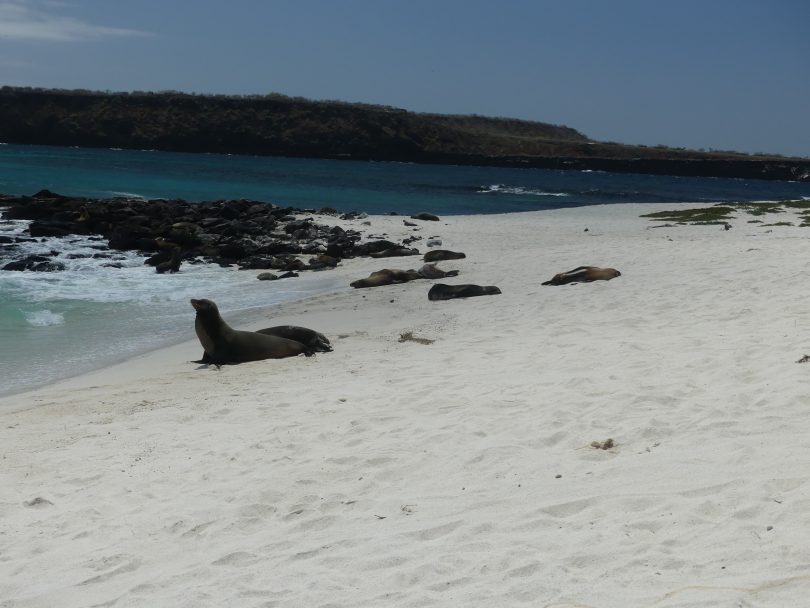
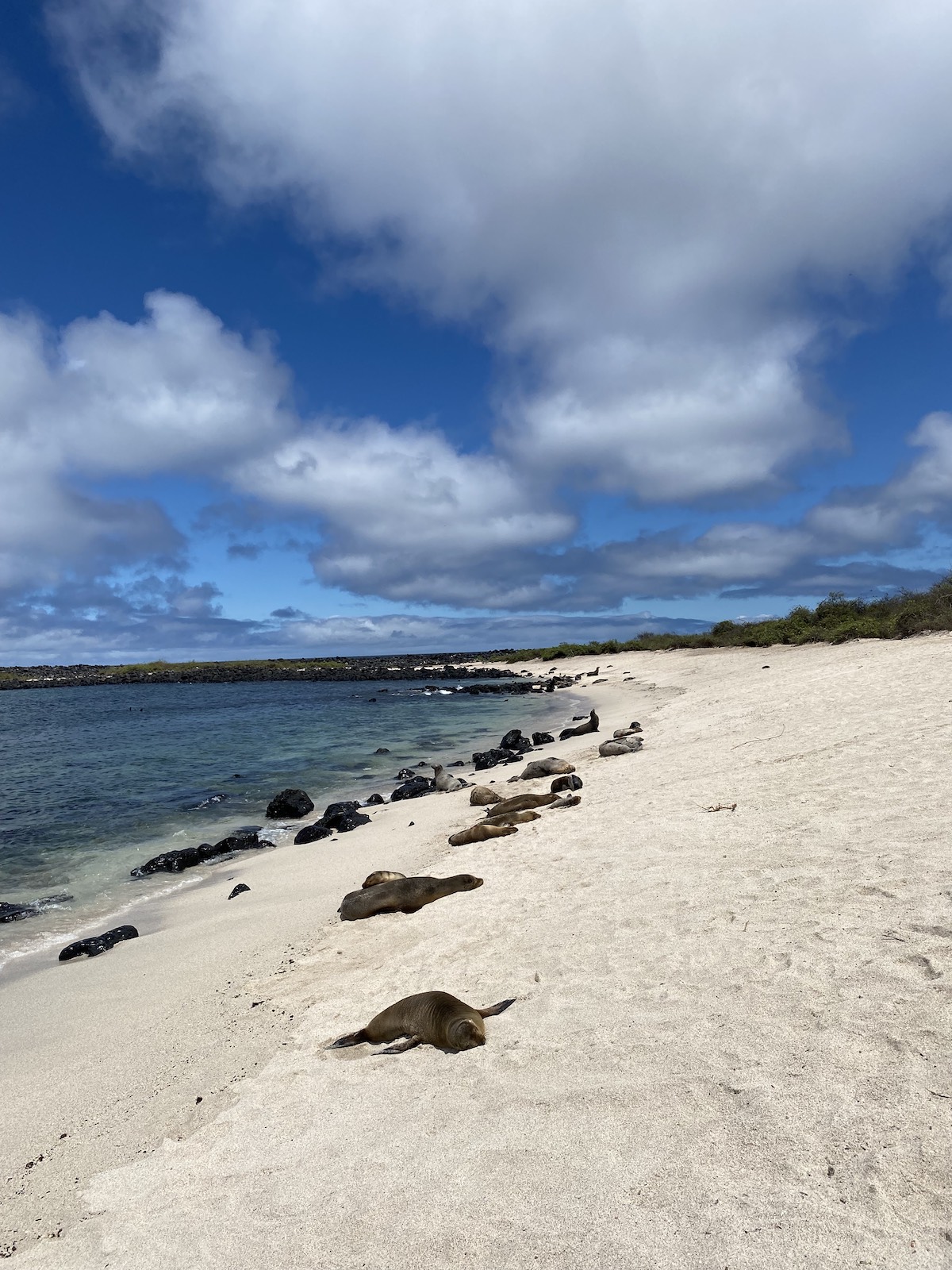
Galapagos sea lions are present on virtually every island in the archipelago and are the most commonly encountered wildlife on any cruise. They sleep on beaches, boardwalks, boat landings, and park benches in the inhabited towns. In the water, they approach snorkelers with genuine curiosity, spiraling around divers, blowing bubbles, and occasionally nudging fins. The best dedicated sea lion snorkel experiences are Gardner Bay on Española, multiple bays along Isabela’s coast, and the waters around Rábida and North Seymour. The territorial behavior of dominant males, which peaks from August through December, is a behavioral spectacle in its own right.
The sea lion’s distribution reflects its ecological flexibility. Unlike the fur seal, which depends on specific cold upwelling conditions for its prey, the sea lion eats a broader range of fish and squid across multiple water temperatures and can rest on any surface that is flat enough and warm enough. This generalism lets it exploit the entire archipelago rather than concentrating in the cold western upwelling zones. A sea lion can be sleeping on the welcome mat outside the post office in Puerto Ayora, and another can be at Gardner Bay on Española 200 kilometres away, and both are using appropriate habitat.
The social structure of the sea lion colony is one of the most observable wildlife behavioral systems on a Galapagos cruise. A single dominant bull controls a territory on a beach, defending access to a harem of females and their pups. Bachelor males, excluded from territories, form their own colonies at separate sites and wait for an opportunity that may not come for years. Territory battles between bulls are loud, physical, and visible from the trail: two males charging each other along the waterline, barking, shouldering, occasionally biting, until one retreats. The “dear enemy effect” is documented in Galapagos sea lions: neighboring territorial males who have established boundary agreements over time reduce the intensity and frequency of their conflicts compared to strangers, arriving at a functional arrangement without formal negotiation.
Gardner Bay on Española is consistently rated the finest sea lion beach in the Galapagos: a long white-sand beach with a large colony, pups present through most of the year, clear water for snorkeling directly off the beach, and enough space that the crowd of animals does not feel compressed. Fill out this short form and we will confirm which itineraries include Gardner Bay as a confirmed snorkel stop versus a beach landing only.
Trying to decide which southern Galapagos islands are worth prioritizing before you commit to a cruise route? Here’s why Española is one of the best cruise stops so you understand what you’d be missing without it.
What Behaviors Can You Watch on a Cruise?
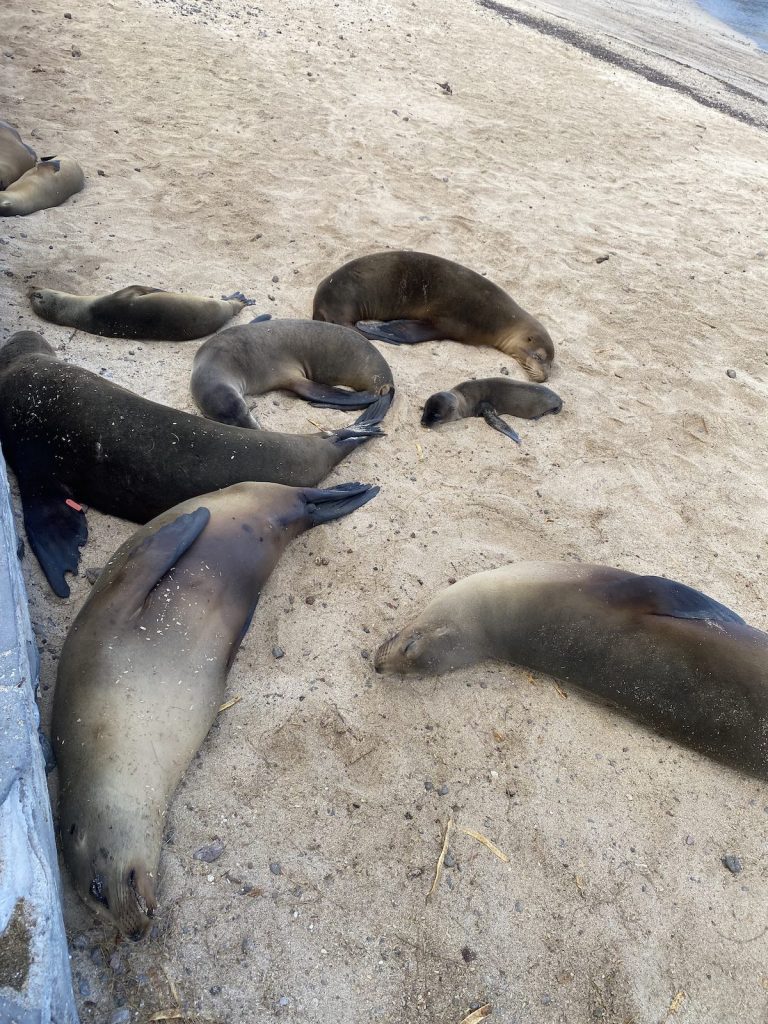
Sea lions offer the widest behavioral range for cruise visitors: territorial battles between bulls, mother-pup nursing and calling, body surfing in waves, and the underwater spiraling and fin-nudging that make snorkeling with them one of the most interactive wildlife encounters in the world. Fur seals are resting animals when you find them on a cruise, because they are nocturnal hunters and daytime is recovery time. What you observe is the physical comparison to sea lions, the shaded grotto habitat, and occasional interactions between resting individuals. The behavioral spectacle of the fur seal happens at night, which cruise passengers do not see.
The sea lion underwater encounter deserves specific preparation because it surprises almost everyone who experiences it for the first time. These animals approach snorkelers under their own initiative. A young sea lion will swim directly at your face, veer off at the last moment, spiral around your body, blow bubbles at you, and repeat. They mimic the behavior of snorkelers: if you blow bubbles, they blow bubbles back. They chase fins. They have been observed engaging sea turtles in similar spiraling games. The experience has nothing of the careful distance and quiet observation that defines most Galapagos wildlife encounters. It is direct, physical, and sometimes overwhelming if you have not been briefed that a sea lion coming straight at your mask is playing, not threatening.
The practical rules for the water encounter are simple. Do not touch the animals. Stay horizontal and calm. Avoid coming between a mother and her pup. Give wide berth to territorial bulls on beaches, who can move with surprising speed on land and can cause injury. The guide briefing before any snorkel session covers all of this, but knowing it in advance means you spend the briefing noting the specifics of the site rather than processing the rules for the first time.
For fur seals at the grottos, the behavioral observation is quieter. Animals resting in the shade of a lava overhang, partially dry, their golden-tinted coats visible as they dry after a night of diving, will look at you and look away. They are not interested in interaction in the way sea lion pups are. The interest is anatomical and ecological: comparing the size and features with adjacent sea lions, watching the thermoregulation behaviors (a fur seal in the equatorial sun raises a flipper to release heat, much as an elephant uses its ears), and understanding why this specific habitat type is the one they have chosen.
What Do Travelers Miss About Both Species?
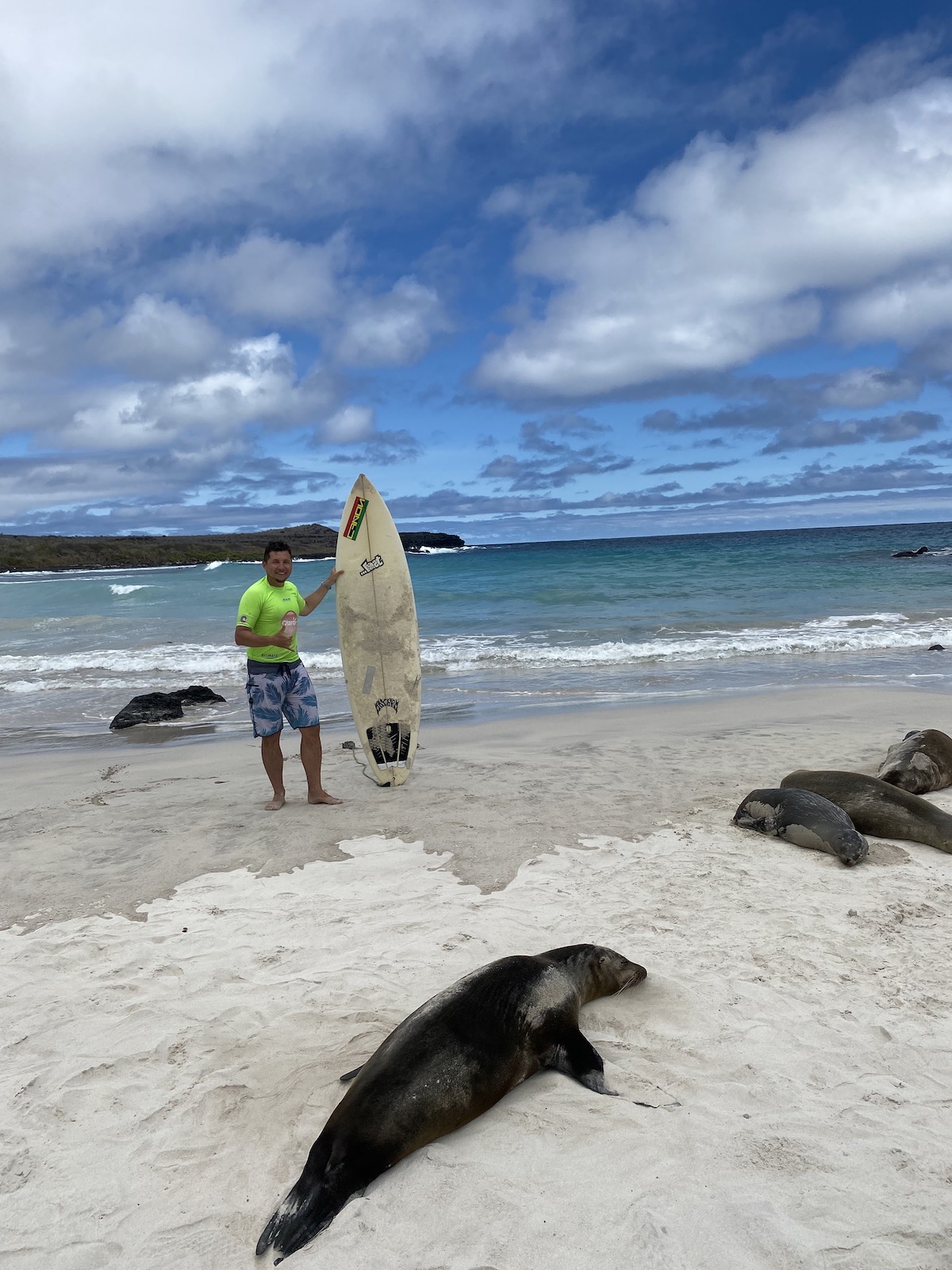
The most common miss with fur seals is assuming they have seen one when they have seen a small sea lion in a rocky area. The second miss is not knowing to ask the guide specifically about fur seal locations before each landing. The most common miss with sea lions is failing to watch the territorial male dynamics on land because the snorkel encounter gets all the attention. The third miss for both species is not understanding that they are both Endangered, a status that contradicts how abundant they appear on any given beach or grotto visit.
Thinking you have seen a fur seal when you have not. Fur seals and sea lions share rocky sites on Santiago, Genovesa, and a few other islands. A small sea lion resting in the shadow of a rock is easy to mistake for a fur seal if you do not know the field markers. The reverse error is rare because fur seals are small enough that most people notice the size difference when they see a genuine one. But confident misidentification of sea lions as fur seals is extremely common among cruise passengers. If your guide has not specifically said “this is a fur seal” and walked you through the diagnostic features, verify before recording the species in your notes.
Missing the land-based sea lion drama. The underwater encounter with sea lions is so dominant in the Galapagos experience that the beach behaviors get less attention than they deserve. A territorial bull patrolling his beach boundary, driving off a bachelor male, and then barking to reassert his presence to the females in his harem is a complete behavioral story told in about three minutes of observation. The rookery during pupping season, with mothers calling their pups in a crowd and each pup recognizing its own mother’s voice, is documented as one of the more complex acoustic recognition systems in pinnipeds. Your guide knows this. Ask them to explain what is happening on the beach before you enter the water.
Not registering the conservation context. Both species appear so abundant on any given beach or grotto that their Endangered status seems implausible. But both populations have declined by more than 50 percent since 1980, driven primarily by El Niño events that eliminate the prey both species depend on during critical nursing periods. A severe El Niño year can collapse pup survival across the entire archipelago because mothers cannot find enough fish to sustain lactation and return to their pups, which then starve. The recovery after each El Niño event is slow because both species have low reproductive rates. What looks like a healthy, abundant population is actually operating at a fraction of its historical numbers. Reach out to us here to plan the best timing for your visit around current population conditions.
What Our Travelers Report: Fur Seal vs Sea Lion Encounter Quality by Site
Based on feedback gathered through mytrip2ecuador.com, our YouTube audience, and Oleg’s direct traveler interviews across three personal visits to the Galapagos:
| Site and Species | Confirmed Sighting | Close Encounter (<3m) | Underwater Interaction | “Highlight of the stop” |
|---|---|---|---|---|
| Sea lion, Gardner Bay (Española) | 100% | 98% | 91% | 74% |
| Fur seal, Puerto Egas (Santiago) | 88% | 79% | 41% | 52% |
| Sea lion, North Seymour snorkel | 94% | 87% | 83% | 61% |
| Fur seal, Genovesa (cliff snorkel) | 67% | 54% | 61% | 44% |
Conservation Status: Two Species, Very Different Situations
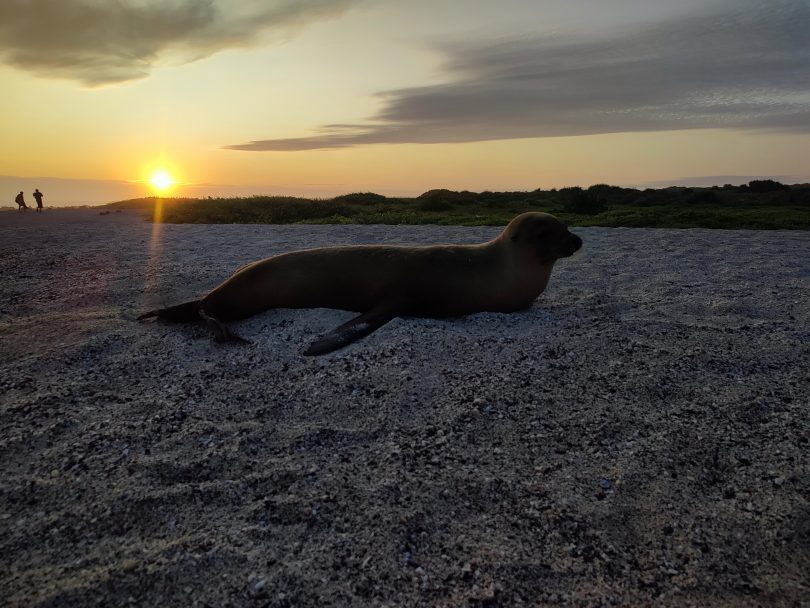
Both the Galapagos fur seal and the Galapagos sea lion are Endangered on the IUCN Red List, with populations having declined by more than 50 percent since 1980. This shared status masks a meaningful difference in vulnerability: the fur seal’s more restricted habitat and smaller population size make it more sensitive to catastrophic events. El Niño is the primary driver of population collapse for both species, disrupting the food web that both depend on during critical nursing periods. A 2022 Galapagos Conservancy project assessed the ongoing causes of decline in both species, including food availability, movement patterns, and breeding behavior, in partnership with Universidad San Francisco de Quito.
The historical hunting of Galapagos fur seals nearly eliminated the species in the 19th century. Commercial sealers targeted them for their dense double coat, which was valued for the same reason it causes thermal problems in the tropics: it is exceptionally warm and water-resistant. The population in 1970 was estimated at around 30,000 individuals. By the time systematic surveys were conducted in the early 2000s, the number had dropped significantly, and current estimates place the population at 10,000 to 15,000 mature individuals based on 2022 census data from breeding rookeries across 11 key sites. The species received formal protection under Ecuadorian legislation in 1934, but meaningful enforcement only began with the establishment of the Galapagos National Park in 1959.
The sea lion population faces the same El Niño vulnerability but from a higher baseline. Estimates place the total population at approximately 50,000 individuals, down from historical levels but still roughly three to four times the fur seal population. During severe El Niño events, prey fish move to cooler waters beyond the foraging range of nursing females. Pups that cannot be fed within days of a mother’s return from a foraging trip do not survive. The 1982 to 1983 El Niño reduced the sea lion population by an estimated 50 percent in some colonies. Recovery takes years because females produce only one pup per year and pups remain dependent for 11 months or more.
| Factor | Galapagos Fur Seal | Galapagos Sea Lion |
|---|---|---|
| IUCN status | Endangered | Endangered |
| Population estimate | 10,000 to 15,000 mature individuals | Approx. 50,000 individuals |
| Population trend | Declining; over 50% drop since 1980 | Declining; over 50% drop since 1980 |
| Primary threat | El Niño prey disruption; historically hunting | El Niño prey disruption; disease; asynchronous breeding |
| Reproduction rate | One pup per year; pups sometimes larger than mothers before weaning | One pup per year; 11-month dependency; non-synchronized breeding |
| Current protection | Galapagos National Park; marine reserve; Ecuadorian law since 1934 | Same protections; monitoring by park directorate |
What your cruise visit contributes: national park entry fees fund the monitoring programs for both species. The Galapagos Conservancy’s active research project on both populations is generating the movement and breeding data that will inform conservation responses to future El Niño events. Choosing a licensed, responsible operator who observes wildlife approach distances and does not permit touching or feeding either species keeps the behavioral ecology of both populations intact. The encounter you have with a sea lion pup at Gardner Bay or a fur seal in the Puerto Egas grottos is only possible because the conservation infrastructure around these animals has held through several decades of pressure. Talk to us about planning the right cruise for both encounters.
Frequently Asked Questions
Is a fur seal the same as a seal?
No. True seals belong to the family Phocidae and cannot rotate their hind flippers to walk on land. Fur seals and sea lions both belong to the family Otariidae, the eared seals, and can rotate their hind flippers forward to support their body in an upright posture on land. Despite the name, a fur seal is more closely related to a sea lion than to a true seal. In the Galapagos, you will only encounter Otariids: the fur seal and the sea lion. There are no true seals in the archipelago.
Can you swim with fur seals in the Galapagos?
Yes, though the encounter is less reliably interactive than with sea lions. The best snorkel encounter with fur seals is near the cliffs at Genovesa, where the animals enter the water alongside snorkelers. At Puerto Egas on Santiago, the fur seals are primarily resting on land in the grottos during the day, as they are nocturnal hunters, so the land-based visual encounter is more reliable than the underwater one. Sea lions are the more interactive and predictable underwater encounter across the archipelago.
Why are fur seals harder to see than sea lions?
Three reasons compound each other. First, fur seals are nocturnal feeders, so they spend daylight hours resting in shaded rocky grottos rather than moving around actively. Second, their habitat preference for shaded rocky coastlines means they avoid the open beaches where most cruise landings occur. Third, their distribution is concentrated on the western islands around Isabela and Fernandina, which not all itineraries reach. Sea lions are diurnal, use any beach or flat surface, and live across the entire archipelago, making them impossible to miss on any cruise.
Are both species safe to approach in the water?
Female sea lions and pups are safe at the distances guides enforce and behave with curiosity rather than aggression. Territorial bulls on beaches should be given wide berth at all times, especially during the August to December breeding season. Fur seals in the water are generally less interactive than sea lions and more likely to observe from a distance. Both species are wild animals and should never be touched, fed, or separated from their pups. Your guide’s briefing before each snorkel session covers site-specific rules that apply on that day.
Plan Your Fur Seal and Sea Lion Encounters
Seeing both species on the same cruise requires knowing which itineraries include Puerto Egas on Santiago and which sea lion snorkel sites deliver the most interactive underwater encounters. We know current cruise schedules across the full operator fleet and can tell you exactly which departures hit the right combination of sites. A free quote from Cruises To Galapagos Islands comes with real itinerary detail, not just island names. Tell us your travel dates and priorities and we will build the right recommendation.
Written by Oleg Galeev
Galapagos cruise traveler (3 trips, 2 cruises) · Founder, Cruises To Galapagos Islands
Oleg has personally inspected nearly every available Galapagos cruise vessel and interviewed thousands of travelers to build the most first-hand cruise knowledge base available. He also runs the Ecuador travel blog mytrip2ecuador.com and the YouTube channel My Trip to Somewhere.
Cruises To Galapagos Islands is rated 4.9 stars on Google and TripAdvisor.
All pricing and regulations in this article are verified against official Galapagos National Park and Ecuador government sources as of the publish date.