
Quick Summary
The dress code on a Galapagos cruise is entirely casual, for every meal and every moment on board. There is no formal night, no jacket requirement, and no dress code beyond basic appropriateness. The clothing decisions that actually matter are: neutral tones on the trail (bright colors disturb wildlife and attract insects), quick-dry fabrics everywhere (cotton stays wet for hours in equatorial humidity), a rash guard under or instead of a wetsuit for cold-season snorkeling, and a windproof layer for evenings and cool-season crossings. The rest is comfort.
What to Wear When: Quick Reference
| Context | Core Outfit | Key Notes |
|---|---|---|
| Morning land excursion | Neutral-tone quick-dry shirt, convertible pants or shorts, wide-brim hat, sunglasses with strap, water sandals or hiking shoes depending on landing type | Neutral colors (khaki, olive, navy, grey) reduce wildlife disturbance. Bright colors discouraged by GNPD guidelines. Quick-dry fabric essential. |
| Snorkeling / water activity | Swimwear, rash guard (UPF 50+), wetsuit (provided on most vessels), water sandals for wet landing entry | Rash guard worn under or instead of wetsuit. Essential for cool-season (June to November) snorkeling. Adds UV protection year-round. |
| On board between excursions | Casual comfortable clothes, deck shoes or sandals, light layer for air conditioning below decks | Excursion shoes stay in a bin near the boarding platform. Bring a separate pair of light footwear for inside the vessel. |
| Dinner on board | Clean casual clothes: light pants or shorts, a simple top or shirt. Swimwear at dinner is not appropriate on most vessels. | No formal wear, no jacket requirement, no dress code beyond “not swimwear.” Linen or lightweight casual wear is perfectly appropriate on any vessel class. |
| Evening on deck / crossings | Same casual clothes plus a windproof layer (light fleece or windbreaker). Sunglasses strap recommended for deck use. | Evenings on deck can be breezy and cool even in the warm season. Cool-season evenings at western sites can require a proper fleece layer. |
| Quito stopover | Layered outfit: light base layer, a sweater or fleece, a windproof or waterproof outer layer. Warmer pants and closed-toe shoes. | Quito sits at 2,850m. Daytime temperatures range from 10 to 20°C. It is cold at night and often rainy. Island clothing is insufficient. Pack at least two Quito-appropriate layers. |
Clothing guidance verified September 2026. GNPD neutral-color recommendation applies to all land visitor sites.
What Is the Dress Code on a Galapagos Cruise?
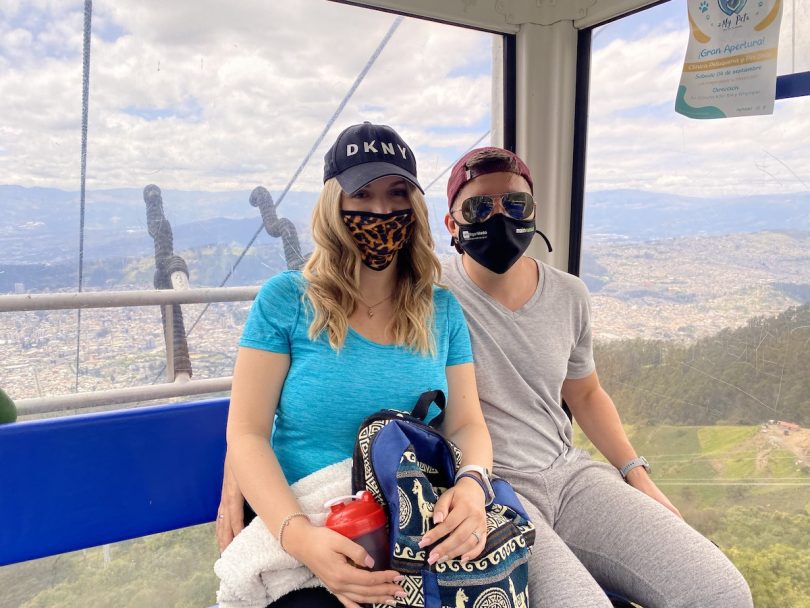
There is no formal dress code on any Galapagos cruise vessel. The entire voyage is casual from breakfast to dinner, every day. No formal nights, no jacket requirements, no dress shoes needed. The upper limit of evening attire on the most formal vessels is clean casual: light pants and a simple top. Swimwear at dinner is the one consistent request from operators, but even this is a suggestion rather than an enforced rule. Pack and dress for an active expedition, not a cruise ship gala.
This catches travelers off guard in a specific way. People who have been on Caribbean or Mediterranean cruises arrive expecting some version of a dress code that ratchets up for dinner. Galapagos cruises operate on a completely different social register. The nature of the trip, two active excursions per day in salt air and equatorial sun, makes the idea of formal wear not just unnecessary but physically impractical. By 7 p.m., you have been on a lava field and in the ocean and you want a shower and clean clothes, not a tie.
The most formal operators in the fleet, Quasar Expeditions and some of the National Geographic-Lindblad vessels, request that guests change out of excursion clothes for dinner. This means light pants rather than shorts, a clean shirt rather than a sweaty hiking tee. It is not a jacket requirement. It is a basic “you’ve had your shower, now eat dinner” expectation that any reasonable traveler already plans for. The actual dress code across every vessel class, from budget to ultra-luxury, is genuinely casual for the entire voyage.
If you are planning a Galapagos cruise and want to understand exactly what the daily routine looks like, which activities happen when, and how to pack for a full week without overfilling your luggage, we can walk you through the specifics for the cruise we recommend for you. Fill out this short form and we will match you with the right vessel and send you a trip-specific clothing breakdown alongside your quote.
What Should You Wear for Land Excursions and Hiking?
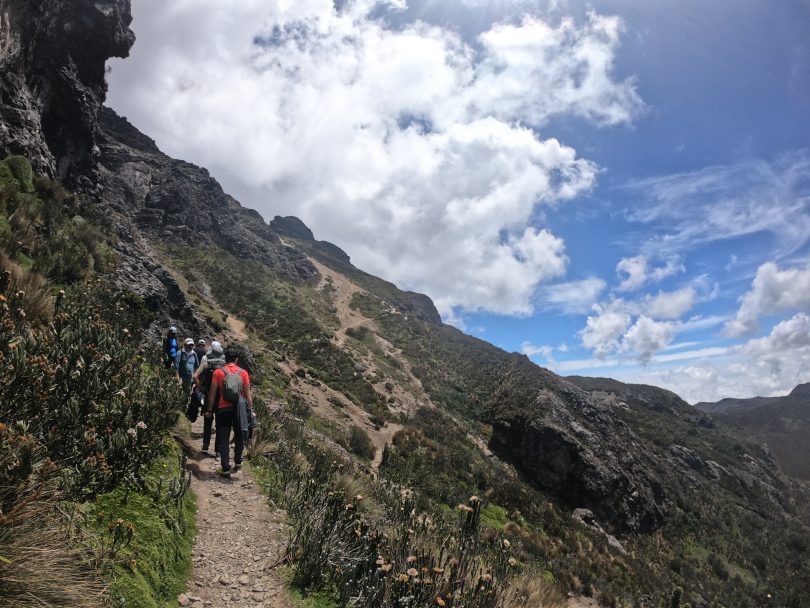
For land excursions and hiking on a Galapagos cruise, wear neutral-tone quick-dry shirts (khaki, olive, navy, grey), convertible pants or quick-dry shorts, a wide-brim hat with a chin strap, polarized sunglasses with a neck strap, and closed-toe hiking shoes or trail runners. Bright colors are discouraged by GNPD guidelines because they disturb nesting wildlife. Cotton clothing is impractical because it stays wet in equatorial humidity. A long-sleeve layer for sun protection is worth bringing on all exposed lava field walks.
The neutral-color guideline is the one clothing decision with a direct wildlife conservation rationale. Nesting seabirds, particularly boobies and frigatebirds, can show elevated stress responses to bright visual stimuli near their colonies. Red, orange, and electric yellow are the colors most consistently flagged in guide briefings at North Seymour, Espanola, and Genovesa. Your guide will not turn you away at the panga for wearing a bright shirt, but your wildlife encounters will be quieter and your photography better if the animals around you are not registering a visual alarm. Neutral is not a fashion choice in this context. It is part of how the visit is designed.
The fabric choice is the practical one. Morning hikes on the Galapagos start in manageable temperatures but the equatorial sun rises fast. By 9 a.m. on an exposed lava field at North Seymour, you are sweating in whatever you are wearing. In cotton, that sweat stays. The shirt is damp for the rest of the excursion and remains damp when you board the panga back to the vessel. In a synthetic quick-dry fabric, the shirt dries in under an hour, sometimes less, and you are in fresh-feeling clothes by the time you step back on board. The weight difference between a cotton T-shirt and a quick-dry equivalent is marginal. The comfort difference across a full day of two excursions is significant.
The hat and sunglasses are not optional accessories on the Galapagos trail: they are sun protection infrastructure on the equator. A wide brim that extends over the back of the neck protects the single most commonly burned area on Galapagos excursions. A chin strap keeps the hat on during Zodiac rides and on exposed cliff-edge trails where the wind catches. Polarized sunglasses with a neck strap stop the glare off the lava and the water and also stop the three people per week who lose their glasses off pangas in the Galapagos.
Which excursions you do on any given day, whether a wet or dry landing, a lava cobble hike or a beach walk, a morning at a booby colony or an afternoon kayak, changes what the right clothing is for that slot. Different itinerary routes have different terrain profiles and different weather patterns. Reach out here and we will give you a day-by-day activity breakdown for the specific cruise we recommend for you, so you know exactly what to wear and when.
What Should You Wear for Snorkeling and Water Activities?
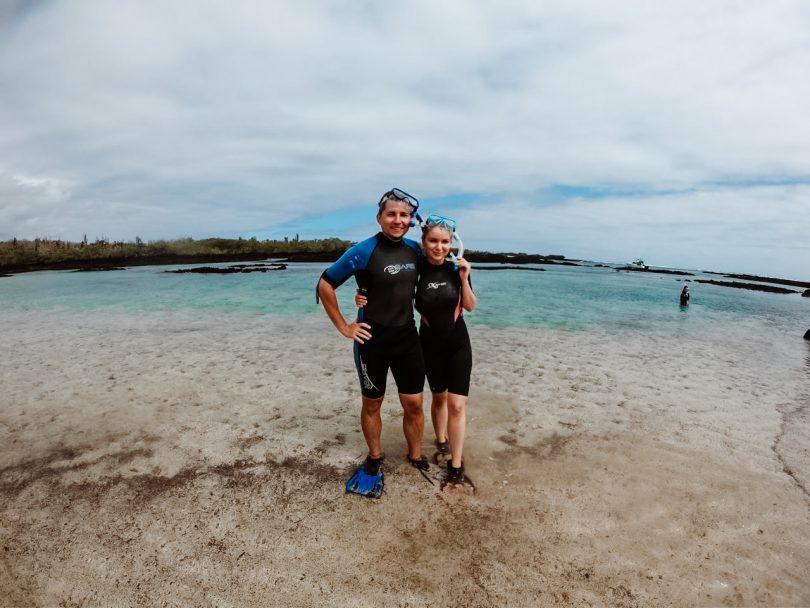
For snorkeling on a Galapagos cruise, wear a swimsuit, a UPF 50+ long-sleeve rash guard, and a wetsuit (provided on most mid-range to luxury vessels at no extra charge). The rash guard worn under the wetsuit adds insulation in cool-season water temperatures and UV protection at any time of year. For kayaking and paddleboarding, the same swimwear-and-rash-guard combination handles most sessions; add water sandals for wet landing entry and exit.
The rash guard is the single most valuable clothing item for water activities on a Galapagos cruise that most travelers underpack. It does two things simultaneously: it adds a layer of thermal insulation under the wetsuit in June-to-November water temperatures that can drop to 16 to 18°C at western sites, and it protects the skin on the backs of your hands, forearms, and the base of your neck from UV exposure when you are face-down in reflective water for 45 minutes. Both problems are real. The rash guard solves both without adding meaningful weight to your bag.
Long-sleeve rash guards (UPF 50+) are worth prioritizing over short-sleeve versions specifically for the hands-above-water posture of snorkeling. Your hands and forearms are extended over the water surface and in direct equatorial sun for the duration of the session. A short-sleeve rash guard leaves the forearm exposed. Many experienced Galapagos snorkelers wear lightweight paddling gloves as well, primarily for warmth in cool-season water but also to protect the backs of their hands from the sun that short sleeves miss.
Swimwear quantity matters on an 8-day cruise. You are in the water once or twice per day on most itineraries. A single swimsuit used twice daily on a humid vessel does not dry fully between sessions. Two swimsuits rotate comfortably across the whole cruise. Three give you flexibility if one is not fully dry after an unexpectedly long snorkel session. Pack at least two. Packing one is the swimwear equivalent of packing one sock.
What Should You Wear on the Vessel Between Excursions?
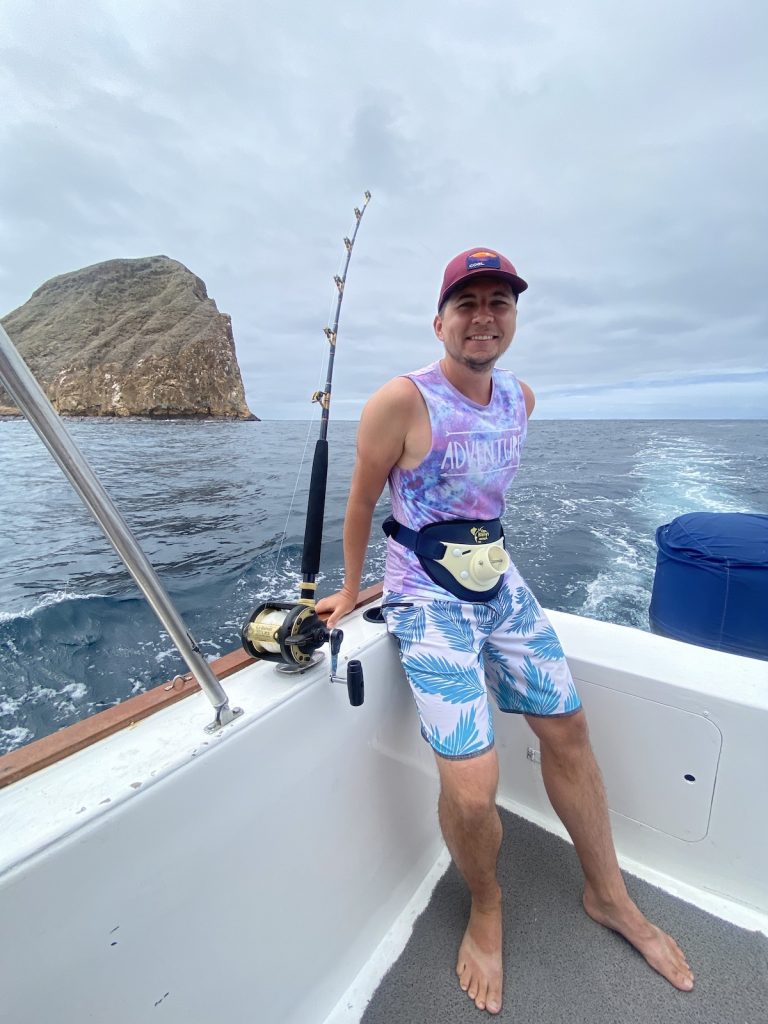
Between excursions, the vessel is your rest space: casual clothes, deck shoes or light sandals, and a light layer for the air-conditioned interior. The shoes you wear ashore go into a bin near the boarding platform and stay there until the next excursion. Bring a separate pair of light footwear specifically for on-board use: deck shoes, flip-flops, or a simple sandal that you only wear inside the vessel. This keeps the interior clean and gives your excursion shoes time to dry and air out between landings.
The two-footwear system is one of the small logistics that makes the cruise more comfortable across a full week. Hiking shoes worn on lava terrain and through wet landings accumulate sand, volcanic dust, salt, and moisture. The shoe bin near the boarding platform is where they live when you are not using them. It can get fragrant by day three. Wearing a light pair of deck shoes or sandals on board keeps the vessel interior clean for everyone and lets your hiking shoes breathe between sessions rather than sitting in a closed bag.
The air conditioning variable surprises travelers who assume the Galapagos is always warm. On deck at 8 a.m. or during a midday lava field hike, you will be warm. Inside the vessel between excursions, with the air conditioning running, a light interior can be cool. A thin fleece or long-sleeve layer kept in your cabin handles this without needing to be carried on excursions. The transition from outdoor to interior temperatures is sharper than most tropical destinations because the air conditioning is running against equatorial ambient heat.
The midday rest window, roughly 1 to 2 hours between the morning excursion return and the afternoon departure, is when most travelers change clothes, rinse gear, and eat lunch. This is when the two-shirt-per-day rotation earns its place: a fresh shirt for the afternoon excursion means you are not wearing a salt-and-sunscreen-saturated morning shirt for a second consecutive session in the afternoon sun.
The specific clothing rotation you need for a week on any Galapagos vessel depends on how many excursions per day the itinerary runs, what the terrain looks like, and which season you are traveling. We put together a trip-specific clothing recommendation for every traveler we book, as part of the pre-departure information we provide. Send us a message here and we will include it alongside your cruise recommendation.
What Should You Wear for the Quito Stopover?
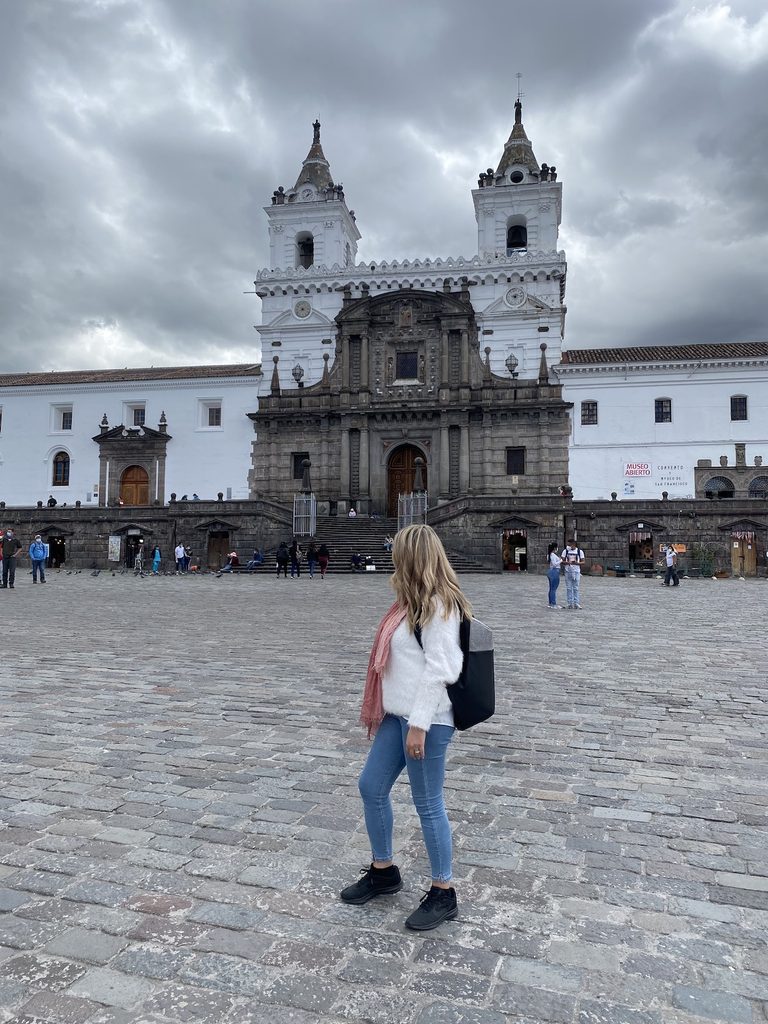
Quito sits at 2,850 meters (9,350 feet) and requires completely different clothing from the Galapagos Islands. Daytime temperatures range from 10 to 20°C depending on cloud cover. Rain is frequent, particularly in the afternoons. Pack at least two Quito-appropriate layers: a mid-layer fleece or sweater and a windproof or waterproof outer layer. Closed-toe shoes are appropriate; the island-specific sandals and water shoes are not the right call for Quito’s cobblestone streets in the rain.
The Quito clothing failure happens in both directions. Travelers who pack only island clothes arrive in Quito in shorts and a quick-dry shirt at 9,350 feet in afternoon rain and are cold immediately. Travelers who pack a full Quito wardrobe alongside their island kit exceed the domestic flight weight limit. The solution is a minimal Quito capsule: one fleece or sweater, one waterproof outer shell, one pair of warmer pants, and the closed-toe shoes you were already planning to wear on Galapagos trails. This covers the 1 to 2 days in Quito without adding meaningful weight to the overall kit.
The standard Quito strategy for Galapagos travelers: wear your warmest Quito layers on the flight to Quito from your home country, checking in with the island kit. On the domestic flight to the Galapagos, switch to island clothing and leave the Quito layers with the hotel. Most Quito hotels store luggage during your cruise days at no charge. You fly to the islands with only what you need for the cruise, which keeps you under the domestic flight weight limit, and pick up your Quito clothes when you return before the flight home.
A Quito layover before your Galapagos cruise is worth more than just a hotel room if you plan it right. Here’s a guide on making the most of a Quito layover for Galapagos cruise travelers so you don’t waste the time in the city.
What Colors and Fabrics Work Best in the Galapagos?
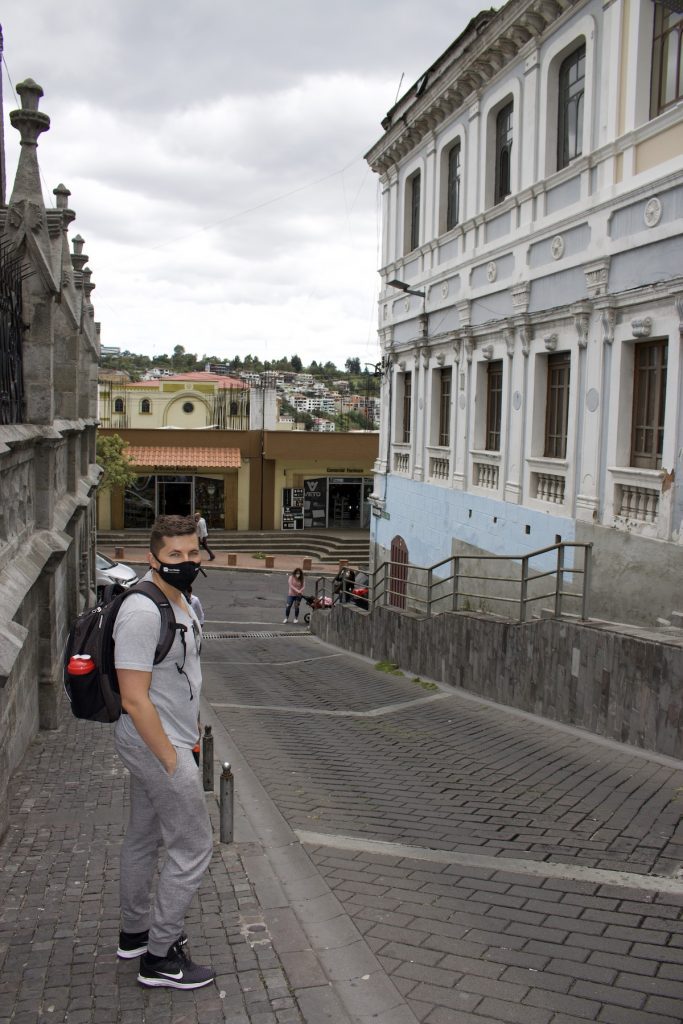
Neutral earth tones work best in the Galapagos: khaki, olive, taupe, navy, stone, and grey. These minimize wildlife disturbance at nesting sites and blend naturally with the volcanic and sandy environments you are walking through. Synthetic quick-dry fabrics (polyester, nylon, merino wool blends) are the right choice for everything worn on excursions. Cotton feels comfortable at home but fails in the humidity: it absorbs moisture, stays wet, and adds weight to your daypack.
The color science is straightforward. Bright colors create a visual contrast against volcanic black and sandy beige that stands out to the same visual processing system that nesting seabirds use to detect intruders. The Galapagos National Park Directorate includes neutral-color clothing in its visitor guidance, and Ecoventura specifically cites it in their pre-trip documentation alongside the GNPD rules. It is not a law enforced at the landing, but it is a recommendation with a real conservation rationale from the same authorities who manage visitor behavior at every site.
On fabric, the performance difference between cotton and synthetic quick-dry is most visible on day two or three of the cruise, when a traveler wearing cotton realizes they are starting each excursion in yesterday’s slightly damp shirt because nothing dried overnight in the cabin. Synthetic fabrics in the 150g to 180g weight range dry in under an hour hanging in the cabin. Lightweight merino wool is the one natural fiber that performs comparably to synthetics in moisture management and has the added benefit of not retaining odor across multiple wears, which matters on a compact vessel after five active days.
What Clothing Mistakes Do Galapagos Cruise Travelers Make?
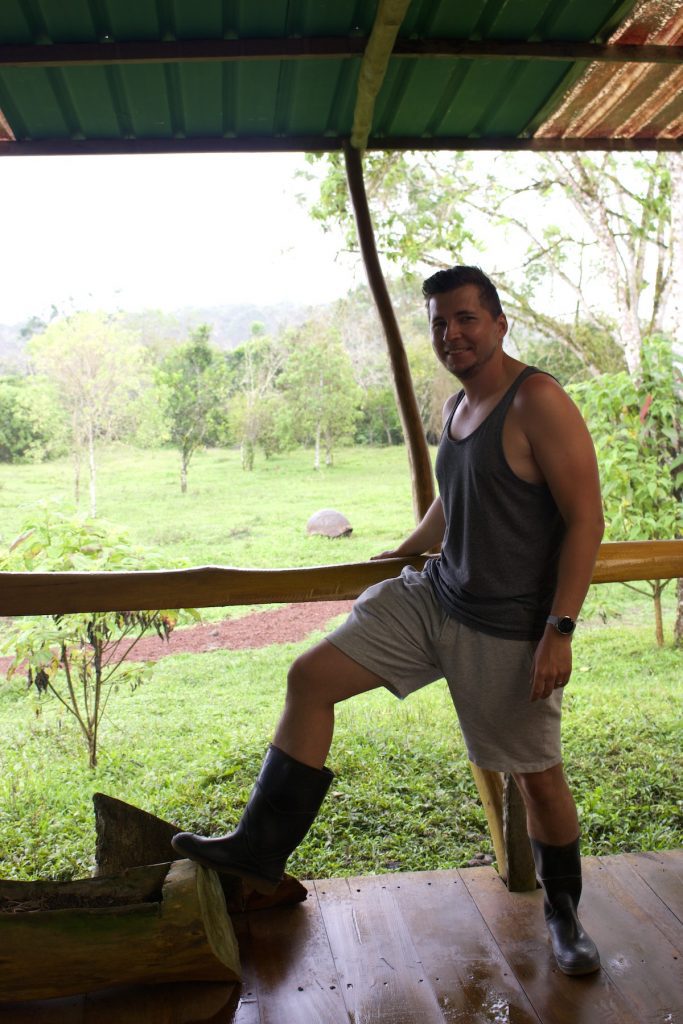
The most consistent clothing mistakes on a Galapagos cruise are: packing cotton instead of quick-dry fabrics, bringing only one swimsuit, wearing only one type of footwear, forgetting that Quito requires different clothes from the islands, packing formal wear that never leaves the bag, and not bringing a windproof layer for cool evenings and crossings. All are preventable with the right pre-trip information.
Not sure what to bring for wet landings, cold water snorkeling, and equatorial sun all in the same week? Here’s a straight breakdown on what to pack for a Galapagos cruise.
| Mistake | Why It Happens | Simple Fix |
|---|---|---|
| Packing cotton clothing | Feels comfortable at home, natural choice for warm weather | Replace every excursion item with a synthetic quick-dry equivalent before packing. Leave all cotton T-shirts at home. |
| One swimsuit for a week | Underestimating how often and how long you are in the water | Bring two swimsuits minimum. Three for a full 8-day cruise with daily snorkeling. |
| Only hiking shoes (no water sandals) | Assumes all landings are dry; does not research the wet landing system | Pack water sandals with heel straps. Wear them through wet landings; change into hiking shoes on shore. |
| No Quito-specific layers | Focuses all clothing research on the islands; treats Quito as an afterthought | Pack one fleece and one waterproof outer shell. Wear them on the international flight and leave them at the Quito hotel during the cruise. |
| Formal wear that never leaves the bag | Assumes Galapagos operates like a standard cruise ship | Leave all formal wear at home. The most formal situation you will encounter is dinner in clean casual clothes on a luxury vessel. |
| No windproof layer | Packs for daytime equatorial heat only | A lightweight windbreaker or fleece handles evening deck time, cool-season crossings, and the air-conditioned interior below decks. |
Based on traveler feedback across thousands of Galapagos cruise placements. Verified September 2026.
What Travelers Say About Clothing Choices (Our Data)
From feedback collected through mytrip2ecuador.com and our YouTube audience, here is what travelers most consistently named about clothing decisions after returning from a Galapagos cruise:
| Finding | % Who Named It | Pattern Observed |
|---|---|---|
| Brought formal wear that was never worn | 44% | Almost half of travelers returned with formal or semi-formal items completely unworn. The most common version: a dress or blazer packed “for nice dinners” that never came out of the bag. |
| Cotton clothing stayed damp | 58% | More than half of travelers who packed cotton items reported wearing them once, finding them still damp the following morning, and rotating through the same quick-dry items for the rest of the week. |
| Hat strap was essential | 71% | Travelers who brought hats without chin straps reported near-losses or actual losses from pangas. Travelers who had straps reported no hat incidents across the full cruise. |
| Needed warmer layers than expected | 39% | Travelers on western itineraries in the cool season and those who sat on deck in the evening consistently reported being colder than anticipated. Most did not pack a windproof layer because they assumed the Galapagos was always warm. |
| Rash guard was the most-used item | 67% | Two thirds of travelers who packed a rash guard rated it as one of their most-used items. Travelers who did not bring one reported sunburned forearms from snorkeling and wished they had one for under the wetsuit in cool-season water. |
Frequently Asked Questions
Is there a dress code on a Galapagos cruise?
No formal dress code exists on any Galapagos cruise. The entire voyage is casual. Swimwear at dinner is generally not appropriate, and some operators request clean casual clothes for evening meals, but there are no formal nights, no jacket requirements, and no dress shoes needed at any point. Pack and dress for an active outdoor expedition.
Can I wear bright colors on a Galapagos cruise?
Bright colors are discouraged by the GNPD and multiple operators specifically because they can cause stress responses in nesting wildlife at visitor sites. Neutral tones (khaki, olive, navy, grey, stone) are recommended for all land excursions. There is no enforcement at the gangway, but the wildlife encounter quality is genuinely better when you blend into the environment rather than stand out from it.
Do I need a wetsuit for snorkeling in the Galapagos?
Wetsuits are provided at no extra charge on most mid-range to luxury vessels. They are strongly recommended for the cool season (June through November) when water temperatures drop to 16 to 22°C at some sites. A long-sleeve rash guard worn under the wetsuit adds meaningful insulation in the coldest water and UV protection year-round. Bring your own rash guard rather than relying on the vessel’s supply.
What should I wear in Quito before my Galapagos cruise?
Quito requires completely different clothing from the islands. At 2,850 meters, daytime temperatures range from 10 to 20°C and afternoon rain is frequent. Pack a mid-layer fleece or sweater, a waterproof outer shell, warmer pants, and closed-toe shoes. The standard strategy is to leave Quito layers at the hotel during the cruise and pick them up on the return to Quito before flying home.
How many swimsuits should I bring on a Galapagos cruise?
Minimum two. You are in the water once or twice per day on most itineraries. A single swimsuit used twice daily in equatorial humidity does not dry fully between sessions. Two swimsuits rotate comfortably across an 8-day cruise. Three provides flexibility if one remains damp after a longer snorkel session.
Planning Your Galapagos Cruise Wardrobe?
What you wear on a Galapagos cruise is simpler than most travelers assume before they research it, and more specific than a generic tropical vacation packing list suggests. We put together a trip-specific clothing and packing breakdown for every traveler we work with, matched to the vessel, the itinerary, and the season. Cruises To Galapagos Islands is rated 4.9 stars on Google and TripAdvisor. Every conversation is free and comes with no commitment. Fill out the contact form and we will get back to you with cruise recommendations and the right clothing guidance for your specific trip.
Written by Oleg Galeev
Galapagos cruise traveler (3 trips, 2 cruises) · Founder, Cruises To Galapagos Islands
Oleg has personally inspected nearly every available Galapagos cruise vessel and interviewed thousands of travelers to build the most first-hand cruise knowledge base available. He also runs the Ecuador travel blog mytrip2ecuador.com and the YouTube channel My Trip to Somewhere.
Cruises To Galapagos Islands is rated 4.9 stars on Google and TripAdvisor.
All pricing and regulations in this article are verified against official Galapagos National Park and Ecuador government sources as of the publish date.