What Is a Wet Landing vs Dry Landing on a Galapagos Cruise?
Part of our guide to the types of Galapagos cruises. Ready to pick a ship? See Galapagos cruises by price, size and class.
Quick Facts: Wet vs Dry Landings
| Feature | Wet Landing | Dry Landing |
|---|---|---|
| What happens | Step off panga into ankle to knee-deep water; wade to beach | Step directly from panga onto rock, dock, or concrete surface |
| Do feet get wet? | Yes | No |
| Footwear required | Water shoes or sport sandals with strap | Hiking shoes or trail runners |
| Surface type | Sandy beach | Lava rock, concrete dock, wooden pier, or rock platform |
| Which is harder? | Neither consistently; depends on wave conditions and individual | Can be harder on uneven lava; no railing or ramp |
| Camera risk | Moderate; dry bag recommended | Low |
| Advance notice | Guide briefs group before departure | Guide briefs group before departure |
| Crew assistance | Yes; holds bag and steadies panga | Yes; holds panga against surface; assists step |
| More common? | Yes; majority of beach sites | Less common; specific rock or dock sites |
| Park entrance fee | $200/adult, $100/child under 12 (USD cash on arrival); same for all landing types |
Details verified July 20, 2026.
What Wet and Dry Landings Actually Mean on a Galapagos Cruise
Wet and dry describe how you get from the panga to the shore at each visitor site. A wet landing means the panga approaches a sandy beach, you step off the side into shallow water, and you walk the last few meters to dry land. A dry landing means the panga pulls up to a rock platform, dock, or concrete step and you step directly onto a solid surface without touching water. These are not difficulty ratings. They are descriptions of the terrain at the landing point. Both types happen on most 7-day itineraries, and which one you get at each site depends on the island’s geography.
Every visitor site in the Galapagos National Park has a designated landing point determined by the terrain. Sandy beaches get wet landings because there is no hard surface for the panga to pull alongside. Rock platforms and docks get dry landings because the panga can hold against them while passengers step across. The National Park doesn’t give operators a choice in landing type at each site. The geography of the island determines it. At Gardner Bay on Española, it’s a wet landing onto one of the most beautiful white sand beaches in the archipelago. At Prince Philip’s Steps on Genovesa, it’s a dry landing onto volcanic rock at the base of a steep cliff. Both are outstanding sites. The landing type is incidental to what you find once you’re ashore.
The guide announces the landing type during the pre-excursion briefing on the vessel before you board the panga. This briefing happens every time, before every excursion. It covers landing type, expected conditions, where to hold, and what to do when you get off. Travelers who arrive at the panga already knowing what kind of landing is coming, wearing the right shoes, with their camera protected appropriately, have smooth landings. Those who miss the briefing improvise. Improvising on a moving inflatable boat in surf is where the avoidable problems occur.
Wet landings, dry landings, and panga rides along the cliffs are all part of the Galapagos experience. Here’s a guide on what the cruise panga is and how it works so you know what you’re getting into before you step aboard.
How a Wet Landing Works Step by Step
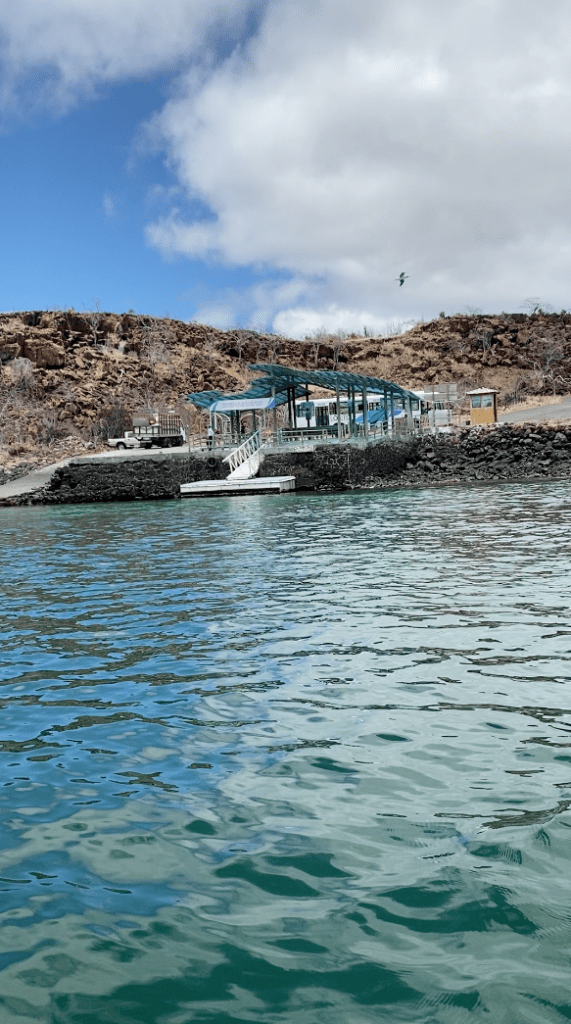
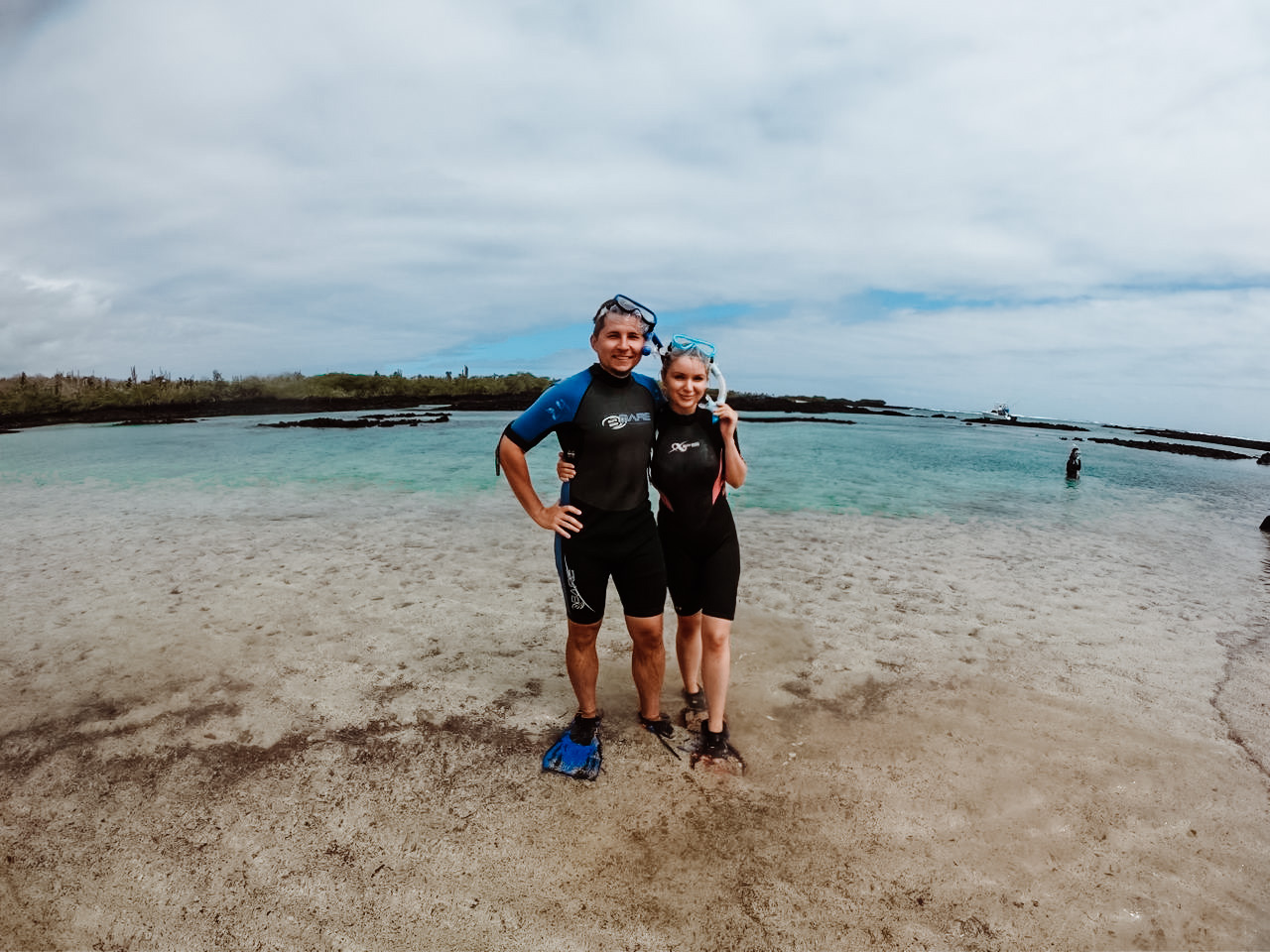
On a wet landing, the panga approaches the beach bow-first and the driver cuts the engine as the hull touches sand or enters shallow surf. A crew member holds the bow steady. Passengers move to the front or side of the panga one or two at a time, sit on the tube edge, swing both legs over into the water, stand up, and walk to shore. The water depth ranges from ankle to knee in standard conditions, occasionally higher if a wave arrives during the step. Crew members hold bags and assist passengers who need a steadying hand. The whole sequence per person takes about 15 to 20 seconds.
The sequence sounds more complicated written out than it is in practice. Most travelers who describe wet landings as difficult beforehand describe them as easy afterward. The Tauck Community forum captures this accurately: travelers who were anxious about wet landings before their trip consistently report that they were “nothing to worry about” once they experienced them. The water is shallow enough to stand in easily. The sand underfoot is firm enough to walk on without difficulty. The panga crew manages the boat while you focus on the step.
The one variable that changes the wet landing experience is wave timing. At most beach sites in the Galapagos, the swell is mild enough that the panga sits stable while passengers exit. On exposed beaches with more surf, a wave can arrive as you’re stepping off and push water higher than expected. This is when bags get wet if they’re not protected and when the occasional traveler loses balance. The crew watches for incoming sets and times the exit accordingly. Waiting for the crew’s signal rather than self-directing the exit is the correct approach and what the briefing instructs.
After the excursion, the return wet landing is the reverse: wade into ankle to knee-deep water, approach the panga bow, and board from the water with crew assistance. This is slightly more physically demanding than the exit because you’re stepping up onto the tube rather than stepping down. The crew pulls passengers up and in. It works smoothly when everyone waits their turn and doesn’t rush the person in front.
How a Dry Landing Works Step by Step
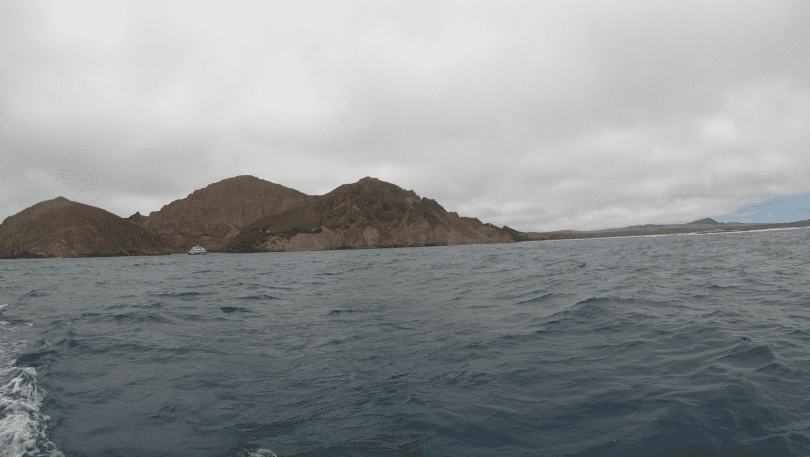
On a dry landing, the panga approaches a rock platform, wooden dock, or concrete step and a crew member holds the boat against the surface while the driver keeps the engine in gentle reverse to maintain position. Passengers move forward one at a time, take the crew member’s offered hand or forearm, step from the panga tube onto the surface, and move clear to make room for the next person. No water contact. The main skill required is stepping from a slightly moving surface onto a fixed one. The crew tells you which foot to lead with and where to place it.
Dry landings are misnamed in one important sense: the word “dry” implies easier, but that isn’t always true. A wet landing onto a flat sandy beach in calm conditions is physically straightforward for almost everyone. A dry landing onto a sloped lava rock surface in mild chop, with no railing, stepping from a panga that’s moving slightly against the rock, requires more coordination and confidence than the wet equivalent. Prince Philip’s Steps at Genovesa is the most frequently cited example: the landing is onto a natural rock ledge at the base of a cliff, and the steps that follow are steep and uneven. The landing type is “dry.” The experience is more demanding than most wet landings on the same itinerary.
At town docks like Puerto Ayora on Santa Cruz or the pier at San Cristobal, dry landings are flat, stable, and genuinely easy. The panga ties up alongside or the bow rests against a concrete step, and passengers step across onto a level surface with a crew member holding each person steady. These are the landings most consistent with what travelers imagine when they hear “dry landing.”
The returning dry landing follows the same sequence in reverse. The key difference from the wet landing return is that you’re stepping from a fixed surface back onto a floating one. Timing matters more here because the panga moves slightly even when the crew holds it. Taking the crew member’s hand and stepping at their signal rather than self-directing produces a smoother transfer.
Wet vs Dry Landing: Step-by-Step Comparison
| Step | Wet Landing | Dry Landing |
|---|---|---|
| 1. Approach | Panga approaches beach bow-first; engine cuts in shallow water | Panga pulls alongside rock, dock, or step; crew holds against surface |
| 2. Crew position | Crew holds bow steady; may take your bag | Crew holds panga against surface; offers hand or forearm |
| 3. Exit | Sit on tube edge; swing both legs over; stand in water | Step from tube edge onto surface; crew guides foot placement |
| 4. Transit to shore | Wade ankle to knee-deep to beach | Step clear immediately; no water |
| 5. Return sequence | Wade back to panga; board from water with crew assist | Step from surface back onto tube; take crew’s hand; time the step |
| 6. Main physical demand | Balance on sand in moving water; boarding from water on return | Stepping from moving surface to fixed; lava terrain on difficult sites |
Verified July 2026. Crew always assists on every transfer.
If mobility or physical confidence is a concern for anyone in your group, specific landing types at specific sites matter more than the general rules. Some itineraries have more dry landings on challenging rock surfaces; others are predominantly calm beach wet landings. We know which routes and vessels suit different physical profiles. Send us a message here and we’ll match you with the right itinerary.
Which Visitor Sites Have Wet Landings and Which Have Dry
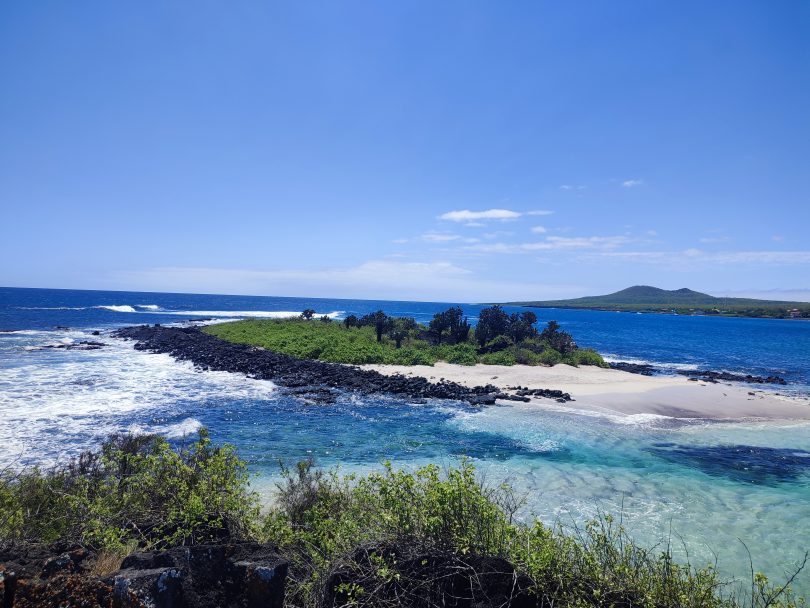
Wet landings happen at sandy beach sites. Dry landings happen at rock platform, dock, and cliff base sites. Most beach sites on standard Galapagos itineraries are wet landings: Gardner Bay on Española, Darwin Bay on Genovesa, Cerro Brujo on San Cristobal, Bachas Beach on Santa Cruz, Punta Cormorant on Floreana, and Rabida Island’s red-sand beach are all wet. Dry landings include Punta Suarez on Española, Prince Philip’s Steps on Genovesa, North Seymour Island’s rock platform, and town docks on inhabited islands. Some sites can be either type depending on conditions on the day.
The eastern route, which is the most common 7 or 8-day itinerary covering Santa Cruz, Española, San Cristobal, Floreana, and Genovesa, includes a mix that runs roughly 60% wet landings and 40% dry across the week. The western route covering Isabela and Fernandina has more dry landings at volcanic platforms and cliff sites. Travelers who are specifically anxious about wet landings should know that the eastern route includes some of the easiest wet landings in the archipelago: Gardner Bay’s beach is wide, flat, and has mild surf in most conditions.
One important nuance: landing type at a specific site can change on the day based on swell, tide, and sea conditions. A site that is typically a dry landing may switch to a wet approach if conditions make the rock platform unsafe to approach closely. The reverse is less common but possible. The guide and captain make these calls in real time and brief passengers accordingly before each transfer. Itinerary descriptions that list a specific landing type as fixed are approximations. The actual type on any given day is a weather-and-conditions call.
Landing Type by Common Galapagos Visitor Site
| Visitor Site | Island | Typical Landing Type | Terrain After Landing |
|---|---|---|---|
| Gardner Bay | Española | Wet | Flat white sand beach; easy walk |
| Punta Suarez | Española | Dry (rock/sand) | 2-mile trail; uneven lava; moderate |
| Darwin Bay Beach | Genovesa | Wet | Coral sand beach; flat short trail |
| Prince Philip’s Steps | Genovesa | Dry (rock cliff base) | Steep rocky steps; most demanding dry landing on common routes |
| North Seymour | North Seymour | Dry (rock platform) | Rocky trail; uneven but manageable |
| Bachas Beach | Santa Cruz | Wet | Sandy beach; flat; easy |
| Cerro Brujo | San Cristobal | Wet | White sand beach; flat |
| Punta Cormorant | Floreana | Wet | Green olivine sand beach; short flat trail to flamingo lagoon |
| Rabida Island | Rabida | Wet | Red sand beach; short walk; sea lion colony |
| Puerto Ayora dock | Santa Cruz | Dry (concrete pier) | Flat town dock; easiest dry landing |
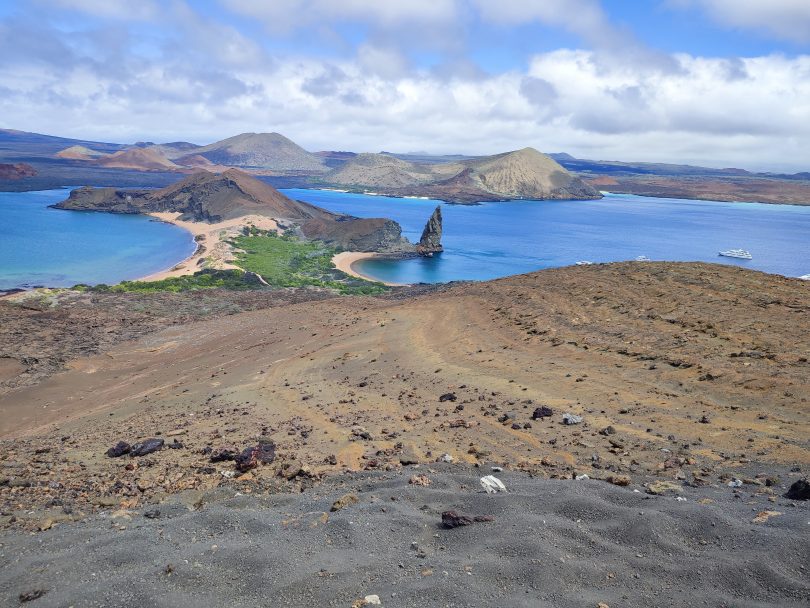
| Bartolome summit trail | Bartolome | Dry (wooden dock) | Wooden boardwalk to summit; steady steps |
Landing types are typical for standard conditions. Can change based on swell, tide, and captain judgment. Verified July 2026.
Knowing the landing type at each site before you arrive removes the uncertainty that makes first-timers nervous. We can walk you through the specific landing sequence at every site on any itinerary you’re considering. Reach out here and we’ll cover it in detail before you book.
Footwear, Gear, and How to Prepare for Each Type
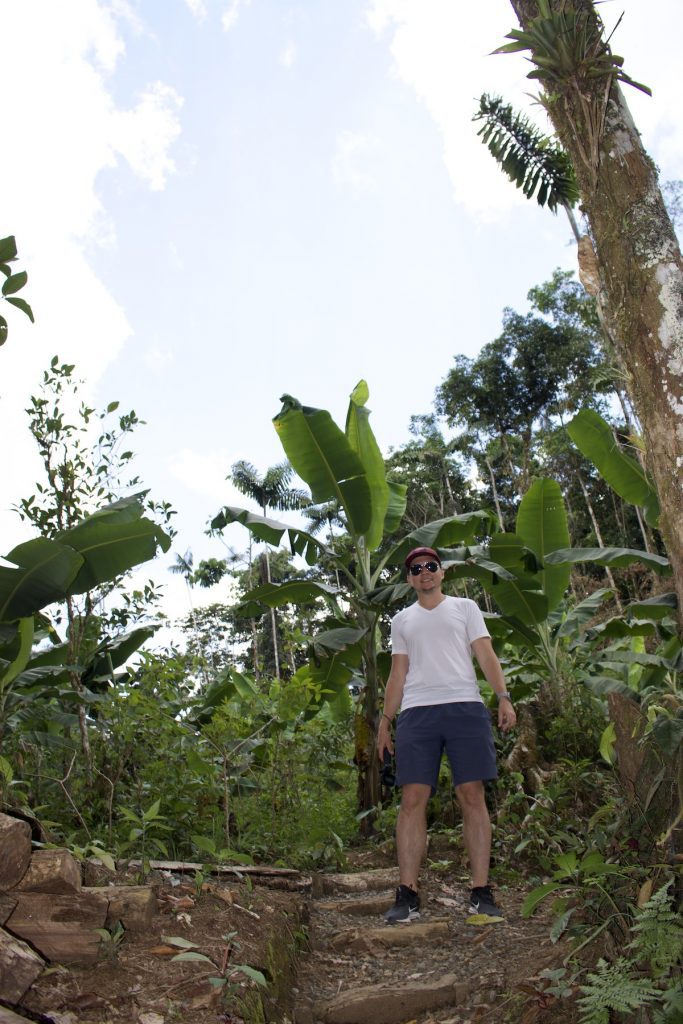
Bring two pairs of footwear for any Galapagos cruise: water shoes or sport sandals with a secure strap for wet landings, and hiking shoes or trail runners for dry landings. Nothing else about landing preparation is as consequential as getting this right. A dry bag or waterproof case for camera and phone is important for wet landings. A sunglasses strap and hat with a chin strap or fit that holds in wind matters on every panga transfer. Everything else is useful but secondary.
Water shoes for wet landings need to meet two criteria: they must stay on your foot when you step into water, and they must provide enough grip and support for the terrain after you reach shore. Flip-flops fail the first criterion in any real surf. Bare feet fail the second when the beach transitions to rocky or coral surfaces. Tevas and Keens are the most consistently recommended brands in traveler feedback across our audience because they strap securely, drain quickly, and have outsoles that work on both wet sand and rock. Any equivalent that meets those criteria works.
The dry bag question is genuinely more divisive. Some experienced Galapagos travelers consider it essential. Others report never having used one and never had equipment damaged. The honest answer: a dry bag eliminates risk entirely and costs very little. A ziplock bag inside a regular day pack reduces risk significantly at no cost. The travelers who report camera damage from salt spray almost always skipped protection on the basis that it “probably wouldn’t be an issue.” It sometimes is. Protect the camera.
Clothing for landings is guided by the same equatorial sun rules that apply everywhere on the cruise: lightweight and quick-drying, with sun protection for arms and neck. Long trousers for evening panga rides through mangroves protect against mosquitoes. A light packable layer for early morning excursions handles the temperature difference between the vessel and the island in the first hour. None of this is specific to landing type. It applies equally to all excursion formats.
Mobility, Families, and Managing Landings with Physical Limitations
Most travelers with moderate mobility limitations manage both wet and dry landings with crew assistance. The key question is not the landing itself but the terrain after it. A wet landing onto a flat sandy beach with sea lions is accessible for almost any traveler who can walk on soft sand. A dry landing onto Prince Philip’s Steps followed by a steep volcanic rock climb is not accessible for travelers with significant mobility or balance limitations. Understanding the specific terrain at each site, not just the landing type, is what matters for trip planning with any mobility concern.
Children manage both landing types well in most cases. The crew assists smaller passengers with extra care and the transfers are brief. The more relevant question for families with young children is the trail terrain after landing, which varies from flat beach walks to uneven lava hikes with significant elevation change. Operators set minimum age requirements for their vessels, typically ranging from 5 to 12 depending on the itinerary activity profile. This is worth checking before booking if your group includes young children.
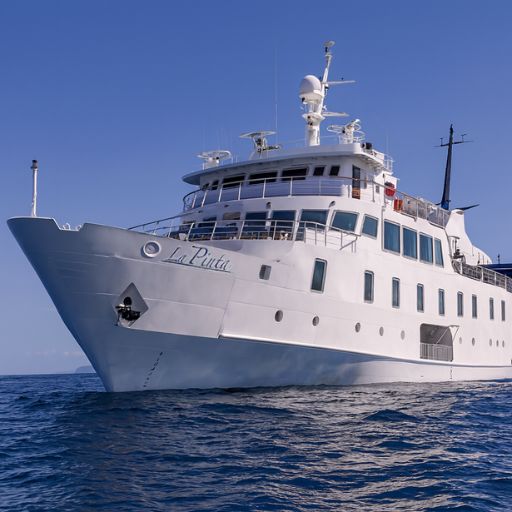
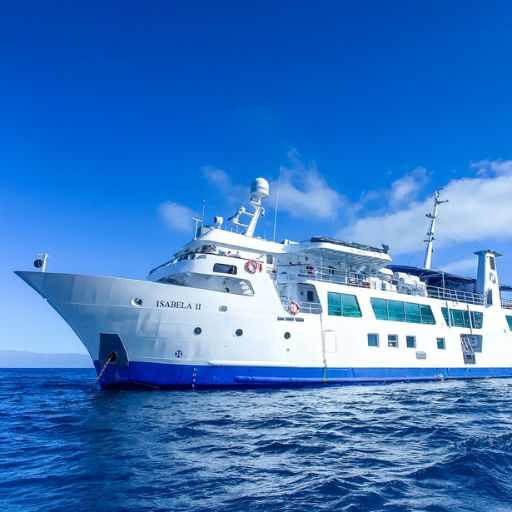
Senior travelers are a significant portion of the Galapagos cruise market and the majority report managing both landing types comfortably. The crew’s role in assisting boarding and disembarking is practiced and attentive. Where senior travelers encounter more difficulty is the terrain variation after landing: some trails involve uneven lava surfaces that require good balance and confidence. Larger mid-size vessels like La Pinta and Isabela II at 40 to 48 passengers tend to have steadier deck access and more crew support per passenger than 16-passenger yachts, which some older travelers prefer for exactly this reason.
Travelers with significant mobility limitations, including wheelchair users, face genuine constraints in the Galapagos environment. No visitor site has access ramps or paved paths. The National Park terrain is natural and remains so by design. Ecuador for All is currently the only operator offering specialized services for wheelchair users in the Galapagos. Most standard cruise operators are transparent that their vessels and sites are not wheelchair accessible beyond limited inhabited island areas.
The boat you choose shapes your entire Galapagos experience in ways most people don’t consider until they’re already on the water. Here’s an honest comparison of small yacht vs large cruise ship in the Galapagos so you pick the right one from the start.
Landing Suitability by Traveler Profile
| Traveler Profile | Wet Landing | Dry Landing (easy dock) | Dry Landing (rock/cliff) |
|---|---|---|---|
| Fit adult traveler | Easy | Easy | Manageable |
| Older adult; good mobility | Easy with crew assist | Easy | Challenging; assess site-by-site |
| Child 8 to 12 years | Easy; fun | Easy | Depends on child’s confidence |
| Child under 8 | Easy with adult/crew help | Easy with help | Not recommended |
| Traveler with knee issues | Usually manageable | Easy | Difficult; discuss with operator |
| Traveler with balance issues | Possible with crew support | Manageable | Not recommended |
| Wheelchair user | Not standard; specialist operator required | Limited dock access only | Not accessible |
General guidance. Individual vessel and site variation applies. Verified July 2026. For specific mobility planning, discuss with operator before booking.
What First-Timers Get Wrong About Landings
The most common landing mistake is assuming wet means harder and dry means easier. It doesn’t. The second most common mistake is wearing the wrong footwear, which is preventable by listening to the pre-excursion briefing. The third is not protecting camera equipment on wet landings. None of these errors are complicated to avoid. All three are completely predictable from the pre-trip information every reputable operator provides. The briefing exists to prevent them. Travelers who treat the briefing as optional information they already know are the ones who make avoidable mistakes.
The surprise that most consistently catches first-timers off guard is not the landing itself but what immediately follows a wet landing at a wildlife site. You step off the panga into ankle-deep water, wade to shore, and walk directly into a sea lion colony without any barrier or railing between you and the animals. The National Park requires two meters of distance between visitors and wildlife, which is a rule your guide enforces. But it’s still abrupt and wonderful in a way that no preparation fully captures. The panga sets down on the beach and the Galapagos begins immediately. There is no staging area, no entrance gate, no transition. The wildlife is right there.
First-Timer Landing Experience: What Our Travelers Report
Based on traveler interviews and survey data collected through mytrip2ecuador.com and the My Trip to Somewhere YouTube channel:
| Said wet landings were easier than expected | 81% |
| Said a dry landing was harder than expected | 29% |
| Wore wrong footwear for the landing type on at least one excursion | 31% |
| Had camera or phone get wet during a landing | 9% |
| Described a specific landing as a trip highlight moment | 57% |
| Said the guide’s briefing was essential to their confidence | 73% |
| Would have prepared differently with better pre-trip information | 38% |
Based on traveler interviews and survey data collected through mytrip2ecuador.com and the My Trip to Somewhere YouTube channel.
Frequently Asked Questions
How deep is the water on a Galapagos wet landing?
Ankle to knee-deep in standard conditions, which is typically 15 to 45 centimeters. Soft sand can sink an additional 10 centimeters under your weight. In mild surf, an incoming wave can temporarily raise the water level higher as you step off the panga. The crew watches incoming sets and times exits to minimize this, but it can happen. Water shoes that stay on your foot and have decent grip are the right answer.
Which landing type is better for elderly travelers?
Neither type is consistently easier for older travelers. The physical demands depend on the specific site. A wet landing onto Gardner Bay’s flat white sand beach is very manageable. A dry landing onto Prince Philip’s Steps on Genovesa is the most challenging landing on the common eastern itinerary. The relevant question is not wet vs dry but what specific terrain follows the landing. Discuss this with your operator for each site on your itinerary.
Can you skip a landing if you’re not comfortable?
Yes. Staying on the vessel is always an option. The guide will not pressure anyone to disembark, and the crew can arrange for a traveler to remain on the panga or return to the vessel if needed. Some travelers who are nervous about a specific landing opt to watch from the panga instead and find this a worthwhile alternative. You see the wildlife from water level, which is its own excellent perspective.
Does landing type affect the wildlife you see?
Not directly. The wildlife at a site is determined by the island’s ecology, not the landing type. Gardner Bay (wet landing) has one of the most densely populated sea lion colonies in the archipelago. Punta Suarez (dry landing) has waved albatross, blue-footed boobies, Nazca boobies, and a famous blowhole. Both are outstanding. The landing is how you get there. The wildlife is what you find when you arrive.
Wet landings and dry landings are two of the most Googled Galapagos questions before a trip and two of the least remembered after it. Because once you’ve done them, they’re just how you get to the places where the extraordinary things happen. The waved albatross at the cliff edge doesn’t care whether you walked in through ankle-deep water or stepped off a rock. Neither will you, once you’re there.
We help travelers understand what to expect at every site on every common Galapagos itinerary, including landing type, terrain, and physical demand. Rated 4.9 stars on Google and TripAdvisor. Get your free quote here and we’ll plan a trip matched to your group’s physical profile and priorities.
Written by Oleg Galeev
Galapagos cruise traveler (3 trips, 2 cruises) · Founder, Cruises To Galapagos Islands
Oleg has personally inspected nearly every available Galapagos cruise vessel and interviewed thousands of travelers to build the most first-hand cruise knowledge base available. He also runs the Ecuador travel blog mytrip2ecuador.com and the YouTube channel My Trip to Somewhere.
Cruises To Galapagos Islands is rated 4.9 stars on Google and TripAdvisor.
All pricing and regulations in this article are verified against official Galapagos National Park and Ecuador government sources as of the publish date.