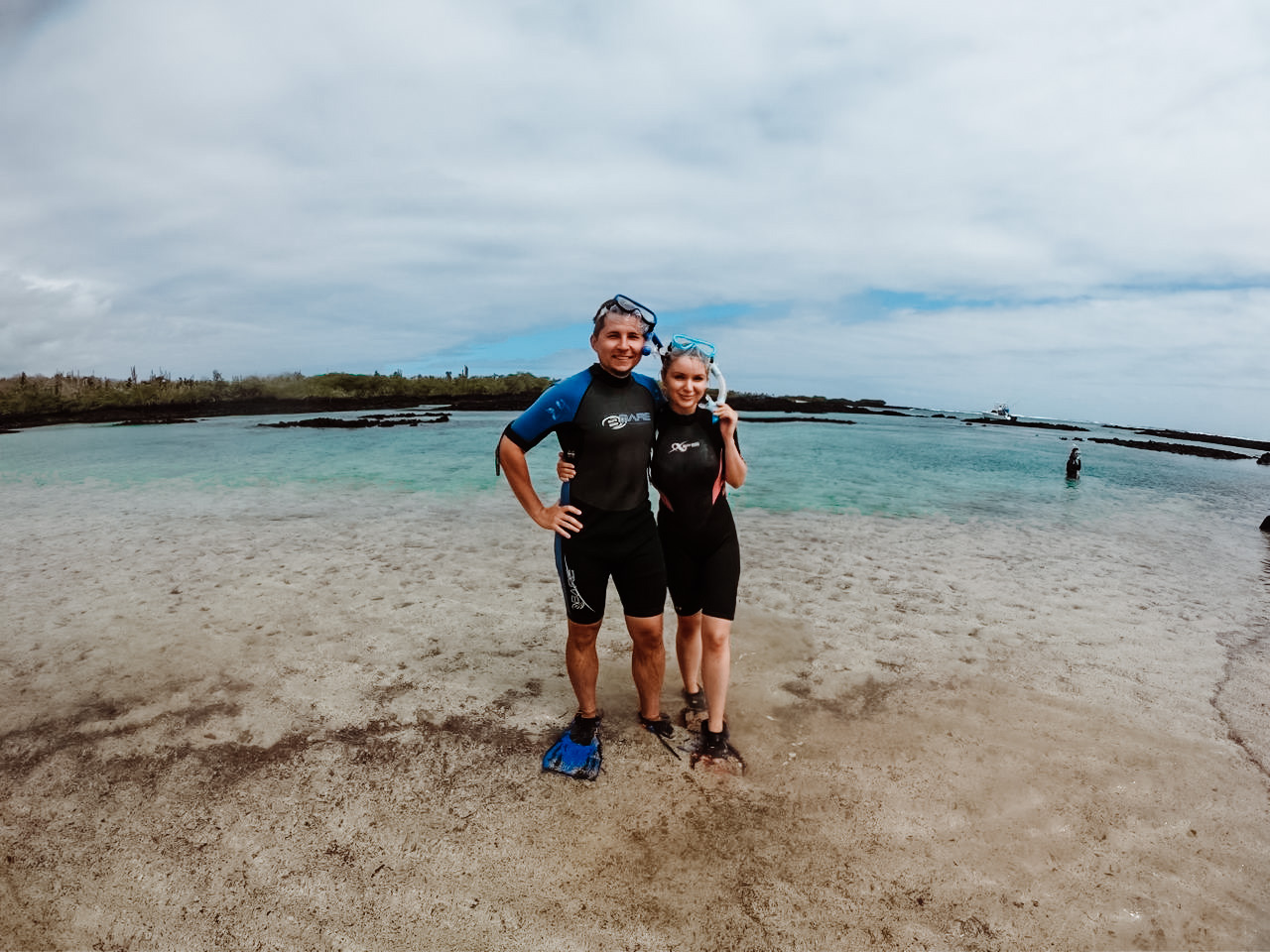
Upper Deck vs Lower Deck Cabins on a Galapagos Cruise
Part of our guide to the types of Galapagos cruises. Ready to pick a ship? See the best Galapagos cruises by price, size and class.
Quick Facts: Upper vs Lower Deck Cabins
| Feature | Lower Deck | Mid / Main Deck | Upper Deck |
|---|---|---|---|
| Motion in swell | Least | Moderate | Most |
| Typical window type | Porthole (small, round) | Picture window | Panoramic window or balcony |
| Natural light | Limited | Good | Best |
| Views from cabin | Near waterline; limited horizon | Good ocean views | Wide horizon; island views |
| Engine noise risk | Higher (cabin-dependent) | Low | Minimal |
| Wave noise at waterline | More audible | Moderate | Least |
| Foot traffic above cabin | Yes (from decks above) | Some | Less (top deck is open) |
| Price premium | Lowest | Mid-range | Highest |
| Best for | Budget; seasick-prone; value | Most travelers; good balance | Couples; view-seekers; light-lovers |
| Park entrance fee | $200/adult, $100/child (USD cash on arrival); same regardless of deck |
Details verified July 20, 2026. Individual vessel layouts vary.
Why Deck Position Matters More Than Most Travelers Realize
Deck position determines three things on a Galapagos cruise: how much motion you feel during overnight passages, how much natural light enters your cabin, and what you see when you look out the window each morning. These are not dramatic differences on most days, but they compound across seven mornings and seven nights. The traveler who woke up to a porthole of grey Pacific and the traveler who woke up to a panoramic window of islands at dawn had the same excursions. They had very different first ten minutes every day.
Most travelers asking about deck position are thinking about seasickness. That’s the right first question. But it’s not the only one. Natural light affects mood in ways that are hard to articulate until you’re in a windowless or near-windowless space for seven consecutive nights. The difference between pulling back a curtain onto a porthole and pulling back a curtain onto a full picture window showing the Galapagos at 6am is not trivial. It sets the register for the day.
On a 16-passenger yacht with two or three deck levels, the distance between lower and upper deck is a matter of meters. This is not a large ship where decks are separated by four flights of stairs and a significant elevation change. The physical difference is genuinely modest. The experiential difference in light and view is real and consistent. The motion difference is real in rough conditions and minimal in calm ones.
Understanding how your specific vessel is laid out before booking is the only way to make a genuinely informed deck choice. The generic rules about lower decks and upper decks apply broadly but mask significant vessel-specific variation. A lower deck cabin that sits directly above the engine room on one vessel is a completely different proposition from a lower deck cabin on a catamaran where the engine rooms are in the hulls and the lower deck passenger cabins are centered between them.
First time choosing a Galapagos vessel size and not sure why so many experienced travelers point to 16 passengers as the ideal? Our guide on the 16-passenger Galapagos yacht walks you through the real advantages of going small.
Lower Deck Cabins: Who They’re Actually Right For
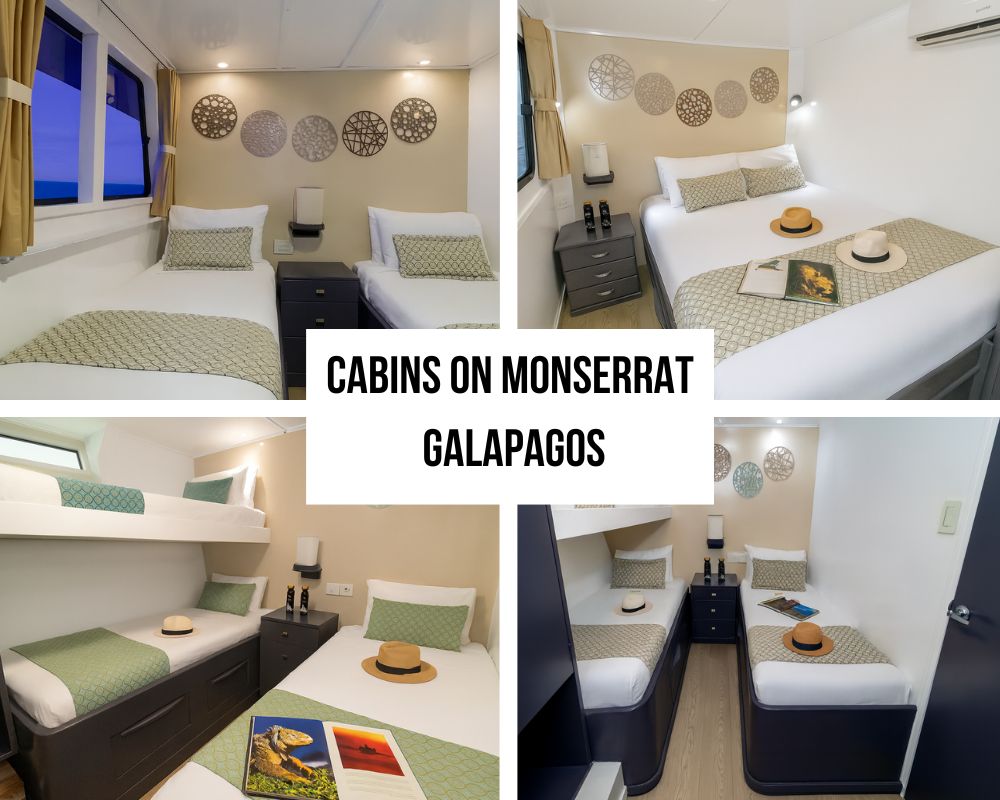
Lower deck cabins on Galapagos yachts are the right choice for travelers with any history of motion sickness, budget-conscious travelers wanting to maximize their vessel class without paying the deck premium, and anyone for whom the cabin is purely a place to sleep between excursions and the view from it genuinely doesn’t matter. They’re not the compromise choice most travelers assume. On a well-maintained vessel, a lower deck cabin is a perfectly comfortable base for a week at sea.
The motion advantage of lower deck positioning follows basic physics. A ship moves like an inverted pendulum: the pivot point is roughly at the waterline and the motion amplifies as you move away from it either upward or toward the bow or stern. Sitting lower and closer to the center of the vessel means you sit closer to that pivot point and feel less of the amplified swing. On a 16-passenger Galapagos yacht in calm conditions this difference is mild. In the Bolivar Channel on a western itinerary in August, it’s significant enough that travelers prone to motion sickness consistently report lower deck positioning as the most protective cabin choice short of medication.
The porthole question is where most travelers hesitate. Portholes are small, round, and fixed. They don’t open. They sit close to the waterline, which means in rough water you’ll occasionally see spray rather than sky. The natural light they admit is limited and directional. On a calm day at anchor in a protected bay they can be charming in a traditional nautical way. Over a week, the light limitation is something travelers notice. It’s the one genuine drawback of lower deck positioning that isn’t solved by choosing the right vessel.
The Monserrat’s lower deck cabins illustrate the better end of this category well. Renovated in 2025 with new furniture and described by the operator specifically as “the most comfortable option for those prone to motion sickness,” these cabins carry traditional portholes but are well-appointed and genuinely functional for a week aboard. The light limitation is acknowledged; the comfort of reduced motion is the explicit trade-off offered.
Upper Deck Cabins: What the Premium Buys You
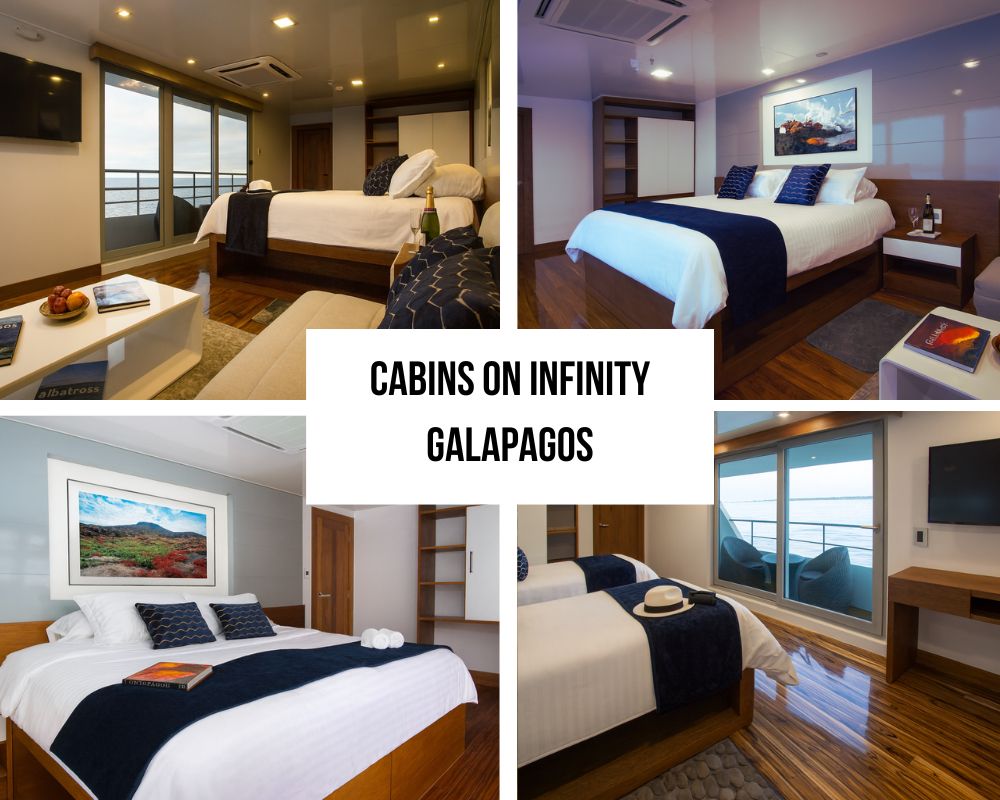
Upper deck cabins on Galapagos yachts deliver three concrete upgrades over lower deck: larger windows or private balconies, more natural light throughout the day, and views that extend to the horizon rather than the waterline. They’re quieter from engine noise and typically more secluded from foot traffic between social areas. The trade-off is more motion in rough conditions and a higher price. For travelers who are not motion-sensitive and who value natural light and morning views, the upper deck upgrade is consistent money well spent.
The Natural Paradise illustrates what upper deck positioning looks like at the luxury end of the 16-passenger market. Four of her eight cabins on the upper deck have private balconies with panoramic views. The remaining upper deck cabins have large windows with full horizon exposure. The lower deck cabin on the same vessel has portholes and is priced about 20 to 25% lower. The difference in the morning experience is the difference between waking inside a boat and waking inside a room that happens to be surrounded by the Pacific Ocean with the Galapagos outside the glass.
Upper deck cabins on smaller Galapagos yachts also tend to be quieter from the mechanical noise perspective. Engine rooms on most vessels sit in the lower aft section of the hull. Upper deck cabins are physically the furthest removed from that sound source. The trade-off is occasional foot traffic noise from passengers moving between social areas on the same level, which on a 16-passenger vessel is generally minor. The Infinity’s upper deck cabins receive specific praise in traveler reviews for their sense of seclusion: fewer people moving past the cabin door, a feeling of being slightly apart from the main social activity without being disconnected from it.
Lower Deck vs Upper Deck: The Practical Daily Difference
| Moment | Lower Deck Experience | Upper Deck Experience |
|---|---|---|
| Waking up at anchor | Porthole circle of light; limited view; quieter | Wide window or balcony; island or ocean panorama; full morning light |
| Overnight passage in calm water | Engine hum (cabin-dependent); minimal motion | Quieter mechanically; very slight movement |
| Overnight passage in rough water | Least motion; best for sleep | More movement; potential for disrupted sleep |
| Anchor drop at night | Audible; same on all decks on small yacht | Audible; same on all decks on small yacht |
| Reading or relaxing in cabin | Lower light; may need cabin lighting | Natural light; can read without switching on lights |
| Privacy and foot traffic | More foot traffic past cabin door | More secluded; less through-traffic |
| Seasickness risk | Lowest | Higher, especially bow/stern positions |
Based on operational experience and traveler feedback. Small vessel specifics vary. Verified July 2026.
The deck choice on any specific vessel depends on the actual layout of that vessel, not just the general rules. We know the cabin configurations of most vessels currently operating in the Galapagos, including which lower deck cabins sit near the engine room and which upper deck cabins feel genuinely private. Send us a message here and we’ll give you cabin-specific advice for any vessel you’re considering.
Seasickness, Motion, and the Physics of Deck Position
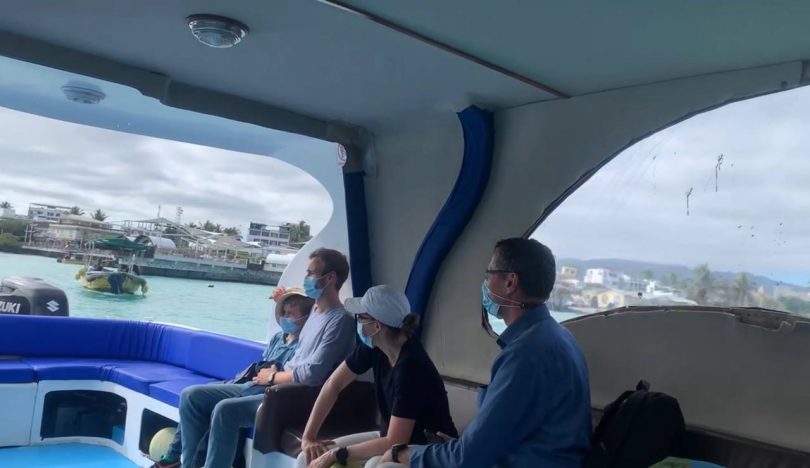
Lower and mid-ship positions minimize motion because they sit closest to the vessel’s center of rotation. The higher you go and the further toward the bow or stern you sit, the more amplified the movement. On a 16-passenger Galapagos yacht in typical conditions, the difference between decks is noticeable but manageable for most travelers. On the Bolivar Channel western crossing in rough season, it becomes significant. Seasickness medication combined with a lower mid-ship cabin is the most protective combination available.
The physics works like this: a ship at sea rolls around a pivot point near its center of buoyancy, which sits roughly at the waterline amidships. The motion at that pivot point is approximately zero. The further away from the pivot point you are, the larger the arc of motion you travel through during each roll. An upper deck cabin at the stern of a vessel is the maximum distance from the pivot point and experiences the amplified end of that arc. A lower deck cabin at mid-ship is as close to the pivot point as a passenger cabin can get and experiences the minimum arc.
On a small Galapagos yacht this effect is real but compressed by scale. The vessel is short enough that bow-to-stern distance is limited, and shallow enough that lower-to-upper deck distance is similarly modest. The difference between the most stable and least stable cabin position on a 16-passenger yacht is much smaller than the same calculation on a 300-passenger expedition ship. Travelers who have struggled with significant seasickness on larger ocean vessels sometimes report that small Galapagos yachts are more comfortable than expected regardless of deck, partly because of the vessel’s ability to shelter close to shore in protected anchorages overnight.
One counterintuitive note: catamarans change the calculation meaningfully. On a catamaran, the engine rooms sit inside the two hulls rather than in the center of a single hull. The passenger cabins between those hulls on the lower deck may actually sit between the engine compartments rather than near them. This means the engine noise profile of a catamaran lower deck cabin is different from a monohull lower deck cabin. The motion profile is also different: catamarans roll less from side to side but can pitch more bow-to-stern, and that pitch is felt across all deck levels fairly equally because of the twin-hull design.
Catamarans handle the open channel crossings better but yachts often win on atmosphere and intimacy. Here’s an honest comparison of catamaran vs yacht in the Galapagos so you weigh what matters most for your trip.
Noise, Light, and the Daily Reality of Each Deck
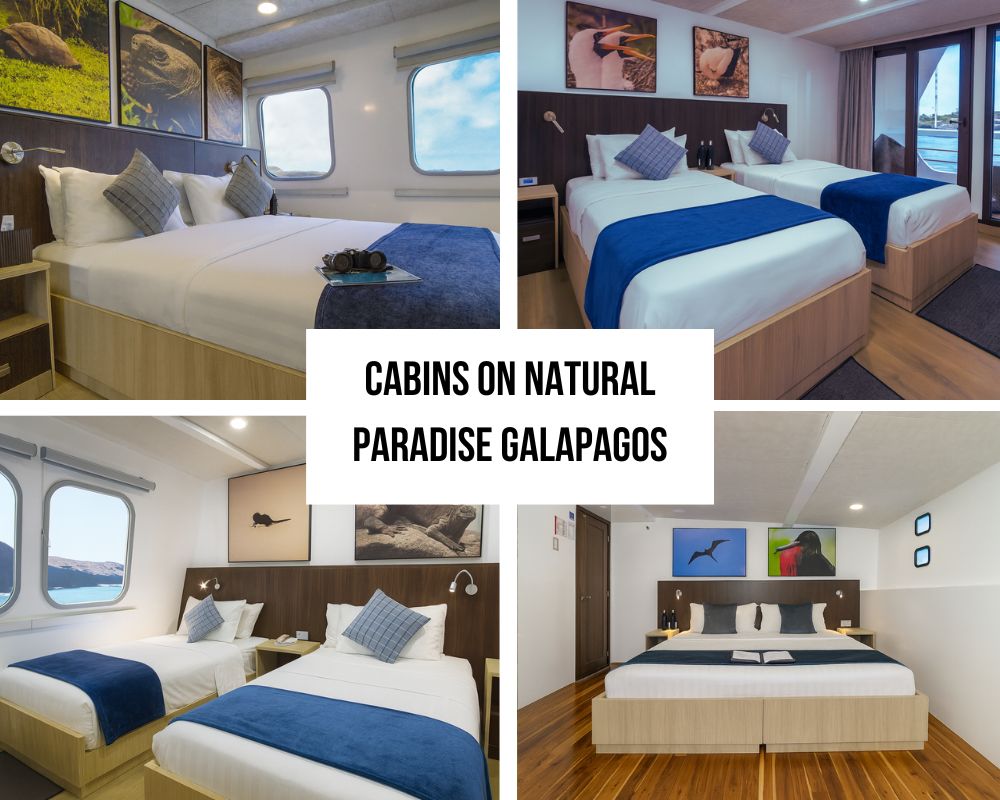
The two noise sources on Galapagos vessels are the engine and the anchor. Engine noise on lower decks ranges from inaudible on well-insulated vessels to a constant low hum on older ones. Anchor noise affects all decks equally and is abrupt and brief. Natural light is the more consequential daily difference: porthole cabins on lower decks require cabin lighting for reading and limit the sense of connection to the ocean environment. Picture window and balcony cabins on upper decks operate in natural light for most of the day.
Engine noise deserves an honest description because the range is wide. On a well-maintained, properly insulated Galapagos yacht, lower deck travelers consistently report that engine sound quickly becomes background white noise they stop noticing. On older vessels with less soundproofing, the hum is more present and some light sleepers find it genuinely disruptive during overnight passages. The only way to know which you’re dealing with is to ask the operator specifically about engine noise in the lower deck cabins and look for mentions of it in recent TripAdvisor reviews from travelers who stayed in those specific cabins.
The anchor drop happens once per night and lasts about one minute. The chain running through the bow hawse pipe is loud and sudden. Experienced Galapagos travelers universally advise first-timers to expect it rather than be startled awake thinking something is wrong. It affects all deck levels approximately equally on small yachts. Earplugs solve it entirely.
Natural light is where the daily lived difference between decks shows up most consistently in traveler feedback. The Monserrat’s upper deck cabins have expansive windows that fill the cabin with morning light. The lower deck cabins have portholes that admit a circle of light. Both sleep the same. Only one reads naturally without the overhead light on. Only one shows you the Galapagos when you look up from your book. That difference, accumulated across seven mornings and seven evenings of time in the cabin, shapes mood in ways that travelers consistently report even when they can’t articulate the mechanism precisely.
Noise Sources by Deck Position on Galapagos Small Yachts
| Noise Source | Lower Deck | Mid Deck | Upper Deck | Mitigation |
|---|---|---|---|---|
| Engine hum (underway) | Variable; white noise to audible depending on vessel | Low; muffled | Minimal; furthest from engine | Earplugs; well-insulated vessel |
| Anchor chain (drop/raise) | Audible; all decks similar on small yacht | Audible | Audible | Earplugs; expected warning from crew |
| Wave noise at hull | Most; near waterline | Less | Least | Normal at sea; settles when anchored |
| Foot traffic above cabin | Present; social area movement above | Moderate | Least; top deck is open | Not usually a problem on small vessels |
| Galley sounds (early morning prep) | Possible if near galley | Variable | Less | Ask about galley position at booking |
Applies to typical 16-passenger monohull yachts. Catamaran noise profiles differ. Verified July 2026.
Engine noise, anchor timing, and galley proximity vary significantly between specific vessels. We’ve heard these details from returning travelers and know which boats have noise issues in specific cabin positions. Reach out here before you book and we’ll tell you honestly what to expect in the cabin you’re considering.
Smaller boats get to the landing sites first and larger ships have better stabilizers for rough crossings. Here’s an honest comparison of small yacht vs large cruise ship in the Galapagos so you weigh what actually matters for your trip.
Price Difference and Whether the Upgrade Is Worth It
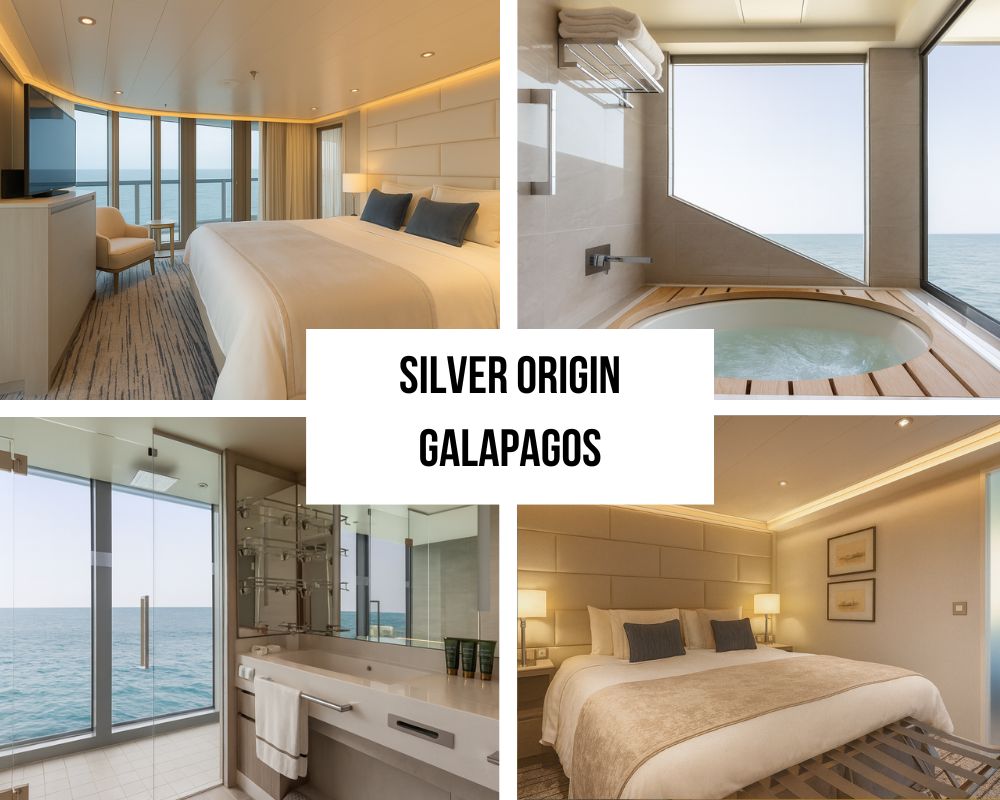
The price difference between lower and upper deck cabins on a 16-passenger Galapagos yacht typically runs $200 to $800 per person for a week-long cruise, representing a 10 to 25% premium on the base cabin rate. On larger 48 and 100-passenger ships with more cabin categories, the range can be $500 to $2,000+ per person. The upgrade to picture window mid-deck is almost always worth it. The further upgrade to upper deck balcony is a more personal calculation depending on whether the outdoor private space matters to you.
The upgrade value framework we use: if the price difference between a porthole lower deck cabin and a picture window mid-deck cabin is under $500 per person for a 7-night cruise, and you have no specific motion sensitivity reason to choose lower deck, the mid-deck upgrade is worth doing. You will spend time in your cabin every morning and evening regardless of how much time you spend on the islands. Natural light and a real view change that cabin time from functional to pleasant.
The further upgrade from mid-deck to upper deck is worth it specifically for: couples on a milestone trip who want the cabin itself to feel special, travelers who plan to spend meaningful time in the cabin reading or relaxing during the midday break, and anyone for whom a private balcony represents something they want to experience on this specific trip. It is not worth it for travelers with any motion sensitivity, for travelers who genuinely don’t care about the cabin beyond a place to sleep, or for travelers where the budget difference would be better spent on a vessel class upgrade or a longer itinerary.
Ship size in the Galapagos affects everything from landing priority to dinner conversation. Here’s a full guide to Galapagos cruise ship sizes so you understand what 16 vs 48 vs 100 passengers actually means for your experience on the water.
How to Choose and What to Ask Before Booking
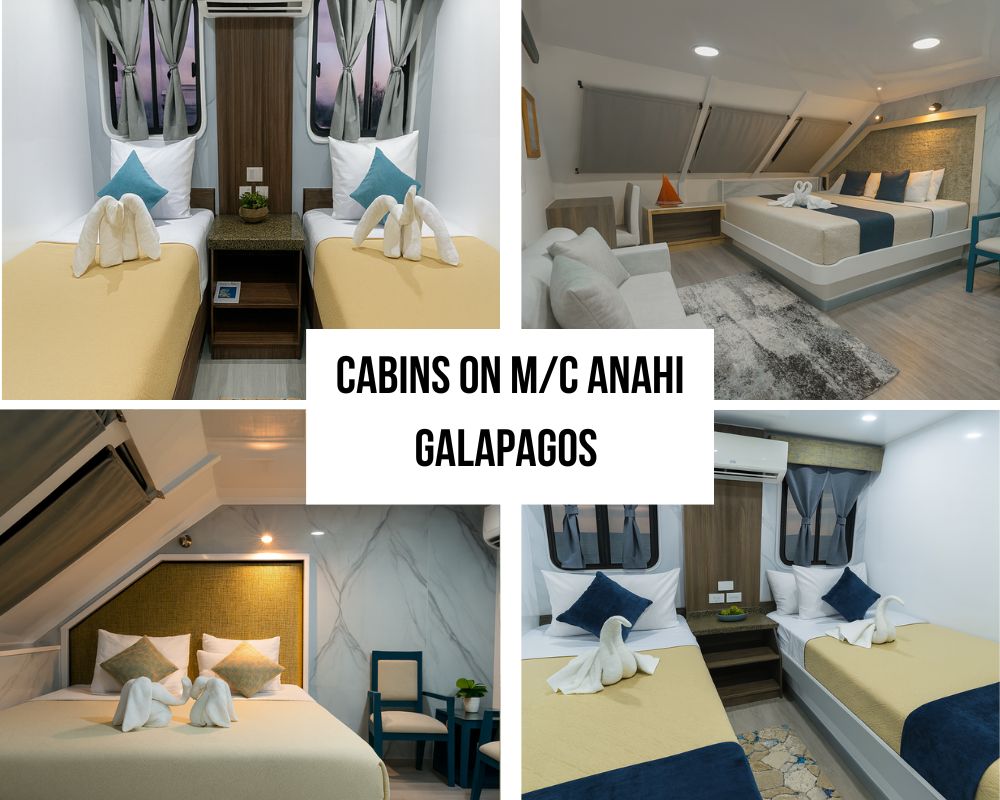
The decision comes down to two questions: Do you have any motion sensitivity? And how much does natural light and a cabin view matter to you on a daily basis? Motion sensitive travelers should book lower or mid-deck regardless of price. Travelers without motion concerns who value morning light and island views should book mid or upper deck. Everyone should ask the operator for the specific cabin number assigned and whether it is near the engine room or galley before confirming.
The most useful question to ask any Galapagos operator before finalizing a cabin booking is not “which deck?” but “which specific cabin number on that deck?” Knowing you have a lower deck cabin tells you the porthole and motion profile. Knowing you have lower deck cabin 3 rather than lower deck cabin 6 tells you whether you’re mid-ship or near the engine room, whether you’re near the stairwell from the deck above, and whether the cabin is positioned amidships where motion is minimized or toward the stern where it’s amplified even on the lower deck. Operators who can answer this question readily are running a vessel they’re confident in. Operators who respond vaguely are flagging uncertainty about the product they’re selling.
A practical tip from traveler feedback collected through mytrip2ecuador.com: book cabins in the middle of the lower or mid deck rather than at the forward or aft ends. Cabin 1 on the lower deck is typically near the anchor chain at the bow. The last cabin on the lower deck aft is closest to the engine room. Cabins 3 and 4 on a 6-cabin lower deck are usually the quietest and most stable. This applies across most 16-passenger yacht layouts regardless of vessel.
Entry fees are the same regardless of which deck you book. The National Park entrance fee is $200 per adult and $100 per child under 12, paid in USD cash on arrival at Baltra or San Cristobal airport. The Transit Control Card is $20 per person, completed online before the flight through the official CGREG government portal. Neither is included in cruise rates at any cabin level.
We’ve got a full breakdown on Galapagos cruise cabin types if you want to know exactly how the options compare on size, location, natural light, and what you actually give up by going with the cheaper berth.
Who Should Choose Which Deck: Decision Guide
| Traveler Profile | Recommended Deck | Reason |
|---|---|---|
| Prone to seasickness | Lower deck; mid-ship position | Minimum motion; closest to pivot point |
| Couples on milestone trip | Upper deck; picture window or balcony | Morning views; light; cabin feels special |
| Budget-conscious travelers | Lower deck | Lowest price; same excursions; same wildlife |
| Light-sensitive or early risers | Mid or upper deck | Natural light from first light; better morning ambience |
| Travelers on western itinerary Jul–Nov | Lower deck | Bolivar Channel crossing; rough conditions likely |
| Solo traveler (noise sensitive) | Mid deck; avoid cabin nearest galley | Best balance of light, quiet, and motion |
| Families with children | Lower or mid deck | Stability; easier access to social areas; lower price |
| Traveler who rarely uses cabin | Lower deck | Save the upgrade budget for a better vessel class or longer itinerary |
Verified July 2026. Deck availability varies by vessel. Confirm with operator.
Traveler Satisfaction by Deck Position: What Our Feedback Shows
Based on traveler interviews and survey data collected through mytrip2ecuador.com and the My Trip to Somewhere YouTube channel:
| Satisfied with cabin | 62% | 83% | 93% |
| Wished they had chosen a higher deck | 41% | 13% | 2% |
| Reported meaningful engine noise | 28% | 8% | 3% |
| Experienced meaningful seasickness | 14% | 19% | 27% |
| Mentioned morning view as a highlight | 9% | 34% | 64% |
| Would choose same deck again | 71% | 88% | 94% |
Based on traveler interviews and survey data collected through mytrip2ecuador.com and the My Trip to Somewhere YouTube channel.
Common Mistakes When Choosing Deck Position
- Booking upper deck with motion sensitivity. The physics is consistent: higher positions amplify motion. Anyone who has experienced seasickness on a boat before should book lower or mid-deck regardless of view preferences.
- Not asking which specific cabin number on the lower deck. Lower deck cabin 1 (near the anchor chain) and lower deck cabin 4 (near the engine room) are different sleeping experiences. Mid-ship lower deck cabins are always quieter than bow or stern lower deck positions. Ask for the specific number.
- Assuming upper deck means better on a catamaran. On a catamaran, engine rooms sit in the hulls. The noise and motion profiles differ from a monohull. The lower deck cabin between the hulls on a catamaran may be quieter than the lower deck on a comparable monohull. Ask the operator to explain the specific layout.
- Underestimating the light difference. A porthole admits limited light. A picture window admits the Galapagos. Over seven mornings and seven evenings, the mood difference this creates is real. Travelers who chose the porthole for the budget saving consistently report wishing they had paid for natural light.
- Spending the deck upgrade budget before considering vessel class. The most common cabin mistake we see: spending $600 per person on an upper deck upgrade on a mediocre vessel when that same $600 would buy a better vessel class with a stronger guide on a mid-deck cabin. Get the vessel and guide right first. Then optimize the cabin.
Frequently Asked Questions
Is a lower deck cabin always better for seasickness on a Galapagos cruise?
Lower deck is better than upper deck for motion sensitivity, yes. But the most stable position combines low deck with mid-ship placement. A lower deck cabin at the bow or stern still moves more than a mid-deck cabin at mid-ship. Ask specifically for a mid-ship lower deck cabin if seasickness is the priority.
Is there a big price difference between lower and upper deck cabins?
On a 16-passenger Galapagos yacht, typically $200 to $800 per person for a week-long cruise, representing 10 to 25% of the base cabin rate. On larger vessels with more cabin categories, the range is wider. Mid-deck picture window cabins are the best value for most travelers who prioritize both light and budget.
Do upper deck cabins always have better windows?
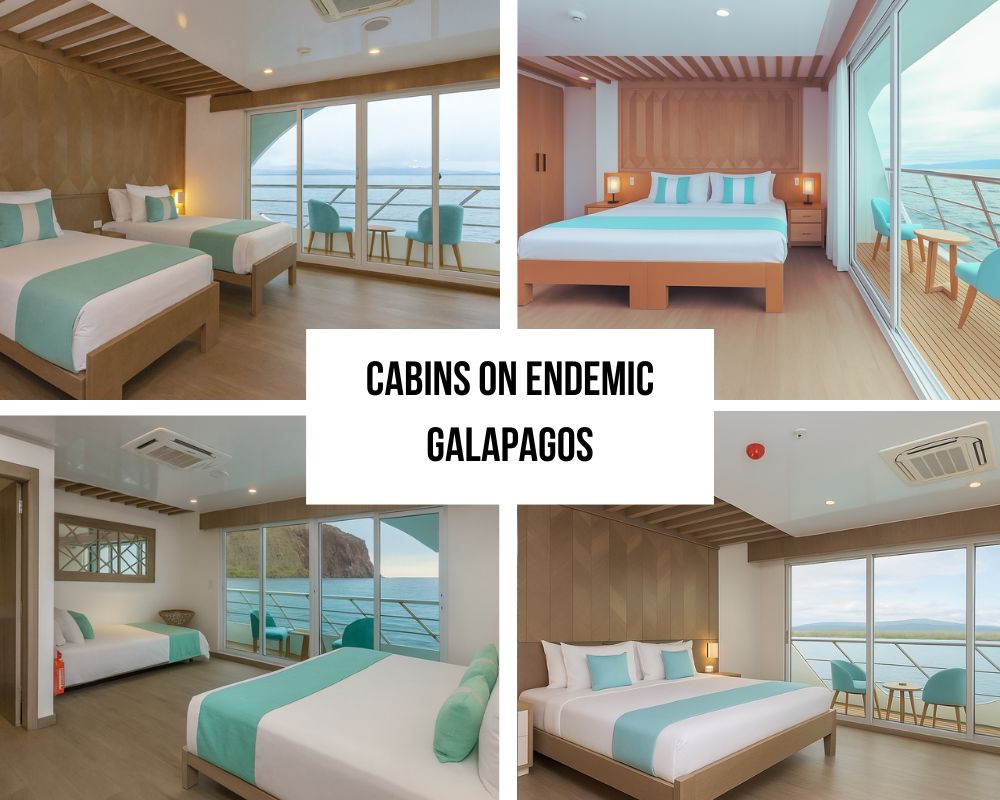
Generally yes, but vessel-specific. Most Galapagos yachts put portholes in lower deck cabins and picture windows or balconies in upper deck cabins. Some luxury vessels like the Endemic have panoramic windows or balconies on all deck levels regardless of position. Confirm window type by specific cabin number, not just by deck label.
How loud is the anchor on a Galapagos yacht?
Loud enough to wake light sleepers and startling if you’re not expecting it. The anchor chain runs through a pipe in the bow and creates a distinctive rattling-grinding sound when deployed or raised. It lasts about one minute. It happens on all decks at roughly similar volume on a 16-passenger yacht. Earplugs solve it entirely. The crew can usually give you advance warning of anchor timing if you ask at briefings.
Deck position is the kind of detail that sounds minor until you’re in a porthole cabin at dawn watching a circle of grey water instead of the islands. Or until you’re in an upper deck cabin in the Bolivar Channel at 2am wishing you’d taken the motion-stable lower berth. Getting this choice right requires knowing your specific vessel’s layout, not just the general rules.
We know the cabin configurations across the Galapagos fleet because we’ve been on these boats and track returning traveler feedback continuously. Rated 4.9 stars on Google and TripAdvisor. Get your free quote here and we’ll match you with the right cabin on the right vessel within one business day.
Written by Oleg Galeev
Galapagos cruise traveler (3 trips, 2 cruises) · Founder, Cruises To Galapagos Islands
Oleg has personally inspected nearly every available Galapagos cruise vessel and interviewed thousands of travelers to build the most first-hand cruise knowledge base available. He also runs the Ecuador travel blog mytrip2ecuador.com and the YouTube channel My Trip to Somewhere.
Cruises To Galapagos Islands is rated 4.9 stars on Google and TripAdvisor.
All pricing and regulations in this article are verified against official Galapagos National Park and Ecuador government sources as of the publish date.