Waved Albatross in Galapagos: When to See Them on a Cruise
Quick answer
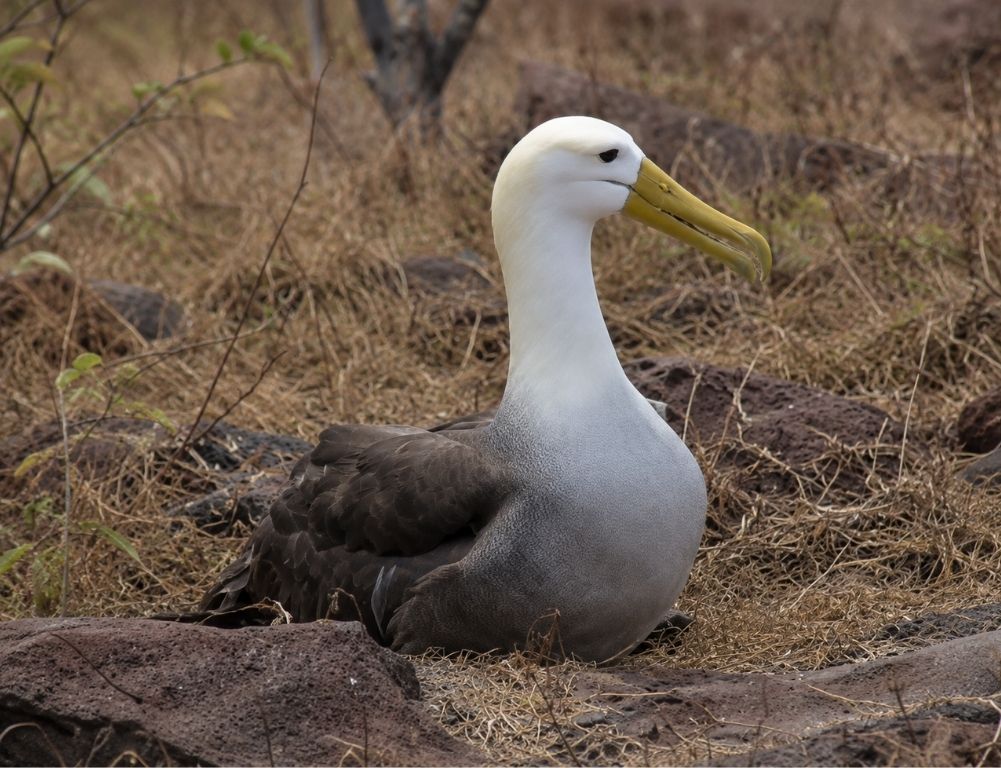
The waved albatross nests on a single island in the world: Española Island in the southern Galapagos. They are present from April through December. Outside those months there is nothing to see on Española because they have gone to sea. The courtship dance, which can last five days between a reunited pair, is best witnessed April through June when pairs are re-establishing bonds. Chicks are visible September through November. Your cruise itinerary must explicitly include Punta Suarez on Española to see them. No other site in the Galapagos, or on Earth, offers this encounter.
Part of our guide to what wildlife you can see on a Galapagos cruise. Ready to pick a ship? See compare all Galapagos cruise ships by price, size and class.
Quick Facts: Waved Albatross in the Galapagos
| Fact | Detail |
|---|---|
| Species | Phoebastria irrorata; endemic to the Galapagos; nests only on Española Island |
| IUCN status | Critically Endangered since 2007 |
| Population | 25,000 to 30,000 adult birds; 12,000+ breeding pairs on Española |
| Wingspan | Up to 2.5 metres; largest bird in the Galapagos |
| On Española | April to December; absent January to March |
| Best for courtship dance | April to June when pairs reunite and re-establish bonds |
| Best for chicks | September to November |
| Only visitor site | Punta Suarez, Española Island; Punta Cevallos also nests but is closed to visitors |
Data verified August 7, 2026, against Galapagos Conservancy, Charles Darwin Foundation, IUCN, and published research.
What Makes the Waved Albatross the Most Dramatic Bird in the Galapagos?
The waved albatross is the largest bird in the Galapagos with a wingspan of up to 2.5 metres, and it nests in a single location on Earth: a specific stretch of rocky ground on Española Island. It mates for life. Every April, the entire global population returns to this one island after months at sea, and reunited pairs perform a courtship dance of such length and complexity that experienced wildlife travelers who have seen breeding displays across every continent consistently describe it as one of the most remarkable behavioral spectacles in the natural world. Nothing else in the Galapagos, and very little anywhere, comes close to what happens at Punta Suarez from April through June.
The name comes from the fine brown barring across the white plumage of the upper breast and neck, a waved pattern visible at close range on the trail. The bright yellow bill is disproportionately large and immediately distinctive. On the ground these birds are clumsy in a way that feels deliberate, waddling between nesting sites with what one researcher called a drunk sailor’s gait. In the air they are transformed: a 2.5-metre wingspan riding the ocean updrafts with almost no perceptible wingbeat, covering hundreds of kilometres in hours between Española and the productive feeding grounds off the coasts of Ecuador and Peru.
The biology is built around a single profound constraint: the albatross produces one egg per year, incubated for two months by both parents in alternating shifts, with the resulting chick fed and protected for another five months before it fledges. The entire cycle from arrival to departure occupies April through December. After fledging, a young albatross will spend the next five years entirely at sea before returning to Española to find a lifelong mate. Adult mortality has risen in recent decades due to longline fishing bycatch, which has pushed the species from Vulnerable to Critically Endangered. But on Española during breeding season, the colony of 25,000 to 30,000 birds feels improbably vast and healthy for an animal in serious trouble beyond the island’s edge.
The encounter at Punta Suarez is also structurally different from most Galapagos wildlife experiences. Other iconic species, sea lions, marine iguanas, blue-footed boobies, are present across multiple islands and multiple seasons. The waved albatross is available in one place, in one window, and then it is gone for four months. That specificity concentrates something.
We’ve got a full breakdown on the best sea lion snorkeling encounters on a Galapagos cruise if you want to know exactly which islands, bays, and snorkel sites put you in the water with the most active colonies.
Where in the Galapagos Can You See the Waved Albatross?
Española Island is the only place on Earth where the waved albatross nests. Within Española, the accessible visitor site is Punta Suarez on the island’s southern tip. A second nesting area at Punta Cevallos exists on the eastern end of the island but is permanently closed to visitors. During the non-breeding season from January through March, waved albatrosses are entirely absent from the Galapagos and can occasionally be spotted at sea off the coasts of Ecuador and Peru. Any cruise visit to Española outside April through December will find no albatrosses.
Española sits in the far southeast of the Galapagos archipelago, making it a longer overnight sail from the central islands than most other wildlife destinations in the chain. The crossing from Santa Cruz takes approximately 8 hours. This distance keeps Española off shorter central-island itineraries and means it typically appears on southern loops of 7 days or more. The isolation has also produced something valuable: Española has a higher proportion of endemic species than almost any other island in the Galapagos, because its distance from neighboring islands reduced gene flow and accelerated local evolution.
Punta Suarez is a 3-kilometre trail along the island’s rocky southern coast that passes directly through the albatross nesting colony, continues to a clifftop blowhole where ocean swells force water 23 metres into the air, and returns past Nazca booby nesting grounds, blue-footed booby display sites, and the endemic Española mockingbird. The trail is well-marked and the terrain is rocky but manageable for most fitness levels. The albatross colony is encountered roughly midway along the route: birds nesting within metres of the path, pairs dancing on the open ground, and the constant coming and going of adults arriving from or departing for the sea.
Gardner Bay on Española’s north coast is the island’s other visitor site and is excellent for sea lions and snorkeling. It has no albatross. If your cruise visits Gardner Bay only, you will not see the albatross. Confirm specifically that your itinerary includes Punta Suarez. Send us a message here and we’ll verify your itinerary includes the right landing site on Española.
We’ve got a full breakdown on why Española is one of the best Galapagos cruise stops if you want to know exactly which wildlife encounters, landscapes, and experiences make this island worth building your itinerary around.
When Is the Best Time to See the Waved Albatross?
The waved albatross is on Española from April through December. Within this window, different months offer different highlights. April through June is the courtship peak: males arrive first in late March, females follow, and established pairs perform the full bonding dance before egg-laying begins in mid-April through late June. July and August bring incubating adults and the first hatching chicks. September through November is when fully grown fluffy chicks share the trail with their parents. December sees fledglings preparing to leave. Any month from April through November delivers a compelling encounter. January through March delivers nothing.
| Period | What You See | Highlight |
|---|---|---|
| Late Mar to Apr | Males arriving first; reunion dances beginning | First courtship displays of the season; high energy colony |
| Apr to Jun | Full courtship dances; egg-laying begins mid-April | Peak for the complete dance sequence; multiple pairs displaying simultaneously |
| Jul to Aug | Adults incubating; first chicks hatching from early June onward | Incubating pairs; new chicks appearing; adults returning from sea |
| Sep to Nov | Large fluffy chicks; adults foraging and returning to feed | Best for chicks; colony at maximum visible population |
| Dec | Fledglings preparing to leave; colony thinning | Last chance before departure; dramatic cliff takeoffs |
| Jan to Mar | No albatrosses on Española | Gardner Bay snorkel still excellent; no albatross visit |
One practical nuance worth understanding: egg-laying itself involves a peculiar behavior unique to this species. The waved albatross does not build a conventional nest. Instead, the pair lays the egg directly on the ground and then periodically moves it by placing it between the tops of their feet and shuffling forward, sometimes relocating the egg by several metres over the incubation period. Research has documented that this “walking the egg” behavior is responsible for up to 80 percent of hatching failures when eggs become lodged in rock crevices or roll beyond reach. It is a behavioral quirk that costs the species thousands of breeding attempts each season and has puzzled ornithologists since the first systematic study of the colony in 1973.
What Is the Courtship Dance Actually Like?
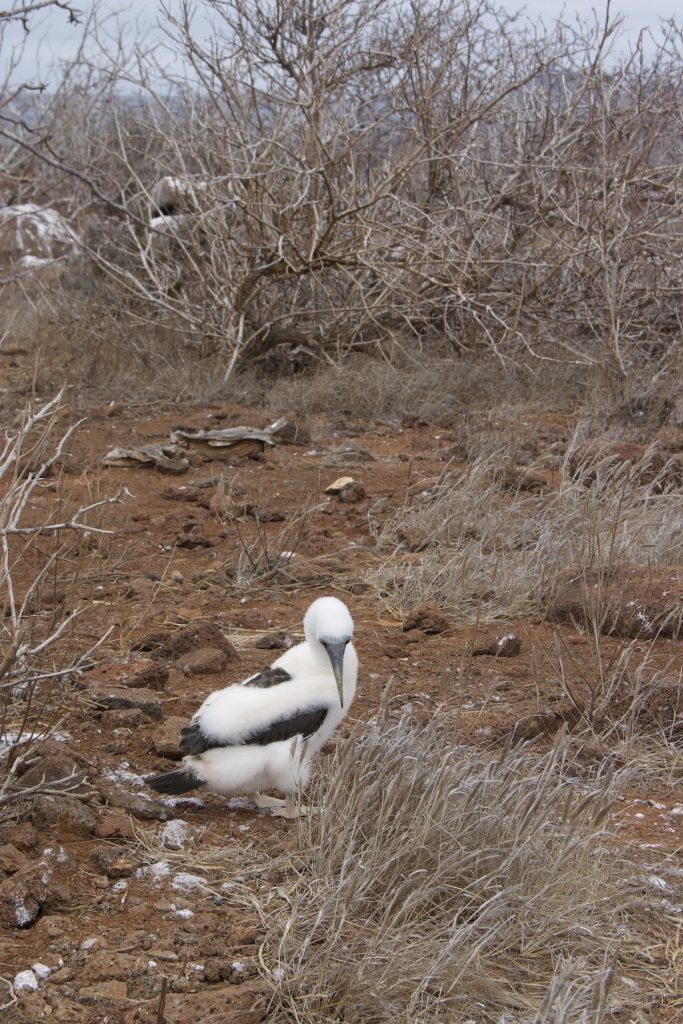
The waved albatross courtship dance is a multi-element sequence lasting from a few minutes to several days, performed by lifelong pairs who must re-establish their bond each season after months apart at sea. New pairs and pairs who failed to breed the previous season perform longer and more elaborate versions. The sequence includes rapid bill fencing in which the birds face each other and slap their bills back and forth at speed, bowing, exaggerated head swaying, waddling in circles, a distinctive honking sound, and a skyward bill point accompanied by a loud “whoo-oo” call. Watching it at close range on the Punta Suarez trail is genuinely disorienting in the best possible way.
The dance opens contact: both birds approach each other and begin a sequence of synchronized movements that has been compared to an elaborate handshake and to an argument conducted entirely through gesture. The bill fencing phase is the most visually intense, with both birds rapidly clacking their long yellow bills against each other in a back-and-forth rhythm that looks aggressive but produces no injury. This transitions into bowing movements where both birds dip their heads low and raise them in sequence. The head swaying involves each bird tracing wide arcs with its bill while the other watches, and at the end of some sequences only one bird raises its bill skyward while its partner keeps watching, before roles switch. The whole performance is punctuated by honking, by the occasional awkward waddle that the bird seems entirely unaware is comical, and by brief pauses where both birds simply stand still, apparently recalibrating.
Established pairs who bred successfully the previous season go through a shorter version of the ritual before settling quickly into nesting. Pairs reuniting after a failed breeding season, or young birds pairing for the first time, can sustain the full display for up to five days with breaks for feeding and rest. Wildlife researchers have noted that the dance appears to function as an assessment mechanism: the complexity and synchronization of the display between two birds signals their compatibility and coordination quality as a breeding pair. A mismatched pair that cannot synchronize their movements may not proceed to egg-laying.
The experience of watching this on the trail at Punta Suarez is heightened by proximity. These birds have no learned fear of humans, and a dancing pair will perform their entire sequence within three metres of observers who stay still and quiet on the path. A group that moves slowly, stays together, and gives the birds a moment to adjust to their presence will witness something that feels genuinely private even when standing a few steps away. This is one of the defining wildlife encounters available on a Galapagos cruise, and it does not require perfect conditions or good luck. If you are there in April through June, it is happening around you.
How Does Your Cruise Route Affect Albatross Sightings?
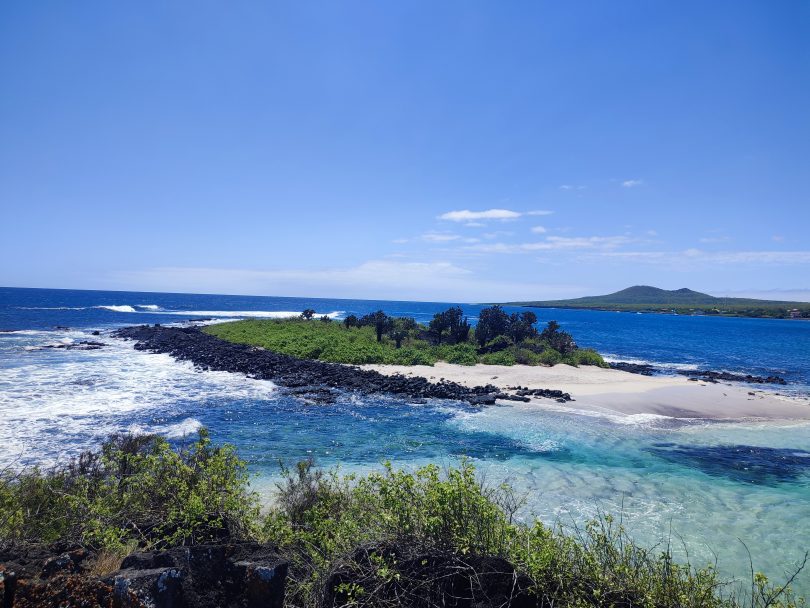
Española appears on southern itineraries, typically as part of a route that includes Floreana, San Cristóbal, and Española in a southeastern loop. Most 7 and 8-day cruises that include Española visit both Punta Suarez and Gardner Bay in the same day. Shorter 5-day itineraries focused on central and northern islands usually skip Española entirely. The single most important question to ask before booking any cruise where albatross sightings matter is: does this itinerary include Punta Suarez on Española, and in which months does the operator visit?
Some operators describe their cruise as visiting Española without specifying which of the island’s two visitor sites is included. Española has two distinct landing areas: Gardner Bay on the north coast and Punta Suarez on the south coast. Gardner Bay is a beautiful white-sand beach with a large sea lion colony and excellent snorkeling, and it appears on more itineraries. Punta Suarez is the albatross site. These are completely different experiences on the same island, and a cruise that visits only Gardner Bay has not visited the albatross colony.
Española can also be reached on a day trip from San Cristóbal during albatross season, which opens it to travelers who are not on a multi-day cruise. Day trips from San Cristóbal take approximately 1.5 hours of sailing each way and include the Punta Suarez trail with a naturalist guide. The timing works best from April through November. We can provide current day-trip operator recommendations for San Cristóbal departures alongside cruise options for the same season.
Cruise itineraries that include Española sometimes schedule the visit in January through March, when the island is albatross-free. Gardner Bay remains excellent in these months, but travelers who came expecting albatrosses and find none are disappointed in a way that a simple conversation before booking would have prevented. Verify both the island and the month before making this the centerpiece of your Galapagos planning. Fill out this short form and we will confirm exactly which departure dates put you at Punta Suarez during the right season.
Planning a Galapagos cruise that includes San Cristóbal and not sure how to make the most of the stop? Our guide on what to expect on a San Cristóbal cruise visit walks you through the best options by time available.
What Do Travelers Miss About the Waved Albatross Encounter?
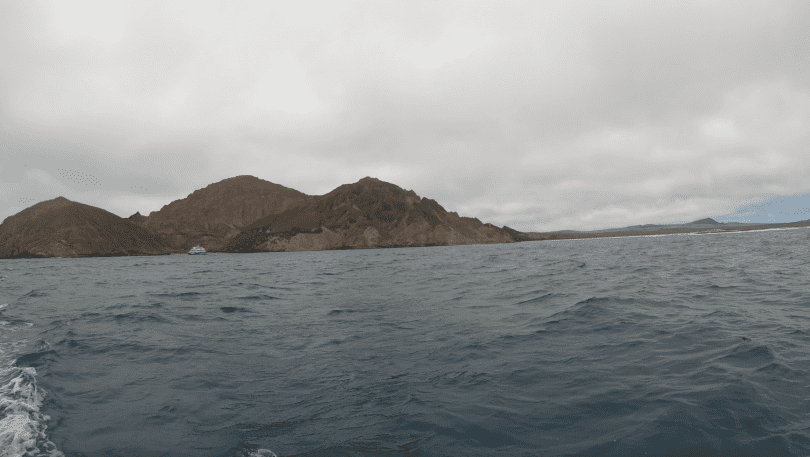
The most frequent miss is visiting Española in January through March and finding no albatrosses. The second is arriving at Punta Suarez without understanding what the egg-walking behavior means, which makes a bird shuffling sideways with its egg look inexplicable rather than scientifically extraordinary. The third is spending the entire visit trying to photograph the dance rather than watching it, and leaving with footage but without the experience. The fourth is not understanding that the waved albatross’s takeoff from the cliff edge, running against the wind before launching, is as remarkable as the dance itself and happens throughout the visit.
Focusing entirely on the dance and missing the flight. The courtship dance is the most discussed aspect of the waved albatross experience. But the albatross in flight is an entirely different category of spectacle. An animal with a 2.5-metre wingspan that travels hundreds of kilometres effortlessly on ocean updrafts is one thing to read about and another to watch launch off a cliff directly below your viewpoint on the Punta Suarez trail. The bird runs a short distance into the wind, tips forward off the cliff face, and within seconds is riding an invisible thermal in a long, slow spiral that carries it out of sight in minutes. This happens repeatedly throughout a visit because adults constantly depart for and return from foraging trips. Watch the cliff edge as much as you watch the colony.
Not understanding the egg-walking. If your guide points out a bird that appears to be walking while holding something between its feet, that is the egg-walking behavior, and it is unique to this species among all albatrosses. The bird physically moves its egg along the ground by resting it on top of its feet and shuffling forward. Researchers have documented eggs moved dozens of metres from their original position over the course of incubation. The behavior costs the colony thousands of eggs per season when eggs become lodged in rock crevices. It is not a feature of any other albatross species globally, and no one has fully explained why the waved albatross developed it. Your guide’s explanation of this, if prompted, is one of the better pieces of natural history you will hear on any Galapagos excursion.
Not allowing time for the full trail. The Punta Suarez trail is 3 kilometres and typically takes 2 to 3 hours at a wildlife pace. Groups that rush the first section to reach the albatross colony quickly often find they have reached the blowhole and the cliffs with 20 minutes left and the guide already gesturing back toward the panga. The entire trail is the experience, not a single viewpoint. Allow the full time allocation and do not let anyone in your group create pressure to move faster than the birds require.
What Our Travelers Report: Española and the Waved Albatross by Season
Based on feedback gathered through mytrip2ecuador.com, our YouTube audience, and Oleg’s direct traveler interviews across three personal trips to the Galapagos:
| Visit Period | Saw Courtship Dance | Saw Chicks | Saw Cliff Takeoff | “Highlight of the trip” |
|---|---|---|---|---|
| April to June | 94% | 21% | 88% | 82% |
| July to August | 61% | 58% | 91% | 76% |
| September to November | 44% | 97% | 89% | 79% |
| January to March | 0% | 0% | 0% | 12% |
The January to March data captures exactly the planning problem we see most often. Every one of those travelers visited Española. None saw an albatross. Most did not know albatrosses would be absent when they booked. This is entirely preventable with a five-minute conversation before the cruise is confirmed. Get in touch here before booking and we’ll make sure your travel dates align with the birds you want to see.
Waved Albatross Conservation: A Species on the Edge
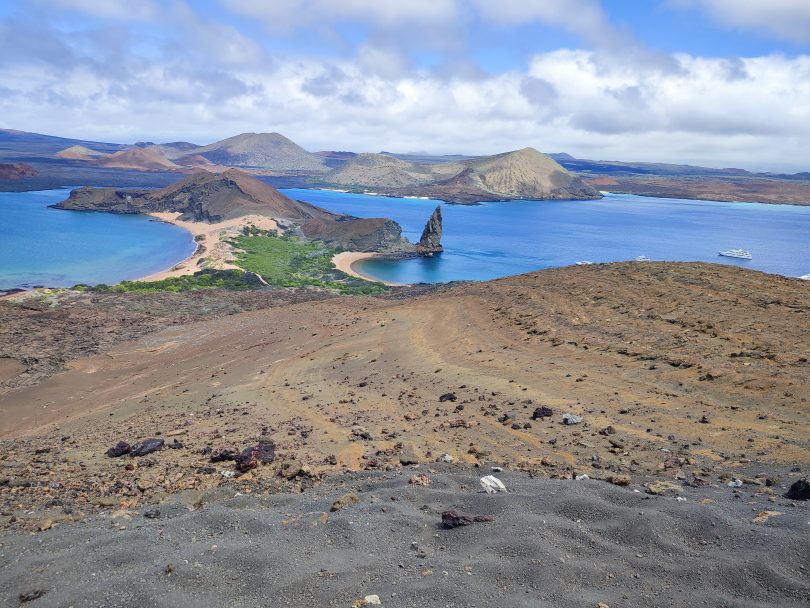
The waved albatross has been Critically Endangered since 2007, one category below Extinct in the Wild on the IUCN Red List. The primary threat is longline bycatch: albatrosses dive for the baited hooks set by both industrial and artisanal fishing vessels across their foraging range off Ecuador and Peru and drown when hooked below the surface. A secondary threat is habitat degradation on Española itself, where vegetation regrowth following the 1978 eradication of introduced goats has progressively blocked the open “runways” the birds need for takeoff and landing. Active conservation work is underway on both fronts, with measurable recent results.
The bycatch problem involves both industrial longline fleets and the roughly 80,000 artisanal fishers who operate in Ecuadorian and Peruvian waters. Industrial fisheries are regulated by international agreements under the Convention on the Conservation of Migratory Species and through the Agreement on the Conservation of Albatrosses and Petrels (ACAP), but enforcement varies significantly. Artisanal fishers, who collectively may represent the larger threat due to sheer numbers, have historically operated outside the scope of seabird bycatch regulations. Since 2008, American Bird Conservancy has worked directly with artisanal fishing communities in southwestern Ecuador to understand the interaction between their gear and albatrosses, and to develop modified fishing practices that reduce bycatch while maintaining catch rates. The NISURI Fastset system, developed with Humane Society International, allows fishers to set lines faster with weighted gear that sinks more quickly, giving albatrosses less time to intercept the bait.
The habitat work on Española is equally concrete. With wingspans exceeding two metres, waved albatrosses need open, unobstructed runways to build the speed required for takeoff. When goats were eradicated from Española in 1978, native vegetation recovered rapidly across the island. Within a decade, vegetation had regrown enough to block inland nesting corridors that had previously been maintained by heavy goat grazing. Two inland colonies disappeared entirely by 1994. In 2024, a field expedition by the Galapagos National Park and Galapagos Conservancy deployed 27 rangers and conservation officers specifically to clear vegetation corridors across the island, reopening runways for albatross takeoff and landing. Field teams observed birds using the cleared corridors immediately after vegetation was removed. Researchers recorded groups of birds queuing to use newly accessible launch points. In 2025, the Galapagos Conservancy began planning the first comprehensive drone-based census of the Española colony, which will provide the most accurate population count since current estimates were made using early 2000s data.
The tortoise connection adds another layer. Giant tortoises historically maintained open grazing habitat across Española through heavy browsing and movement through the vegetation. Their near-extinction by the 1960s removed this ecological service, which contributed to the vegetation regrowth that now blocks albatross corridors. The ongoing tortoise reintroduction program on Española, which has returned close to 2,000 captive-bred tortoises since the 1990s, is partly an albatross conservation measure as well as a tortoise one. As the tortoise population grows and its grazing spreads, it may eventually maintain open corridors that currently require annual manual clearing by conservation teams.
Trying to build your Galapagos itinerary around a genuine wild tortoise encounter rather than just a breeding center visit? Here’s the guide on giant tortoises on a Galapagos cruise so you plan it right.
Frequently Asked Questions
Can the waved albatross be seen anywhere other than Española?
As a nesting species, virtually no. The entire global breeding population nests on Española, with a tiny handful of pairs occasionally documented at Isla de la Plata off the Ecuadorian coast. At sea, waved albatrosses can sometimes be spotted from boats in the waters between the Galapagos and the Ecuadorian and Peruvian coast during the non-breeding months. But these are fleeting pelagic sightings of birds in flight, not the colony encounter that makes Española extraordinary. For any meaningful waved albatross experience, Española and the April through December window are the only realistic option.
Do the albatrosses actually mate for life?
Yes, and the biology of this is embedded in the courtship dance. Because the pair separates entirely for four months at sea and returns independently to Española, the dance functions partly as re-identification: each bird confirming through the precise sequence of shared movements that this is the same partner from last year. New pairs perform the full sequence for up to five days. Long-established pairs shorten it considerably, which researchers interpret as evidence that the sequence itself functions as a mutual recognition and bond-reinforcement mechanism rather than purely a mate-selection display. Pairs that failed to breed the previous season perform longer dances, suggesting the sequence calibrates to the current state of the pair bond.
Why is the waved albatross Critically Endangered if there are thousands of them on Española?
The Critically Endangered listing reflects two compounding vulnerabilities. First, the entire breeding population of the species occupies a single island: a single catastrophic event, a severe El Niño, a disease outbreak, an oil spill in Española’s surrounding waters, could eliminate the species’ reproductive base. Second, adult mortality from longline bycatch in the non-breeding months has increased adult mortality rates from around 4 percent per year in the 1990s to 6 to 7 percent per year in more recent assessments. Because albatrosses reproduce slowly, one chick per year, and young birds take five years to mature, elevated adult mortality cannot be offset by increased reproduction. The colony may look healthy at Punta Suarez in May. The population trend at the global level is downward.
Is the albatross encounter at Española guaranteed?
Yes, if you visit between April and December. The colony is large enough and the trail proximity is close enough that albatrosses are present on the Punta Suarez trail on every visit during the season. What varies is how much of the full behavioral range you see: a trip in April and May is more likely to include active courtship dances with multiple pairs displaying simultaneously. A trip in September and October is more likely to show large chicks and foraging adults. Every visit during the season includes adults at or near the path. The question is not whether you will see them but which stage of the breeding cycle you will encounter.
Make Sure Your Itinerary Includes the Albatross
The waved albatross encounter at Punta Suarez is one of the most singular wildlife experiences available on a Galapagos cruise. It requires the right island, the right site on that island, and the right months. We have seen too many travelers arrive at Española in January through March and find nothing, simply because no one confirmed the season before booking. A short conversation with Cruises To Galapagos Islands costs nothing and prevents that. Tell us your travel dates and we’ll confirm whether your shortlisted cruise puts you at Punta Suarez when the albatrosses are there.
Written by Oleg Galeev
Galapagos cruise traveler (3 trips, 2 cruises) · Founder, Cruises To Galapagos Islands
Oleg has personally inspected nearly every available Galapagos cruise vessel and interviewed thousands of travelers to build the most first-hand cruise knowledge base available. He also runs the Ecuador travel blog mytrip2ecuador.com and the YouTube channel My Trip to Somewhere.
Cruises To Galapagos Islands is rated 4.9 stars on Google and TripAdvisor.
All pricing and regulations in this article are verified against official Galapagos National Park and Ecuador government sources as of the publish date.