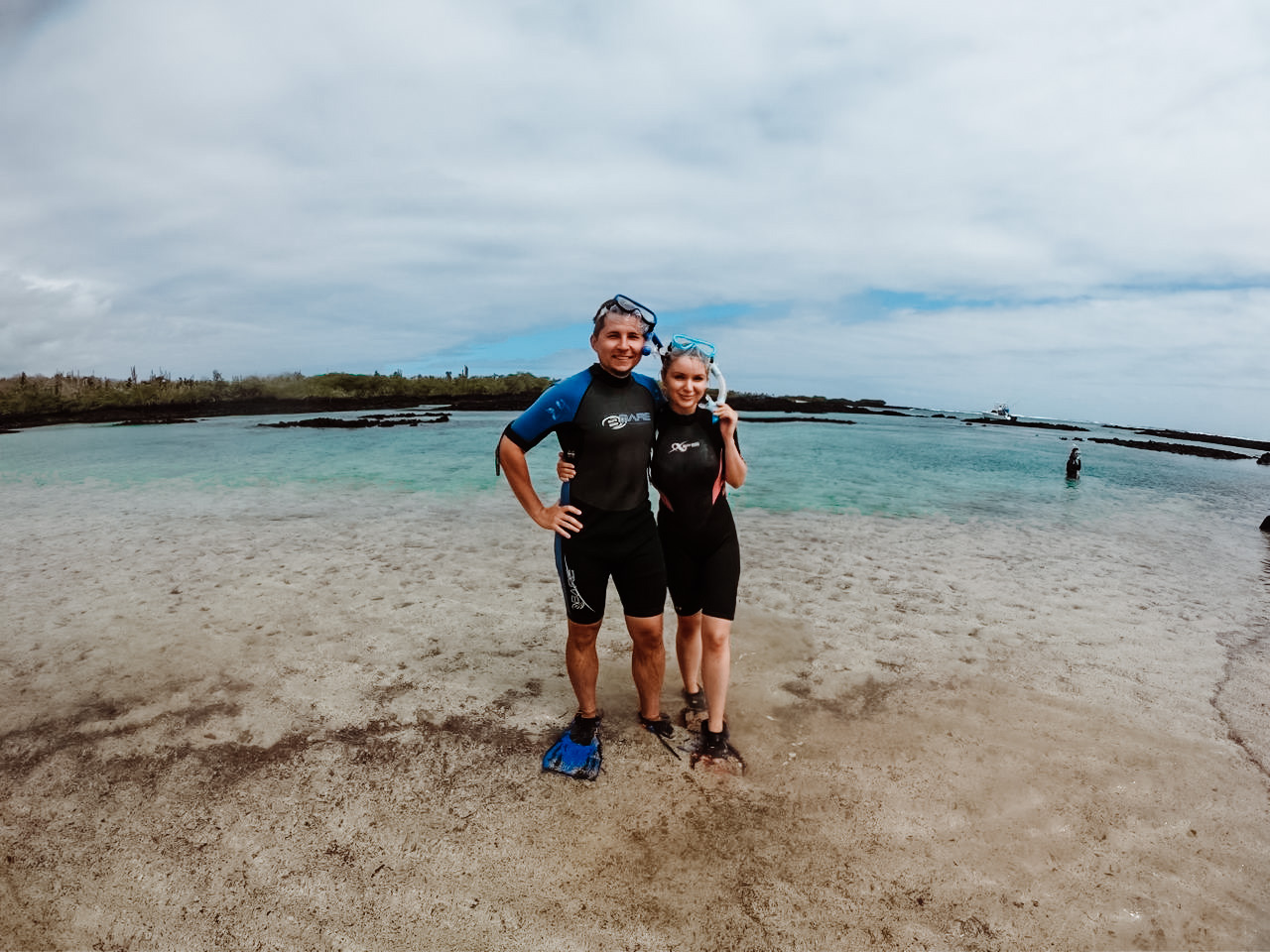
Glass-Bottom Boat Excursions in Galapagos: Which Ships Offer It?
Quick Summary
Glass-bottom boat excursions are available on a small number of Galapagos cruise ships, primarily luxury and first-class vessels. They give non-swimmers, young children, elderly travelers, and anyone who prefers to stay dry a genuine window into the underwater world: sea turtles, reef sharks, rays, and reef fish visible through the hull without entering the water. Sessions run 45 to 60 minutes, are included in the cruise rate on vessels that carry them, and are guided by a naturalist. If this activity matters to you, the vessel you choose determines whether you get it at all.
Part of our guide to what wildlife you can see on a Galapagos cruise. Ready to pick a ship? See the best Galapagos cruises by price, size and class.
Quick Facts: Glass-Bottom Boat Excursions in the Galapagos
| Detail | What to Know |
|---|---|
| Available on all cruises? | No. Glass-bottom boats are rare across the Galapagos fleet. Available primarily on luxury and select first-class vessels. Confirm before booking. |
| Extra charge? | No. On vessels that carry a glass-bottom boat, excursions are included in the cruise rate. |
| Session length | 45 to 60 minutes, guided by a certified naturalist |
| Who it is designed for | Non-swimmers, elderly travelers, young children, people with mobility limitations, photographers who prefer to stay dry, anyone choosing an alternative to snorkeling on a given day |
| Key vessels confirmed with glass-bottom boats | National Geographic Endeavour II, National Geographic Gemini, Yacht La Pinta (Metropolitan Touring), Santa Cruz II (HX Expeditions), Ecoventura Origin (glass-bottom Zodiac) |
| Marine life visible | Sea turtles, white-tipped reef sharks, rays, reef fish, marine iguanas at some sites |
| Best sites | Pinnacle Rock (Bartolome), Black Turtle Cove (Santa Cruz), Champion Islet (Floreana), mangrove lagoons on Isabela |
| Park entrance fee (all visitors) | $200 USD per adult, cash on arrival. Verified September 2026. |
All prices and regulations verified September 1, 2026.
What Is a Glass-Bottom Boat Excursion in the Galapagos Actually Like?
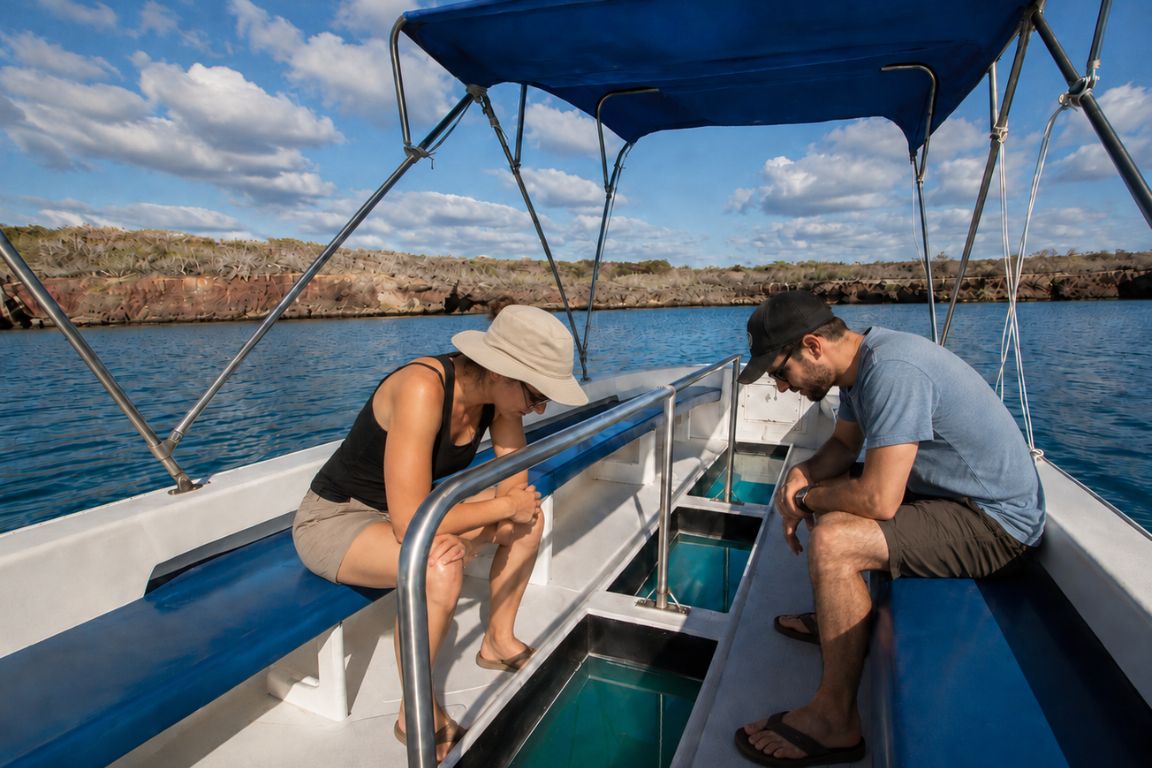
A glass-bottom boat excursion puts you directly over the Galapagos marine world without entering the water. You sit inside a small, motorized boat with transparent panels in the hull. Below you, a naturalist guide identifies the marine life as it passes: sea turtles surfacing to breathe, reef sharks drifting along the bottom, rays moving through the sandy shallows. Sessions run 45 to 60 minutes in calm, sheltered water. You stay completely dry.
The first time you look down through the hull, the water is closer than you expect. The glass panels sit just centimeters above the surface, and when a green sea turtle glides underneath, it fills the frame. No mask, no water in your ears, no wetsuit. You are sitting in a boat looking straight into the ocean like it is an aquarium, except everything in it is wild and nothing is performing.
The guide narrates throughout. On Lindblad-National Geographic vessels, a naturalist in the boat identifies species, explains behavior, and adjusts the route based on what the water is showing on a given day. At Pinnacle Rock near Bartolome Island, the guide pointed out a Galapagos shark circling below the hull before anyone in the boat had noticed it. That kind of active interpretation is what separates a good glass-bottom boat session from a drift in calm water.
The practical format varies slightly between vessels. The National Geographic Endeavour II and National Geographic Gemini carry dedicated glass-bottom boats, small vessels purpose-built for the activity, transported to sites separately from the main Zodiacs. The Ecoventura Origin carries a glass-bottom Zodiac: a standard inflatable tender with a transparent panel in the floor. Metropolitan Touring’s Yacht La Pinta is one of the few mid-size vessels in the fleet with a dedicated glass-bottom boat as a standard feature. Each setup delivers the same core experience; the dedicated boat tends to offer better sightlines and more stability for photography.
Glass-bottom boat availability is one of the most frequently misunderstood features in the Galapagos cruise fleet. Several operators list it as available without clarifying that it is on a subset of departures or a specific vessel in their range. If this activity matters to your group, whether because of a non-swimmer, a young child, or a traveler who simply wants the dry option alongside snorkeling, confirming it before booking saves a significant disappointment. Fill out this short form and we will verify which vessels are running glass-bottom boat excursions in your travel window.
Your naturalist guide is the single biggest variable in how much you get out of a Galapagos cruise. Here’s a guide to Galapagos cruise naturalist guides so you know what to look for and what questions to ask before you book.
Which Galapagos Cruise Ships Offer Glass-Bottom Boat Excursions?
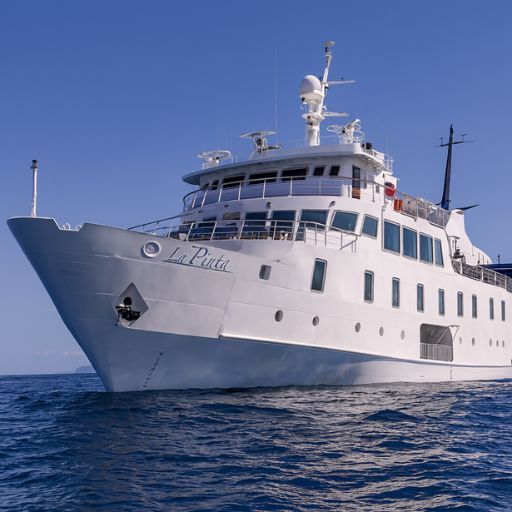
Glass-bottom boat excursions are available on a small number of Galapagos cruise vessels, concentrated in the luxury and first-class tiers. The National Geographic-Lindblad fleet, Yacht La Pinta, Santa Cruz II, and the Ecoventura Origin are the most consistently confirmed operators. Budget and mid-range boats do not typically carry glass-bottom boats.
| Vessel | Operator | Class | Glass-Bottom Type | Included in Rate? |
|---|---|---|---|---|
| National Geographic Endeavour II | Lindblad Expeditions | Luxury | Dedicated glass-bottom boat | Yes |
| National Geographic Gemini | Lindblad Expeditions | Luxury | Dedicated glass-bottom boat | Yes |
| Yacht La Pinta | Metropolitan Touring | First-class to luxury | Dedicated glass-bottom boat | Yes |
| Santa Cruz II | HX Expeditions / Metropolitan Touring | First-class | Glass-bottom boat | Yes |
| Ecoventura Origin | Ecoventura | Luxury | Glass-bottom Zodiac | Yes |
| Budget and most mid-range vessels | Various | Budget to mid-range | Not available | N/A |
Vessel amenities subject to change. Confirm glass-bottom boat availability directly with your operator before booking. Verified September 2026.
The Ecoventura Origin deserves a specific note. It is the only 20-passenger yacht in the Galapagos fleet confirmed to carry a glass-bottom Zodiac, which Ecoventura themselves describe as a feature normally found only on larger ships. This matters for travelers who want intimacy and small-group atmosphere alongside the glass-bottom option: most vessels in this tier do not carry the equipment, and the Origin is a genuine exception.
The National Geographic Gemini, launched in early 2025, carries a dedicated glass-bottom boat alongside its full expedition kit of Zodiacs, kayaks, and paddleboards. It is the newest vessel in the Lindblad fleet and purpose-built for expedition-style access to the archipelago’s most sheltered sites. The glass-bottom boat is listed as a core program feature, not an occasional add-on.
Want to explore the Galapagos coastline from a paddleboard rather than a panga? Our guide to SUP in the Galapagos covers which cruises include it and what the experience actually looks like.
What Marine Life Will You See on a Glass-Bottom Boat Tour?
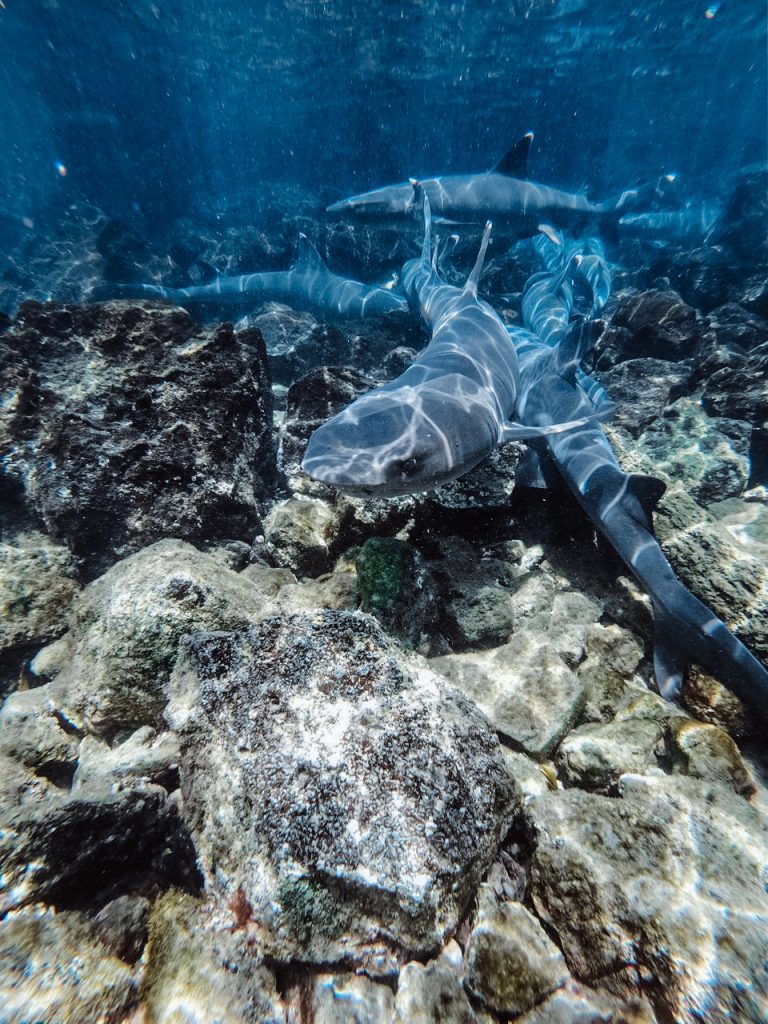
On a glass-bottom boat excursion in the Galapagos, you can reliably see green sea turtles, white-tipped reef sharks resting on sandy bottoms, spotted eagle rays, golden rays, colorful reef fish, and marine iguanas at sites where they feed in shallow water. The guide positions the boat over the best concentrations. What you see depends on the site, the conditions, and the season.
Sea turtles are the most consistent sighting. They surface to breathe every few minutes in the calm coves used for glass-bottom sessions, and they pass directly under the hull. At Black Turtle Cove on Santa Cruz, the density of green turtles in the mangrove lagoon is high enough that sightings are almost continuous. The turtle surfaces, shows its shell at close range through the glass, inhales, and descends again. Children and adults react identically to the first time this happens.
White-tipped reef sharks are common at sheltered sites and tend to rest motionless on sandy bottoms in shallow water, making them ideal glass-bottom subjects. A snorkeler might drift past a resting shark at depth and miss it. Viewed from directly above through a clear hull panel, with the guide pointing, the shark is impossible to miss. At Pinnacle Rock on Bartolome, the guide on a Lindblad itinerary spotted a Galapagos shark circling below on one documented session, visible through the glass before it moved on.
Rays are another highlight. Spotted eagle rays and golden rays move through shallow coves at moderate depth, their wing-spans extending out from a narrow body as they glide. Through the glass-bottom hull, viewed from above, the shape is dramatic in a way that a horizontal snorkeling perspective does not replicate. At Champion Islet near Floreana, rays move through the clear water alongside the boat on Zodiac cruises regularly, and the glass-bottom option makes the sightline significantly cleaner.
How Does a Glass-Bottom Boat Compare to Snorkeling in the Galapagos?
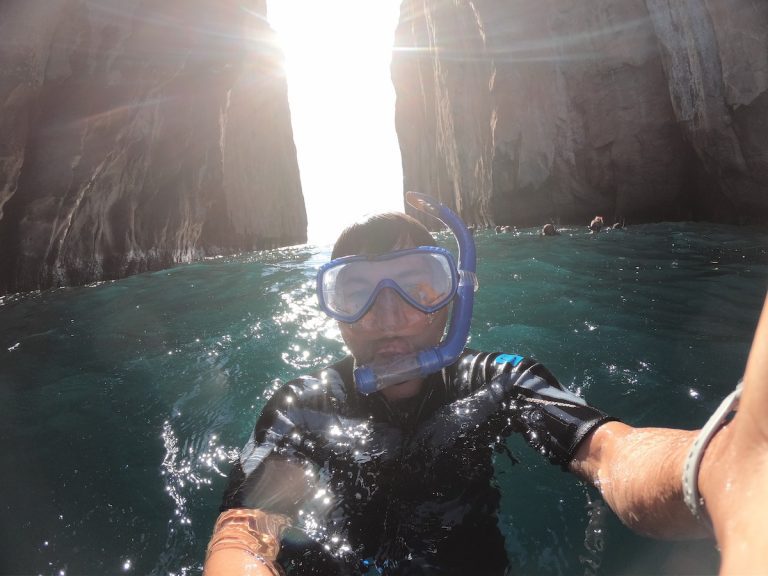
Snorkeling gives you a three-dimensional, immersive underwater experience at the level of the animals. A glass-bottom boat gives you a clear overhead view of marine life from inside a dry, stable boat. Snorkeling wins on proximity and depth of encounter. The glass-bottom boat wins on accessibility, comfort, and suitability for anyone who cannot or prefers not to enter the water. They are complementary, not competing.
The honest comparison is not about which is better. It is about which is right for a specific traveler on a specific day. Snorkeling at Kicker Rock or Devil’s Crown, with sea lions spiraling past and a hammerhead circling below, is one of the most intense wildlife encounters available anywhere in the world. A glass-bottom boat cannot replicate that. What it can do is give a non-swimmer or an 8-year-old who is not confident in open water a real, unmediated, guided look at the marine world from inside a stable boat.
The two activities also work well together on the same day. On Lindblad itineraries, the glass-bottom boat and snorkeling excursions often run simultaneously from the same vessel, with guests self-selecting based on preference that morning. A traveler who snorkeled at 7 a.m. might take the glass-bottom boat at 11 a.m. to see the same site from a different angle. Photographers who find it difficult to manage a camera underwater often prefer the glass-bottom option at specific sites for the visual access it provides above the waterline.
The one area where the glass-bottom boat has a structural limitation: visibility through the hull glass depends on water clarity and surface conditions. In choppy water or murky conditions, the view is reduced. All glass-bottom sessions are run in calm, sheltered water specifically for this reason, but the best Galapagos snorkeling sites (Kicker Rock, Gordon Rocks, Devil’s Crown) are exposed and current-driven. The glass-bottom boat will not take you to those.
If your group includes both snorkelers and non-swimmers, or if you are traveling with elderly parents or young children who want the marine experience without the water entry, the vessel choice is critical. Some ships accommodate this mix better than others, specifically those that run both activities in parallel rather than treating the glass-bottom boat as a fallback. Reach out here and we will identify the vessels that handle mixed groups best.
Galapagos snorkeling is unlike anything else and the right preparation makes all the difference. Here’s a complete guide to snorkeling on a Galapagos cruise so you get the most out of every session in the water.
Which Sites Are Best for Glass-Bottom Boat Excursions?
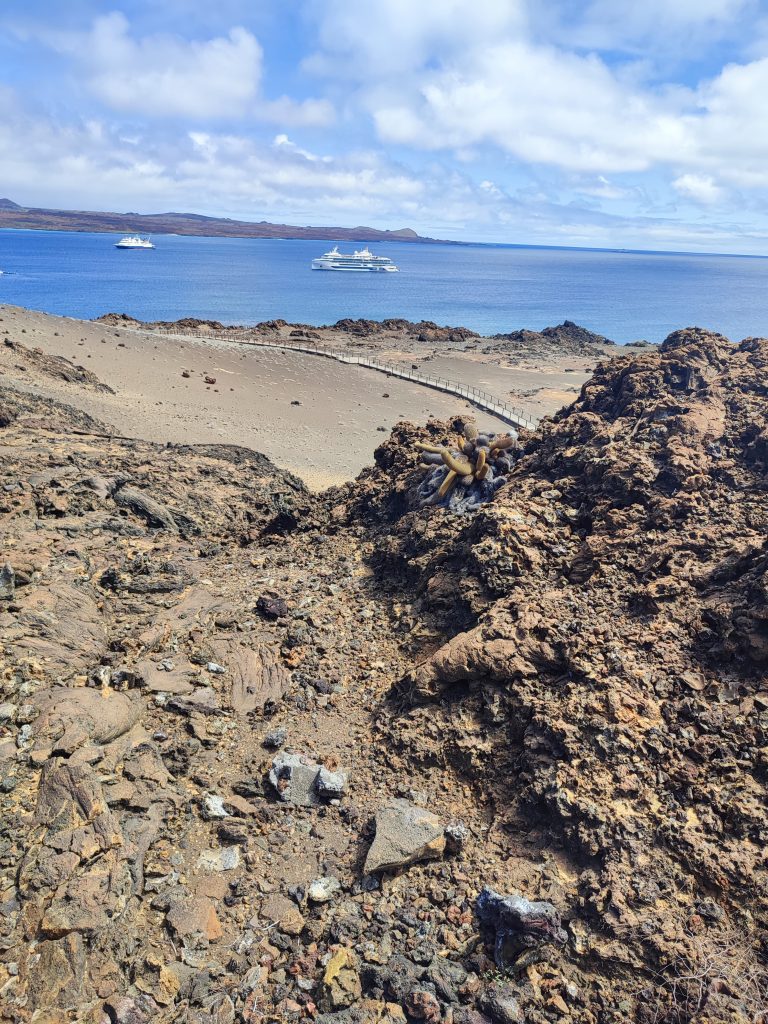
The best glass-bottom boat sites in the Galapagos are calm, shallow, and marine-life dense. Pinnacle Rock at Bartolome, Black Turtle Cove on Santa Cruz, Champion Islet near Floreana, and the mangrove lagoons on Isabela are the sites most frequently used. All are sheltered from open-ocean swell, with clear water and reliable wildlife concentrations close to the surface.
Pinnacle Rock on Bartolome is the site most commonly referenced by travelers who have done the glass-bottom excursion on Lindblad voyages. The water around the rock is clear, relatively shallow, and home to Galapagos penguins, white-tipped reef sharks, sea lions, and sea turtles, all in a compact area the boat can work efficiently. The dramatic visual backdrop of the rock itself above the surface adds context that a featureless open-water snorkel does not have.
Black Turtle Cove on Santa Cruz is the other standout. Motorized boats are restricted inside the mangrove lagoon, so the glass-bottom boat (or a Zodiac with engine off) is one of the few ways to move through the site at all. The enclosed, dark-water environment of the mangrove channels concentrates wildlife in a small area. Green turtles are consistently present. The guide can bring the boat close to the mangrove roots where juvenile sharks often rest in the shallows.
Champion Islet near Floreana offers a Zodiac cruise option that several operators, including Lindblad, run as a glass-bottom or observation alternative to snorkeling. Sea lions are almost always present and active in the water around the islet. The surrounding reef fish population is dense, and the islet’s sheltered western face keeps the water calm enough for good hull visibility.
Who Is the Glass-Bottom Boat Best Suited For?
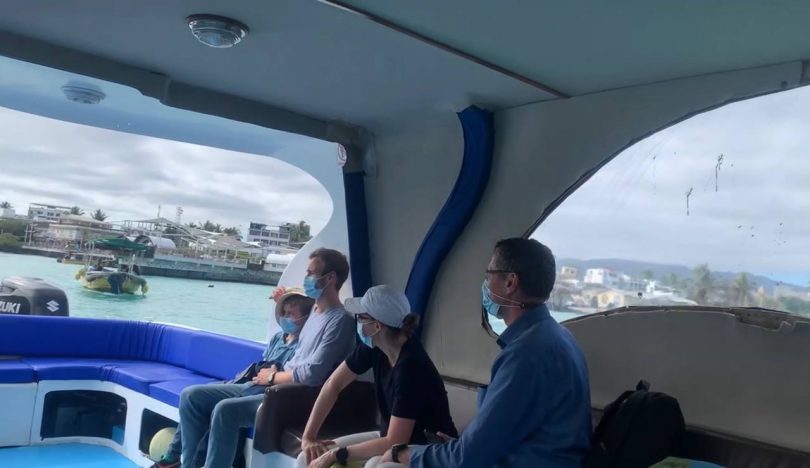
The glass-bottom boat excursion is specifically designed for non-swimmers, travelers with mobility limitations, young children, elderly guests, and anyone who wants the marine experience without entering the water. It is also a genuine option for underwater photographers who want topside access to marine subjects, and for snorkelers who want a different perspective on a site they already visited in the water.
The activity has no fitness or swimming requirement. You board from the vessel’s platform, sit inside the boat, and look through the hull. Guides are trained for mixed-ability groups and regularly lead sessions with guests ranging from age 6 to their 80s. The seating is stable and low to the water, which makes the view effective and the physical experience manageable for guests who would struggle with wet landings or panga transfers.
For families with young children, the glass-bottom boat resolves one of the most common planning tensions on a Galapagos cruise: how to give children a real marine encounter when they are not yet comfortable snorkeling in open water. The boat keeps them dry, seated, and engaged, with a naturalist guide turning the session into a narrated wildlife experience rather than a passive drift.
Underwater photographers find it useful for a specific reason: shooting through the hull glass from above gives a perspective that is genuinely different from anything achievable in the water. The overhead angle on a resting shark, a turtle at surface, or a ray moving through sand is a compositional option that disappears the moment you enter the water and adopt a horizontal orientation.
For groups with mixed needs, whether one non-swimmer in a family of snorkelers or elderly travelers who want the full experience without physical strain, the glass-bottom boat changes the planning calculus significantly. We work with these kinds of mixed groups regularly and know which vessels handle them best and which ones treat the non-swimmer option as an afterthought. Send us a message here and we will build the right itinerary for your group.
Want to make the most of every landing from a photography standpoint before you step off the panga? Our guide to wildlife photography on a Galapagos cruise covers gear, settings, and which species to prioritize.
Which Cruise Class Gets You the Best Glass-Bottom Boat Experience?
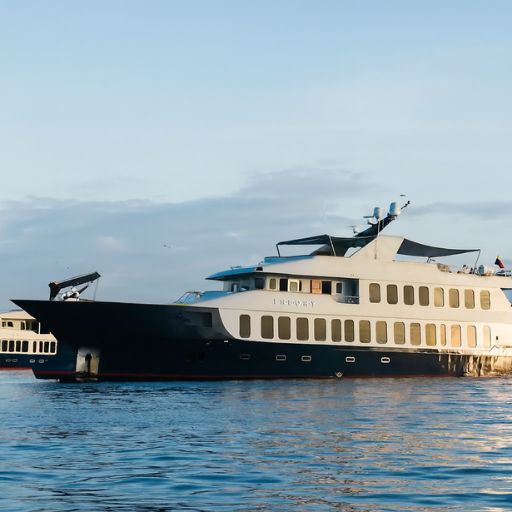
Luxury and upper first-class vessels deliver the best glass-bottom boat experience, because they are the only ones that carry the equipment. Among those that do, the Lindblad fleet and Yacht La Pinta are the strongest options: dedicated glass-bottom boats (not converted Zodiacs), active naturalist guidance in the boat, and itineraries that include the best sites. The Ecoventura Origin is the standout exception at the smaller-vessel level.
The distinction between a dedicated glass-bottom boat and a glass-bottom Zodiac matters practically. A dedicated boat is purpose-built with larger, clearer viewing panels, more stable seating, and better acoustic properties for the guide’s narration. A glass-bottom Zodiac offers a smaller viewing window and slightly more movement from water conditions. Both deliver the core experience; travelers who prioritize photography or very clear hull views will notice the difference.
The guide makes a larger difference than the equipment. On Lindblad voyages, the naturalists who lead glass-bottom sessions are veterans of the archipelago who actively position the boat over concentrations of marine life, free-dive if needed to check what is below, and turn a drift through a calm cove into a narrated encounter. Vessels where the glass-bottom boat is a secondary feature and the guide is primarily focused elsewhere produce a notably quieter experience.
Planning a Galapagos cruise and want to add diving without committing to a full liveaboard? Our guide on what you need to know about scuba diving on a Galapagos cruise walks you through the options and what to expect.
What Travelers Say About Glass-Bottom Boat Excursions (Our Data)
Based on feedback collected through mytrip2ecuador.com and our YouTube audience, here is what consistently shapes how travelers rate the glass-bottom boat experience on their cruise:
| Factor | % Who Named It | Pattern Observed |
|---|---|---|
| Discovered it solved a planning problem | 81% | Non-swimmers and families with young children rated the glass-bottom boat as one of the most valuable features of their cruise – often named ahead of snorkeling itself. |
| Booked the wrong vessel | 34% | Travelers who specifically wanted glass-bottom boat access and did not confirm before booking frequently discovered mid-trip that their vessel did not carry one. |
| Guide quality drove satisfaction | 72% | Sessions with an active, narrating naturalist who positioned the boat for wildlife were rated significantly higher than sessions where the boat drifted without commentary. |
| Used it alongside snorkeling | 47% | Strong snorkelers who also used the glass-bottom boat described the different visual perspective as a genuine addition to the trip, not a consolation for non-swimmers. |
| Surprised by wildlife quality | 63% | Travelers who expected a diminished experience compared to snorkeling were consistently surprised by how close and clear the marine life was through the hull panels. |
Frequently Asked Questions
Is a glass-bottom boat available on all Galapagos cruises?
No. Glass-bottom boats are available on a small subset of the Galapagos cruise fleet, concentrated in the luxury and upper first-class tiers. Key confirmed vessels include National Geographic Endeavour II, National Geographic Gemini, Yacht La Pinta, Santa Cruz II, and the Ecoventura Origin (glass-bottom Zodiac). Budget and most mid-range boats do not carry this equipment. Always confirm before booking if this activity is important to your group.
Is there an extra charge for the glass-bottom boat on a Galapagos cruise?
No. On every vessel that carries a glass-bottom boat, the excursion is included in the cruise rate at no additional charge. There are no per-session fees.
Can non-swimmers do the glass-bottom boat excursion?
Yes, and it is specifically designed for them. The excursion requires no swimming, no water entry, and no physical fitness beyond the ability to board the boat. Guests ranging from young children to travelers in their 80s participate without difficulty.
What is the difference between a glass-bottom boat and a glass-bottom Zodiac?
A dedicated glass-bottom boat is purpose-built with larger viewing panels, more stable seating, and better hull visibility. A glass-bottom Zodiac is a standard inflatable tender with a transparent panel in the floor, offering a smaller viewing window with slightly more movement. Both deliver the core experience. The Ecoventura Origin uses a glass-bottom Zodiac; Lindblad vessels and Yacht La Pinta carry dedicated glass-bottom boats.
Which sites have the best glass-bottom boat excursions in the Galapagos?
Pinnacle Rock at Bartolome, Black Turtle Cove on Santa Cruz, Champion Islet near Floreana, and the mangrove lagoons on Isabela are the standout sites. All are sheltered, clear-water locations with reliable concentrations of sea turtles, reef sharks, rays, and reef fish close to the surface.
Need a Cruise with a Glass-Bottom Boat?
The glass-bottom boat is one of the most valuable features for groups with non-swimmers, young children, or elderly travelers, and it is also one of the most frequently misbooked. We confirm availability across the full fleet and know exactly which vessels are running it in any given travel window. Cruises To Galapagos Islands is a local agency rated 4.9 stars on Google and TripAdvisor. Every quote is free and comes with no pressure or commitment. Fill out the contact form and we will get back to you with the right options for your group and your dates.
Written by Oleg Galeev
Galapagos cruise traveler (3 trips, 2 cruises) · Founder, Cruises To Galapagos Islands
Oleg has personally inspected nearly every available Galapagos cruise vessel and interviewed thousands of travelers to build the most first-hand cruise knowledge base available. He also runs the Ecuador travel blog mytrip2ecuador.com and the YouTube channel My Trip to Somewhere.
Cruises To Galapagos Islands is rated 4.9 stars on Google and TripAdvisor.
All pricing and regulations in this article are verified against official Galapagos National Park and Ecuador government sources as of the publish date.