Wildlife Photography on a Galapagos Cruise: Tips and Best Ships
Quick Summary
The Galapagos is the best wildlife photography destination on earth for one reason: the animals evolved without human predators and do not run. You shoot blue-footed boobies at a meter, marine iguanas at half that, and sea lions that swim directly into your lens. The best ships for photographers are those with resident National Geographic-certified photo instructors (Lindblad fleet), dedicated camera rinse stations, and smaller guide ratios that allow the naturalist to slow the group for shots. Flash photography and drones are banned by the Galapagos National Park. Golden hour is your best light window.
Part of our guide to what wildlife you can see on a Galapagos cruise. Ready to pick a ship? See compare all Galapagos cruise ships by price, size and class.
Quick Facts: Wildlife Photography in the Galapagos
| Detail | What to Know |
|---|---|
| Flash photography | Strictly prohibited at all Galapagos National Park visitor sites. Banned by GNPD rules. No exceptions. |
| Drones | Not permitted in the Galapagos National Park or Marine Reserve under any circumstances. |
| Commercial photography | Requires prior authorization from the GNPD. Apply at least 2 months in advance. |
| Wildlife distance rule | 2 meters minimum from all wildlife. Animals often approach closer on their own, which is permitted. |
| Best light window | Early morning (6-8 a.m.) and late afternoon (4-6 p.m.). Midday equatorial sun creates harsh shadows. |
| Recommended lens range | 24-105mm zoom for most situations. 70-200mm or 100-400mm for birds in flight and Zodiac shots. |
| Best ships for photographers | National Geographic-Lindblad fleet (resident certified photo instructor on every voyage), Ecoventura (small group ratio, active guide positioning), Aqua Mare (underwater video program) |
| Park entrance fee | $200 USD per adult, cash on arrival. Verified September 2026. |
All prices and regulations verified September 1, 2026.
Why Is the Galapagos One of the Best Places in the World for Wildlife Photography?
The Galapagos is the best wildlife photography destination in the world for a reason that has nothing to do with equipment or technique: the animals have no instinctive fear of humans. Blue-footed boobies sit at your feet and hold eye contact. Marine iguanas sunning on black lava do not move when you crouch to their level. Sea lion pups swim directly into your camera housing. You are not chasing wildlife here. You are sharing space with it, on its terms, at distances that are impossible anywhere else.
Every other wildlife photography destination requires compromise. In Africa, you shoot from a vehicle at distance through heat shimmer. In the Arctic, conditions and animal behavior limit your window. In most bird reserves, telephoto reach determines what you can capture. In the Galapagos, a tourist-class camera at one meter from a waved albatross produces a frame that would win awards if shot anywhere else.
The proximity is a result of evolution, not habituation. These animals did not learn to tolerate humans over decades of tourism. They never developed a threat response to begin with, because the Galapagos had no land predators before human arrival. A marine iguana’s threat assessment has never included anything resembling a human with a camera. It simply does not register you as a concern. That is the photograph you cannot stage, buy, or replicate anywhere else on earth.
What it means practically: the Galapagos rewards patience and positioning far more than equipment. A photographer who sits quietly at iguana level on a lava field and waits for a behavioral moment will leave with better images than a photographer who walks the trail efficiently with a 500mm lens. The guide’s job is to get you to the right place. Your job is to notice what is happening in the frame before you press the shutter.
The itinerary determines which species you access and during which behavioral window. Waved albatross at Española appear only April through November. Christmas iguanas in full red and green mating coloration peak on Española in December and January. Frigate birds with inflated pouches are most reliably found at North Seymour. If a specific subject drives your photography plans, the route needs to be built around it, not chosen after. Fill out this short form and we will match your target subjects to the right itinerary and departure window.
What Camera Gear Should You Bring on a Galapagos Cruise?
For a Galapagos cruise, the ideal camera kit is a mirrorless or DSLR body with a 24-105mm zoom as your primary lens, a 70-200mm or 100-400mm telephoto for birds and Zodiac shots, and a waterproof camera or housing for snorkeling. Keep the kit light and mobile. Tripods are largely unnecessary. Extra batteries, memory cards, and a waterproof dry bag are more important than any additional lens.
The gear calculus in the Galapagos is the opposite of most wildlife destinations. Experienced wildlife photographers who arrive with a 500mm prime lens and a full-size tripod frequently find that the animals are closer than their minimum focus distance and that the trail does not accommodate a tripod setup. The 24-105mm zoom handles 80 percent of on-land situations, from wide establishing shots of a lava field full of iguanas to tight portraits of a blue-footed booby performing its courtship dance one meter away.
The 70-200mm telephoto earns its place specifically on Zodiac excursions. From a moving inflatable boat on choppy water, hand-holding a longer lens with image stabilization is the practical solution for seabirds in flight, penguins hunting in the surf, and wildlife on shorelines the Zodiac circles without landing. On land, you will rarely need it, but from the water you will use it constantly.
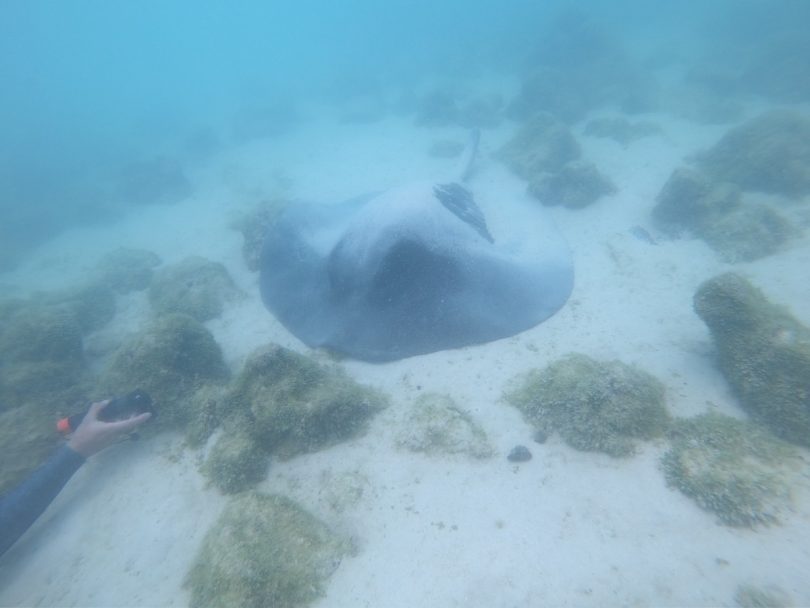
Underwater photography deserves specific planning. Most cruise snorkeling produces sea lion, sea turtle, and reef fish encounters at very close range. A GoPro or waterproof point-and-shoot captures these adequately. Serious underwater photographers bring a mirrorless body in a dedicated underwater housing with wide-angle dome port, which handles the shallow, clear-water Galapagos conditions exceptionally well. Some Lindblad vessels carry underwater camera equipment available for guest use, which removes the need to bring your own housing.
| Item | Priority | Notes |
|---|---|---|
| Mirrorless or DSLR body | Essential | Any current mirrorless with good autofocus. Crop sensors work well at Galapagos distances. |
| 24-105mm zoom | Essential | Primary lens for 80% of on-land situations. Handles wide landscapes and close portraits. |
| 70-200mm or 100-400mm telephoto | Strongly recommended | Critical for Zodiac excursions. Birds in flight, shoreline wildlife, penguins in surf. |
| GoPro or waterproof camera | Recommended | For snorkeling sessions. Sea lions will approach within arm’s reach. |
| Spare batteries (minimum 3) | Essential | Full shooting days with multiple excursions drain batteries fast. Charging access on the vessel. |
| Memory cards (generous) | Essential | You will shoot more than you expect. Bring more than you think you need. |
| Waterproof dry bag | Essential | Wet landings and Zodiac spray require protection for all gear carried ashore. |
| Tripod | Optional (mini only) | Full-size tripods are impractical on narrow lava trails. A small tabletop model works for long exposures. |
Gear recommendations based on field experience across multiple Galapagos cruises. Verified September 2026.
Which Galapagos Cruise Ships Are Best for Photographers?
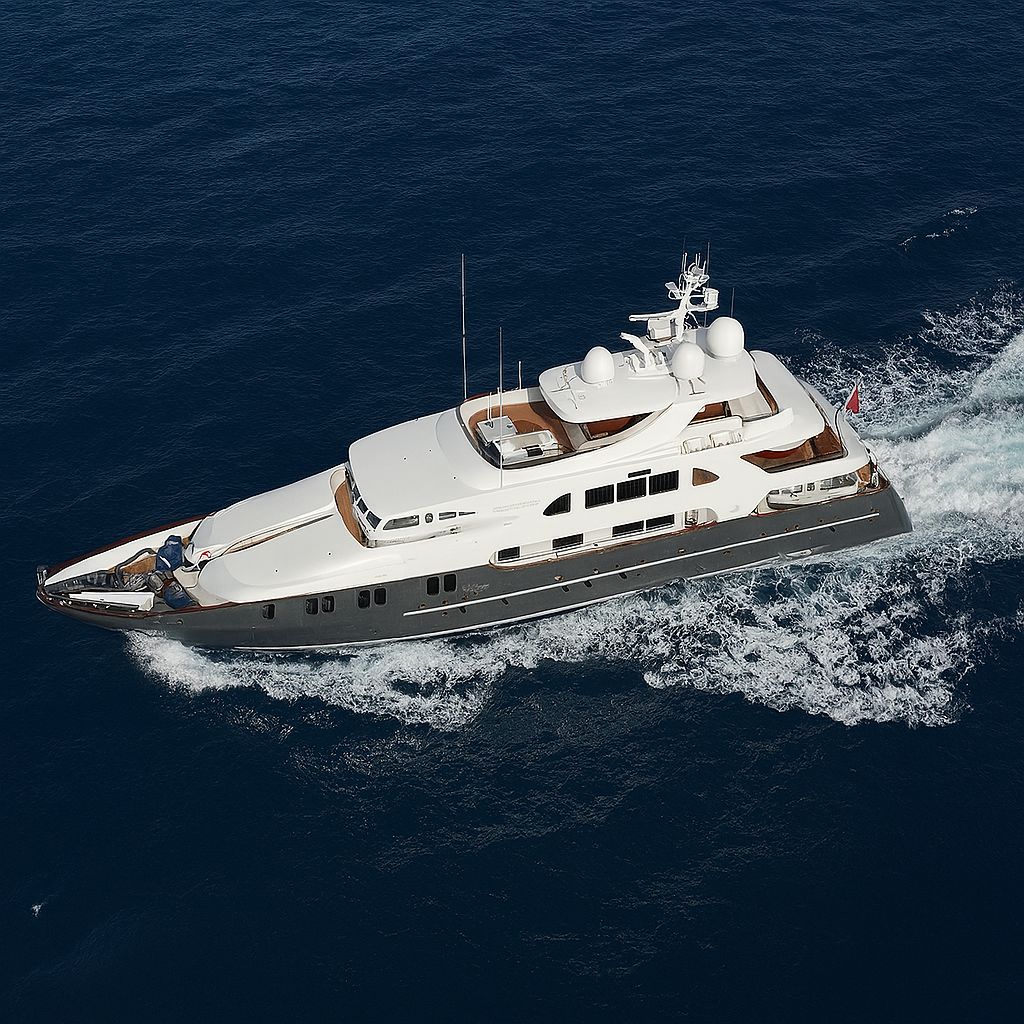
The National Geographic-Lindblad fleet is the clear leader for photography-focused travelers: a certified National Geographic photo instructor sails on every voyage, provides daily workshops and individual mentoring, and specifically slows the schedule to allow for behavioral shots. Ecoventura’s small-group ratio and active guide positioning are the strongest alternative. Aqua Mare offers an underwater video program. Every vessel benefits from the Galapagos itself; the ship determines how much structured photographic support you get around it.
The Lindblad advantage is concrete and specific. On every National Geographic-Lindblad departure, a photography expert certified by National Geographic joins the expedition staff. This is not a travel photographer doing occasional tips at dinner. It is someone whose job on the voyage is entirely photographic: running morning workshops before landings, accompanying guests ashore to position shots, reviewing images with individuals in the evenings, and identifying the behavioral windows the naturalist guides might not prioritize. Serious photographers who have sailed both Lindblad and non-Lindblad vessels in the Galapagos consistently describe the photo instructor as the differentiating factor.
Ecoventura’s three vessels (Origin, Theory, Evolve) offer a different advantage: sixteen guests, two naturalist guides, and a daily structure that allows the guide to slow the group at interesting behavioral moments without managing a larger crowd’s timeline. When a frigate bird is inflating its pouch, the guide can stop the whole group and wait. On a vessel with 40 guests and a tighter schedule, that moment often passes before everyone has found a clean angle. The smaller format makes the naturalist’s wildlife positioning more effective for photography, even without a dedicated photo instructor.
Aqua Mare‘s undersea specialist program deserves mention for underwater photographers specifically. The vessel carries a dedicated undersea specialist whose role includes capturing underwater video footage of guests’ snorkeling sessions, reviewing it onboard, and helping guests understand what they saw. For photographers who want to review and improve their underwater technique mid-trip, this is a practical resource that most vessels do not offer.
Photography-focused travelers sometimes book based on destination reputation rather than vessel features, and discover mid-trip that the ship’s schedule and group size do not allow for the slow, patient shooting the Galapagos actually rewards. We know which vessels are genuinely structured for photographers and which ones treat it as a secondary consideration. Reach out here and we will match you with the right ship for your style of shooting.
We’ve got a full breakdown on Galapagos cruise naturalist guides if you want to know exactly how the licensing system works, what separates a Level 1 from a Level 3 guide, and why it should factor into your cruise choice.
What Are the Best Wildlife Photography Subjects and Moments in the Galapagos?
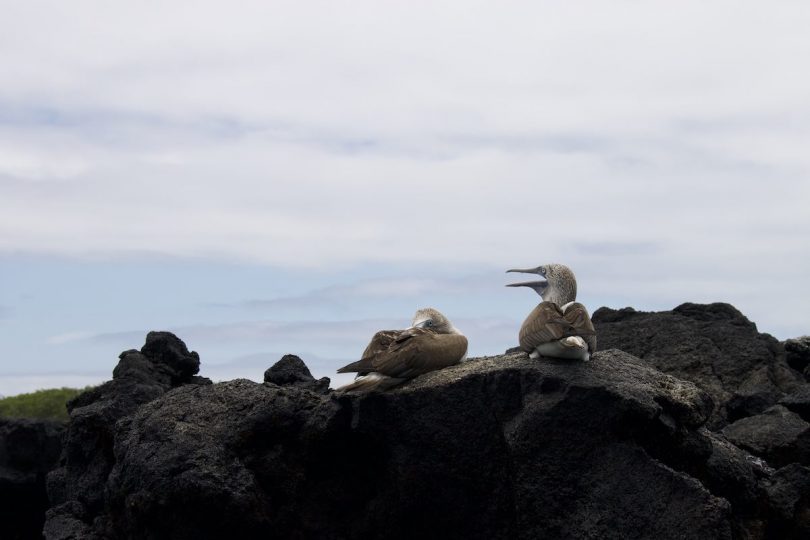
The best photography subjects in the Galapagos are blue-footed boobies (courtship dance), waved albatross (in flight and nesting, April to November), frigate birds (inflated red pouch displays at North Seymour), marine iguanas (especially Christmas iguanas in red and green mating coloration on Española, December to March), sea lions (pups, mothers, and juveniles in the water), and giant tortoises in the Santa Cruz highlands. Every one of these subjects holds still, approaches close, and behaves naturally regardless of your presence.
Blue-footed boobies are the species most travelers photograph first and most. The courtship dance is slow, deliberate, and completely indifferent to observers: the male lifts his blue feet one at a time, spreads his wings, and turns in a circle for the female. You can shoot the entire sequence from three feet away at eye level if you crouch. The feet are genuinely blue, the color is richer than any photograph prepared you for, and the bird’s expression during the display is one of concentrated earnestness that reads as something very close to comedy. These shots happen on nearly every island on every itinerary.
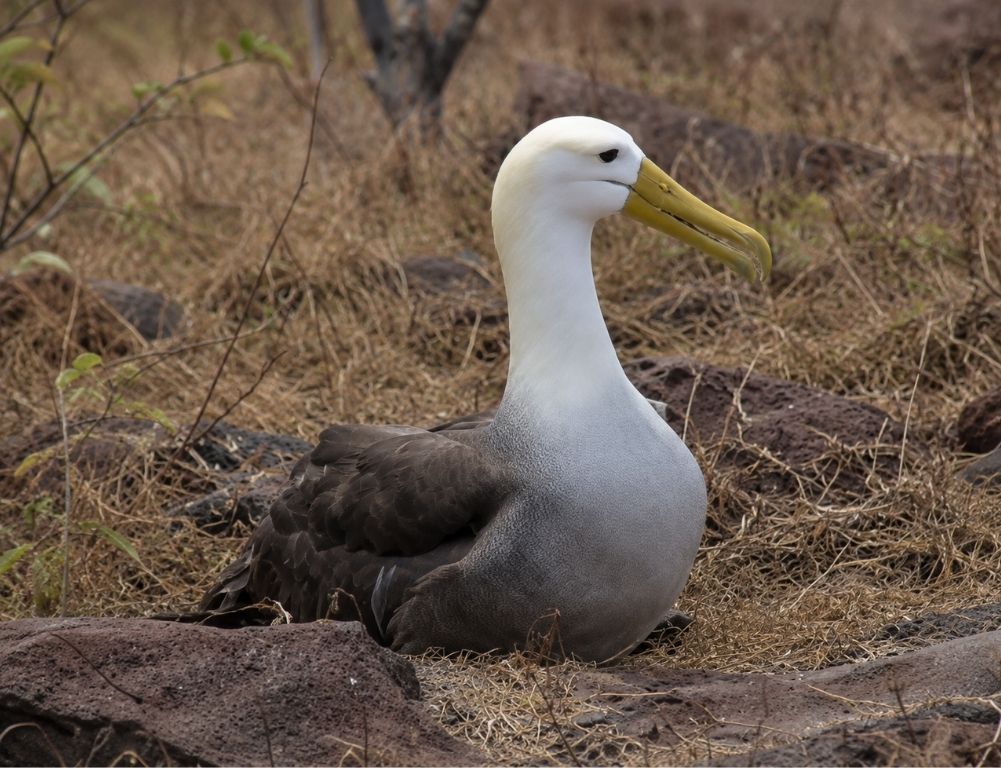
Waved albatross on Española (April to November only) is a different kind of photography entirely. The wingspan reaches two meters. The birds nest, court, and raise chicks directly alongside the trail at Punta Suarez. Their courtship display involves two birds touching bills, swinging their heads, and producing a rattling call in synchrony: the sequence takes several minutes and is repeatable. You can set up a composition and wait for the moment. This is one of the few locations in wildlife photography where you genuinely have enough time to get the frame right.
Frigate birds at North Seymour are the action shot. The males inflate brilliant red throat pouches the size of a small balloon and shake them at passing females while other males steal nest material from each other in the background. The colony is dense and the behavior is constant. The challenge is not finding the subject but choosing which one to track in the chaos of an active colony.
What Are the Photography Rules in the Galapagos National Park?
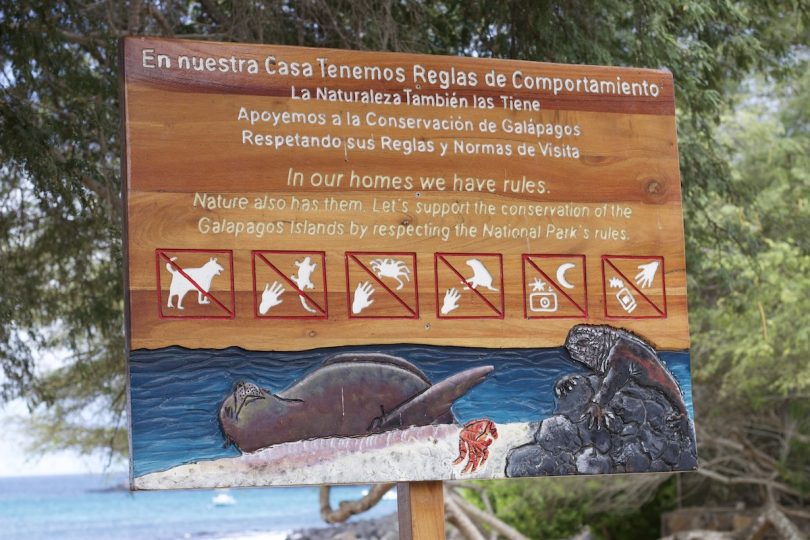
No flash photography is permitted at any Galapagos National Park visitor site. Drones are prohibited entirely. Professional commercial photography requires GNPD authorization obtained at least two months in advance. Personal photography is unrestricted beyond these rules and the standard 2-meter wildlife distance requirement. Cell phones should be on airplane mode at visitor sites.
The flash prohibition is the rule most travelers arrive knowing but occasionally forget in the moment. When a sea lion surfaces two feet from your camera in low light and your camera fires a built-in flash automatically, you have violated the rule and potentially distressed the animal. Disable automatic flash before you board the panga. Make it a habit at the start of every excursion: check that flash is off. In low light, increase ISO instead. Modern mirrorless cameras handle ISO 3200 and 6400 without meaningful image quality loss, and the Galapagos morning light at 6 a.m. is more than sufficient for wildlife photography at those settings without flash support.
The drone prohibition is absolute. There are no circumstances under which a drone is permitted in the Galapagos National Park or Marine Reserve: no special permit, no exception for professional productions without the full GNPD commercial authorization process (which does not include recreational drones), no exception for very low altitude or very brief flights. Park rangers and drone monitoring technology enforce this. The fine is significant and confiscation is immediate.
The 2-meter wildlife rule is the other photography-relevant regulation. In practice, the animals often approach closer than 2 meters on their own initiative: a sea lion pup may walk up to your foot. This is permitted, because the animal chose the proximity. What is not permitted is positioning yourself within 2 meters of a stationary animal, moving toward a resting animal to get a closer shot, or repositioning yourself between a parent and a chick to fill the frame. The guide enforces this and will redirect you before a ranger needs to.
Photography-specific itinerary planning (timing for albatross season, Christmas iguana coloration, frigate pouch displays) is the kind of detail that makes a meaningful difference to the images you come home with. We build cruise itineraries around this kind of priority regularly. Send us a message here and we will tell you which departure windows align with the subjects you most want to photograph.
Which Itinerary Gets You the Best Photography Opportunities?
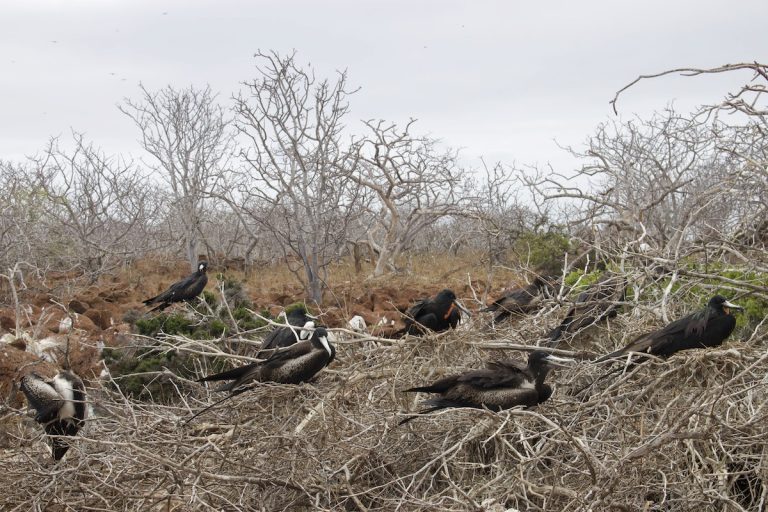
For photography, no single 8-day itinerary covers all the best subjects. Western routes deliver frigate birds at North Seymour, flightless cormorants and Galapagos penguins on Isabela and Fernandina, and the volcanic landscape of Bartolome. Eastern and southern routes give you waved albatross on Española and the best booby variety. Travelers who want both typically need 12 or more days or a carefully planned two-loop itinerary.
The seasonal layer adds another dimension. An eastern itinerary in October delivers albatross in their final nesting weeks on Española, plus sea lion pups in full play mode on the beaches. The same eastern itinerary in February produces Christmas marine iguanas in peak coloration. A western itinerary in July gives you Galapagos penguins most active in cool water and flightless cormorants at their photogenic best on the Fernandina lava flows. The species are almost always there. The behavioral windows that produce the most extraordinary images are not.
The guide quality variable cannot be overstated for photography. A guide who knows when the albatross pair will begin their display sequence, which angle of the Pinnacle Rock gets the best morning light, and where to position the Zodiac so the penguins are framed against the volcanic cliff rather than the open sky makes more difference to your photography than any equipment upgrade. This is where the Lindblad photo instructor program earns its premium: you have someone whose specific job on the voyage is to help you get the shot, not just show you the wildlife.
Tips From the Water: Photography on Zodiacs, Kayaks, and Snorkeling Sessions
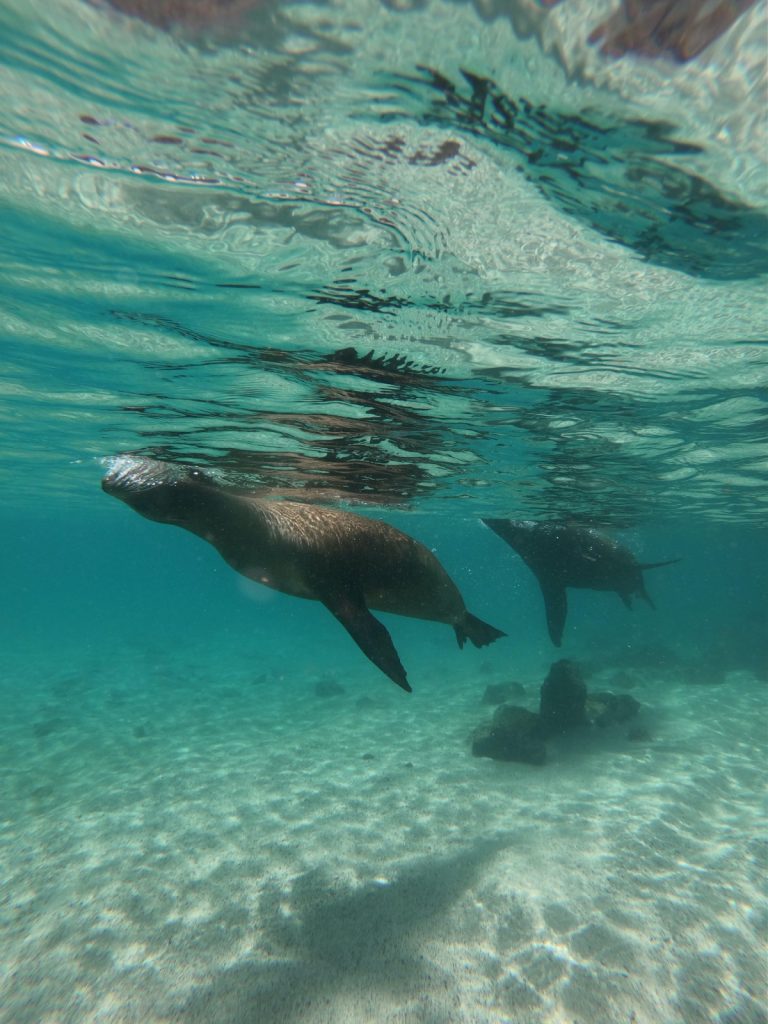
On Zodiac excursions, sit at the front or back of the boat for unobstructed shooting angles, brace against the hull for stability, and use a 70-200mm telephoto with image stabilization on. On kayaks, a small waterproof camera on a wrist strap handles spontaneous wildlife moments. Underwater, shoot wide-angle in the clear shallows; sea lions approach close enough that a GoPro with a wide lens captures full-frame encounters at arm’s length.
The Zodiac is where many photographers are caught unprepared. Seats in the middle of the boat put you behind the shoulders of the people in front. The front bench or the back corner gives you the clearest sightline. This is not a reserved seat: it requires being at the boarding platform early and positioning yourself deliberately. On a Lindblad vessel, the photo instructor often signals where to sit for the specific site being visited that morning.
Spray is the practical enemy on a Zodiac. Front seats produce the most spray on choppy crossings. A waterproof bag over the camera body during transit, removed when you arrive at the site, is the right protocol. Salt spray on a lens element is harder to address in the field than keeping it off in the first place.
Sea lion encounters during snorkeling require a different mindset than land photography. The animals move fast, come close without warning, and leave just as quickly. A GoPro or wide-angle housing on a mirrorless body, held loosely and pointed toward the approach direction, captures far more than a carefully composed shot that the sea lion swims out of before you fire. Burst mode, if your housing setup allows it, is the right setting for snorkeling wildlife. Review your shots in the evening and identify the frame rather than trying to capture it in real time.
Not sure what snorkeling on a Galapagos cruise actually involves beyond jumping in with a mask? Here’s the complete guide so you know exactly what to expect in the water.
What Photography-Focused Travelers Say After Their Cruise (Our Data)
From feedback collected through mytrip2ecuador.com and our YouTube audience, here is what consistently determines how photography-focused travelers rate their Galapagos cruise:
| Factor | % Who Named It | Pattern Observed |
|---|---|---|
| Guide wildlife positioning | 84% | The guide’s ability to slow the group, identify behavioral moments, and position photographers for the best angle was the single most cited factor in image quality. |
| Missed flash-off habit | 38% | Travelers who did not disable automatic flash before landings fired it accidentally at least once. A pre-excursion check habit eliminates this entirely. |
| Wrong itinerary for target species | 44% | Travelers who specifically wanted albatross on western routes, or Christmas iguanas outside of breeding season, were the most consistent source of photography disappointment. |
| Underestimated battery and card needs | 52% | Travelers consistently shot more than expected on day one and arrived at later excursions with reduced card space or depleted batteries. |
| Lindblad photo instructor cited as decisive | 77% | Among travelers who sailed with Lindblad and had photography as a primary interest, the photo instructor program was named as the decisive reason they rated the cruise above alternatives. |
Frequently Asked Questions
Is flash photography allowed in the Galapagos?
No. Flash photography is strictly prohibited at all Galapagos National Park visitor sites. The GNPD bans it to protect wildlife from disturbance and potential harm. Disable your flash before every landing and check before every excursion. Use higher ISO settings in low-light conditions instead.
Are drones allowed in the Galapagos?
No. Drones are prohibited entirely in the Galapagos National Park and Marine Reserve. There are no exceptions for recreational use. Commercial productions require full GNPD authorization obtained at least two months in advance, which does not extend to recreational drones.
Do I need an expensive camera to photograph wildlife in the Galapagos?
No. Because the animals approach so closely, even smartphones produce extraordinary images in the Galapagos. A mirrorless or DSLR with a 24-105mm zoom handles most situations well. The quality of your images depends far more on patience, timing, and guide positioning than on equipment.
Which cruise ship is best for wildlife photographers?
The National Geographic-Lindblad fleet is the strongest choice for serious photographers, with a certified National Geographic photo instructor on every voyage who provides daily workshops, individual mentoring, and behavioral guidance. Ecoventura’s small-group ratio is the best alternative for photographers who want active guide positioning without the Lindblad premium.
When is the best time of year for wildlife photography in the Galapagos?
It depends on the subject. Waved albatross are present on Española from April through November. Christmas marine iguanas in peak red and green coloration appear from December through March. Frigate bird pouch displays are year-round at North Seymour. Blue-footed boobies court year-round. There is no bad season for wildlife photography in the Galapagos, but specific subjects require specific timing.
Planning a Photography-Focused Galapagos Cruise?
The itinerary route, the departure window, and the vessel’s photographic support program all determine what you come home with. We work with photography-focused travelers regularly and know which ships, which routes, and which months align with specific subjects and behavioral windows. Cruises To Galapagos Islands is rated 4.9 stars on Google and TripAdvisor. Every quote is free and comes with no obligation. Fill out the contact form and we will help you build a cruise around the images you want to make.
Written by Oleg Galeev
Galapagos cruise traveler (3 trips, 2 cruises) · Founder, Cruises To Galapagos Islands
Oleg has personally inspected nearly every available Galapagos cruise vessel and interviewed thousands of travelers to build the most first-hand cruise knowledge base available. He also runs the Ecuador travel blog mytrip2ecuador.com and the YouTube channel My Trip to Somewhere.
Cruises To Galapagos Islands is rated 4.9 stars on Google and TripAdvisor.
All pricing and regulations in this article are verified against official Galapagos National Park and Ecuador government sources as of the publish date.