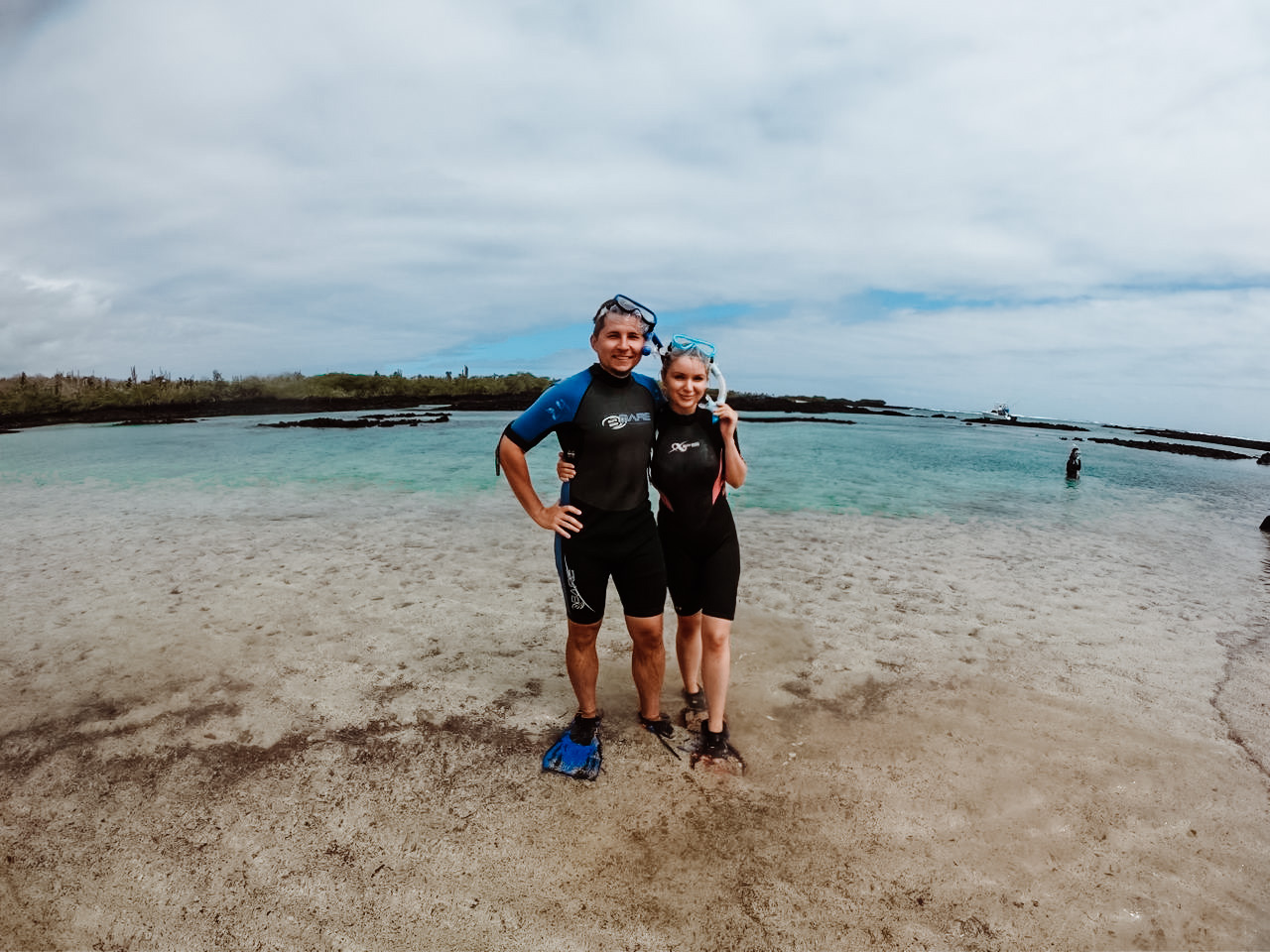
Stand-Up Paddleboarding in the Galapagos
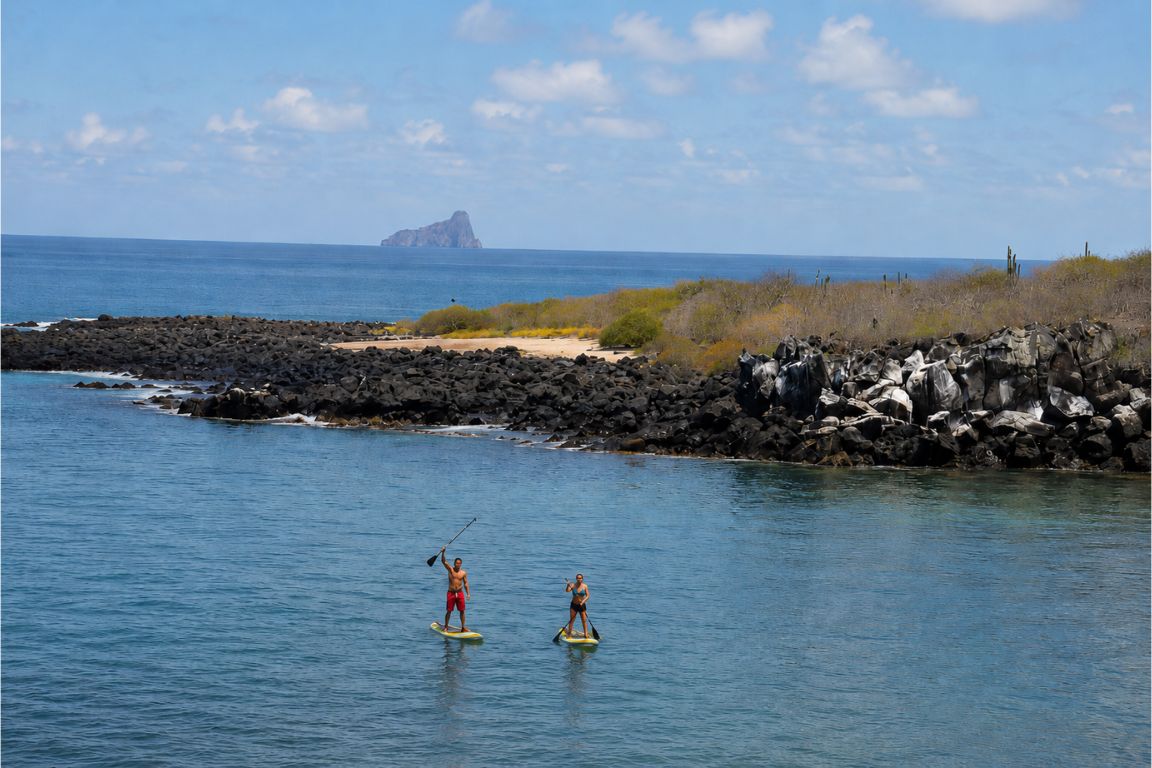
Quick Summary
Stand-up paddleboarding in the Galapagos is real, available on select luxury and first-class vessels, and genuinely rewarding when conditions allow. SUP sessions run 45 to 75 minutes in calm, sheltered water at a small subset of GNPD-approved sites. Expect one to three sessions across an 8-day cruise, always supervised by a naturalist, always conditions-dependent. It is a supplement to snorkeling and kayaking, not a trip driver. If SUP matters to you, the vessel choice is everything: most cruise ships do not carry boards.
Part of our guide to what wildlife you can see on a Galapagos cruise. Ready to pick a ship? See Galapagos cruises by price, size and class.
Quick Facts: Stand-Up Paddleboarding in the Galapagos
| Detail | What to Know |
|---|---|
| Available on all cruises? | No. SUP is offered on select luxury and first-class vessels only. Most cruise ships do not carry boards. |
| Extra charge? | No. On vessels that include SUP, it is part of the cruise rate at no additional cost. |
| Sessions per 8-day cruise | 1 to 3 sessions, conditions and itinerary permitting. Always weather-dependent. |
| Session length | 45 to 75 minutes per session |
| Experience required | Basic balance helpful but not required. A brief guide tutorial is provided. All sessions in calm, sheltered water. |
| Key vessels confirmed with SUP | Ecoventura (Origin, Theory, Evolve), National Geographic-Lindblad (Endeavour II, Gemini, Delfina), Aqua Mare, Metropolitan Touring (La Pinta, Isabela II, Santa Cruz II), HX Santa Cruz II |
| GNPD-approved SUP sites | Punta Vicente Roca (Isabela), Tortuga Bay lagoon (Santa Cruz), Las Bachas / North Seymour anchorage, Tagus Cove (Isabela). Site access always conditions-dependent. |
| Park entrance fee (all visitors) | $200 USD per adult, cash on arrival. Verified September 2026. |
All prices and regulations verified September 1, 2026.
What Is Stand-Up Paddleboarding in the Galapagos Actually Like?
Stand-up paddleboarding in the Galapagos puts you alone at water level in near-total silence, higher off the surface than a kayaker, able to see directly down through clear, shallow water while the ocean moves around you. A sea turtle surfaces two meters ahead. A sea lion investigates the board’s shadow below. A white-tipped reef shark rests on the sand four meters down, visible through the clear water column without snorkeling gear. Sessions run 45 to 75 minutes, always guided, always in sheltered water.
The vantage point is the thing that surprises most people who try SUP in the Galapagos. Standing on the board puts your eyes roughly a meter above the water surface, which means you read the underwater world from above rather than at its level. In calm, clear water, that elevation gives you a column view: you look straight down through several meters of water and see what is resting or moving on the bottom. Snorkeling gives you horizontal immersion. SUP gives you vertical perspective. Both are extraordinary. They are genuinely different.
The honest expectation setting matters here. On a Galapagos cruise, SUP is a supplemental activity. The Galapagos National Park Directorate permits it at a small subset of visitor sites: sheltered bays and lagoons where there is no current strong enough to push a paddler into a restricted zone, no risk to nesting wildlife, and no surface conflict with snorkelers and pangas operating at the same site. The marquee snorkeling sites (Kicker Rock, Devil’s Crown, Gordon Rocks) are not SUP sites. They are current-driven, exposed, and designed for in-water activity. SUP belongs to the calm-water part of each day’s schedule.
One specific detail that consistently catches travelers off guard: boards on a vessel’s deck do not mean boards in the water. Three conditions need to align on any given day. The vessel carries boards. The site that day is GNPD-approved for SUP. And the conditions (wind, swell, current) are calm enough for the captain and guide to deploy them safely. On some itineraries, all three line up twice in a week. On others, once. Booking a SUP-equipped vessel is the necessary first step. The rest depends on the ocean.
SUP availability across the Galapagos cruise fleet is genuinely difficult to verify without talking to someone who knows the vessels and the routes. Several operators list paddleboarding as a feature without clarifying how often it is actually deployed on their itineraries. If SUP sessions matter to your trip, we can tell you which vessels run the most and which itineraries put you at the best-suited sites. Fill out this short form and we will give you an honest picture of what to expect.
Want to arrive fully prepared for the snorkeling before you step on the boat? Our complete guide to snorkeling on a Galapagos cruise covers everything from wetsuit thickness to the best sites by route.
Which Galapagos Cruise Ships Include Stand-Up Paddleboarding?
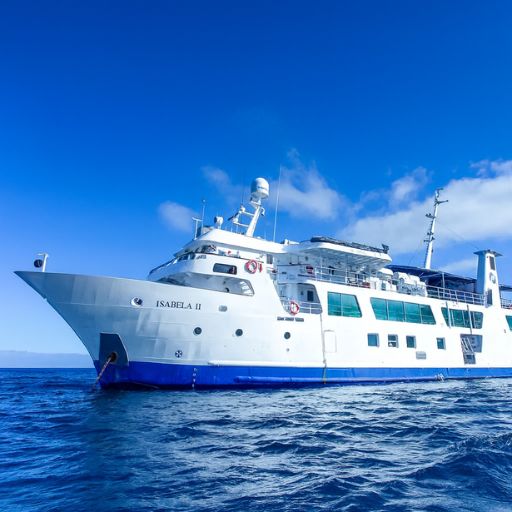
SUP boards are carried by a subset of mid-range, first-class, and luxury vessels. The Ecoventura fleet (Origin, Theory, Evolve), the National Geographic-Lindblad fleet, Aqua Mare, and the Metropolitan Touring vessels (La Pinta, Isabela II, Santa Cruz II) all list paddleboards as included equipment. On all of these, SUP is part of the cruise rate with no extra charge.
| Vessel / Operator | Class | SUP Included? | Other Water Activities |
|---|---|---|---|
| Ecoventura (Origin, Theory, Evolve) | Luxury | Yes, complimentary | Kayaks, snorkel gear, wetsuits, glass-bottom Zodiac (Origin only) |
| National Geographic-Lindblad (Endeavour II, Gemini, Delfina) | Luxury | Yes, complimentary | Kayaks, glass-bottom boat, Zodiacs, snorkel gear |
| Aqua Mare (Aqua Expeditions) | Ultra-luxury | Yes, complimentary | Double kayaks, snorkel gear, wetsuits |
| Metropolitan Touring (La Pinta, Isabela II, Santa Cruz II) | First-class to luxury | Yes, complimentary | Kayaks, glass-bottom boat, snorkel gear |
| Budget and most mid-range vessels | Budget to mid-range | Rarely or never | Snorkel gear (standard), wetsuits at extra cost |
Vessel equipment subject to change. Confirm SUP availability before booking. Verified September 2026.
The Ecoventura distinction is worth naming. On the Origin, Theory, and Evolve, SUP is not a listed optional: it is deployed as part of the standard water-activity rotation alongside kayaking, with the naturalist briefing both activities together on appropriate afternoons. Ecoventura’s own itinerary descriptions reference paddleboarding explicitly at sites like Tagus Cove and along Isabela’s sheltered coastline. The framework is: the naturalist identifies the right window within the day’s schedule, briefs the group, and guests choose kayak or SUP based on preference.
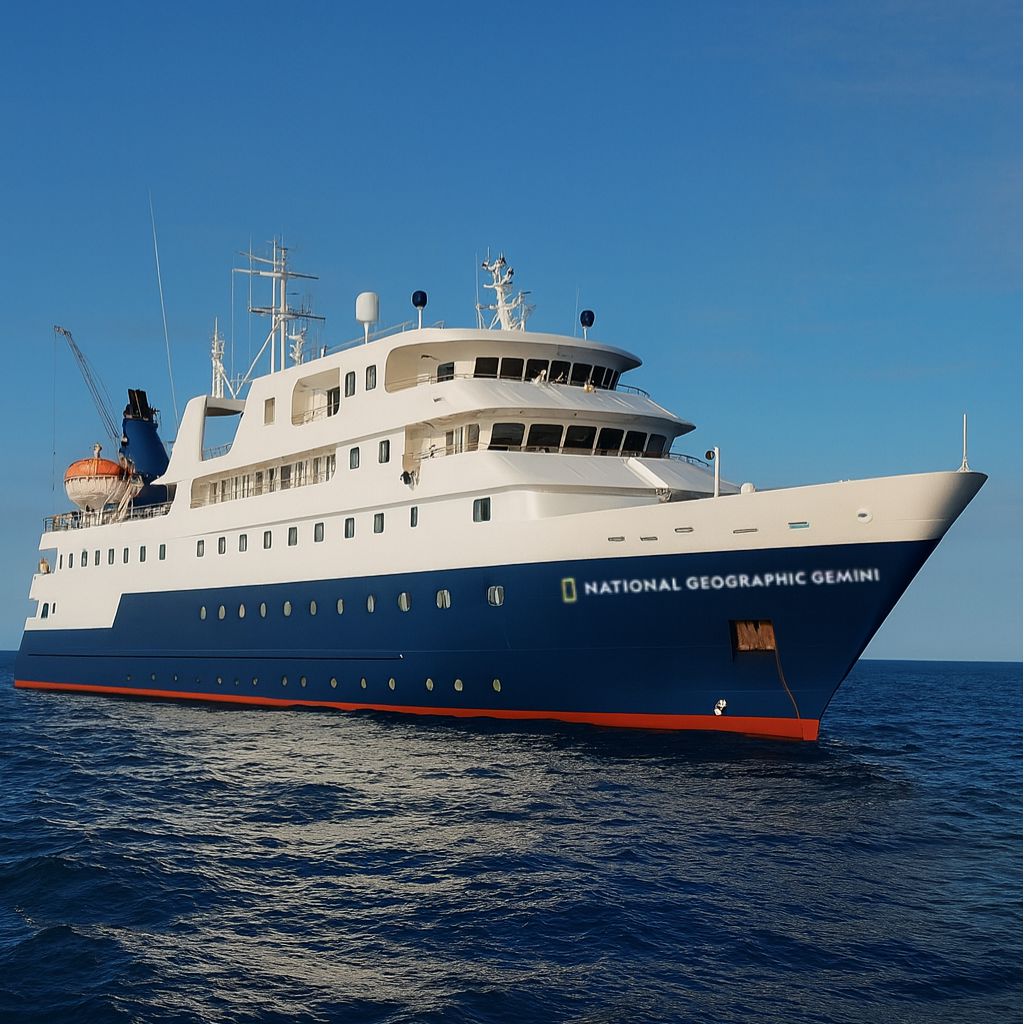
National Geographic-Lindblad integrates SUP into the same daily-choice framework. On the Endeavour II and the Gemini (launched in early 2025), guests on any given afternoon can choose between snorkeling, kayaking, paddleboarding, the glass-bottom boat, or photography walks, depending on site and conditions. The operative word is choice: SUP is one slot in a menu of simultaneous options, not a scheduled group activity the whole vessel participates in at once.
What Wildlife Will You Encounter While Paddleboarding in the Galapagos?
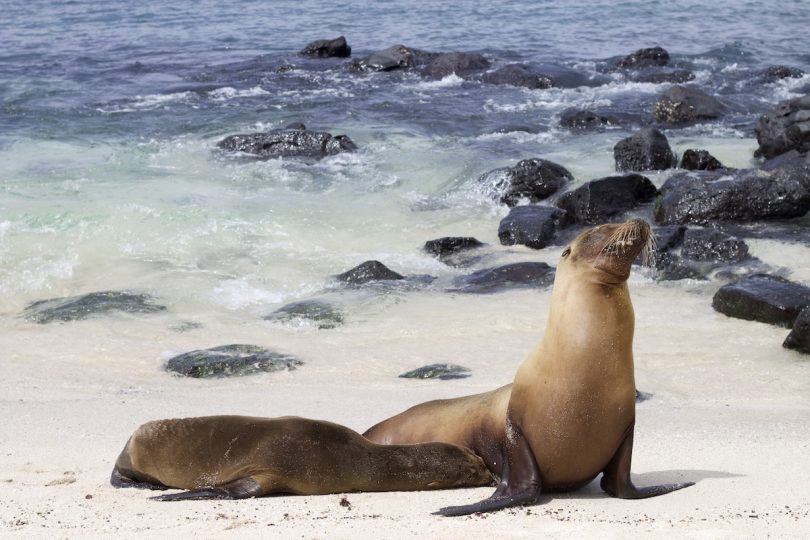
From a SUP board in the Galapagos, expect sea turtles surfacing within meters of the board, sea lions investigating the hull from below, white-tipped reef sharks visible resting on sandy bottoms in clear shallow water, rays moving through the shallows, and seabirds at eye level. At western sites like Tagus Cove and Punta Vicente Roca, penguins and flightless cormorants are possible. The elevated vantage changes what you see compared to kayaking or snorkeling.
The sea lion encounter from a SUP board is different from any other activity on the cruise. Sea lions in the water around a stationary or slow-moving board treat it as an object of intense curiosity. They surface next to the board, look up at the paddler from just below the surface, and occasionally bump the hull gently. Standing upright on the board, you are at the height of a cormorant on a rock. The sea lion reads you as neither threat nor prey. It investigates, decides you are not interesting, and moves on. The whole encounter takes 30 seconds and stays with you for significantly longer.
The overhead vantage is the genuine SUP advantage for wildlife observation. On a calm morning at Tortuga Bay lagoon or at Las Bachas on Santa Cruz, white-tipped reef sharks rest motionless on the sandy bottom in 3 to 4 meters of clear water. From a kayak at surface level, you might not notice them. From a standing position on a SUP board, looking straight down through still water, you see the full outline of the shark on the sand below your feet. The guide may point it out. Or you spot it first and feel the particular calm of realizing something large and completely unhurried is directly below you.
Seabirds add a dimension that is easy to underestimate. Pelicans dive-bomb within meters of a stationary board. Blue-footed boobies fly at eye level and land on the water nearby. At Tagus Cove and Punta Vicente Roca on Isabela, flightless cormorants fish along the shoreline at the same height as your head when you are standing on the board. No other activity puts you at that elevation at water level.
We’ve got a full breakdown on wildlife photography on a Galapagos cruise if you want to know exactly which islands, species, and lighting conditions give you the best shots on a typical itinerary.
How Difficult Is Stand-Up Paddleboarding in the Galapagos? What Skill Level Do You Need?
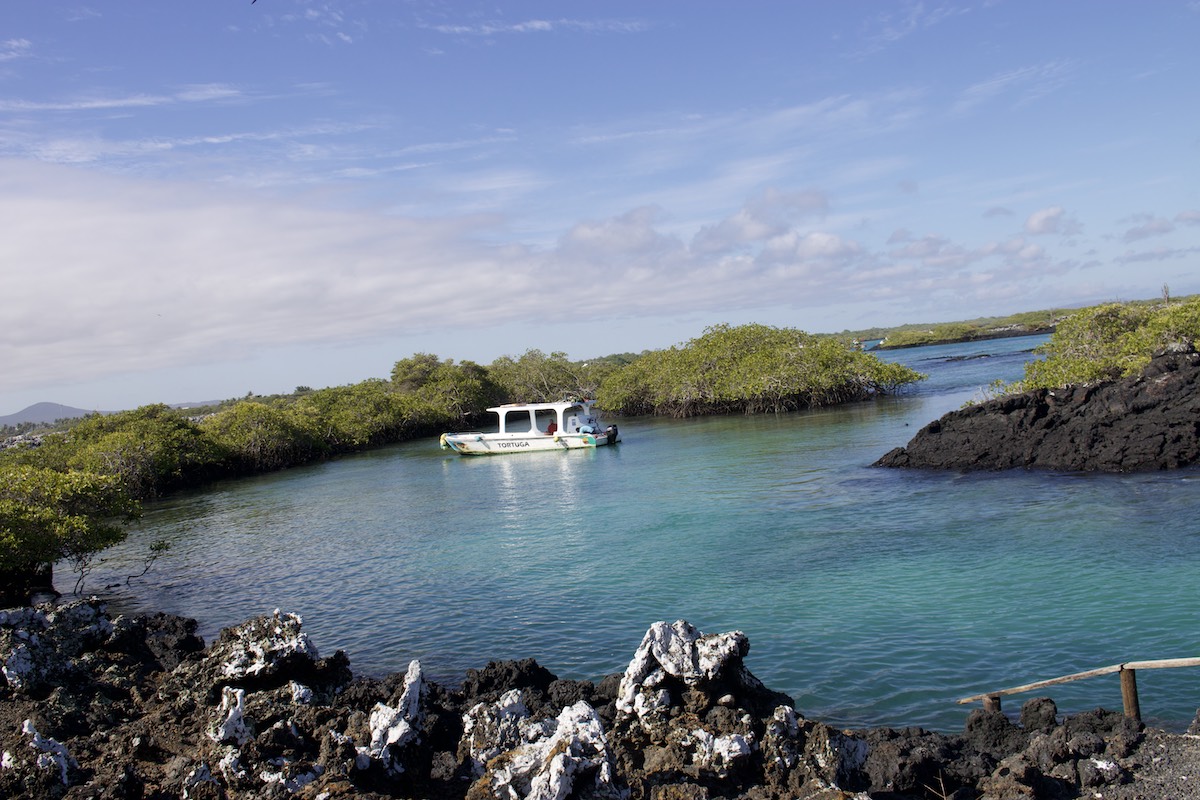
SUP in the Galapagos requires no prior experience. All sessions take place in calm, sheltered water with minimal current and no swell. Boards are wide and stable. The guide provides a brief tutorial on balance and paddle technique before launch. Guests who have never stood on a board before are on the water and comfortable within a few minutes. The one physical requirement is enough core stability to stand upright.
The sessions are not a test of SUP skill. Nobody is racing, surfing, or covering long distances. A typical session involves launching from the panga or vessel platform, finding your balance in flat water, and paddling slowly through a sheltered cove while the guide positions the group near wildlife. The pace is slower than a walk. Most first-timers fall once, get back on, and spend the rest of the session standing comfortably.
The one condition worth acknowledging: kneeling is always an option. Guests who are not confident standing, or who prefer the stability of a lower center of gravity, paddle on their knees for part or all of the session without any issue. The wildlife encounters from kneeling position are nearly identical to those from standing. The crew does not push anyone to stand if they are not comfortable, and the guide has managed guests of every ability level on these sessions.
The Galapagos-specific variable is water temperature. SUP sessions occur in the same water used for snorkeling: cool season temperatures at some western sites drop to 16 to 19°C. You are not in the water, but spray from the paddle and the occasional balance correction puts water on your skin. A long-sleeve rash guard or lightweight wetsuit top is worth packing for cool-season cruises, and reef-safe sunscreen on your hands, neck, and forearms is the non-negotiable item across every season.
Western itineraries that include Isabela and Tagus Cove consistently give the most SUP sessions and the best wildlife context for the activity. Not all vessels run these routes, and among those that do, the schedule of SUP deployment varies by guide and conditions. We know which vessels and which itineraries produce the most board time in practice, not just on paper. Reach out here and we will match you to the right combination.
Which Sites Are Best for Stand-Up Paddleboarding in the Galapagos?
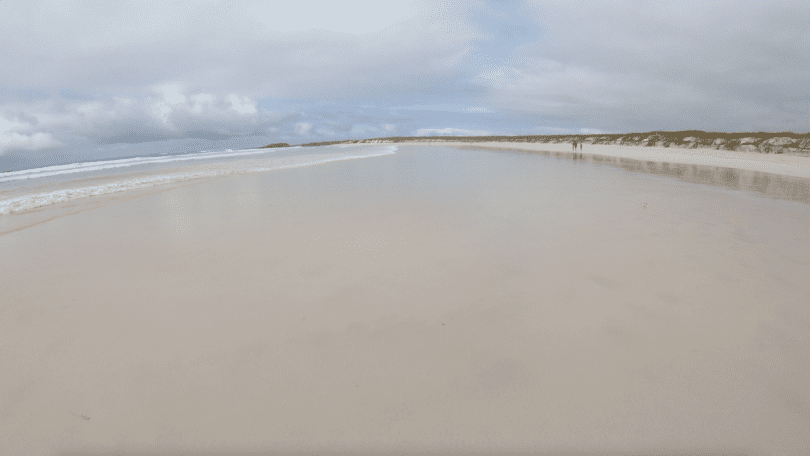
The GNPD-approved SUP sites in the Galapagos are a small, curated set of calm, sheltered locations. Punta Vicente Roca and Tagus Cove on Isabela, the Tortuga Bay lagoon on Santa Cruz, and the Las Bachas / North Seymour anchorage are the primary sites. All are on western or central itineraries. The marquee snorkeling sites are not SUP sites.
Tagus Cove on Isabela is the standout. This sheltered caldera-rim bay on the western coast of Isabela has been an anchorage since the 1800s, and the still, dark water of the cove is one of the few places in the archipelago where the conditions for SUP are reliable rather than occasional. Flightless cormorants fish along the shoreline at board height. Penguins dart through the shallows below. Marine iguanas line the lava edges of the cove. From a standing board, you paddle among all of it at the pace of the water.
Punta Vicente Roca, just north of Tagus Cove on Isabela’s northwest tip, is protected by the headland from the prevailing swell. The water here hosts seahorses, turtles, and the occasional sunfish in the shallows. It is also one of the coldest water sites on a western itinerary, sitting in the path of the Cromwell Upwelling. A rash guard is not optional at Vicente Roca during the cool season, whether you are snorkeling or standing on a board.
The Tortuga Bay lagoon on Santa Cruz is accessible both from cruise itineraries and from Santa Cruz town. The protected inner lagoon (separate from the open beach) is calm enough for SUP year-round and reliably hosts white-tipped reef sharks resting on the sandy bottom, sea turtles, and rays. It is one of the few SUP sites also accessible by non-cruise travelers, which makes it a useful option for those adding days on Santa Cruz around their cruise.
What Gear Do Galapagos Cruises Provide for SUP?
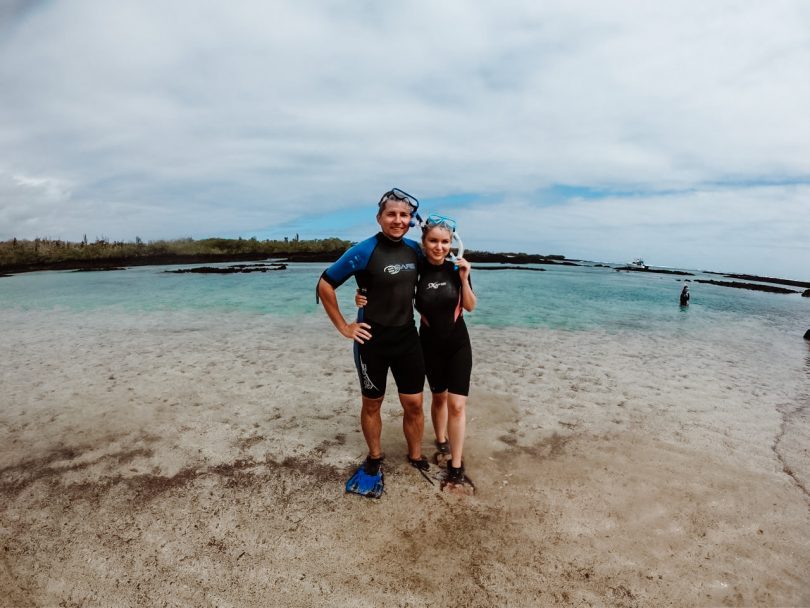
Vessels that include SUP provide the board, paddle, and personal flotation device as part of the activity. A brief guide tutorial is given before launch. You do not need to bring your own equipment. A long-sleeve rash guard, reef-safe sunscreen, and water shoes or sandals are the practical personal items worth packing for SUP sessions.
The boards used on Galapagos cruises are wide, inflatable or hard-top all-around SUP designs: stable, forgiving, and sized for recreational use rather than performance. None of the operators in the fleet use race boards or surf-specific shapes. The boards are appropriate for beginners and experienced paddlers alike.
Sun protection deserves the same emphasis here as in every water activity on a Galapagos cruise. Paddling at surface level under the equatorial sun, with your face angled slightly downward and your hands and forearms extended over the water, produces a specific burn pattern: the back of the neck, the tops of the forearms, and the ears take the most exposure. Apply reef-safe sunscreen before launch, not after you are already on the water.
A leash is typically provided with the board. Wearing it is not optional: in any surprise balance event, the board stays with you rather than drifting away. The panga follows the SUP group at a distance, but the leash is the first line of recovery.
If you are planning a Galapagos cruise specifically around active water pursuits and want SUP, kayaking, and snorkeling all in the mix, the vessel and itinerary combination is the planning decision that matters most. We know which ships actually deploy their boards regularly rather than leaving them strapped to the deck, and which routes give you the most water-activity time overall. Send us a message here and we will build the right trip for you.
Want to add kayaking to your Galapagos experience but not sure which cruise actually delivers it well? Our guide on the best ships and routes for kayaking on a Galapagos cruise walks you through the top options.
Which Cruise Class Gets You the Best SUP Experience?
Luxury vessels deliver the best SUP experience on a Galapagos cruise, for the same reasons they deliver the best kayaking: SUP boards are included, guide ratios are smaller, itineraries more consistently hit western sites where the best SUP conditions are, and the activity programs are structured to offer genuine choice rather than a single scheduled group activity. Budget and mid-range vessels almost never carry boards.
The Ecoventura fleet is the standout recommendation for travelers who specifically want SUP as a regular part of the cruise. Sixteen guests, two naturalist guides, boards and kayaks both included, and itineraries that alternate between the southern/central and western/northern routes. On western itineraries (Itinerary B), Tagus Cove and the Isabela coastline provide exactly the sheltered water that makes SUP viable and wildlife-rich. Ecoventura’s own itinerary descriptions name paddleboarding explicitly at these sites.
Among the Lindblad fleet, the National Geographic Gemini (launched in early 2025) is the purpose-built option for travelers who want the full expedition toolkit including SUP. Forty-eight guests, SUP boards, kayaks, a glass-bottom boat, and Zodiacs: the daily-choice framework gives you genuine flexibility across all four activities at appropriate sites.
For travelers who don’t snorkel the glass-bottom boat is how you see what’s happening beneath the surface. Here’s a guide to glass-bottom boat excursions in the Galapagos so you know what to expect.
What Travelers Say About SUP in the Galapagos (Our Data)
Based on feedback from travelers through mytrip2ecuador.com and our YouTube audience, here is what shapes how people rate the paddleboarding experience on their Galapagos cruise:
| Factor | % Who Named It | Pattern Observed |
|---|---|---|
| Booked wrong vessel (no boards) | 41% | Travelers who wanted SUP and did not confirm before booking were the most consistent source of disappointment in our traveler feedback on this topic. |
| Surprised by wildlife from the board | 76% | The elevated vantage for seeing underwater wildlife was named as the defining feature of SUP over kayaking by the majority of travelers who had done both. |
| Conditions cancelled planned sessions | 29% | Wind and swell cancelled at least one planned SUP session on roughly one in three cruises. Travelers who understood this as inherent to the Galapagos context reported no dissatisfaction; those who expected guaranteed sessions were frustrated. |
| Easier than expected | 68% | First-time SUP travelers consistently reported being comfortable on the board within five minutes and not thinking about balance for the rest of the session. |
| Western itinerary produced more sessions | 62% | Travelers on western-route cruises (Isabela, Fernandina, Santiago) reported more SUP opportunities than those on eastern-only routes, due to the sheltered coves at Tagus Cove and Punta Vicente Roca. |
Frequently Asked Questions
Is stand-up paddleboarding available on all Galapagos cruises?
No. SUP is offered on select luxury and first-class vessels. The Ecoventura fleet (Origin, Theory, Evolve), National Geographic-Lindblad vessels, Aqua Mare, and Metropolitan Touring ships (La Pinta, Isabela II, Santa Cruz II) all include SUP boards. Budget and most mid-range boats do not carry them. Always confirm before booking if paddleboarding matters to your trip.
Do I need SUP experience to paddleboard in the Galapagos?
None at all. All sessions take place in calm, sheltered water. Boards are wide and stable. The guide gives a brief tutorial before launch, and guests who have never stood on a board are typically comfortable within a few minutes. Kneeling is always an option for those who prefer lower stability.
How many SUP sessions can I expect on an 8-day cruise?
Typically one to three sessions, depending on itinerary route and daily conditions. SUP is always weather-dependent: wind and swell can cancel a planned session. Western itineraries (Isabela, Fernandina, Santiago) tend to produce more SUP opportunities than eastern routes due to the sheltered coves at sites like Tagus Cove and Punta Vicente Roca.
Which sites in the Galapagos are best for SUP?
The GNPD-approved SUP sites are primarily Tagus Cove (Isabela), Punta Vicente Roca (Isabela), the Tortuga Bay lagoon (Santa Cruz), and the Las Bachas and North Seymour anchorage area. All are sheltered, calm-water sites. The marquee snorkeling sites are not SUP sites, by park design.
Is there an extra charge for SUP on a Galapagos cruise?
No. On every vessel that carries paddleboards, SUP is included in the cruise rate at no additional charge. There are no per-session fees.
Want SUP Built Into Your Galapagos Cruise?
The vessel choice and the itinerary route determine whether SUP is a real part of your trip or a feature listed in the brochure that never reaches the water. We have worked with enough travelers and enough vessels to tell you honestly which ships deploy their boards most frequently and which itineraries give you the most time at SUP-suitable sites. Cruises To Galapagos Islands is rated 4.9 stars on Google and TripAdvisor, and every quote we provide is free and comes with no commitment. Fill out the contact form and we will match you with the right cruise for your travel window and the activities that matter most to you.
Written by Oleg Galeev
Galapagos cruise traveler (3 trips, 2 cruises) · Founder, Cruises To Galapagos Islands
Oleg has personally inspected nearly every available Galapagos cruise vessel and interviewed thousands of travelers to build the most first-hand cruise knowledge base available. He also runs the Ecuador travel blog mytrip2ecuador.com and the YouTube channel My Trip to Somewhere.
Cruises To Galapagos Islands is rated 4.9 stars on Google and TripAdvisor.
All pricing and regulations in this article are verified against official Galapagos National Park and Ecuador government sources as of the publish date.