
Quick Summary
What you leave behind matters as much as what you pack for a Galapagos cruise. Several items are prohibited by GNPD rule or Ecuador biosecurity law: non-reef-safe sunscreen (oxybenzone or octinoxate), drones, single-use plastics, fresh food and agricultural products, and anything taken from the islands as a souvenir. Beyond the legal prohibitions, a hard-shell suitcase, cotton clothing, formal wear, a full-size tripod, and a GoPro chest mount all create problems in the field without solving any. Every item that does not make the cut buys you weight, space, and clarity for what does.
Quick Reference: What Not to Bring to the Galapagos
| Item | Category | Why |
|---|---|---|
| Non-reef-safe sunscreen | GNPD prohibited | Oxybenzone and octinoxate are banned. Can be confiscated at the airport on arrival. |
| Drones | GNPD prohibited | Strictly banned in the National Park and Marine Reserve. No recreational permit exists. |
| Single-use plastics | Ecuador law | Plastic bags, straws, single-use bottles, and polystyrene are banned across the Galapagos archipelago. |
| Fresh food and produce | Biosecurity law | Fruits, vegetables, seeds, plants, and unprocessed food are prohibited to prevent invasive species introduction. |
| Souvenirs from the islands | GNPD prohibited | Lava rock, shells, coral, wood, and animal parts are illegal to remove. Fines are significant. |
| Flash photography gear | GNPD prohibited | Flash photography is banned at all visitor sites. External flash units, ring flashes, and pop-up flash all fall under this rule. |
| Hard-shell suitcase | Practical problem | Impractical in cabin storage and panga loading. Some vessels cannot accommodate them at all. |
| Cotton clothing | Practical problem | Stays wet in humid equatorial conditions. Does not dry between daily excursions. |
| Formal wear | Waste of space | No Galapagos cruise vessel has a dress code beyond casual. Every gram of formal wear displaces something useful. |
| Full-size tripod | Waste of space | Impractical on narrow lava trails. Wildlife approach distances make it redundant for most shots. |
All regulations verified against GNPD and Ecuador government sources, September 1, 2026.
What Items Are Prohibited in the Galapagos National Park?
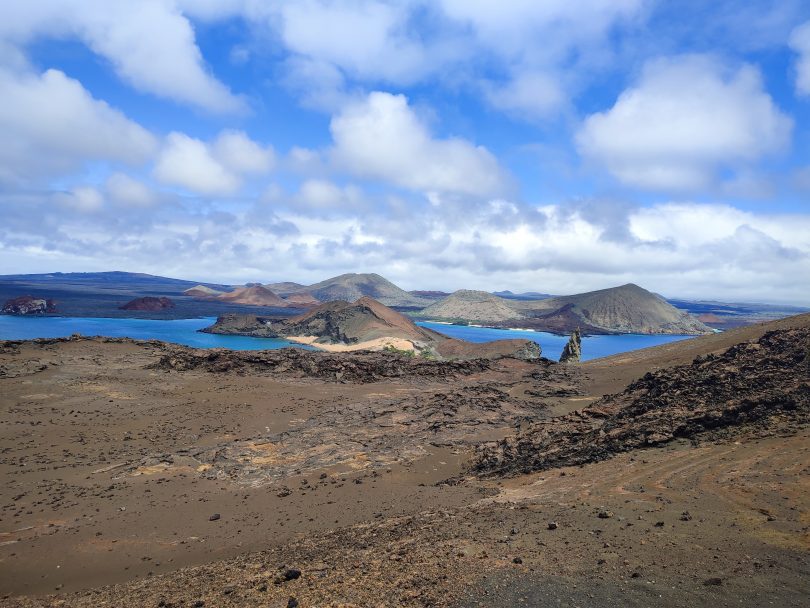
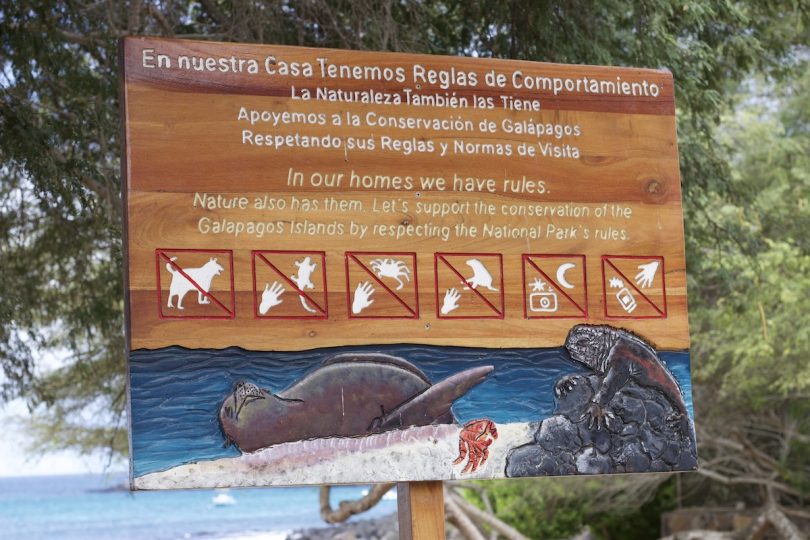
The Galapagos National Park Directorate prohibits drones, flash photography equipment, non-reef-safe sunscreen (oxybenzone or octinoxate), and single-use plastics across the archipelago. Ecuador biosecurity law prohibits fresh food, agricultural products, seeds, plants, and live animals. Removing anything from the islands, including lava rock, shells, coral, or plant material, is also a criminal offense. These are not suggestions or guidelines. They are enforced at the airport, on vessels, and at visitor sites.
The enforcement mechanism matters. Your luggage is inspected before boarding your domestic flight to the Galapagos from Quito or Guayaquil. A second biosecurity check occurs on arrival. Officers look specifically for fresh food, agricultural material, and non-compliant sunscreen. The Sworn Declaration Form you complete online within 48 hours of departure declares that you are not carrying prohibited items. Providing false information on this form is a separate legal issue from the confiscation of the item itself.
The souvenir prohibition catches travelers who were not aware of its scope. It is not just illegal to sell items made from Galapagos materials: it is illegal to take anything at all. A lava rock from Bartolome that ends up in a pocket is a violation of GNPD rules regardless of intent. A shell from a beach on Española takes a piece of the calcium carbonate cycle that supports the island’s ecosystem. Your naturalist guide will address this at the first briefing, and park rangers conduct bag checks at some sites before you return to the panga.
The single-use plastic ban in the Galapagos is broader than most travelers expect. It covers plastic bags, straws, single-use water bottles, polystyrene cups and containers, and disposable cutlery. Bring a reusable water bottle from home. Most cruise vessels provide refill stations throughout the day. A reusable tote bag in your daypack handles any shopping in port towns without producing prohibited waste.
Understanding what the park prohibits before you arrive prevents problems at the airport and at visitor sites. If you are unsure about a specific item or product, we are happy to check before your departure. Fill out this short form and we will answer any pre-trip compliance questions alongside your cruise recommendation.
We’ve got a full breakdown on flying into Quito or Guayaquil if you want to know exactly how the two gateway cities compare on flight connections, layover options, and how each one sets you up for the Galapagos.
What Clothing and Personal Items Should You Leave at Home?
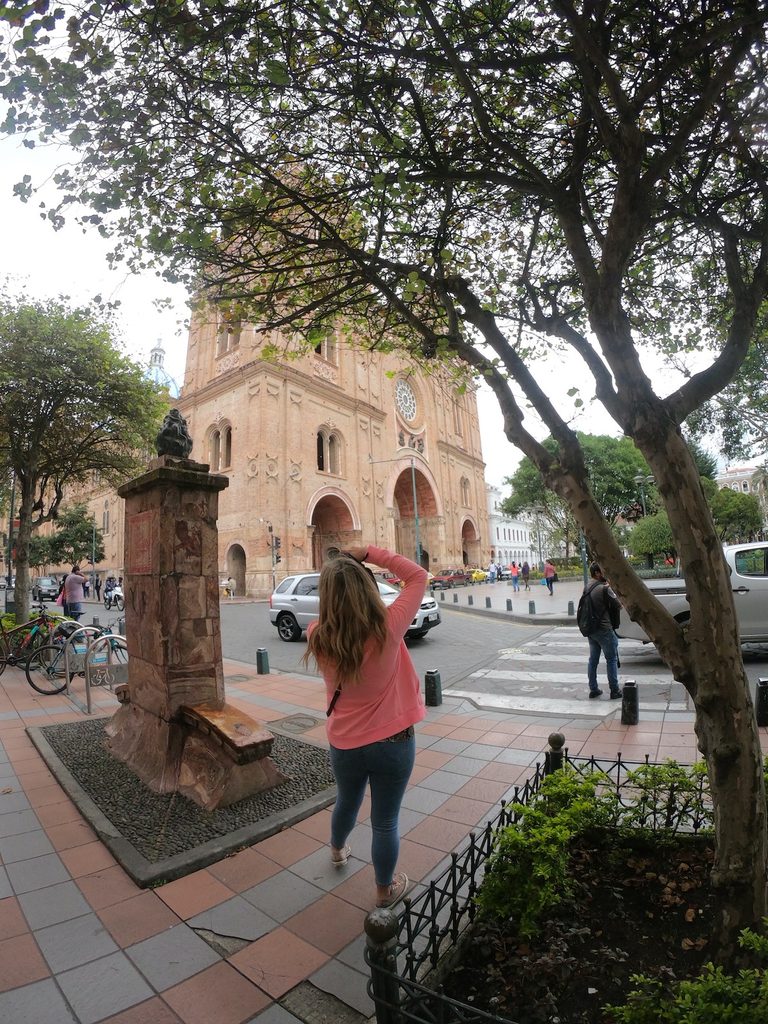
Leave behind all cotton clothing, any formal or semi-formal wear, bright-colored shirts and jackets, heavy fragrances, and items with excessive packaging that would generate plastic waste on board. Cotton fails in humid equatorial conditions. Formal wear is genuinely unnecessary on every Galapagos cruise vessel. Bright colors can disturb wildlife during breeding and nesting periods. Heavy fragrances attract wasps at some sites.
Cotton is the single most commonly cited clothing regret in our traveler feedback. The logic is simple and consistent: on a Galapagos cruise, your clothes get wet every day. Wet landings soak your calves. Snorkeling soaks everything. Panga spray catches your shirt on open crossings. 80 percent humidity means nothing left wet dries overnight in a small cabin. A cotton T-shirt you put on wet from the morning landing is still damp when you need it for the afternoon excursion. Synthetic quick-dry fabric is dry within an hour in the same conditions. Bring none of your cotton travel wardrobe and you will not miss it.
Formal wear is the item that wastes the most space in more Galapagos suitcases than any other category. Every Galapagos cruise operator explicitly states that the dress code across the entire voyage is casual. There are no formal nights, no jacket requirements, no dress shoes expected at dinner. A clean shirt and light pants or a casual dress is the upper limit of what any dinner on any vessel calls for. The space and weight occupied by a suit jacket, a formal dress, or dress shoes displaces items you will actually need on deck at 6 a.m. on an exposed lava field in equatorial sun.
Bright colors deserve specific mention because the concern is real, not just aesthetic. Nesting seabirds, particularly boobies and frigatebirds, can show stress responses to bright visual stimuli near their colonies. Red, orange, and electric yellow are the most consistently cited problem tones in guide briefings at North Seymour, Española, and Genovesa. Neutral tones (khaki, olive, navy, grey) blend into the volcanic and sandy environments without triggering defensive responses. It is not a hard rule at the gangway, but your guide will notice and your wildlife encounters will be better for it.
What to wear on a Galapagos cruise changes slightly depending on which itinerary you choose and which season you travel. A western itinerary in July requires different layering from an eastern itinerary in February. If you are building a packing list around a specific cruise, we can provide a tailored clothing breakdown alongside your quote. Reach out here and we will include it at no charge.
Not sure what clothing actually works for a mix of wet landings, wildlife walks, and evening meals on a Galapagos cruise? Here’s a straight breakdown on what to wear on a Galapagos cruise.
What Camera and Tech Gear Is Not Allowed?
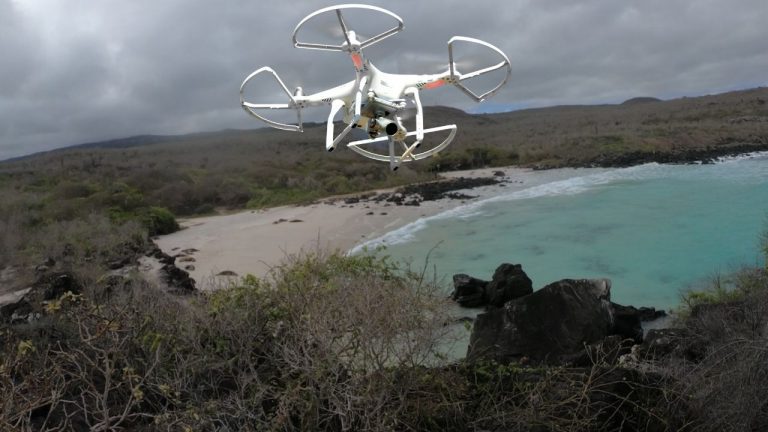
Drones are prohibited in the Galapagos National Park and Marine Reserve without a specific commercial permit, which does not exist for recreational use. Flash photography equipment is banned at all visitor sites. Selfie sticks are discouraged by park guidelines and disruptive to wildlife at close range. Bluetooth speakers must not be used at visitor sites or through the National Park. Full-size tripods are not prohibited but are impractical and should be left behind.
The drone prohibition is absolute and routinely underestimated by travelers who assume that a small consumer drone in a carry-on bag will not be noticed. It will. Baggage screening before the domestic flight specifically targets drones. Cruise operators and guides can face significant fines if a guest flies a drone during a voyage, which means enforcement from the vessel side is vigorous. The penalty for flying a drone in the park without authorization includes confiscation and fines. No footage from a Galapagos drone flight is worth what the violation costs the operators, guides, and the ecosystem that is being protected.
Flash photography is banned because the sudden bright light at close range causes measurable stress responses in nesting and resting wildlife. The rule applies specifically to flash: your camera’s built-in pop-up flash, an external speedlight, a ring flash for macro work, and video lights all fall under this prohibition when directed at animals. The practical solution is to disable automatic flash before every excursion, verify the setting each time, and use higher ISO and wider aperture in low light instead. Modern mirrorless cameras handle ISO 3200 to 6400 in early morning conditions without meaningful image quality loss.
Selfie sticks fail at the Galapagos for a mechanical reason that goes beyond the park guidelines: the animals approach to within arm’s reach. A selfie stick extended 60 centimeters beyond your hand puts a rigid object directly into the space of a sea lion that is investigating you. The animal does not understand what the stick is and may react defensively or redirect its attention away from the interaction. Leave the selfie stick at home and use the stick’s arm length as your approximate frame composition guide instead.
Bluetooth speakers and external audio devices are prohibited in the National Park under GNPD rules, which restrict the use of sound equipment to headphones only. This applies on the trail and on pangas near visitor sites. It does not apply on the vessel itself in the open ocean, but the rule at any park site is firm. A pair of good earbuds replaces a speaker for any on-board listening without creating a compliance issue at the landing.
If you are bringing serious camera equipment on your Galapagos cruise and want to know exactly what the park allows and what creates problems at specific sites, we can walk you through it before your trip. We have placed many photography-focused travelers on Galapagos cruises and know the specific rules and practical considerations for different gear setups. Send us a message here and we will help you prepare.
The Galapagos gives you wildlife encounters that most photographers wait a lifetime for and the right gear makes all the difference. Here’s a guide to the best camera gear for a Galapagos cruise so you show up ready to shoot.
What Food and Drink Should You Not Bring?
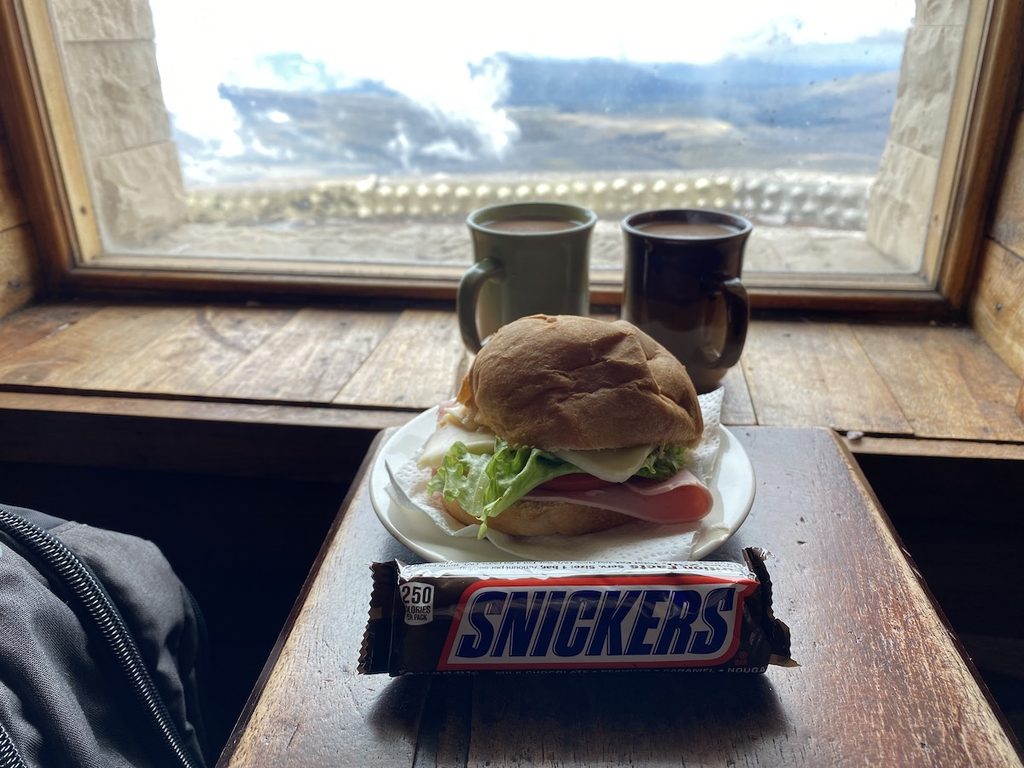
Do not bring fresh fruit, vegetables, seeds, nuts in their shells, plants, or any unprocessed agricultural product to the Galapagos. Ecuador biosecurity law prohibits these items specifically to prevent invasive species from reaching the archipelago. Processed, factory-sealed snacks (energy bars, sealed nuts, chocolate) are generally permitted. Homemade food and anything without a factory seal should be left at home. All meals on your cruise are provided.
The biosecurity reason behind the food prohibition is not bureaucratic formality. The Galapagos Islands are ecologically isolated in a way that makes introduced species catastrophic: a single fruit fly or seed from a mainland plant can establish an invasive population that decades of park management cannot fully reverse. The inspections at Quito and Guayaquil airports before the flight to the Galapagos are specifically designed to catch exactly this kind of transfer. Inspectors are experienced at finding items that passengers have tucked into bags without thinking: an apple in a daypack, a banana in a jacket pocket, a small bag of unshelled sunflower seeds.
The food prohibition extends to the trails. You are not permitted to bring food from the vessel onto uninhabited island landings. This prevents accidental feeding of wildlife (which changes animal behavior), contamination of pristine environments with introduced organic material, and the attraction of introduced insects or pests to visit sites. Your guide will remind you before every landing. Anything you carry ashore should be water, sunscreen, your camera, and the contents of your daypack. Not snacks.
Single-use drinks packaging falls under the plastic ban. Bringing packaged drinks in single-use plastic bottles from the mainland airport creates waste that the cruise vessel then has to manage against the archipelago’s ban. Most vessels provide water at refill stations continuously throughout the cruise. A quality reusable insulated bottle keeps water cold on a three-hour morning excursion in full equatorial sun and produces no waste.
We’ve got a full Galapagos cruise food guide if you want to know exactly what to expect across tourist class, tourist superior, and luxury vessels and how dietary restrictions are typically handled on board.
What Footwear and Luggage Mistakes Do Travelers Make?
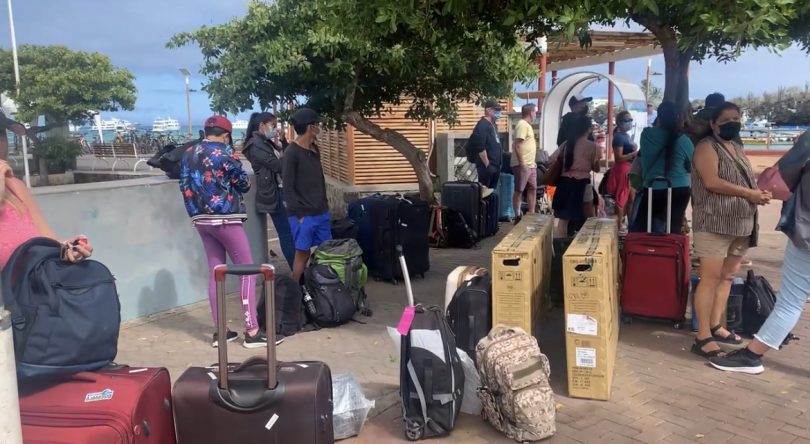
The footwear mistakes that cost Galapagos travelers the most are: bringing only one type of shoe, relying on flip-flops for wet landings, and packing new unworn hiking shoes. The luggage mistakes are: bringing a hard-shell suitcase, overpacking beyond the domestic flight weight limit, and not using packing cubes in a soft duffel. These errors are all preventable and all make the trip harder without adding anything to it.
Flip-flops fail at the Galapagos for a reason that is obvious in retrospect and non-obvious beforehand: the terrain between the waterline and the trail on a wet landing is not flat sand. It is frequently volcanic rock, slick with seawater, at irregular angles. A flip-flop with no heel strap and a flat rubber sole provides neither grip nor retention. It comes off in the surf or slides on the rock and creates an ankle incident that a water sandal with a closed heel and rubber-lugged sole would have prevented. Leave flip-flops as on-board leisure footwear only.
New hiking shoes are the second footwear mistake. Galapagos trails involve six to eight hours of active walking on abrasive lava-cobble over a full week. New shoes that have not been broken in produce blisters before day three, which compound across the remaining excursions. Wear any hiking shoes or trail runners you plan to bring on multiple long walks before your departure. If your current shoes are not suitable and you need to buy new ones, buy them at least a month before the trip and wear them on long walks before packing them.
The hard-shell suitcase mistake persists because hard-shell cases are otherwise excellent travel luggage. In the specific conditions of a Galapagos cruise, they are not: they do not compress when empty (wasting cabin storage space), they are awkward to load in and out of low-sided pangas at dock height, and some smaller vessel cabins literally cannot accommodate them under bunks or in the available storage spaces. Some operators include “soft-sided luggage required” in their pre-trip documentation. Others do not, leaving travelers to discover the problem on embarkation day.
What Over-the-Counter Products Are Banned or Restricted?
The GNPD restricts sunscreens containing oxybenzone or octinoxate, which can be confiscated on arrival. Ecuador’s broader single-use plastics ban covers packaging from personal care products brought in single-use formats. Products containing microbeads are prohibited under the biosecurity framework. Bring toiletries in reusable containers or travel-size quantities in factory-sealed packaging. The principle is: if the product or its packaging creates waste or chemical harm in a fragile marine environment, leave it behind.
Sunscreen is the product that generates the most airport problems and the most traveler regret. The two prohibited chemicals, oxybenzone and octinoxate, appear in a long list of popular mainstream brands. Neutrogena Beach Defense, Banana Boat Sport, Coppertone Sport, Hawaiian Tropic Shimmer Effect, and many others contain one or both. Compliance requires checking the active ingredients list, not the label claims. “Water resistant” or “reef-friendly” language on the front of a bottle is not the same as reef-safe. The active ingredients list is the authoritative source. Compliant options use zinc oxide or titanium dioxide as the only UV filters.
Toiletries in single-use plastic bottles or packaging create waste the vessel must manage against the archipelago’s ban. A set of reusable silicone travel bottles filled from your full-size products at home, combined with solid shampoo bars and soap bars, reduces plastic waste to near zero and keeps your toiletry bag well within airline weight limits. This is not a strict rule at the individual level in the way the sunscreen ban is, but it aligns with the environmental context of the trip and is standard practice on vessels with strong environmental programs.
What Common Packing Items Simply Waste Space on a Galapagos Cruise?
The items that waste the most space on a Galapagos cruise without earning their place are: formal clothing, full-size hair tools, a large umbrella, a portable Bluetooth speaker, a full-size toiletry bag, novels you will not read, and any item you would normally bring “just in case” on a beach vacation. The Galapagos is an active expedition. Every gram that does not serve that purpose is a gram that makes your luggage harder to keep under the airline weight limit.
Hair dryers and straighteners are the items most travelers bring and most consistently do not use. The Galapagos equatorial climate produces a combination of humidity, sea spray, and salt air that undoes any styling effort within 15 minutes of stepping outside. Most cruise vessels provide hairdryers in cabins on mid-range to luxury vessels. More usefully: the conditions on a Galapagos cruise are specifically the kind that make styling effort irrelevant and pointless. A wide-brim hat and a quick-dry headband are more useful than any hair tool for the conditions you will actually encounter.
Full-size toiletry bags are a weight and volume problem that travel-size organization solves completely. The domestic flight to the Galapagos enforces its weight limits with more consistency than most international routes. Travelers who arrive at Quito airport with a suitcase over 23 kg pay significant overage fees or repack items into carry-on luggage at the gate. A week’s worth of toiletries in travel-size amounts in a small reusable bag weighs under 500 grams. There is no good reason to bring full-size bottles to a one-week cruise.
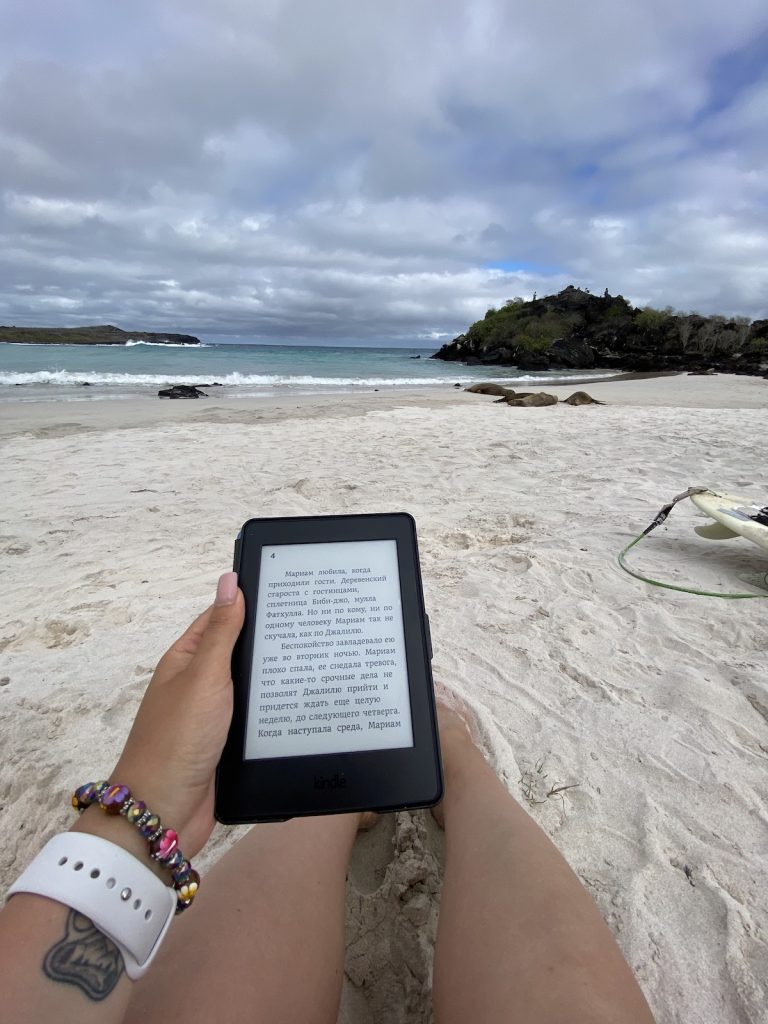
Books are the “just in case” item that most cruisers bring and most do not use. By 9:30 p.m. after two excursions, a naturalist briefing, and dinner, the average Galapagos traveler is asleep before the first chapter. Load your e-reader, download a podcast, and leave the physical books for a different kind of trip. If you insist on paper, one paperback is the right quantity, not three.
Still staring at an empty bag trying to figure out what a Galapagos cruise actually requires? This packing guide gives you a straight answer on what to bring and what to leave at home.
What Travelers Most Regretted Packing (Our Data)
From feedback collected through mytrip2ecuador.com and our YouTube audience, here is what travelers most consistently said they wished they had left behind:
| Item Regretted | % Who Named It | Pattern Observed |
|---|---|---|
| Cotton clothing | 58% | More than half of travelers who packed cotton items reported wearing them once, finding them still damp the following morning, and rotating through the same quick-dry items for the rest of the week. |
| Hard-shell suitcase | 34% | Travelers with hard-shell cases reported cabin storage problems and awkward panga loading. Several noted their vessel specifically requested soft-sided bags in pre-trip documentation they had not read carefully. |
| Formal or dressy clothing | 44% | Almost half of travelers reported returning home with formal or semi-formal items completely unworn. The most common version: a dress or blazer packed “for nice dinners” that never came out of the bag. |
| Non-reef-safe sunscreen | 22% | One in five travelers had sunscreen confiscated on arrival. The most common version: travelers who did not check the active ingredient list and assumed their existing sunscreen was compliant because the label said “sport” or “water-resistant.” |
| Full-size hair tools | 39% | Hair dryers and straighteners were among the heaviest items travelers reported never using, either because the vessel provided a dryer or because the conditions made styling irrelevant within minutes of going outside. |
Frequently Asked Questions
What happens if I bring non-reef-safe sunscreen to the Galapagos?
Non-compliant sunscreen containing oxybenzone or octinoxate can be confiscated by biosecurity officials at the Galapagos airport on arrival. Buying compliant sunscreen in the islands is possible but limited in selection and more expensive than buying it at home. Check the active ingredients list before you pack: compliant sunscreens use zinc oxide or titanium dioxide only.
Are drones really prohibited in the Galapagos?
Yes, completely. Drones are banned in the Galapagos National Park and Marine Reserve without a specific GNPD commercial permit, which does not exist for recreational travelers. Luggage screening before domestic flights specifically targets drones. Operators and guides face fines if a guest flies one, which means enforcement from the vessel side is vigorous. Leave your drone at home regardless of its size or type.
Can I take a rock or shell from the Galapagos as a souvenir?
No. Removing any natural material from the Galapagos, including lava rock, shells, coral, sand, plant material, or animal parts, is a criminal offense under GNPD rules. The fine is significant. Park rangers conduct bag checks at some sites before guests return to the panga. Leave everything exactly where you found it.
Can I bring a hard-shell suitcase on a Galapagos cruise?
You can, but it is inadvisable. Hard-shell suitcases create cabin storage problems on smaller vessels, are awkward in pangas, and some operators explicitly prohibit them in their pre-trip documentation. A 40 to 50 liter soft-sided duffel plus a daypack handles a full week on any Galapagos cruise comfortably and stays within domestic flight weight limits more easily.
Is flash photography prohibited everywhere in the Galapagos?
Flash photography is prohibited at all Galapagos National Park visitor sites. This applies to all flash equipment: built-in pop-up flash, external speedlights, ring flashes, and video lights directed at wildlife. Disable automatic flash before every excursion. Use higher ISO settings in low-light conditions instead. The rule applies on land and in the water.
Ready to Plan Your Galapagos Cruise Without the Packing Headaches?
Knowing what not to bring is half the packing battle, and the other half is knowing exactly what to bring for your specific itinerary, season, and cruise class. We send every traveler we work with a customized packing list alongside their cruise recommendation, tailored to what they are actually doing on the water and on the trails. Cruises To Galapagos Islands is rated 4.9 stars on Google and TripAdvisor. Every quote and conversation is free and comes with no commitment. Fill out the contact form and we will get back to you with the right cruise and a packing list built around it.
Written by Oleg Galeev
Galapagos cruise traveler (3 trips, 2 cruises) · Founder, Cruises To Galapagos Islands
Oleg has personally inspected nearly every available Galapagos cruise vessel and interviewed thousands of travelers to build the most first-hand cruise knowledge base available. He also runs the Ecuador travel blog mytrip2ecuador.com and the YouTube channel My Trip to Somewhere.
Cruises To Galapagos Islands is rated 4.9 stars on Google and TripAdvisor.
All regulations cited in this article are verified against official Galapagos National Park and Ecuador government sources as of the publish date.