
Quick Summary
Galapagos cruise prices are difficult to compare fairly because headline prices exclude several significant costs, and vessels at the same headline price can differ dramatically in quality, inclusions, itinerary coverage, and guide standards. A fair comparison adds the park entrance fee ($200 per person, cash), domestic round-trip flights ($250 to $600), tips ($15 to $25 per person per day), and alcohol (if not included). These fixed add-ons total $700 to $1,400 per person on top of any headline price. Beyond add-ons, the real comparison variables are vessel class and age, naturalist guide quality and ratio, itinerary length and which islands are visited, group size, and whether alcohol is included. A $2,500 cruise and a $5,000 cruise are not the same product with different prices. They are different products. This article shows you how to compare them on the same basis.
What Is and Is Not Included in a Typical Galapagos Cruise Price
| Item | Typically Included? | Notes |
|---|---|---|
| All meals (breakfast, lunch, dinner) | Yes, on every vessel | Quality varies significantly by vessel class but meals are always included in the cruise fare. |
| Cabin accommodation | Yes, on every vessel | Cabin size, private vs shared bathroom, air conditioning, and sea view vary by class and price. |
| Daily guided excursions (2 per day) | Yes, on every vessel | Guide quality and language availability vary significantly. Mid-range and luxury vessels carry certified bilingual naturalists. Some budget vessels have less qualified guides. |
| Snorkeling equipment | Usually yes, sometimes rental | Mask, fins, and snorkel included on most mid-range to luxury vessels. Wetsuit included on most; confirm before booking. Some budget vessels charge a rental fee. |
| Non-alcoholic beverages | Yes, on virtually every vessel | Water, coffee, tea, juices included across all tiers. Purified water at refill stations fleet-wide. |
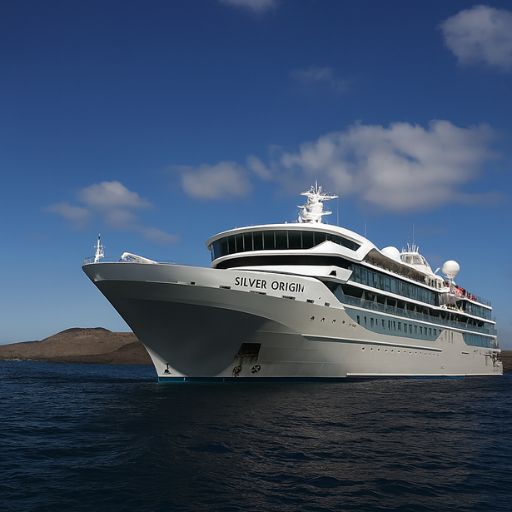
| Alcoholic beverages | Included on some vessels only | Celebrity Flora, Silver Origin, HX Santa Cruz II, Ecoventura include alcohol. Most mid-range and budget vessels charge separately. Bar prices: beer $3 to $8, cocktails $8 to $12, wine $30 to $80 per bottle. |
| Galapagos National Park fee ($200) | Rarely included – almost always extra | $200 USD per adult, cash only, paid on arrival at the airport. Almost never included in the headline cruise price. Always add this to any comparison. |
| INGALA Transit Control Card ($20) | Rarely included | $20 per person, required for all visitors, paid at the airport. Rarely included in headline prices. |
| Domestic flights (mainland to Galapagos) | Sometimes included in packages | $250 to $600 per person round-trip on LATAM or Avianca. Included in some luxury and all-inclusive packages. Most mid-range and budget cruises do not include domestic flights. |
| Gratuities for guide and crew | Never included (expected separately) | $15 to $25 per person per day is the standard range. For an 8-day cruise, budget $120 to $200 per person. Cash USD preferred. Prepare at mainland ATMs before boarding. |
| Travel insurance | Never included | $100 to $300 per person depending on coverage and age. Strongly recommended for a trip of this cost. Not included in any headline price. |
Always request a full inclusions list from your operator and add the fixed costs above to any headline price before comparing. Verified September 2026.
Why Are Galapagos Cruise Prices So Hard to Compare?
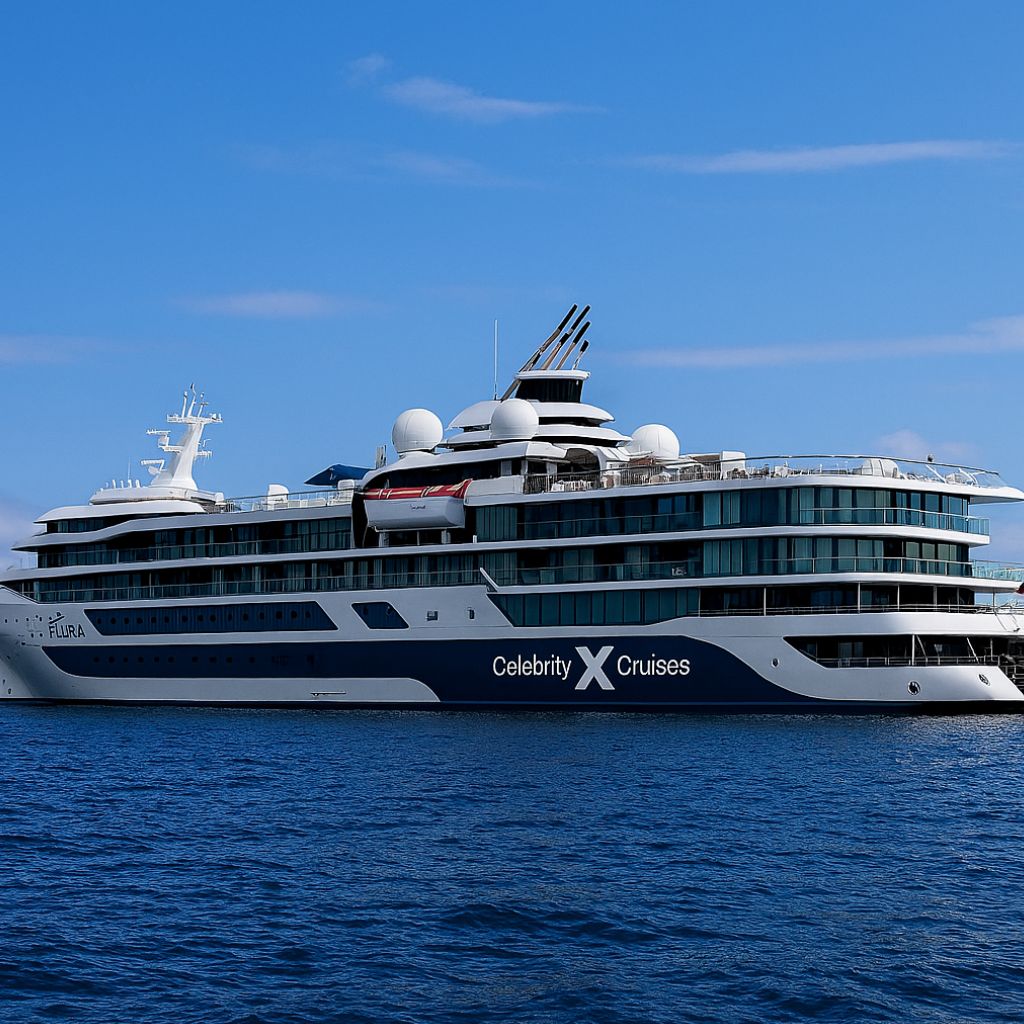
Galapagos cruise prices are hard to compare fairly for three reasons: headline prices exclude several significant fixed costs that every traveler pays, vessels at the same headline price can differ dramatically in quality and inclusions, and “all-inclusive” means different things on different vessels. A $3,500 cruise and a $5,000 cruise may represent exactly the same out-of-pocket cost once the park fee, flights, tips, and alcohol are added to the cheaper option. Or they may represent genuinely different products that no amount of cost adjustment makes comparable.
The headline price problem is the most common trap. A website advertising a Galapagos cruise “from $1,500 per person” is showing you the base cabin price on a budget 4-day vessel excluding the $200 park fee, $20 INGALA card, $350 to $500 in domestic round-trip flights, $60 to $160 in tips for a 4-day cruise, and potentially alcohol. The all-in cost for that $1,500 cruise is closer to $2,200 to $2,500 per person. A competing website showing “$2,800 per person” for an 8-day mid-range vessel may be showing a similar or lower daily cost when the longer itinerary is factored in, with the same add-ons applied to a better vessel and a more comprehensive itinerary.
The “all-inclusive” problem is the second trap. Celebrity Flora describes itself as fully all-inclusive: all meals, all drinks, unlimited WiFi, airport transfers, and daily excursions are in one price. A budget vessel also uses the word “inclusive”: meals, cabin, and excursions are included but alcohol, WiFi, and airport transfers are extra. Both are technically using “inclusive” accurately. They are describing different scopes of inclusion on vessels with dramatically different quality levels. Asking specifically what is included and what is not, and getting a written list, is the only way to make the comparison honest.
When we provide cruise quotes, we include a full line-item breakdown showing exactly what the headline price covers and what each traveler needs to add for a true all-in cost. This is standard practice for us and not standard in the industry. Fill out this short form and we will send you an apples-to-apples comparison of the vessels we recommend for your travel dates and budget.
Trying to figure out what’s included in your Galapagos cruise versus what you’ll be paying for separately on the water? Here’s the guide on all-inclusive Galapagos cruises so you budget accurately.
How Do Galapagos Cruise Classes Affect Price?
The Galapagos cruise fleet is divided into four recognized classes: economy or budget, tourist or mid-range, first class, and luxury. Price increases across classes reflect real and significant differences in vessel age and condition, cabin size and quality, food quality and variety, naturalist guide certification level and language skills, onboard amenities, group size, crew-to-passenger ratio, and alcohol and WiFi inclusion. The wildlife and visitor sites are the same across all classes. What you pay for is the experience of getting to them and the quality of interpretation when you arrive.
| Class | Headline Price Range (8 days) | Key Characteristics | Example Vessels |
|---|---|---|---|
| Economy / Budget | $1,500 to $3,000 | Older vessels. Smaller shared cabins. Basic Ecuadorian home cooking. Guides may be less qualified. Group up to 16. Limited amenities. Alcohol extra. | Multiple budget catamarans and small yachts. Operators change frequently. |
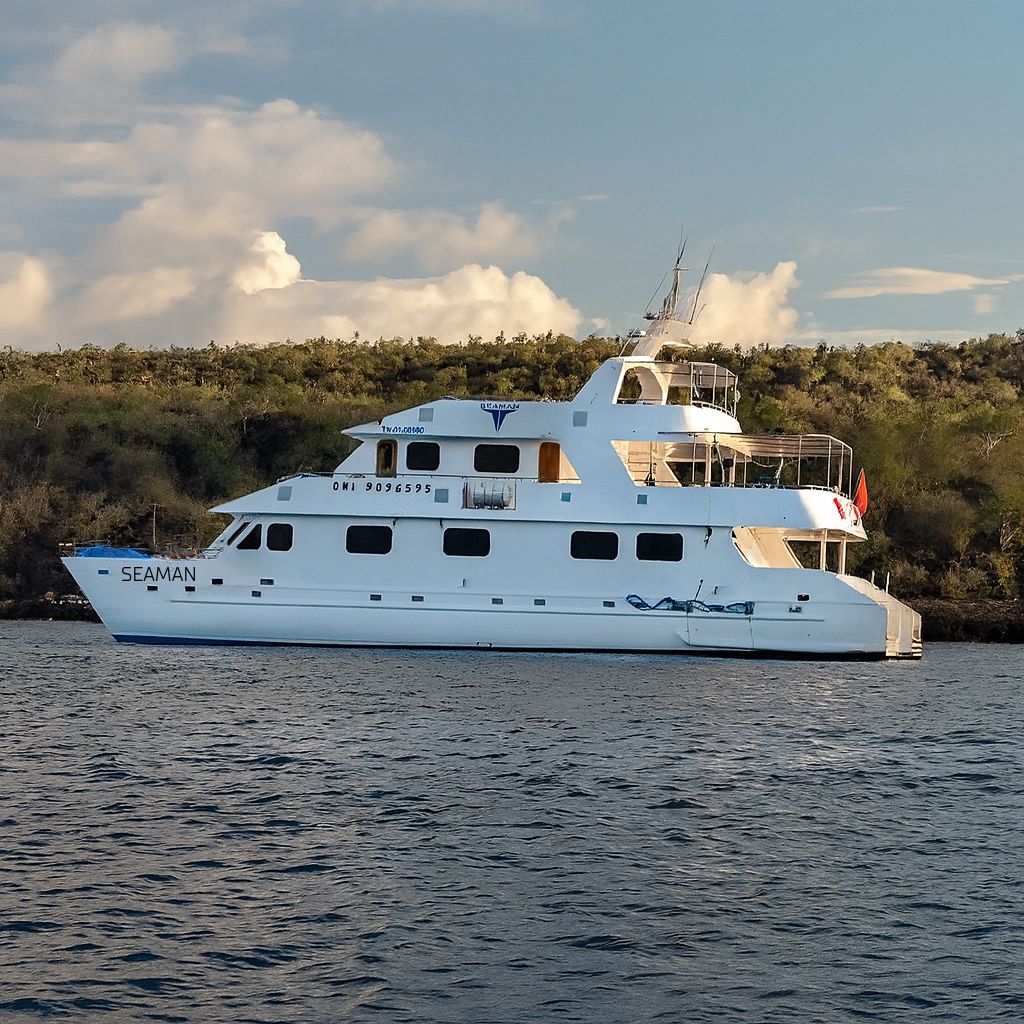
| Tourist / Mid-Range | $3,000 to $5,500 | Comfortable private cabins. Good food, plated dinners. Certified bilingual naturalist guides. 12 to 20 passengers. Air conditioning. Alcohol extra on most. WiFi basic on most. | Ocean Spray, Monserrat, Seaman Journey (hydroponic farm), Tip Top fleet. |
| First Class | $5,000 to $8,500 | Spacious cabins, some with balconies. Excellent food. Experienced bilingual naturalists. 16 to 48 passengers. Starlink WiFi. All drinks included on HX Santa Cruz II. 24-hr medical officer on Santa Cruz II. | HX Santa Cruz II (Metropolitan Touring), Lindblad-National Geographic Endeavour II and Islander II, Quasar fleet. |
| Luxury | $8,500 to $18,000+ | Suite cabins, butler service on some. Outstanding cuisine (Relais and Chateaux on Ecoventura). Open bar or all-inclusive. Starlink WiFi included. Expert naturalists. 16 to 100 passengers. Post-excursion gourmet snacks. 24-hr medical officer. | Celebrity Flora, Silver Origin (Silversea), Ecoventura (Origin, Theory, Evolve), Aqua Mare (Peruvian Nikkei cuisine). |
Headline prices are per person double occupancy for an 8-day cruise, excluding park fee, flights, tips, and alcohol unless noted. 2026 market pricing. Prices vary by season and booking lead time.
The key insight for fair comparison within the same class: vessels marketed at the same price point can have genuinely different value propositions. A vessel that includes Starlink WiFi, wetsuits, and alcohol at $4,500 may represent better total value than a vessel at $3,800 that charges separately for all three. Always calculate the total cost for the specific inclusions you care about.
What Hidden Costs Should You Add to Any Galapagos Cruise Quote?
Every Galapagos cruise quote should have four fixed items added before comparing: the Galapagos National Park fee ($200 per adult, cash only), the INGALA Transit Control Card ($20 per person), round-trip domestic flights from the mainland ($250 to $600 per person on LATAM or Avianca), and gratuities for the naturalist guide and crew ($15 to $25 per person per day). For an 8-day cruise, these add-ons total approximately $690 to $1,020 per person at minimum, before alcohol, travel insurance, or Quito hotel nights are included.
The park fee deserves specific attention because of how it is paid: $200 USD per adult in cash, collected at the Galapagos airport on arrival. This is a fixed government fee that no operator controls and no headline price includes. For a couple, the park fee alone is $400 in cash that must be prepared before the domestic flight. Baltra Airport has no ATM; San Cristobal has limited and unreliable ATM infrastructure. The standard advice is to withdraw the park fee cash from mainland ATMs in Quito or Guayaquil before boarding the Galapagos flight, alongside the tip cash. Several travelers who did not read this advice discovered it at the airport, which creates unnecessary stress at the start of the trip.
Gratuities are the hidden cost most travelers underestimate in dollar terms. At $15 to $25 per person per day, an 8-day cruise for two people generates $240 to $400 in expected gratuities. Cash USD is strongly preferred; some luxury vessels allow tips via credit card on the onboard account, but internet connectivity in remote anchorages can make card processing fail. The guidance from the tipping article in this series: prepare tip cash from mainland ATMs alongside the park fee, bring $20, $10, and $5 bills (avoid $100 bills which create change problems), and tip based on honest assessment of service within the standard range, not based on suggestions from guides that occasionally exceed industry norms.
The hidden costs in a Galapagos cruise quote are predictable and calculable before you book. We provide every traveler with a full all-in cost breakdown that includes the fixed add-ons alongside the cruise quote, so there are no surprises at the airport. Reach out here and we will give you the complete cost picture for any cruise we recommend.
How Do Itinerary Length and Route Affect Price?
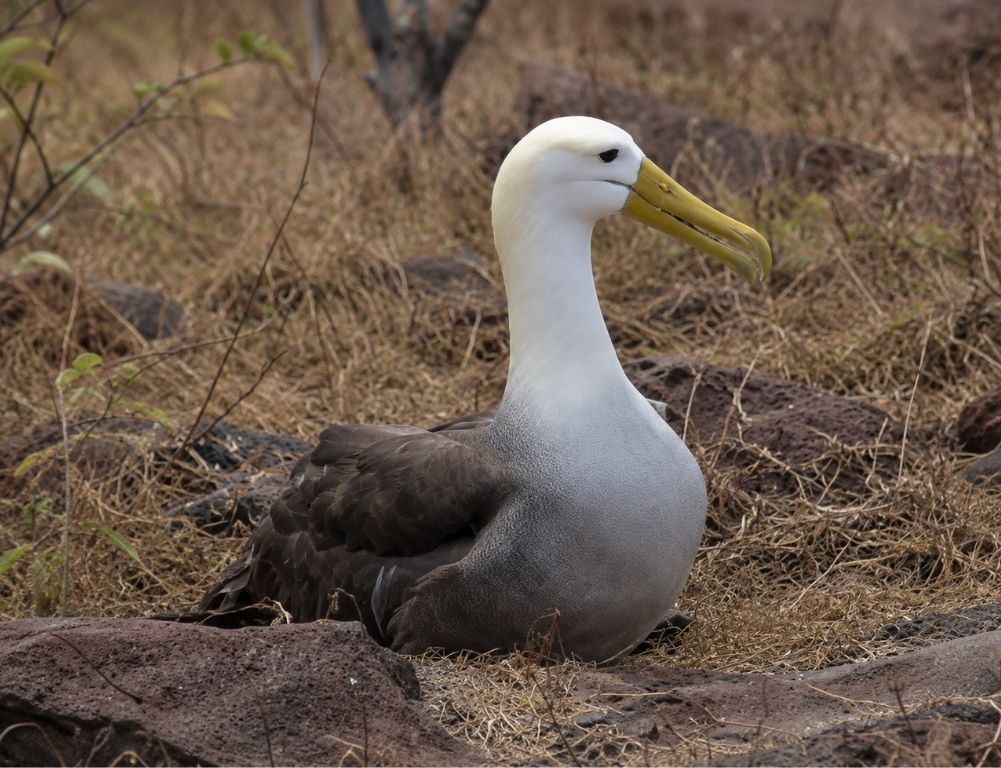
Itinerary length directly affects price, with 4-day, 5-day, 7-day, and 8-day options being the most common. A longer itinerary is not simply more of the same: it visits more islands, including remote uninhabited ones that shorter itineraries cannot reach. The waved albatross colony on Espanola, the flightless cormorant on Fernandina, and the massive frigatebird colony on Genovesa are only accessible on longer western or northern extension itineraries. A 4-day cruise costs less but covers primarily the central islands. An 8-day cruise costs more and covers the full archipelago, which is where the most exceptional wildlife encounters happen.
The daily rate comparison is the most useful tool for cross-length comparison. A 4-day budget cruise at $1,800 costs $450 per person per day. An 8-day mid-range cruise at $4,500 costs $562 per person per day. The 8-day cruise costs more per day and significantly more in total, but it also visits Genovesa, Espanola, and Fernandina, the three islands consistently rated by naturalists as the most spectacular in the archipelago. Whether the price difference is worth it depends on what you want from the trip, but comparing the two on headline price alone without factoring in itinerary coverage produces a misleading result.
The itinerary route matters as much as the length. Two 8-day cruises at the same price may visit completely different islands. An eastern itinerary based around Santa Cruz, San Cristobal, Espanola, and Genovesa gives a different wildlife experience than a western itinerary covering Isabela, Fernandina, Santiago, and the outer islands. Neither is definitively better, but they are different. Travelers interested in the flightless cormorant and marine iguana aggregations on Fernandina need a western itinerary; travelers prioritizing the waved albatross on Espanola need a southeast route. Comparing prices without comparing routes is comparing the cost of two trips rather than the same trip.
When Is the Best Time to Book for the Best Galapagos Cruise Price?
Book 6 to 12 months ahead for preferred dates and vessels at the best available price. The best prices on quality vessels are not last-minute deals: they are early-booking rates on shoulder season departures. The cheapest months are September and October (shoulder season, occasional last-minute discounts of 20 to 40 percent on unfilled cabins). The most expensive months are July and August (peak, few discounts) and late December through early January (holiday season, consistently sold out on quality vessels months ahead). Last-minute deals exist on budget and some mid-range vessels in shoulder months; they rarely appear on luxury vessels.
The booking lead time question has a counterintuitive answer for luxury vessels. Celebrity Flora, Silver Origin, and Ecoventura’s three yachts regularly sell out 9 to 12 months ahead for peak season departures. A traveler who waits for a last-minute deal on a luxury Galapagos vessel will almost always be disappointed: the cabin they want does not exist at 30 days out because it was sold a year ago. Last-minute deals in the Galapagos exist primarily on tourist-class and mid-range vessels with unfilled inventory in shoulder months, and the 20 to 50 percent discount that appears on those cabins reflects the operator’s need to fill the vessel, not a general market reality that applies across all tiers.
The shoulder season booking strategy is the most reliable way to get meaningful savings without sacrificing quality. September through November offers the same wildlife experience as peak season (the cool season continues with excellent marine wildlife activity) at prices that are 15 to 25 percent below the July to August peak on mid-range and first-class vessels. Booking a mid-range to first-class vessel in September 6 months ahead, rather than a luxury vessel in August at peak pricing, can save $2,000 to $4,000 per person while delivering a genuinely good cruise experience. On the other hand, Easter week and mid-July through late August consistently command premium prices with no discounting, and attempting to save money during these windows on quality vessels is generally not possible.
Want to find a legitimate Galapagos cruise discount without spending weeks hunting through operator websites? Our guide to Galapagos cruise discounts walks you through the best ways to save.
What Travelers Say About Galapagos Cruise Price and Value (Our Data)
From feedback collected through mytrip2ecuador.com and our YouTube audience, here is what Galapagos cruise travelers reported about price, value, and the comparison process:
| Finding | % Who Named It | Pattern Observed |
|---|---|---|
| Hidden costs were higher than expected | 54% | More than half of travelers reported that their total trip cost was meaningfully higher than the headline cruise price suggested, with the park fee, tips, and alcohol being the three costs most commonly named as surprises. Travelers who received a full cost breakdown before booking reported almost no surprises. |
| Guide quality was the best predictor of satisfaction | 79% | Nearly four in five travelers rated their naturalist guide as the single most important factor in their overall cruise satisfaction, more important than cabin quality, food, or vessel size. This was consistent across vessel classes. The difference between an exceptional guide and a competent one was the difference between understanding what you were seeing and simply seeing it. |
| Wished they had booked a longer itinerary | 62% | Among travelers who booked a 4 or 5-day cruise, 62 percent said in retrospect they wished they had extended to 7 or 8 days. The most common reason: the 4-day cruise covered only central islands and did not visit Espanola, Genovesa, or Fernandina, which they heard about from fellow travelers on longer itineraries. |
| Considered the trip excellent value despite the cost | 88% | An overwhelming majority of travelers, across all vessel classes, said the Galapagos cruise was excellent value relative to what they experienced. This held even at the luxury tier where per-day costs exceeded $1,000. The wildlife and ecosystem uniqueness was the consistent reason cited for the value rating. |
| Would have booked earlier if they knew quality vessels sold out | 71% | Nearly three quarters of travelers who ended up on a second-choice vessel because their preferred vessel was sold out said they were unaware that quality Galapagos cruise cabins sell out 6 to 12 months ahead. Among those who booked 9 or more months ahead, 94 percent got their first-choice vessel. |
How Do You Know If a Galapagos Cruise Price Is Fair?
A Galapagos cruise price is fair when it reflects the genuine daily rate for the vessel class, all inclusions and exclusions are clearly stated, and the total cost including the fixed add-ons is competitive with other vessels in the same class for the same itinerary length. The benchmark for 2026: mid-range 8-day cruises run $3,000 to $5,500 in headline price; first-class runs $5,000 to $8,500; luxury runs $8,500 to $18,000 or more. Significantly below these ranges for the same class description is a signal to investigate the vessel’s age, condition, and guide quality before booking.
Price that appears too low is the most reliable signal of a quality gap in the Galapagos fleet. The park rules, the guide certification requirements, and the GNPD environmental standards mean that all operators face the same minimum costs. An operator offering an 8-day luxury vessel at $3,000 per person is either misrepresenting the vessel class, operating an older vessel with significant maintenance deferred, or using less qualified guides. In a destination where the experience is defined almost entirely by what you see and how it is interpreted, cutting corners on guide quality or vessel condition materially reduces the value of the trip.
Using a specialist rather than booking directly is the most practical way to ensure fair pricing for the right vessel. A specialist who books multiple vessels across the fleet knows what each vessel actually delivers relative to its price, knows which guide on the Seaman Journey consistently receives exceptional reviews, and knows whether the vessel described as “first class” in a marketing brochure has had its generators replaced in the last five years. This knowledge is not publicly available from the operator’s own website. It comes from having placed real travelers on real vessels and collected their honest post-trip feedback. The specialist’s commission is typically paid by the operator rather than added to the traveler’s cost, which means the information and comparison service comes at no direct cost to the buyer.
We compare cruises across the fleet on the same basis for every traveler we work with: headline price, total all-in cost with fixed add-ons, inclusions and exclusions, itinerary coverage, vessel age and condition, guide quality track record, and group size. This comparison is what we do before we make any recommendation. Send us a message here with your travel dates, number of travelers, and budget and we will provide a full comparison of the vessels we recommend for your specific situation.
We’ve got a full breakdown on Galapagos cruise booking agencies vs booking direct if you want to know exactly where each approach wins and which one makes more sense for your budget and experience level.
Frequently Asked Questions
Why do Galapagos cruise prices vary so much?
Galapagos cruise prices vary because they reflect genuinely different products: different vessel classes, ages, and conditions; different food quality and chef training; different naturalist guide certification levels and language skills; different itinerary lengths that visit more or fewer islands; different inclusions (alcohol, WiFi, domestic flights); and different group sizes. A $2,500 cruise and a $6,000 cruise for the same number of days are not the same trip at different prices. They are different trips.
What is not included in most Galapagos cruise prices?
The items most commonly excluded from headline prices are the Galapagos National Park fee ($200 per adult, cash), the INGALA Transit Control Card ($20 per person), round-trip domestic flights from mainland Ecuador ($250 to $600 per person), gratuities for guide and crew ($15 to $25 per person per day), alcohol (extra on most mid-range and budget vessels), and travel insurance. For an 8-day cruise for two people, these exclusions total approximately $1,400 to $2,000 combined.
What is the best time to book a Galapagos cruise for the best price?
Book 6 to 12 months ahead for quality vessels and preferred dates. The cheapest months are September and October (shoulder season). The most expensive are July to August and late December to early January. Last-minute deals of 20 to 40 percent off exist on budget and some mid-range vessels in shoulder months; they rarely appear on luxury vessels, which sell out months before departure.
Does a more expensive Galapagos cruise see better wildlife?
No. The wildlife and visitor sites are the same across all cruise classes; the national park rules apply equally to every vessel. What a higher price buys is a better experience of getting to the wildlife: more comfortable cabin, better food, a more expert and engaging naturalist guide, smaller group size, and in some cases longer or western itineraries that reach Fernandina, Espanola, and Genovesa. The guide quality difference between tiers is the most significant real-world impact on how much you understand and remember about what you see.
How do I compare two Galapagos cruise quotes fairly?
Add the same fixed costs to both quotes: $200 park fee, $20 INGALA card, $350 to $500 domestic flights round-trip, $15 to $25 per person per day in tips. Then compare: what vessel class is each, how many days, which islands does each itinerary visit, is alcohol included, what is the passenger capacity, what are the naturalist guide qualifications, and how old is the vessel. Two quotes that look similar in headline price may represent very different total costs and very different experiences once these factors are applied.
Want a Fair, Transparent Galapagos Cruise Comparison?
We provide every traveler with a full all-in cost breakdown for each vessel we recommend, including the headline price, all fixed add-ons, inclusions and exclusions, and a honest assessment of what each vessel delivers relative to its price. No surprises at the airport, no misleading comparisons. Cruises To Galapagos Islands is rated 4.9 stars on Google and TripAdvisor. Every conversation is free with no commitment. Fill out the contact form with your travel dates and total budget and we will send you a transparent, apples-to-apples comparison of the vessels we recommend for your trip.
Written by Oleg Galeev
Galapagos cruise traveler (3 trips, 2 cruises) · Founder, Cruises To Galapagos Islands
Oleg has personally compared cruise options across budget to luxury tiers and documented Ecuador travel on mytrip2ecuador.com and the YouTube channel My Trip to Somewhere.
Cruises To Galapagos Islands is rated 4.9 stars on Google and TripAdvisor.
All pricing in this article reflects 2026 market conditions. Cruise prices change frequently. Always confirm current pricing with your operator before booking.