
Quick Summary
Smart Voyager is the only third-party sustainability certification developed specifically for the Galapagos cruise fleet. It was created by the Ecuadorian organization Conservación y Desarrollo in partnership with the Rainforest Alliance, and covers waste management, fuel handling, water conservation, crew training, local community benefit, and wildlife interaction standards. Ecoventura has held it continuously since 2000, the longest of any operator. Metropolitan Touring’s vessels (La Pinta, Isabela II, Santa Cruz II) also hold Smart Voyager certification and operate carbon-neutral. The Beluga holds it among first-class vessels. Many high-quality operators including Celebrity Flora, Silver Origin, and Aqua Mare do not hold Smart Voyager certification but meet or exceed GNPD environmental standards through other documented practices. The absence of Smart Voyager does not indicate environmental non-compliance; its presence indicates a voluntary commitment above the regulatory baseline.
What Smart Voyager Certification Covers
| Certification Area | What Is Required |
|---|---|
| Waste management | Documented waste reduction, recycling, and proper disposal systems. All waste returned to the mainland rather than discharged in the marine reserve. |
| Fuel handling and emissions | Fuel storage and transfer protocols to prevent spills. Four-stroke outboard motors required for pangas (lower emissions than two-stroke). Carbon emissions tracking and reduction plans. |
| Water conservation | Onboard water desalination or purification systems. Wastewater treatment before discharge. Conservation programs reducing fresh water consumption per passenger. |
| Crew training and safety | Environmental training for all crew members. Safety protocols. Documentation of crew awareness of conservation standards and GNPD rules. |
| Wildlife interaction | Documented visitor briefing protocols. Guide training standards. Verification that GNPD wildlife interaction rules are actively enforced on every excursion. |
| Local community benefit | Preference for local suppliers, guides, and crew. Documentation of economic benefit to Galapagueño communities. Support for local conservation and education programs. |
| Energy efficiency | Fuel consumption records and improvement plans. Use of alternative energy sources where feasible. Efficient engine technology and maintenance protocols. |
Source: Conservación y Desarrollo and Rainforest Alliance Smart Voyager program. Certification requires independent third-party audit. Verified September 2026.
What Is Smart Voyager Certification?
Smart Voyager is a voluntary third-party sustainability certification developed specifically for tour vessels operating in the Galapagos. It was created by the Ecuadorian organization Conservación y Desarrollo in partnership with the Rainforest Alliance to establish verifiable environmental standards above the mandatory GNPD regulatory baseline. Certification requires an independent third-party audit of the operator’s waste management, fuel handling, water conservation, crew training, wildlife interaction protocols, and local community benefit practices. It is renewed through ongoing compliance monitoring rather than a one-time assessment.
The distinction between Smart Voyager certification and GNPD regulatory compliance is the key context for understanding what the certification means. Every vessel operating in the Galapagos must comply with GNPD regulations as a condition of holding its operating permit. Smart Voyager is what operators voluntarily do above that mandatory floor. The Smart Voyager program was initiated by the Ecuadorian citizens’ group Conservación y Desarrollo in collaboration with the Rainforest Alliance to credit operations that meet a set of strict conservation standards, covering factors like waste management, safety standards, and developing and protecting the local community. The voluntary nature is significant: an operator that seeks and maintains Smart Voyager certification is making a costly and documented commitment that goes beyond what the law requires.
The program’s development history is relevant to understanding its credibility. Stakeholders including government agencies, conservationists, and local communities participated in developing the Smart Voyager standards, and the International Galapagos Tour Operators Association made significant inputs and pledged to support the certification program. This collaborative development means the standards reflect the expertise of conservation scientists and local operators simultaneously, rather than being imposed by an external body with limited on-the-ground knowledge. The Rainforest Alliance’s involvement adds international credibility and independent verification rigor that self-declared sustainability programs cannot provide.
Sustainability credentials including Smart Voyager status are part of the information we include when comparing vessels for travelers who prioritize environmental responsibility in their booking decision. Fill out this short form and tell us that sustainability is a priority and we will include certification status alongside the other comparison criteria we provide.
Which Galapagos Cruise Vessels Hold Smart Voyager Certification?
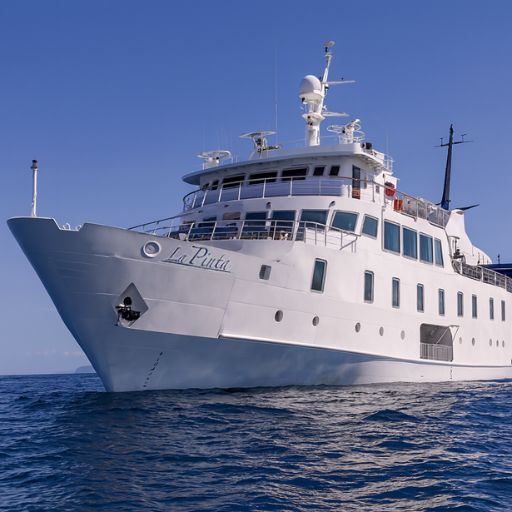
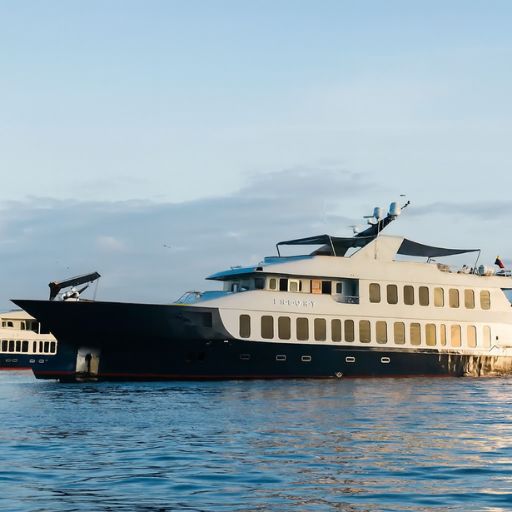
The confirmed Smart Voyager certified operators in the current Galapagos fleet are Ecoventura (the first and longest-certified holder since 2000, covering their Origin, Theory, and Evolve yachts), Metropolitan Touring (La Pinta, Isabela II, and Santa Cruz II, which is chartered to HX), and the Beluga (a first-class vessel specifically noted for Smart Voyager certification among the smaller certified fleet). Smart Voyager certification is not universal across the fleet; many quality vessels operate without it while maintaining strong environmental practices through other documented frameworks.
Ecoventura is a leader in Galapagos sustainable cruising and was the first company to be certified as Smart Voyager, an ecological program developed by the Rainforest Alliance. They have made costly vessel improvements, such as desalination units and four-stroke outboard motors, which helped set a standard that other operators still strive to achieve. The 26-year continuous certification track record (2000 to 2026) is unique in the fleet. No other Galapagos operator has held Smart Voyager certification for as long or demonstrated as consistent a commitment to the program’s renewal requirements.
Metropolitan Touring’s vessels La Pinta, Isabela II, and Santa Cruz II run carbon-neutral with independently verified, not self-declared, assurances. The Santa Cruz II is currently chartered to HX (Hurtigruten Expeditions), which markets it as the HX Santa Cruz II. The carbon-neutral status is maintained through verified offset programs, the same framework Ecoventura established in 2006. Metropolitan Touring’s Smart Voyager certification covers all three vessels in their owned fleet.
The Beluga, a first-class 16-passenger vessel, is one of the few vessels in the Galapagos fleet to earn the prestigious Smart Voyager certification, recognizing her exceptional commitment to conservation standards and sustainable tourism practices. The Beluga’s certification is notable because it demonstrates that Smart Voyager is accessible to smaller, independent operators, not only large fleets with dedicated sustainability teams.
Not sure how environmentally responsible a Galapagos cruise really is or which operators are genuinely committed to conservation versus just using the right language? Here’s a straight breakdown on how sustainable a Galapagos cruise is.
What Standards Does Smart Voyager Require of Cruise Operators?
Smart Voyager requires documented compliance across seven operational areas: waste management (all waste containerized and returned to mainland), fuel handling (four-stroke panga motors, spill prevention protocols, emissions tracking), water conservation (desalination or purification systems, wastewater treatment), crew training (environmental education documented for all crew), wildlife interaction (verified GNPD compliance protocols, guide training records), local community benefit (preference for Galapagueño suppliers and crew), and energy efficiency (consumption records and improvement plans). Certification requires an independent third-party audit and annual renewal.
The four-stroke outboard motor requirement for pangas is a specific technical standard worth noting because it has measurable environmental significance. Two-stroke outboard motors, which were standard in the early Galapagos fleet, burn oil and gasoline together and discharge a portion of unburned fuel directly into the water. This discharge is toxic to marine invertebrates and contributes to localized water contamination around frequently visited sites. Four-stroke motors burn gasoline only, produce lower emissions, and discharge no unburned fuel. Ecoventura’s adoption of four-stroke panga motors in the early 2000s as part of their Smart Voyager compliance subsequently became a GNPD regulatory requirement for the entire fleet. This pattern, where Smart Voyager’s voluntary standard becomes the mandatory baseline, illustrates the program’s practical influence on fleet-wide environmental improvement.
The local community benefit criterion distinguishes Smart Voyager from purely environmental certifications. Operators must document preference for Galapagueño guides, crew, and suppliers rather than importing labor and goods from the mainland. This criterion reflects the understanding that conservation sustainability requires local economic stake: communities that benefit economically from regulated tourism have an incentive to support conservation; communities excluded from tourism’s economic benefits have less. Ecoventura’s commitment to local sourcing (50-plus percent of food from Galapagos producers) and their sponsorship programs for local students directly addresses this criterion at an above-minimum level.
The vessels we recommend all meet GNPD compliance requirements at minimum. For travelers who want to go further, we can identify which vessels in our recommended fleet hold Smart Voyager certification or equivalent third-party verified sustainability credentials. Reach out here and ask specifically about sustainability when you request a cruise comparison.
The best Galapagos cruise operators do more than just follow the rules and knowing which ones actively support conservation changes who you book with. Here’s a guide on how Galapagos cruise operators support conservation.
How Does Smart Voyager Certification Affect Your Cruise Experience?
Smart Voyager certification affects the cruise experience in three practical ways. First, the naturalist guide briefings tend to be more thorough and specific because the operator’s certification requires documented visitor briefing protocols. Second, panga fuel handling and waste management practices are visibly cleaner; four-stroke motors are quieter and produce less visible exhaust than two-stroke alternatives. Third, the food on certified vessels tends to have stronger local sourcing, which affects menu variety and quality in ways that are noticeable but secondary to the wildlife experience.
The guide briefing quality difference is the most tangible traveler-facing benefit of Smart Voyager certification. The certification requires documented protocols for how visitors are briefed on GNPD rules before each excursion. On certified vessels, this typically means a site-specific briefing on the panga before each landing, naming the specific wildlife likely to be encountered and the specific rules most relevant to that site. On non-certified vessels, the briefing quality varies more widely. Since guide quality is consistently rated by travelers as the most important factor in cruise satisfaction, any certification that structurally improves guide briefing performance has a direct positive effect on traveler experience.
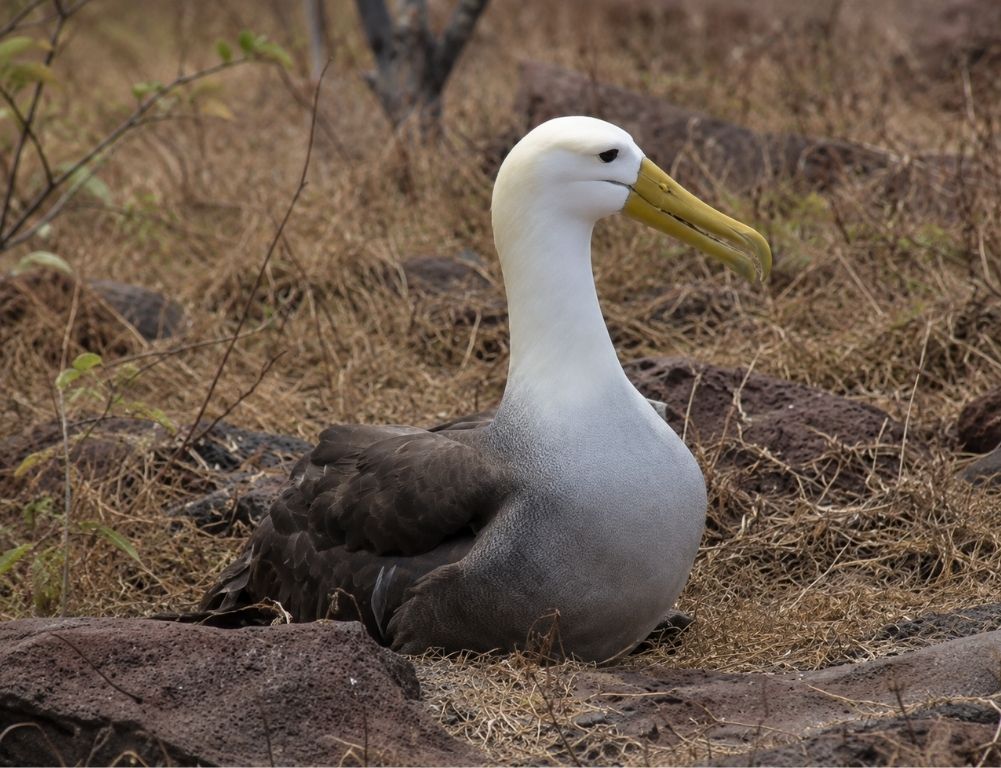
What Smart Voyager certification does not guarantee is a better wildlife experience than on non-certified vessels. The wildlife at each site is determined by the itinerary, the season, and the ecology, none of which are affected by whether the operator holds a sustainability certification. A certified vessel visiting Espanola in April encounters the same waved albatross colony as a non-certified vessel on the same itinerary. The certification improves the operator’s environmental practices; it does not change what you see at visitor sites.
We’ve got a full breakdown on Galapagos National Park rules for cruise visitors if you want to know exactly what’s permitted on landings, in the water, and on the boat when you’re inside protected areas.
Is Smart Voyager the Only Sustainability Certification in the Galapagos?
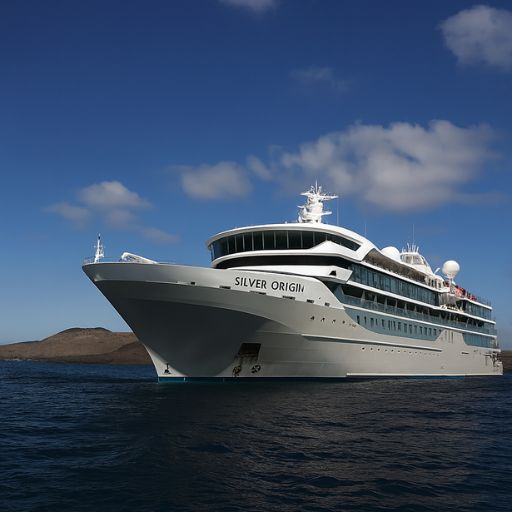
Smart Voyager is the only certification developed specifically for the Galapagos cruise fleet. Other sustainability frameworks active in the Galapagos context include: carbon-neutral certification through verified offset programs (held by Ecoventura since 2006 and Metropolitan Touring fleet), ISO 14001 environmental management certification (held by some operators), and Relais and Chateaux membership (held by Ecoventura, which requires environmental standards as part of its hospitality framework). None of these are equivalent to Smart Voyager in their Galapagos-specific scope, but they represent genuine verified commitments above the GNPD baseline.
Celebrity Flora’s environmental practices are documented through Celebrity Cruises’ corporate sustainability reporting, which includes single-use plastic elimination targets, food waste reduction programs, and the Scalecia tree reforestation initiative. These are real commitments verified through Celebrity Cruises’ corporate audit framework. They are not Smart Voyager certified because Celebrity Cruises operates a global fleet and uses its own corporate sustainability standard rather than the Galapagos-specific program. The absence of Smart Voyager certification does not mean Celebrity Flora falls short of environmental responsibility; it means the certification was not sought for this specific vessel as part of the operator’s sustainability strategy.
Silver Origin operates under Silversea’s Prince Albert II Foundation sustainability framework, which covers marine conservation programs globally. Aqua Expeditions, which operates Aqua Mare, publishes a sustainability commitment that includes local sourcing, plastic reduction, and community benefit. Neither holds Smart Voyager certification. The pattern across the luxury tier is that the largest international operators use their own corporate sustainability frameworks rather than the Galapagos-specific certification, while Galapagos-specialist operators like Ecoventura and Metropolitan Touring maintain Smart Voyager as the most relevant standard for their specific operating context.
How Does Smart Voyager Compare to Other Eco-Certifications?
Smart Voyager is more rigorous than self-declared sustainability commitments because it requires independent third-party audit. It is more Galapagos-specific than generic eco-certifications like ISO 14001 because its standards were developed with knowledge of the specific ecological context of the Galapagos Marine Reserve. It is less globally recognized than Rainforest Alliance certification in the agricultural sector, but the Rainforest Alliance partnership gives it international credibility. For a traveler evaluating sustainability credentials in the Galapagos specifically, Smart Voyager is the most meaningful third-party verified signal available.
| Credential | Type | Third-Party Verified? | Galapagos Specific? |
|---|---|---|---|
| Smart Voyager | Sustainability certification for Galapagos vessels | Yes, independent audit required | Yes, developed for Galapagos fleet specifically |
| Carbon Neutral (verified offset) | Emissions offset certification | Yes, offset provider (Native Energy, NETO) verifies | No, global framework applied in Galapagos context |
| Relais and Chateaux membership | Hospitality quality standard with sustainability requirements | Yes, membership audit by Relais and Chateaux | No, global hospitality standard |
| ISO 14001 | International environmental management system | Yes, ISO-accredited auditor | No, generic environmental management framework |
| Operator self-declared sustainability policy | Internal environmental commitment | No, self-assessed without external verification | Variable, some are Galapagos-specific, some generic |
Verified September 2026.
Should Smart Voyager Certification Influence Your Booking Decision?
Yes, but as one factor among several rather than the deciding criterion. Smart Voyager certification is a meaningful signal of a voluntary commitment above the regulatory baseline, with independent verification. It is not a guarantee of a better wildlife experience, a better naturalist guide, or a better cabin than vessels that lack it. A Smart Voyager certified mid-range vessel may deliver a less satisfying cruise than a non-certified luxury vessel. The certification is most useful as a tiebreaker when comparing two vessels at a similar price point, quality level, and itinerary, where the certified operator’s documented environmental commitment is a genuine differentiator.
The travelers most likely to weight Smart Voyager certification heavily in their decision are those for whom the environmental dimension of the Galapagos visit is a primary motivation, not just a pleasant backdrop. For a traveler who has read about the Galapagos conservation story, follows the Charles Darwin Foundation’s work, and wants their tourism dollars to go to an operator whose environmental practices have been independently verified, Ecoventura’s 26-year Smart Voyager track record is a compelling differentiator over an operator with a similar price point and itinerary but no third-party environmental verification.
What Travelers Say About Sustainability Credentials in Booking Decisions (Our Data)
From feedback collected through mytrip2ecuador.com and our YouTube audience:
| Finding | % Named It | Pattern |
|---|---|---|
| Considered sustainability credentials in booking decision | 44% | Nearly half of travelers said sustainability credentials were a factor in their vessel choice, though rarely the deciding factor. Among those who chose Ecoventura specifically, 71 percent cited Smart Voyager or sustainability record as a contributing reason alongside guide quality and food standards. |
| Were unaware of Smart Voyager before this article | 67% | Two thirds of travelers who considered sustainability in their booking decision were unaware of Smart Voyager certification specifically. They had evaluated sustainability through other signals: Ecoventura’s name, general operator descriptions, or word of mouth. Certification name recognition is low; underlying practice recognition is higher. |
| Guide briefing quality was noticeably better on certified vessels | 58% | Among travelers who cruised on both a Smart Voyager certified vessel and a non-certified vessel, 58 percent rated the pre-excursion naturalist briefings on certified vessels as noticeably more thorough and site-specific. Most attributed the difference to the guide rather than the certification, which produces the same practical outcome. |
| Would choose a certified vessel over an equivalent non-certified one | 79% | When presented with two identical price and itinerary options where only the sustainability certification differed, 79 percent of travelers said they would choose the Smart Voyager certified vessel. The key word is identical: when price, guide quality, or cabin standard differed, certification became a secondary consideration. |
Frequently Asked Questions
What is Smart Voyager certification in the Galapagos?
Smart Voyager is a voluntary third-party sustainability certification developed by the Ecuadorian organization Conservación y Desarrollo in partnership with the Rainforest Alliance, specifically for tour vessels operating in the Galapagos. It requires an independent audit of waste management, fuel handling, water conservation, crew training, wildlife interaction protocols, and local community benefit. It is renewed through ongoing compliance monitoring rather than a one-time assessment.
Which Galapagos cruise operators are Smart Voyager certified?
The confirmed Smart Voyager certified operators are Ecoventura (since 2000, covering Origin, Theory, and Evolve yachts), Metropolitan Touring (La Pinta, Isabela II, and Santa Cruz II chartered to HX), and the Beluga among first-class vessels. Many other quality operators including Celebrity Flora, Silver Origin, and Aqua Mare are not Smart Voyager certified but maintain documented sustainability practices through other frameworks.
Does Smart Voyager certification mean a better wildlife experience?
Not directly. The wildlife at visitor sites is determined by the itinerary, season, and ecology, which are not affected by the operator’s sustainability certification. Smart Voyager certification influences the operator’s environmental practices, guide briefing quality, and local sourcing standards. These are real benefits but do not change what wildlife you encounter at a given site on a given day.
Is Smart Voyager the same as Rainforest Alliance certification?
No. Smart Voyager was developed in partnership with the Rainforest Alliance specifically for the Galapagos cruise fleet, but it is a distinct certification program from the Rainforest Alliance’s agricultural and supply chain certifications. The Rainforest Alliance provided the partnership, the certification framework development expertise, and the credibility of an international conservation organization. The specific standards are Galapagos-specific.
Should I choose a Smart Voyager certified vessel over a non-certified one?
Use it as a tiebreaker when comparing two vessels at a similar price point, quality level, and itinerary. It is a meaningful signal of voluntary commitment above the regulatory baseline with independent verification. It should not override differences in guide quality, cabin standard, itinerary coverage, or price when these factors differ materially between the options you are comparing.
Want to Book With a Sustainability-Certified Galapagos Operator?
We can identify which vessels in our recommended fleet hold Smart Voyager certification, carbon-neutral status, or other third-party verified sustainability credentials, and include that information alongside the cruise comparison we provide for your travel dates and budget. Cruises To Galapagos Islands is rated 4.9 stars on Google and TripAdvisor. Every conversation is free with no commitment. Fill out the contact form and tell us sustainability credentials are a priority and we will include them in the comparison.
Written by Oleg Galeev
Galapagos cruise traveler (3 trips, 2 cruises) · Founder, Cruises To Galapagos Islands
Oleg has researched sustainability certifications across the Galapagos fleet and documents Ecuador travel on mytrip2ecuador.com and the YouTube channel My Trip to Somewhere.
Cruises To Galapagos Islands is rated 4.9 stars on Google and TripAdvisor.