
TL;DR
A Galapagos family charter means your family books the entire vessel, sailing with no strangers aboard. Prices run $60,000 to $165,000 for an 8-day trip depending on vessel class, but per-person costs for a full group often come close to scheduled cabin pricing. The age minimum on most vessels is 6, with some operators allowing younger children on private charters with a signed parental waiver. Interconnecting cabins are the most important vessel feature for families with young children and fill up 12 months out. Choose the eastern itinerary for children under 10. Tell the operator every child’s age, dietary restrictions, and swimming ability at booking, not at embarkation.
Quick Facts: Galapagos Family Charter
| Detail | What to Know |
|---|---|
| Minimum age (most vessels) | 6 years; some operators allow younger on private charters with parental waiver |
| Western itinerary minimum age | 8 years on some operators due to rougher crossings |
| Children’s discount | 10% to 15% for children under 12 sharing cabin with 2 adults (varies by operator) |
| Park entrance fee (children under 12) | $100 per child, USD cash only – Prices verified September 14, 2026 |
| Park entrance fee (adults) | $200 per adult, USD cash only – Prices verified September 14, 2026 |
| Transit Control Card (TCT) | $20 per person including children, registered online before domestic flight – Prices verified September 14, 2026 |
| Full charter price range (8-day) | $60,000 to $165,000 depending on vessel class |
| Most important vessel feature for families | Interconnecting cabins or triple cabins; fill 12 months out on popular vessels |
| Best hull type for children prone to seasickness | Catamaran; significantly more stable than monohull yachts |
| Recommended lead time | 12 months minimum; 18 months for peak school holiday dates |
Entry fees verified against cruisestogalapagosislands.com and official Galapagos National Park sources as of September 14, 2026.
What Is a Galapagos Family Charter and How Does It Differ from a Regular Family Cruise?
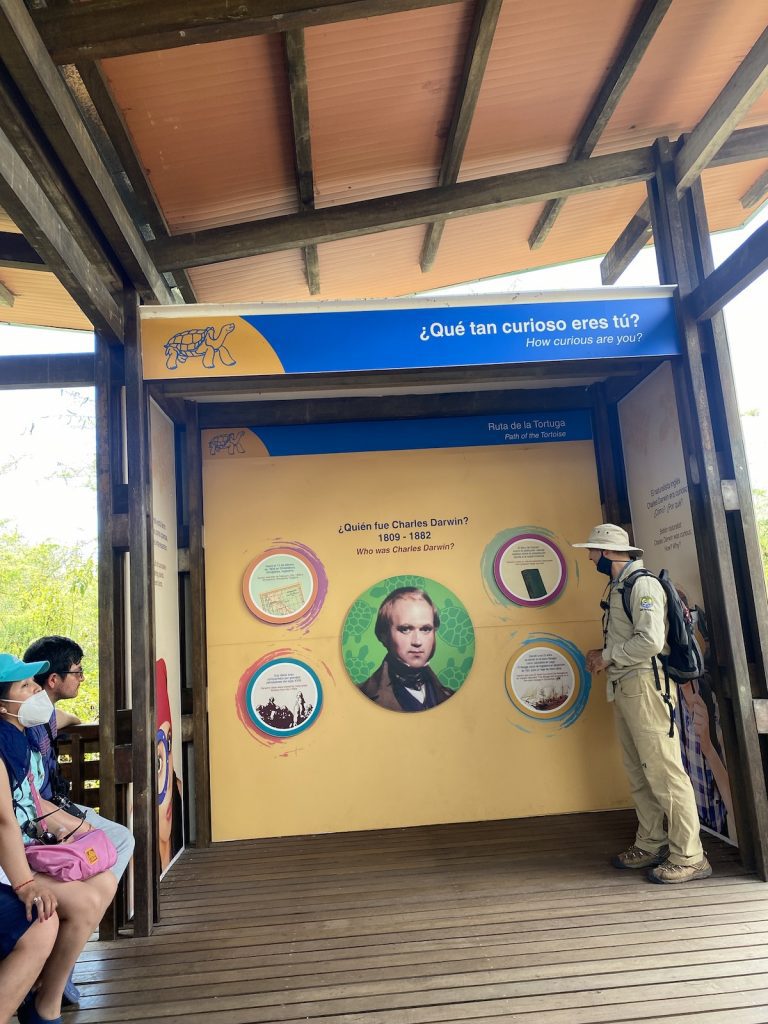
A Galapagos family charter means your family books the entire vessel for your exclusive use. No other passengers. The crew, the naturalist guide, the galley, and every social space belong to your family for the duration of the cruise. On a scheduled family cruise, your family books individual cabins on a departure that also carries other passengers. Both options reach the same islands. The charter removes strangers from the experience entirely, and adjusts the pace of every landing to your family’s interests rather than a compromise average.
The practical differences show up in small moments that compound over eight days. On a scheduled cruise, the guide’s morning briefing is delivered to whoever showed up. On a charter, the guide knows your nine-year-old’s fascination with marine iguanas from day one, and spends an extra ten minutes at Punta Espinoza because that child cannot stop watching them cross the lava. The snorkeling session runs longer because your family wants it to, not because of when the next group needs the Zodiac. Dinner conversation happens with people your children already know.
There is also a practical safety dimension for families with younger children. On a scheduled 16-passenger departure, your family of six is one-third of the group. The guide sets a pace that works for the full mix of passengers. On a charter, if your seven-year-old needs to turn back halfway through a trail because of heat, no one else’s excursion is affected. The guide can stay with the child while the rest of the family continues, or the whole family turns back together without inconveniencing strangers.
For families with children in the 6 to 10 age range, this flexibility is not a luxury. It is what makes the difference between a trip the children remember as magical and one they remember as exhausting. The decision between a charter and individual cabin bookings depends on your family size, the ages of your children, and how central the family cohesion is to the trip. Send us a message here and we will run the honest comparison for your specific group.
Which Galapagos Vessels Work Best for a Family Charter?
For family charters, the most important vessel features are in this order: interconnecting or triple cabins that keep families together without paying for separate rooms per child; catamaran hull stability to reduce seasickness risk; a wide deck with protected areas where younger children can move safely; and crew experience with children. The vessel that scores highest on a spec sheet but separates your family across unconnected cabins is the wrong vessel for a family charter.
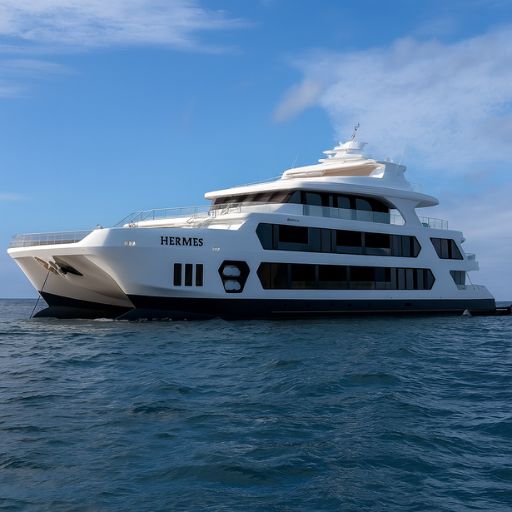
The Hermes Mega-Catamaran is one of the strongest family charter options currently in the fleet. Its cabins 103/105 and 104/106 are interconnectable, creating large multi-room suites that work for families with children of different ages. The wide-beam catamaran hull is among the most stable in the archipelago, which matters for children who have never been on open water. The vessel accommodates up to 20 guests and has generous deck space. For children under 6, Hermes allows them on charter departures with a signed parental waiver, making it one of the more flexible operators for younger families.
The Sea Star deserves specific mention for its interconnecting suite configuration. The Sea Star Suite connects with the Galapagos Suite, creating a generous family space that allows parents and children to share a connected area without occupying separate, isolated cabins on opposite ends of the vessel. This is the feature that multi-generational families find most valuable: grandparents in one suite, parents and young children in the connected suite, with a shared door between them.
The Endemic is an excellent family charter choice for families with older children and teenagers. Its boutique-luxury design suits families who want a high-end experience without a formal atmosphere. The recently renovated suites are genuinely spacious. However, the Endemic does not have designated interconnecting cabin options, so it works better for families whose children are old enough to sleep independently in adjacent cabins rather than families with toddlers who need direct access between rooms.
| Vessel | Capacity | Key Family Features | Best Age Range |
|---|---|---|---|
| Hermes | 20 | Interconnecting cabins 103/105 and 104/106; wide catamaran hull; accepts under-6 on charter with waiver | All ages including young children |
| Sea Star | 16 | Sea Star Suite connects to Galapagos Suite; champagne service standard; catamaran stability | All ages; excellent for multi-generational |
| Endemic | 16 | Spacious renovated suites; boutique-luxury design; adjacent cabins bookable | 8 and older; teenagers thrive here |
| Infinity | 20 | All cabins with private balconies; catamaran stability; strong guide ratio | 8 and older |
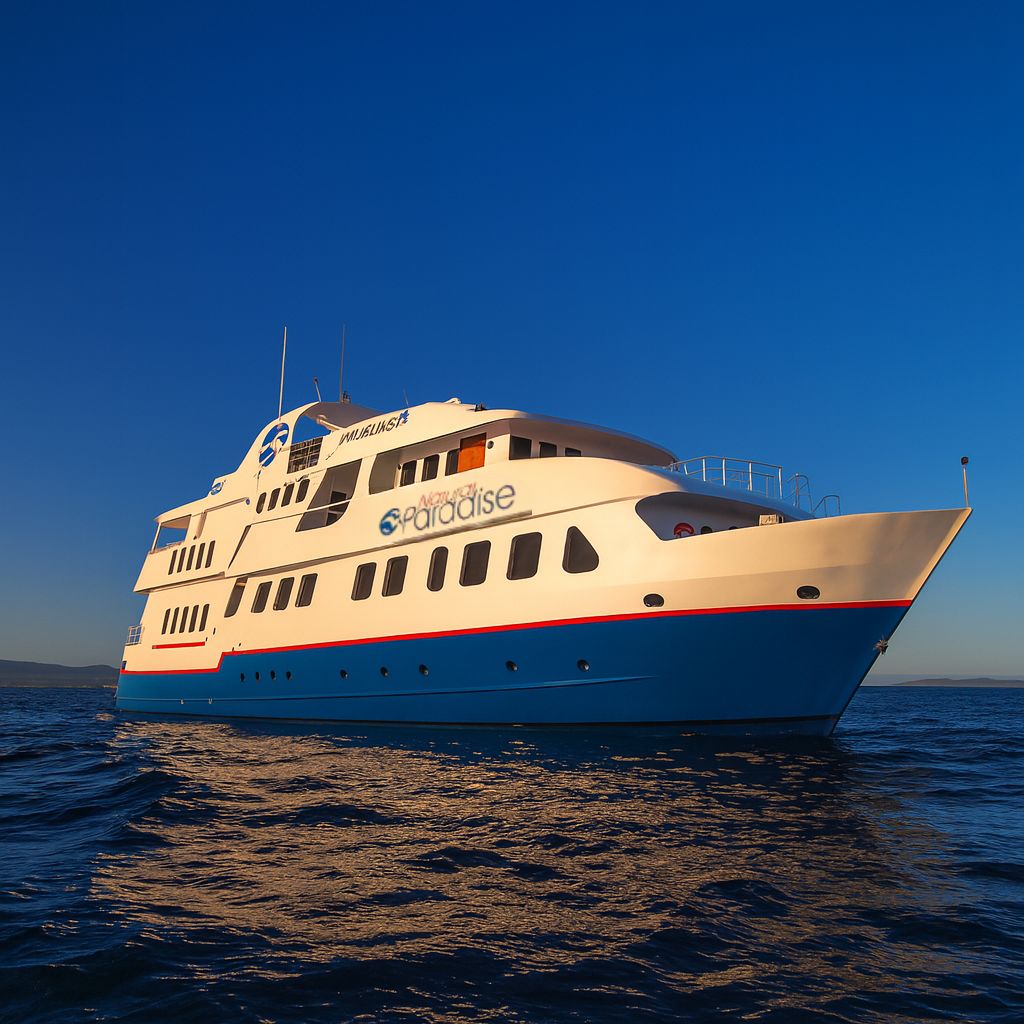
| Natural Paradise | 16 | Mid-range charter pricing; accessible cost entry; competent family crew | 6 and older on eastern itinerary |
One vessel feature that families consistently wish they had researched before booking: the location of children’s cabins relative to their parents. On some vessels, the cabin layout puts adult upper-deck suites far from lower-deck standard cabins. A seven-year-old who wakes up at 2am in a rocking cabin needs to be able to reach a parent without navigating a vessel in the dark. Always ask for the deck plan and map the cabin assignments before you commit.
How Much Does a Galapagos Family Charter Cost?
A full 8-day family charter costs $60,000 to $165,000 depending on the vessel class, before park fees, flights, and gratuities. Divided across a family group of 12 to 16, the per-person cost often approaches what individual cabin bookings on the same vessel would have cost, particularly once children’s discounts on scheduled cruises are offset against the charter’s single-price structure. The real question is not whether the charter is more expensive. It is whether the exclusive use of the vessel is worth the difference for your family.
| Cost Component | Amount | Notes |
|---|---|---|
| Full charter (8-day, economy/mid-range) | $60,000 to $100,000 | Natural Paradise, Grand Majestic, Alya range |
| Full charter (8-day, first-class) | $100,000 to $130,000 | Endemic, Passion, Galaxy Sirius range |
| Full charter (8-day, luxury) | $130,000 to $165,000+ | Infinity, Sea Star, Hermes range |
| Park fee per adult | $200 (USD cash) | Paid on arrival; some operators include in package |
| Park fee per child (under 12) | $100 (USD cash) | Same cash requirement; confirm with operator |
| Transit Control Card per person (incl. children) | $20 | Online registration; every family member including minors |
| Domestic flights per person | $250 to $600 round trip | All family members including children need tickets |
| Crew and guide gratuities | $200 to $400 per adult | Pool as a family; children typically tipped at lower rate |
Charter prices based on 2025-2026 operator data. Park fees in USD cash. Prices verified September 14, 2026. Confirm current rates directly with operators.
A cost variable that surprises family charter organizers: park fees for a family of 12 adults and 4 children under 12 total $2,800 in cash on arrival ($2,400 for adults, $400 for children). This cash needs to be physically present at the airport on landing day. On a charter where one person is managing the group’s logistics, coordinating whether each family unit brings their own cash or whether the charter organizer fronts it and is reimbursed is a conversation that needs to happen before anyone boards a plane. Figuring out the right vessel tier and whether the charter math works for your specific family size is a 15-minute conversation. Reach out here and we will run the numbers honestly, including what individual cabin bookings would cost on the same vessel so you can compare directly.
What Age and Fitness Requirements Should Families Know Before Booking?
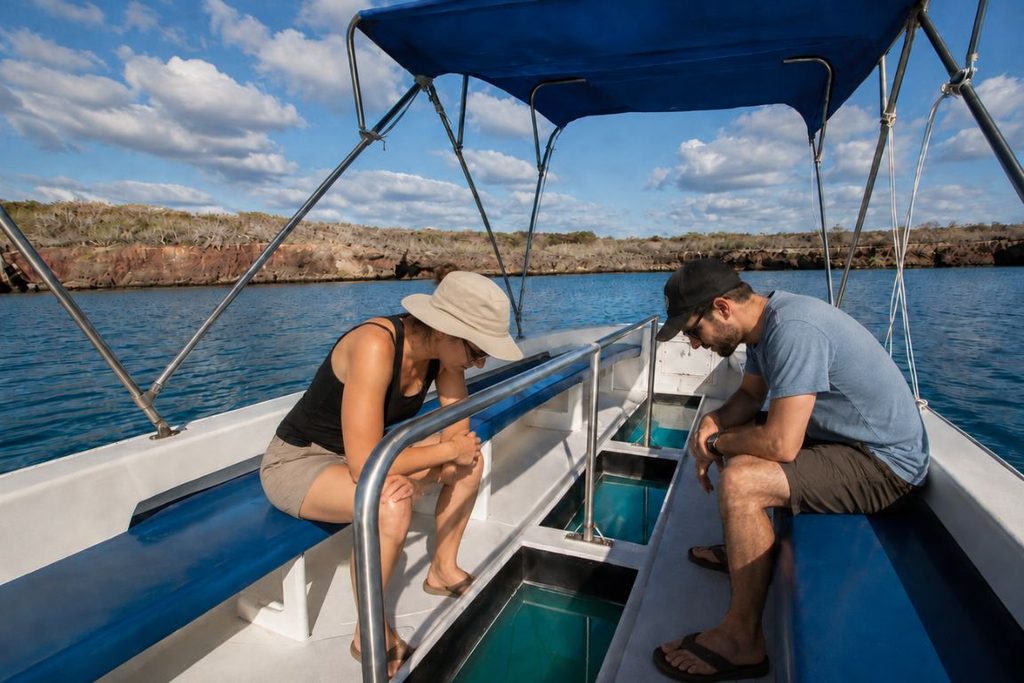
The minimum age on most Galapagos vessels is 6 years old, a policy set because daily excursions involve wet landings from Zodiac tenders, hiking over uneven volcanic terrain, and open-water snorkeling. Some operators set the bar at 7 or 8. Private charters often allow exceptions for younger children, with a signed parental waiver accepting full liability for the child’s safety. Western itineraries sometimes require a minimum age of 8 due to rougher open-water crossings. Confirm the age policy for your specific vessel and itinerary before falling in love with either one.
What the age minimums are actually protecting against is worth understanding clearly, because it changes how parents prepare their children for the trip:
Zodiac boarding and landings. Getting from the vessel to shore requires stepping from a moving Zodiac either onto a dock (dry landing) or into ankle to calf-deep water (wet landing). The Zodiac is not a stable platform, and the crew uses a “Galapagos handshake,” gripping wrists rather than hands, to transfer passengers safely. A child needs to understand and follow instructions in the moment. A four-year-old who panics or makes unpredictable movements during a transfer creates a safety risk for the crew member assisting them. Most six-year-olds can handle this with preparation. Most three-year-olds cannot.
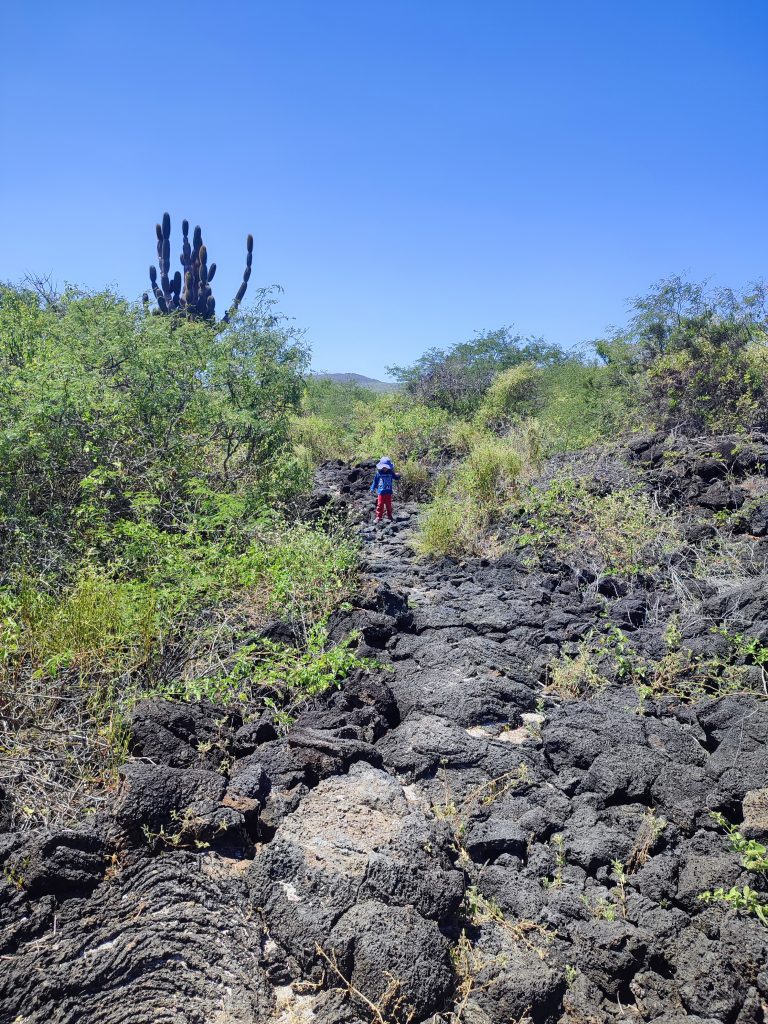
Trail terrain. Galapagos visitor trails cross volcanic lava fields, uneven rocky surfaces, and in some cases steep coastal paths. Children younger than 6 often struggle with the footing, particularly in heat, and parents who are carrying or closely supervising a young child miss much of the excursion themselves. On a private charter, one parent can stay on the vessel with a younger child while the other takes older children ashore, which is a workable solution that scheduled departures do not easily accommodate.
Swimming ability. Snorkeling is a central part of the Galapagos experience. A child who cannot swim or who is uncomfortable in open water with currents will be unable to participate in some of the most memorable encounters the islands offer. If any child in your family cannot swim confidently, ask your operator about vessels that include a glass-bottom boat for wildlife viewing from above the water rather than in it.
Seasickness. Children are not necessarily more susceptible to motion sickness than adults, but when a child becomes seasick on a small vessel, the experience is unpleasant for the whole family. Choose a catamaran, which provides substantially more stability than a monohull yacht. Choose the eastern itinerary, where crossings are shorter and calmer. Bring pediatric-appropriate motion sickness medication and discuss dosing with your doctor before departure, not at the airport.
Your own schedule, your own pace, and your own itinerary within the park rules. Here’s a guide to Galapagos private charter cruises so you understand what becomes possible when you have the boat to yourselves.
What Itinerary Should Families Choose for a Charter Cruise?
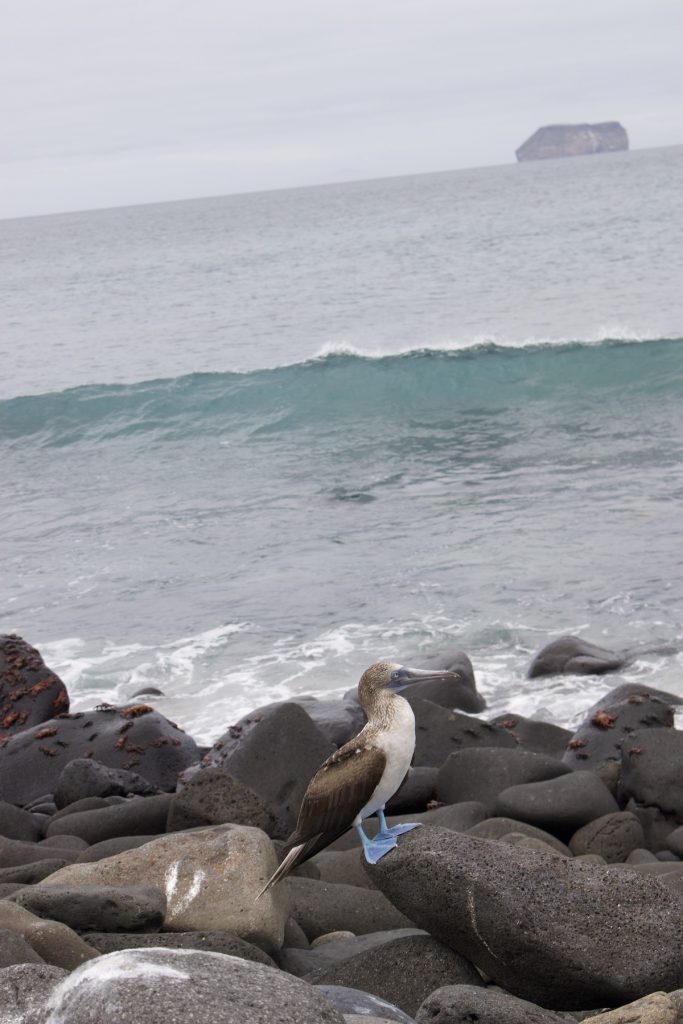
For families with children under 10, the eastern itinerary is the correct default. It covers Española, Floreana, San Cristobal, North Seymour, Santa Fe, and Santa Cruz, with calmer water, accessible landings, and some of the most child-friendly wildlife encounters in the archipelago: sea lions at Gardner Bay, giant tortoises in the Santa Cruz highlands, blue-footed boobies on North Seymour. The western itinerary is better for families with teenagers who can handle longer crossings and more physically demanding terrain.
The reason the eastern route works better for younger children is not the wildlife, which is extraordinary on both routes. It is the water conditions and the landing difficulty. Eastern crossings between islands are shorter and calmer. Most eastern landings are wet landings onto sandy beaches, where a child stepping from a Zodiac into ankle-deep water is a manageable and often delightful experience. Western routes involve the Bolívar Channel between Isabela and Fernandina, which can produce significant swell, particularly from June to November. A nine-year-old who has already spent five minutes being seasick in the Zodiac before the landing even begins is not going to appreciate the flightless cormorant at the end of the trail.
Specific sites that consistently produce the strongest reactions from children on an eastern charter:
Gardner Bay, Española. A white-sand beach covered in sea lion colonies where pups approach children with curiosity. The underwater snorkeling here, with those same sea lions in the water, is the most frequently described “my children’s faces” moment that parents share with us after family charters.
Santa Cruz Highlands. Wild giant tortoises walking freely through misty vegetation, at a pace that allows even the youngest children to observe them from two meters away without rushing. This is consistently the single most powerful wildlife moment for children under 10 on an eastern itinerary.
Post Office Bay, Floreana. A barrel that has served as an informal postal service since the 18th century. Families leave postcards, children search for mail addressed to somewhere near their home to carry and hand-deliver. It is completely analog, moderately absurd, and universally beloved by children and adults alike.
For families with teenagers, the western route offers Punta Espinoza on Fernandina, where flightless cormorants and marine iguanas share the lava in a density that feels prehistoric. Punta Vicente Roca on Isabela, where the snorkeling includes sea turtles, Galapagos penguins, and on lucky days whale sharks. These sites reward teenagers who are ready to be genuinely awed rather than politely interested.
How Do You Coordinate the Logistics of a Galapagos Family Charter?
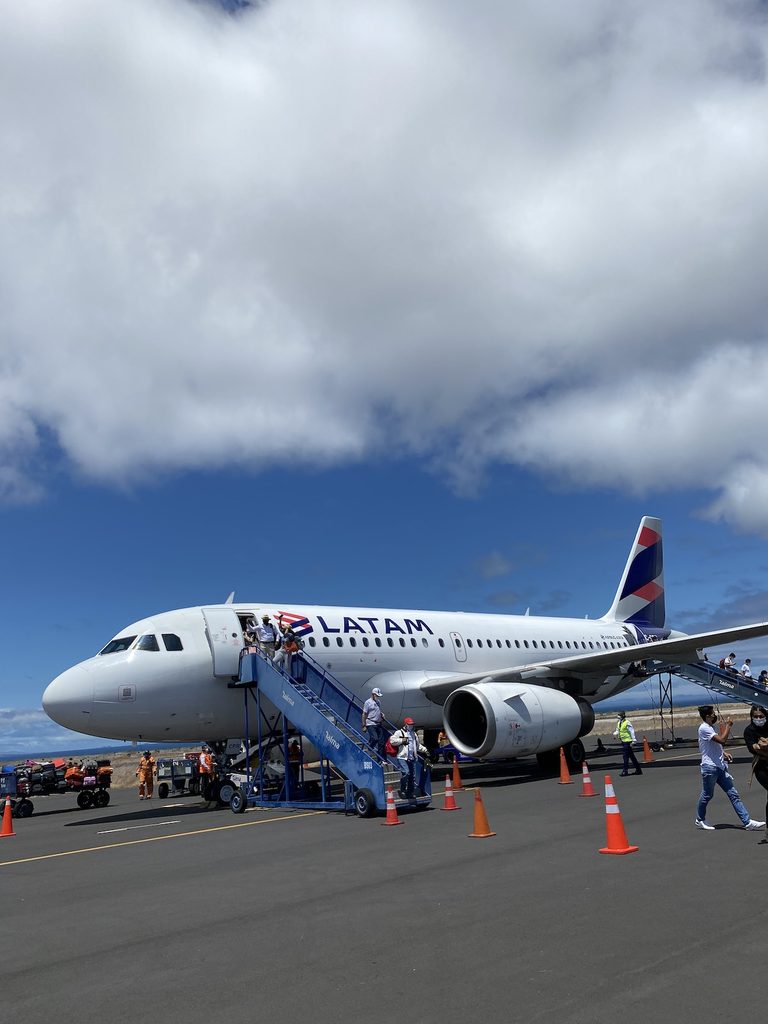
A Galapagos family charter has more pre-departure logistics than almost any other trip format, because every person in the group, including every child, needs individual documentation processed before boarding. Passport data for all family members must be submitted to the operator, Transit Control Cards must be registered online for each person including minors, park fees must be paid in cash on arrival for every traveler, and dietary restrictions and swimming abilities for every child must be communicated in writing at booking time. Assign one person to own the logistics checklist and set deadlines that give everyone time to comply.
Documentation for minors. Every child traveling to the Galapagos needs the same documents as adults: a valid passport, a Transit Control Card registered online before the domestic flight ($20 per person), and the park entrance fee paid in cash on arrival ($100 per child under 12). There is no simplified process for children. The TCT must be registered at the official online portal individually for each traveler, including each child, with the child’s passport number and flight details. Parents can complete the registration on behalf of minor children, but each child needs their own registration.
Cabin configuration planning. Before you submit a final passenger list to the operator, draw out the cabin assignment on the vessel’s deck plan. Which family unit goes in which cabin. Who is adjacent to whom. Which children are in connecting rooms with their parents. Which teenagers are old enough to be in separate cabins nearby. This is not a detail to leave to the operator to sort out at embarkation. A family that arrives at the dock and discovers their two youngest children’s cabin is three decks away from the parents’ suite has a problem that cannot be easily fixed at sea.
Dietary restrictions and allergies. The galley on a 16-passenger Galapagos yacht prepares one menu for the entire passenger complement per meal. On a family charter, that menu can be adjusted to accommodate the group’s needs, but the chef needs the information well in advance. Every child’s food restrictions, preferences, and allergies need to be submitted in writing to the operator at least 30 days before departure. A picky eater is easier to manage than an allergy, but both need to be on the operator’s record before the chef stocks provisions.
Flight coordination. Family charter groups often travel from different cities, sometimes different countries. Coordinating everyone to arrive in Quito or Guayaquil in time to make the same domestic flight to the Galapagos, while also completing the biosecurity check (which opens at approximately 4:20am in Quito and 6:30am in Guayaquil), requires a detailed arrival timeline circulated to every family unit well before departure. One family unit missing a domestic flight does not stop a charter vessel from leaving. Coordinate flights as a group and build in buffer time. We coordinate family charter logistics from start to finish: vessel booking, cabin assignments, flight coordination, passenger documentation, and dietary communication. Get in touch here to start planning.
We’ve got a full breakdown on Galapagos cruises for groups if you want to know exactly which vessel sizes, booking formats, and operators handle group travel well without the usual logistical headaches.
What Family Charter Clients Tell Us: Patterns from Our Traveler Interviews
From traveler interviews and feedback collected through mytrip2ecuador.com, the YouTube channel My Trip to Somewhere, and family charter clients who booked through Cruises To Galapagos Islands:
| Feedback Pattern | Approx. Frequency | Planning Implication |
|---|---|---|
| Said the guide’s ability to pace excursions to the youngest child was the top benefit of the charter format | ~82% | Guide flexibility is the core value of a family charter; it cannot be replicated on a scheduled departure |
| Had not researched the vessel’s cabin layout before booking; discovered configuration issues on arrival | ~37% | Review the deck plan and map all cabin assignments before signing the charter agreement |
| Did not communicate all children’s dietary restrictions and allergies in advance | ~29% | Submit dietary information in writing at booking; the galley plans provisions before departure |
| At least one child was younger than the vessel’s stated minimum age; operator accommodated with waiver | ~18% | Always ask about charter exceptions for young children; most operators have a waiver process |
| Described the family charter as the most successful family trip they had ever taken | ~91% | Satisfaction is very high when vessel, itinerary, and logistics are matched correctly to the family |
Data from traveler interviews and feedback collected through mytrip2ecuador.com and Oleg’s YouTube audience across multiple years of family charter operation.
What Are the Biggest Mistakes Families Make When Booking a Galapagos Charter?
The most damaging family charter mistakes happen before departure: choosing a vessel without interconnecting cabins, overestimating the youngest children’s ability to handle the physical demands, not submitting dietary restrictions and allergies in advance, booking the western itinerary for a group that includes children under 8, and underestimating how long the pre-departure logistics take when coordinating a family of 12 to 16 across multiple households. Every one of these is avoidable.
Mistake 1: Choosing the vessel before mapping the cabin layout. A family charter that puts the parents’ suite on the upper deck and the children’s cabins on the lower deck, with no connecting option, creates a real problem at 3am when a seven-year-old has a nightmare. The cabin configuration should be the first vessel screening criterion for families with young children, not an afterthought after the price is negotiated. Ask for the deck plan before you commit to any vessel.
Mistake 2: Booking the western itinerary for young children. The western route is genuinely extraordinary, but the Bolívar Channel crossings can be rough, particularly from June to November. For families whose youngest child is 6 or 7, the eastern route delivers everything they need: sea lions, giant tortoises, blue-footed boobies, dramatic snorkeling, and beach days, all on calmer water and more accessible landings. The western route will still be there for a future trip when the children are older and can appreciate Fernandina’s volcanic drama.
Mistake 3: Overestimating children’s snorkeling readiness. Parents who describe their children as “strong swimmers” in a pool sometimes discover that open water with current, a mask that fogs, and a wetsuit that does not fit is a different proposition. Talk to your children honestly about what snorkeling from a Zodiac in open ocean feels like before you book a cruise where it is a daily activity. If there is genuine uncertainty about any child’s readiness, choose a vessel that includes a glass-bottom boat option so non-snorkelers can still observe the marine life.
Mistake 4: Starting logistics coordination too late. A family charter involving 16 people across four family units, each with different home cities, school calendars, work constraints, and passport expiry dates, requires 12 to 18 months of lead time for peak school holiday dates. The families who start planning 6 months before a December departure find their preferred vessel already chartered, their preferred cabin configuration unavailable, and their domestic flight options limited. The families who start 18 months out have genuine choices.
Mistake 5: Not building a seasickness management plan. On a 16-passenger catamaran in the Galapagos, the overnight crossings between islands are generally calm. But some crossings, particularly on western routes in the cooler season, produce real swell. Every child’s seasickness history should be assessed before departure, and pediatric-appropriate motion sickness medication should be discussed with your doctor. Scopolamine patches, which are highly effective for adults, are not approved for children. Dramamine (dimenhydrinate) has a pediatric formulation that can be used for children over 2 with appropriate dosing, but requires a doctor’s guidance. Do not leave this until you are at the airport.
Frequently Asked Questions
What is the minimum age for a Galapagos family charter?
Most vessels set the minimum age at 6 years. Some operators require 7 or 8, particularly on western itineraries with rougher crossings. Private charters often allow younger children, including infants, with a signed parental waiver accepting full responsibility for the child’s safety. Always confirm the minimum age for your specific vessel and itinerary before booking.
Do children need the same travel documents as adults for the Galapagos?
Yes. Every child entering the Galapagos needs a valid passport, a Transit Control Card registered online before the domestic flight ($20 per person), and the park entrance fee paid in cash on arrival ($100 per child under 12, $200 for adults age 12 and over). Parents can complete the TCT registration on behalf of minor children using the child’s passport details, but each child needs their own individual registration.
Which is better for families with young children: eastern or western itinerary?
Eastern, for children under 10. Eastern itineraries have calmer crossings, more accessible wet landings onto sandy beaches, and deliver the most child-friendly wildlife encounters (sea lions, giant tortoises, blue-footed boobies). Western routes have rougher crossings and more demanding terrain that suits older children and teenagers better. Both routes are extraordinary; the eastern route is simply safer for younger children.
Do children get a discount on a Galapagos family charter?
On scheduled cruises, most operators offer a 10% to 15% discount for children under 12 sharing a cabin with two adults. On a full private charter, the price is typically set for the entire vessel regardless of how many passengers are children. Some charter operators apply a reduced per-person rate for children under 12 within the total, while others price the charter as a flat vessel buyout. Confirm the children’s pricing structure before signing the charter agreement.
How far in advance should a family charter be booked?
Twelve months minimum for non-peak dates. Eighteen months for Christmas, Easter, and summer school holiday windows, which are when families are most constrained to specific travel windows and when vessels fill earliest. Interconnecting cabin configurations on popular family-friendly vessels fill first, so the earlier you book, the more cabin assignment flexibility you have.
Is there babysitting service available on a Galapagos cruise vessel?
No. Small Galapagos expedition yachts do not carry babysitting or childcare staff. If a parent wants to join an excursion while their young child rests in the cabin, another adult in the group must stay with the child. This is one of the practical reasons a family charter works better than a scheduled cruise for families with very young children: the flexibility to divide the group between those going ashore and those staying aboard is much easier when the whole vessel belongs to your family.
Ready to Plan Your Galapagos Family Charter?
We have helped families of every size and age range find the right vessel, the right itinerary, and the right logistics plan for a Galapagos family charter. Oleg has been on these boats personally and knows which vessels handle multi-generational groups well, which cabin configurations work for families with young children, and which operators take family logistics seriously. Our agency is rated 4.9 stars on both Google and TripAdvisor. Tell us the ages of all the children, approximate group size, and your target travel window, and we will build you an honest recommendation with no obligation.
Start Planning Your Family Charter
Written by Oleg Galeev
Galapagos cruise traveler (3 trips, 2 cruises) · Founder, Cruises To Galapagos Islands
Oleg has personally inspected nearly every available Galapagos cruise vessel and interviewed thousands of travelers to build the most first-hand cruise knowledge base available. He also runs the Ecuador travel blog mytrip2ecuador.com and the YouTube channel My Trip to Somewhere.
Cruises To Galapagos Islands is rated 4.9 stars on Google and TripAdvisor.
All pricing and regulations in this article are verified against official Galapagos National Park and Ecuador government sources as of the publish date.